A clean betta tank does more than look nice. It protects your fish from ammonia burn, bacterial imbalance, and stress. Many owners think cleaning means scrubbing everything until it shines, but that approach often wipes out the beneficial bacteria that make a stable environment possible. Safe cleaning is a balance of removing waste and preserving the ecosystem that supports your betta. This guide walks through the entire process in detail. It gives step by step instructions, clear water parameter targets, and specific actions to avoid so the tank stays stable and the fish stays calm.
Primary keyword used naturally: how to clean a betta tank
Secondary keywords included contextually: clean betta tank without removing fish, how often to clean a betta tank, partial water change, disinfect betta tank, nitrogen cycle, beneficial bacteria
How to Clean a Betta Tank the Correct Way
Cleaning a betta tank correctly means working with the tank’s biology rather than against it. You remove debris, improve clarity, and refresh water without stripping away the bacteria that protect the fish.
How to Clean a Betta Tank Step by Step
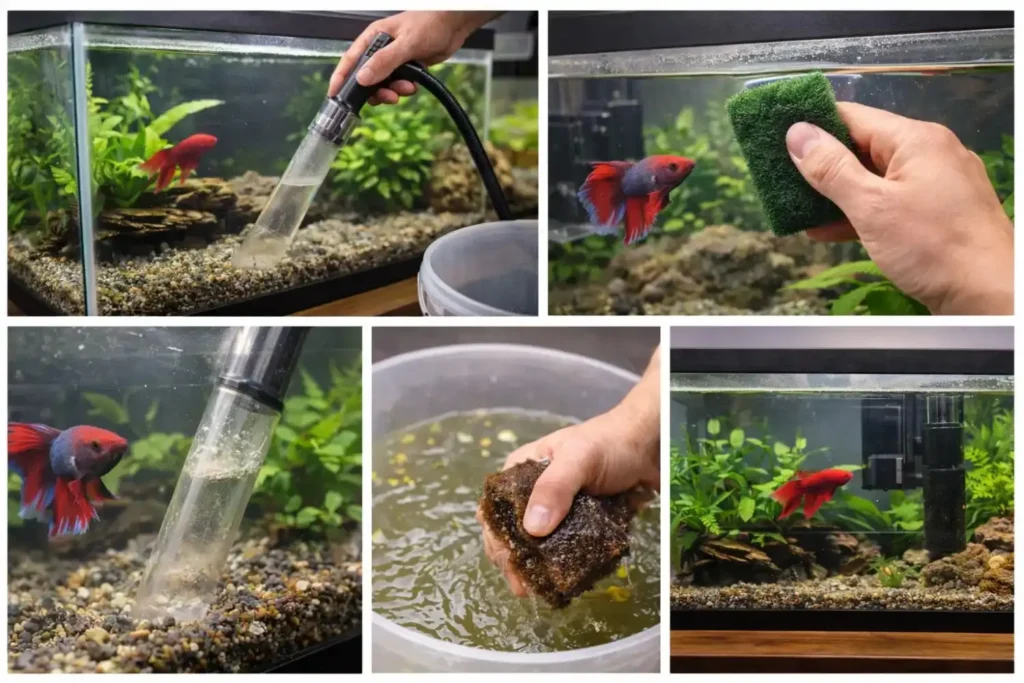
- Prepare conditioned replacement water at the same temperature as the tank.
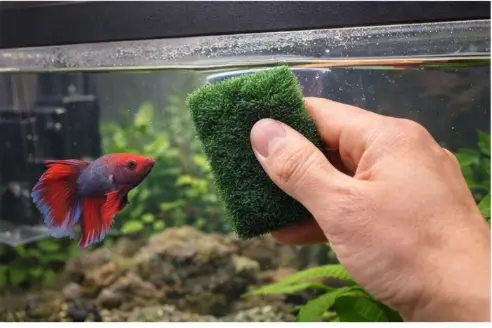
- Wipe glass and gently clean decor inside the tank.
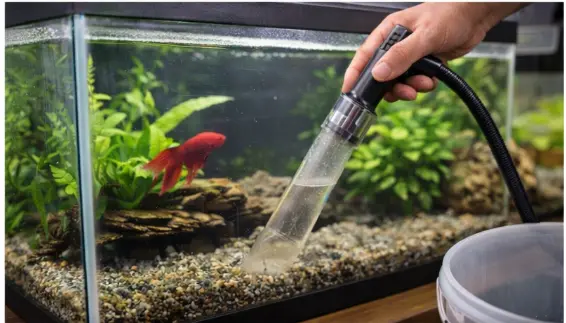
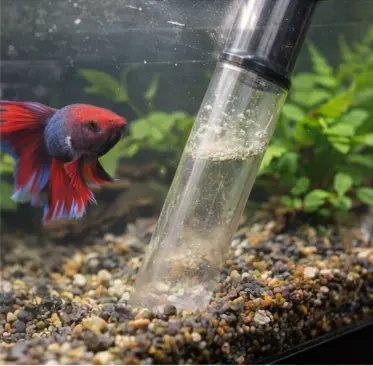
- Use a siphon or gravel vacuum to remove debris during a partial water change.
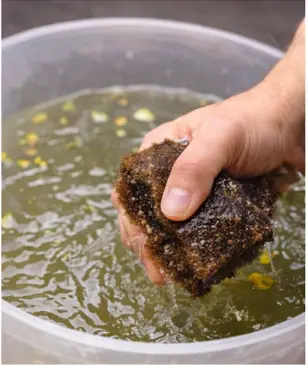
- Rinse filter media in old tank water to prevent bacterial loss.
- Refill with conditioned water, restart equipment, and monitor your betta.
Recommended water change amounts
- Unfiltered bowl or nano setup: 30 to 50 percent
- 3 to 5 gallon filtered tank: 20 to 30 percent
- 10 gallon or larger filtered tank: 15 to 25 percent
Situations where you remove the fish
- Deep cleaning an unfiltered bowl
- Disinfection after illness or contamination
- Visible chemical or hazardous substance exposure
Before You Start: Confirm Your Tank Type and Setup
Cleaning choices change based on tank size, equipment, and biological maturity. A method that works for a filtered, cycled 5 gallon tank does not apply to a small unfiltered bowl.
Filtered versus unfiltered
- Filtered tanks support a stable nitrogen cycle.
- Unfiltered setups require more frequent water changes and hands on care.
Cycled versus uncycled
- A cycled tank converts ammonia into nitrite and nitrate.
- An uncycled tank cannot process waste effectively and becomes unstable faster.
Tank sizes and what to expect
- Bowls and sub 3 gallon setups swing in temperature and chemistry more easily.
- 3 to 5 gallon tanks offer moderate stability with consistent care.
- Larger tanks are easier to keep clean, but still need scheduled maintenance.
Parameter checkpoints before cleaning
- Temperature: 76 to 80 F
- Ammonia: 0 ppm
- Nitrite: 0 ppm
- Nitrate: ideally below 20 ppm
Tools and Supplies You Actually Need
Simple equipment works best. You do not need expensive gadgets to maintain a healthy tank.
Tools that make cleaning smoother
- Siphon or gravel vacuum
- Bucket used only for tank water
- Dechlorinator and basic water conditioner
- Aquarium algae pad or scraper
- Thermometer to confirm temperature match
Tools that are helpful but optional
- Water test kit for regular readings
- Filter safe bio media to improve stability
- Stress reducing conditioner if the fish is sensitive
Tools to avoid
- Soap or scented products
- Household cleaners
- Harsh abrasive tools that scratch acrylic or glass
Core Cleaning Process for a Filtered Betta Tank
This method applies to most tanks between 3 and 10 gallons with an established filter.
Prepare replacement water
- Treat with a dechlorinator.
- Match the temperature to the tank to prevent shock.
Clean surfaces gently
- Wipe interior glass to reduce algae.
- Lift decor only when needed and rinse in old tank water, not tap water.
Vacuum substrate and remove debris
- Move the siphon in sections.
- Stop once you reach the recommended percentage for your tank size.
Handle the filter the right way
- Do not rinse filter media under tap water.
- Place media in a container of old tank water and swish gently to preserve bacteria.
Refill and stabilize
- Pour treated water slowly so the fish is not disturbed.
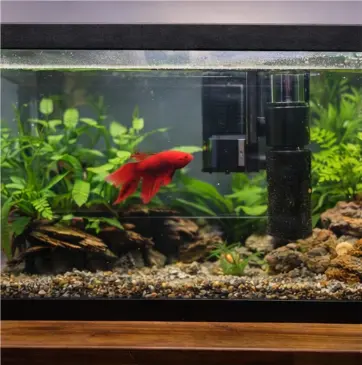
- Confirm heater, filter, and flow rate are normal.
- Watch the betta for changes in behavior.
This approach cleans effectively while keeping the biological foundation intact.
Alternative Method for Unfiltered Bowls and Nano Tanks
Small setups have limited volume and no filtration support, so cleaning is more hands on.
When to temporarily move the fish
- If the tank is small enough that debris stirs everywhere
- If the water quality has declined significantly
- If cleaning involves disinfecting or starting over
Basic cleaning routine for bowls
- Replace 30 to 50 percent of the water.
- Remove debris with a cup or siphon.
- Clean surfaces gently and avoid full scrubbing unless needed.
Deep cleaning an uncycled bowl
- Remove decor and rinse in conditioned water.
- Replace water gradually to avoid shock.
- Reintroduce the betta once temperature matches.
These setups remain stable only with consistent attention and careful monitoring.
Disinfecting a Used Tank for a New Betta
Disinfection is a different process from regular cleaning. You only disinfect when contamination or sickness is suspected or the tank has an unknown history.
When this step matters
- A second hand aquarium
- Previous disease or parasite presence
- Chemical spill or household cleaner exposure
Safe disinfection approach
- Use a light bleach dilution with brief contact time.
- Rinse until no odor remains.
- Treat with a chlorine neutralizing conditioner.
- Let the tank air dry before rebuilding the environment.
Once a disinfected tank is ready, begin cycling before introducing a betta.
Maintain the Beneficial Bacteria That Keep Your Betta Safe
These bacteria form the backbone of every healthy aquarium. They live on surfaces, not in the water column alone.
Where the nitrogen cycle exists
- Filter media
- Substrate and gravel
- Porous decor and surfaces
Habits that protect the cycle
- Avoid full water replacement.
- Rinse media in tank water instead of tap water.
- Clean decor gradually instead of all at once.
Warning signs of a disrupted cycle
- Sudden ammonia or nitrite detection
- Cloudy water that lingers
- Tired or stressed behavior in the fish
Water Quality and Parameter Control During Cleaning
Cleaning affects water chemistry, so it helps to understand how those changes work.
Parameter targets and why they matter
- Temperature between 76 and 80 F prevents shock.
- Ammonia and nitrite at 0 ppm protect gills.
- Nitrate under 20 ppm keeps long term stress low.
- Stable pH matters more than chasing perfect numbers.
How partial changes help stability
- Partial changes reduce nitrate and odor.
- Overcleaning can remove too much beneficial bacteria at once.
Cloudy water and how to fix it
- If it clears within 24 to 48 hours, let the cycle stabilize.
- If it persists, monitor ammonia and adjust cleaning habits.
Algae, Odor, and Contamination Control
Not all problems come from dirt. Some come from imbalance, feeding habits, or external factors.
Algae management
- Reduce light exposure time.
- Confirm you are not overfeeding.
- Clean with pads designed for aquariums only.
Odor in the tank
- Odor usually signals waste buildup or decomposing food.
- Check parameters and adjust routine water changes.
If something harmful entered the tank
- Move the betta into conditioned water.
- Replace a portion of the tank water.
- Evaluate the filter and substrate before resuming normal routine.
Post Cleaning Observation and Stress Prevention
A successful cleaning job shows in the betta’s behavior. Calm swimming, appetite, and normal fin posture are all positive signs.
Signs the betta needs support
- Hiding for long periods
- Rapid gill movement
- Lack of interest in food
What to do if something feels off
- Recheck temperature.
- Test ammonia and nitrite.
- Perform a small stabilizing water change if needed.
This step helps catch problems early, before they become serious.
How to Clean a Betta Tank on a Weekly and Monthly Schedule
A predictable routine prevents most problems.
Weekly routine
- Light glass wipe
- Partial water change
- Gravel vacuuming in sections
Monthly routine
- Inspect equipment
- Clean decor selectively
- Confirm long term stability with a test kit
Emergency actions
- Spike in ammonia or nitrite
- Visible distress in the fish
- Contamination or debris release from substrate
=====================================================
FAQ
Q: How often should you clean a betta tank?
A: Most filtered tanks do well with weekly partial water changes and a light wipe down. Bowls, temporary setups, and unfiltered tanks need more frequent attention because waste accumulates faster.
Q: Do you need to take the betta out every time you clean the tank?
A: Not always. If the tank is filtered and the cleaning is routine, the fish can stay inside. Only move the betta when deep cleaning, disinfecting, or handling contamination.
Q: Is a full water replacement ever recommended?
A: Avoid a full replacement unless disinfection is required. Removing all water removes bacteria and resets the environment.
Q: How do you clean a betta tank without killing beneficial bacteria?
A: Rinse filter media in old tank water, clean surfaces gently, and avoid replacing all the water at once. Partial changes protect bacteria while still improving water quality.
Q: How do you clean a betta tank without a siphon?
A: Remove water with a clean cup or container, wipe glass with an aquarium pad, and pour treated water back in slowly to avoid stirring debris.
Q: How do you clean a used tank safely before adding a betta?
A: Disinfect with a diluted bleach solution, rinse thoroughly, neutralize any residue with conditioner, and give the tank time to dry before cycling.
Q: What happens if you clean a betta tank too aggressively?
A: Aggressive cleaning can trigger ammonia spikes, stress out the fish, and disrupt the nitrogen cycle. Slow and steady methods are safer.
Q: Can cleaning make a betta sick?
A: It can if temperature swings, chemicals, or bacterial loss occur. Monitoring temperature and using the right products prevents this.
Q: Why is soap harmful in aquariums?
A: Soap leaves residue that irritates gills, damages slime coats, and interferes with beneficial bacteria.
Q: Do you need expensive supplies to maintain a clean betta tank?
A: No. A siphon, bucket, dechlorinator, and algae pad are enough for most setups.
Q: Is bottled water better than tap water for cleaning?
A: Treated tap water normally works best. Bottled water often lacks minerals and can be inconsistent.
Q: Is gravel or bare bottom easier to clean?
A: Bare bottom tanks are easier to maintain because waste is visible. Gravel looks more natural but requires vacuuming.
Q: Are filtered tanks cleaner than unfiltered bowls?
A: Yes. Filters provide stability by hosting beneficial bacteria, which makes cleaning less disruptive.
Q: Can you clean a tank during cycling?
A: Yes, but do it gently. Small partial changes control ammonia without stopping the bacteria from developing.
Q: How do you know if cleaning caused a cycle crash?
A: Parameters shift rapidly, the water may cloud for longer than normal, and the betta may show stress signals.
Q: Will smart sensors and AI tools make cleaning easier in the future?
A: Smart monitoring devices are already helping owners track parameters and adjust cleaning schedules based on live data. Manual cleaning will still be required, but decision making becomes faster and more accurate.
Pingback: Do Bettas Need a Heater? 7 Critical Facts About Betta Tanks
Pingback: Betta Starter Kit Checklist: Everything You Need 2026
Pingback: Best Tank Shapes for Bettas: 7 Essential Aquarium Designs
Pingback: Betta Vacation Feeding: Safe Options by Trip Length