Ammonia comes from fish waste, uneaten food and rotting plant matter, and it is invisible in clear water. The safe level for a betta is 0 ppm. This guide shows how to lower ammonia fast, how to read your test result, and how to stop it coming back.
The Fastest Way to Lower Ammonia in a Betta Tank
Immediate action lowers risk. Here is the short version of what to do.
- Test ammonia first so you know the severity.
- Perform a partial water change using conditioned water at the same temperature.
- Remove visible waste in substrate or decor.
- Add an ammonia-binding conditioner if the reading is high or the tank is still cycling.
- Keep the filter running and avoid overcleaning filter media.
Safe Emergency Water Change Amounts
- 3 to 5 gallon betta tank: 30 to 50 percent
- 10 gallon betta tank: 25 to 40 percent
- Unfiltered bowl: 50 percent with close observation
When Detoxifier Helps
- When ammonia is above 1 ppm and you need time to stabilize the tank.
- When tap water has chloramine that breaks into ammonia after treatment.
When Detoxifier Should Not Be Your Only Step
- In uncycled tanks without filtration or biological stability.
- When waste continues to accumulate faster than it can be processed.
Identify Your Scenario Before Fixing Ammonia
Different setups need different solutions. Diagnose first.
Cycled vs Uncycled Betta Tanks
- A cycled tank has beneficial bacteria that convert ammonia to nitrite and nitrate.
- An uncycled tank has little to no biological support and spikes easily.
Filtered vs Unfiltered Systems
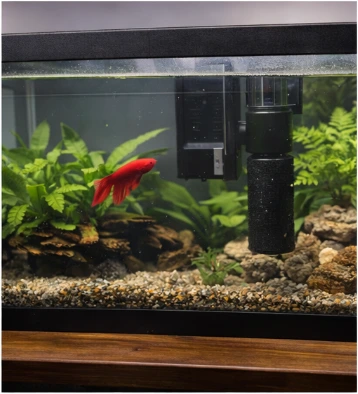
- A filter with biological media stabilizes ammonia.
- Bowls and unfiltered setups rely heavily on frequent water changes.
Small Tank Volume Effects
- A 3 to 5 gallon tank can reach unsafe levels quickly.
- Warm temperatures increase the portion of ammonia that is toxic.
Betta Fish Ammonia Level Chart
| Ammonia reading | What it means | What to do |
|---|---|---|
| 0 ppm | Safe | Keep up your weekly water changes |
| 0.25 ppm | Early warning | Change 25–30%, check how much you feed, retest the next day |
| 0.5 ppm | Harmful with exposure | Change 30–50% now, dose a binder, retest in 12 hours |
| 1.0 ppm | Dangerous | Change 50% now and again in 12–24 hours, dose a binder, look for burns |
| 2.0 ppm or more | Emergency | Repeat large changes, dose a binder, see ammonia poisoning for symptoms and recovery |
Ammonia turns more toxic as pH and temperature rise, so in a warm betta tank at pH 7 or above, treat any reading above 0 seriously. When you do large changes, match the new water’s temperature and pH as closely as you can. If the tank keeps testing positive, it may not be fully cycled yet; see how to cycle a betta tank.
Confirm Ammonia Levels and Water Parameters First
Check parameters before taking action. This prevents overcorrection.
Safe Ammonia Range for Bettas
- 0 ppm is the target
- 0.25 ppm indicates rising risk
- 0.5 to 1 ppm requires urgent intervention
- 2 ppm and above is an emergency
Testing Methods
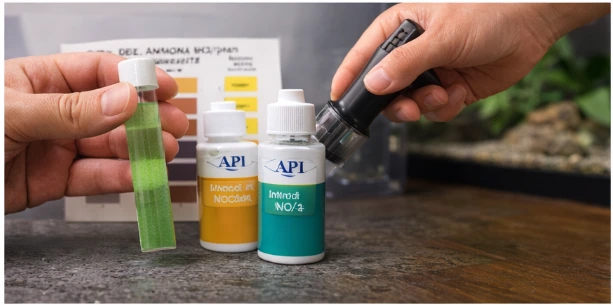
- Liquid test kits are the most reliable; see the best betta water test kit.
- Strips are faster but less precise.
- Ammonia alert badges help monitor between tests.
How pH and Temperature Influence Toxicity
- Higher temperature and higher pH increase the toxic form of ammonia.
- Most betta tanks run warm, so safe levels need monitoring.
How to Lower Ammonia in a Betta Tank: Emergency Step-by-Step Protocol
Use this sequence when ammonia readings are high.
- Remove 30 to 50 percent of water and replace with conditioned water at matching temperature.
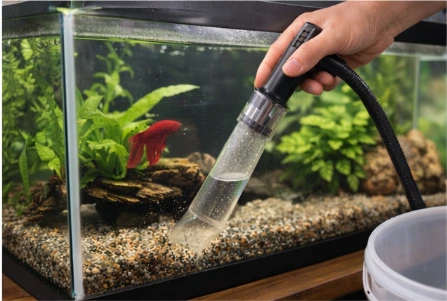
- Vacuum substrate to remove trapped waste.
- Treat tap water for chlorine and chloramine to avoid additional ammonia formation.
- Keep the filter running and avoid replacing all media at once.
- Retest within 6 to 12 hours and repeat small controlled changes if needed.
If Ammonia Keeps Returning
- Reduce feeding quantity.
- Check stocking levels and reduce bioload if needed.
- Confirm that the filter has biological media and appropriate flow.
If the Tank Is Already Cycled
A cycled tank should process ammonia. If it does not, the issue is often maintenance or bioload.
Protect Beneficial Bacteria
- Rinse filter media in old tank water, not tap water.
- Avoid replacing all filter components at once.
- Clean decor gradually to avoid bacteria loss.
Reduce Bioload
- Feed sparingly to reduce waste.
- Remove decaying plants or leftover food.
- Confirm stocking is appropriate for tank size.
Detoxifier as Temporary Support
- Neutralizes ammonia short term.
- Allows bacteria to catch up.
- Not a replacement for correcting root causes.
If the Tank Is Not Cycled Yet
Uncycled tanks do not process ammonia well. Support is needed until the cycle develops.
Fish-In Cycling Method
- Small controlled water changes daily or every other day.
- Keep filter running to allow bacteria to colonize.
- Add bottled nitrifying bacteria to speed stability.
Daily or Alternate Day Routine
- Test ammonia regularly.
- Remove organic waste quickly.
- Avoid overcleaning while bacteria establishes.
When to Add Bacteria or Seeded Media
- New tanks or tanks that recently lost their colony.
- Systems that show consistent ammonia even with water changes.
Fix Root Causes of Rising Ammonia
Lowering ammonia without fixing causes results in repeat spikes.
Overfeeding
- Offer small meals the fish can finish in under two minutes.
- Remove uneaten food.
Inadequate Filtration
- Choose a filter with biological media.
- Maintain gentle flow so bettas can swim comfortably.
Overstocking and Space Limitations
- One betta in 5 gallons or more for stability.
- Avoid adding fish or large amounts of live food that increase waste.

Equipment and Tools That Help Control Ammonia Long Term
Right tools reduce long term workload.
- Sponge filters with bio media for stable biological filtration.
- Live plants that absorb nitrogen compounds.
- Quality dechlorinator to manage tap water chloramine.
- Ammonia alert badges for constant monitoring.
Betta Health and Behavior Indicators to Monitor
Behavior changes often signal ammonia issues before test results arrive.
Signs of Ammonia Stress
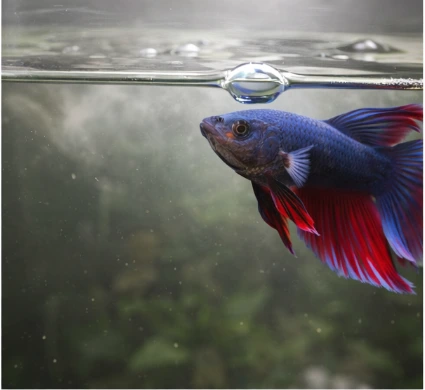
- Gasping at the surface
- Clamped fins
- Rapid gill movement
- Lethargy or hiding
When Mild Symptoms Require Intervention
- Any rise above zero in a small tank.
- Visible discomfort after feeding or cleaning.
Emergency Thresholds
- Above 1 ppm requires immediate action.
- Above 2 ppm requires controlled water changes and detoxifier.
Prevention and Maintenance Schedule for Stable Ammonia Levels
Prevention is more effective than reaction.
Weekly Tasks
- Partial water change.
- Light substrate vacuuming.
- Check filter flow and condition.
Monthly Maintenance
- Rinse media in tank water.
- Check decor for buildup.
- Confirm water parameters and adjust feeding if needed.
Long Term Stability for 3 to 10 Gallon Betta Systems
- Keep stocking low.
- Maintain gentle filtration.
- Feed controlled portions based on appetite.
Frequently Asked Questions
What does it mean to lower ammonia in a betta tank safely?
It means reducing ammonia levels to 0 ppm through controlled water changes, waste removal, and biological support without harming beneficial bacteria or shocking the fish.
What is a safe ammonia level for a betta?
Zero ppm is the target. Anything above 0.25 ppm requires attention because bettas are sensitive to even low traces.
Why is ammonia dangerous for bettas?
Ammonia irritates gills, affects oxygen exchange, and causes stress behaviors. Prolonged exposure can lead to illness and organ damage.
Can a betta survive in a tank with ammonia?
Not safely. Short exposure may be manageable, but continued presence above zero can cause long term harm.
Is ammonia always visible in the water?
No. Water can appear clear even when ammonia is elevated, which is why testing matters.
How do you lower ammonia in a betta tank fast?
Perform a partial water change with conditioned water, remove waste from the substrate, and support the biofilter without overcleaning it.
How do you lower ammonia in a 5 gallon betta tank specifically?
Start with a 30 to 50 percent water change, vacuum debris lightly, and avoid replacing all filter media at once.
How do you lower ammonia in an uncycled betta tank?
Use small frequent water changes, add bottled bacteria, and allow the filter to build a colony without full cleanouts.
Does Seachem Prime remove ammonia?
It does not remove it. Prime binds ammonia into a less toxic form for about 24 to 48 hours, which buys time. The ammonia still has to go through water changes and a working biofilter.
Why is there ammonia in my cycled betta tank?
Usually overfeeding, a dead snail or rotting plant, or a filter that was cleaned in tap water or replaced. Find the source, do a water change, and give the filter time to recover.