Cleaning a betta tank is one of those topics where bad advice spreads fast. Some people say “change all the water weekly,” others say “never touch it.” Both are wrong.
The truth is simpler and more practical: betta tank cleaning is about balance, not perfection. You are managing waste, bacteria, and stability at the same time. Once you understand how those interact, cleaning stops being confusing.
This guide explains how often to clean a betta tank based on tank size, filtration, and water conditions—using methods that experienced keepers actually follow.
The Short, Honest Answer
5–10 gallon filtered tank
- 10–25% water change once per week
2–3 gallon tank
- Partial water change twice per week
1 gallon of unfiltered tank
- Small water changes every 2–3 days
Full water changes
- Only during emergencies
If that feels vague, it’s because tank cleaning is situational. The sections below remove the guesswork.
What Cleaning a Betta Tank Really Means
Cleaning does not mean stripping the tank bare or replacing all the water.
In practical terms, tank cleaning includes:
- Removing dissolved waste through partial water changes
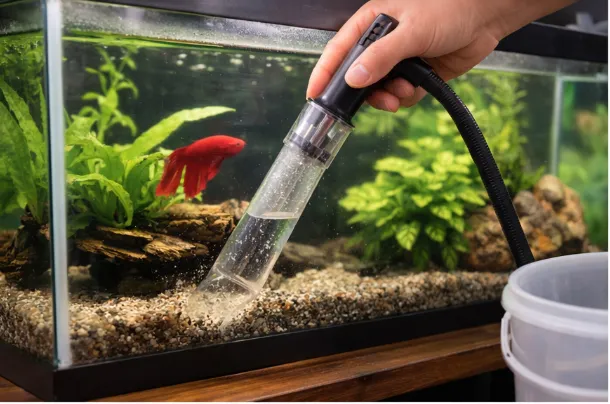
- Vacuuming debris from the substrate
- Managing algae growth
- Maintaining the filter without killing beneficial bacteria
A tank can look clean and still be toxic. What matters is what you cannot see—ammonia, nitrite, and nitrate levels.
Why Bettas React Badly to Poor Water
Betta splendens are resilient fish, but they are not immune to chemistry changes.
Problems appear when:
- Waste accumulates faster than bacteria can process it
- Water changes are too large or too sudden
- Beneficial bacteria are removed during “deep cleans.”
Common symptoms of poor water quality
- Lethargy
- Gasping at the surface
- Clamped fins
- Loss of appetite
These signs often show up before test results look extreme.
Cleaning Frequency by Tank Size
1-Gallon Betta Tanks
These tanks are unstable by nature.
Realistic schedule
- 20–30% water changes every 2–3 days
- No full clean unless ammonia spikes
Small water volume means toxins concentrate fast. Miss a few days, and the tank can turn dangerous.
2.5–3 Gallon Tanks
Slightly more forgiving, still demanding.
Recommended routine
- 20–25% water changes twice per week
- Light gravel vacuum every 2–3 weeks
Avoid cleaning everything at once. Stability matters more than appearance.
5-Gallon Tanks (Minimum Ideal Size)
This is where betta care becomes predictable.
Typical schedule
- 10–20% water change weekly
- Deeper cleaning once per month
Waste dilutes more slowly, bacteria establish better, and mistakes are easier to recover from.
10+ Gallon Tanks
Larger tanks change the game.
Maintenance pattern
- 10–15% water change every 7–10 days
- Monthly or even 6-week deep clean
More water = more margin for error.
Filtered vs Unfiltered Tanks
Filtered Tanks
Filters do two jobs:
- Remove debris
- House beneficial bacteria
Cleaning rules
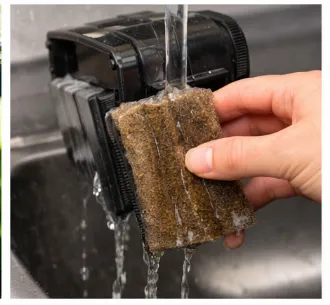
- Never replace all filter media at once
- Rinse media in old tank water only
- Keep flow gentle—bettas hate strong currents
Filtered tanks need less frequent intervention but more consistency.
Unfiltered Tanks
Without a filter:
- Waste stays in the water
- Bacteria have limited surface area
Result: more frequent water changes and smaller margins for error.
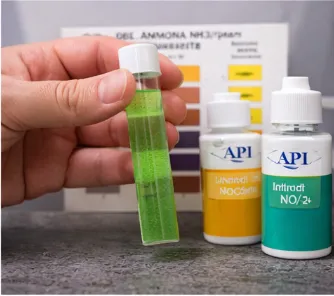
Water Test Numbers That Decide When to Clean
If you want precision, test your water.
Key thresholds
- Ammonia: 0 ppm (anything above 0.25 ppm = action needed)
- Nitrite: 0 ppm
- Nitrate: Keep under 20 ppm
Liquid test kits such as those from API give reliable readings.
If ammonia or nitrite appears, ignore your schedule and clean immediately.
Signs the Tank Needs Cleaning Right Now
Visual Clues
- Cloudy or milky water
- Strong odor
- Heavy algae buildup
- Waste collecting on the bottom
Betta Behavior Changes
- Hiding more than usual
- Hanging at the surface
- Sudden inactivity
- Fin clamping
Behavioral changes are often the earliest warning.
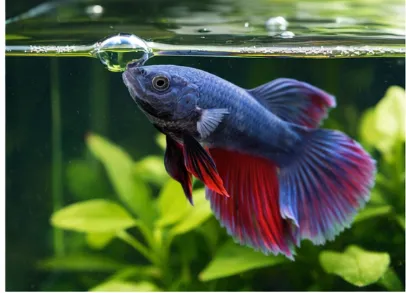
How to Clean a Betta Tank Without Stressing the Fish
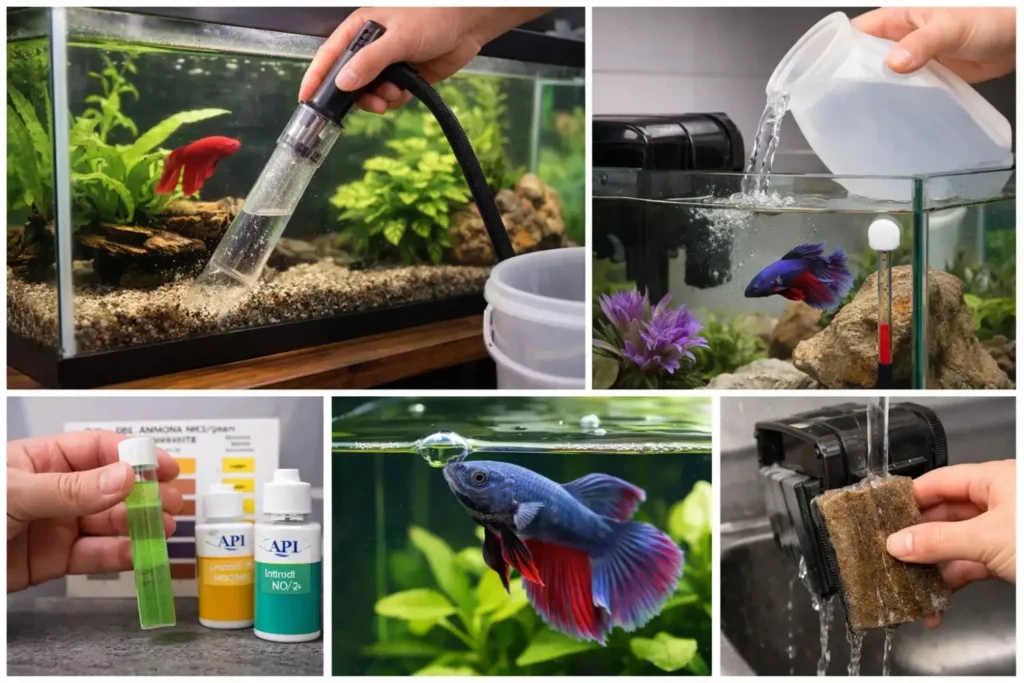
Weekly Partial Water Change
- Remove 10–25% of the water using a siphon
- Lightly vacuum debris (do not dig aggressively)
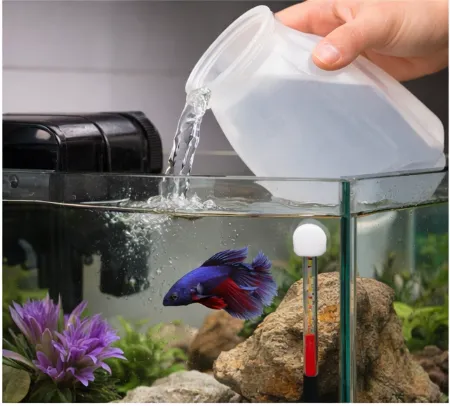
- Add dechlorinated water matched to tank temperature
- Avoid rearranging decor unnecessarily
This keeps chemistry stable while removing waste.
Monthly Deeper Cleaning
- Scrape algae from glass
- Rinse decorations in removed tank water
- Vacuum sections of gravel, not all at once
- Rinse filter media gently in old tank water
Never clean everything in one session.
Emergency Cleaning
Needed when
- Ammonia spikes above 0.5 ppm
- Water smells foul
- Fish shows acute distress
Response
- 25–50% water change
- Repeat daily until parameters stabilize
- Reduce feeding temporarily
Special Situations That Change Cleaning Needs
Planted Betta Tanks
Live plants absorb nitrates and stabilize water.
You may clean slightly less often, but never stop routine maintenance.
Overfeeding
Extra food equals extra waste.
Overfeeding is the fastest way to increase cleaning frequency.
New vs Cycled Tanks
New tanks require closer monitoring and more frequent changes.
Once cycled, maintenance becomes predictable.
Tools That Make Cleaning Easier
- Gravel vacuum sized for your tank
- Dedicated bucket (never used for soap)
- Algae scraper or magnetic cleaner
- Water conditioner
None of these are expensive. All save time and prevent mistakes.
Long-Term Maintenance Strategy
Instead of guessing week to week, think in blocks:
- Weekly: partial water change, visual check
- Monthly: deeper clean, filter inspection
- Every 3 months: reassess feeding, equipment, and stocking
Consistency reduces stress for both fish and owner.
Common Cleaning Mistakes
- Doing full water changes routinely
- Replacing filter media too often
- Cleaning with soap or chemicals
- Cleaning only when water looks dirty
Clear water does not equal safe water.
FAQs: How Often to Clean a Betta Tank
How often should a betta tank be cleaned?
Most betta tanks need a partial water change once per week, but smaller or unfiltered tanks require more frequent cleaning.
Is cleaning the same as changing all the water?
No. Routine cleaning involves partial water changes, not full replacements.
Can a betta live in a dirty tank?
Short term, yes. Long-term, poor water quality leads to illness and reduced lifespan.
How often should I clean a 5-gallon betta tank?
Once per week with a 10–20% water change.
How often should I clean a 1-gallon betta tank?
Every 2–3 days with small partial water changes.
How often should gravel be vacuumed?
Every 2–4 weeks, depending on waste buildup.
Do I need to remove my betta when cleaning?
No. Proper partial water changes can be done with the fish inside.
Can cleaning too often harm a betta?
Yes. Over-cleaning removes beneficial bacteria and destabilizes water chemistry.
Does cloudy water mean I should clean immediately?
Usually yes, especially if accompanied by odor or behavior changes.
Do filters reduce cleaning frequency?
Yes, but they do not eliminate the need for water changes.
Are water test kits necessary?
They are strongly recommended and inexpensive compared to replacing fish.
What ammonia level is dangerous for bettas?
Anything above 0.25 ppm requires immediate action.
Should filter media be replaced during cleaning?
Only partially and infrequently to preserve bacteria.
Do bettas prefer dirty water?
No. This is a myth. They prefer clean, stable water.
Is tap water safe for betta tanks?
Only after dechlorination.
Are betta care recommendations changing?
Yes. Modern care focuses on biological stability, not aggressive cleaning.
Can AI tools help manage tank maintenance?
Emerging tools can track parameters, but manual care remains essential.
Pingback: How to Clean a Betta Tank: 7 Safe Steps for Healthy Water