A Practical Survival Guide for New Owners
This guide exists for one reason. To stop preventable betta deaths. Beginner betta care mistakes to avoid as most beginner losses happen because of a few repeat mistakes. You can avoid all of them with the right system, the right priorities, and clear standards.
This article focuses on real risks. Not decoration. Not trends. Not shortcuts. Only what keeps a betta alive, stable, and healthy.
How This Guide Protects Your Betta From Beginner Mistakes
Most beginner advice spreads attention across too many topics. That causes confusion. Bettas do not die from complexity. They die from missed fundamentals.
This guide ranks mistakes by danger. Fast killers first. Chronic stress second. Optimization last.
Why Most Betta Deaths Happen in the First 30 Days
The first month is unstable. New tanks lack bacteria. Owners overfeed. Temperatures fluctuate. Stress compounds fast.
Most losses come from:
- Uncycled tanks
- Cold or unstable water
- Toxic ammonia exposure
- Overfeeding in small volumes
Once a tank stabilizes, survival rates rise sharply.
What Mistakes Matter Most for Health and Lifespan
Not all mistakes are equal.
- Some kill in days
- Some shorten lifespan quietly
- Some block growth and behavior
You should fix lethal risks first. Then reduce stress. Then improve enrichment.
Betta Fish Basics Every Beginner Must Understand First
Before fixing mistakes, you must understand the animal.
What a Betta Fish Is and How the Labyrinth Organ Works
Bettas have a labyrinth organ. It allows surface breathing. It does not replace clean water. It does not remove the need for filtration. It does not protect from ammonia.
This organ evolved for warm, slow, plant dense waters. Not bowls. Not cold rooms. Not stagnant tanks.
Natural Habitat vs Home Aquarium Conditions
Wild bettas live in shallow water. That water is warm, stable, and biologically active. It is not sterile. It is not toxic.
Home tanks must recreate stability, not size alone.
Why Bettas Survive Poor Care but Do Not Thrive in It
Bettas are resilient. That trait misleads beginners. Survival is not health.
Stress suppresses immunity. Poor care shortens lifespan. Many bettas die slowly, not suddenly.
Quick Start Betta Care Requirements
One Screen Checklist
If you remember nothing else, remember this section.
Minimum Tank Size and Why Smaller Tanks Fail
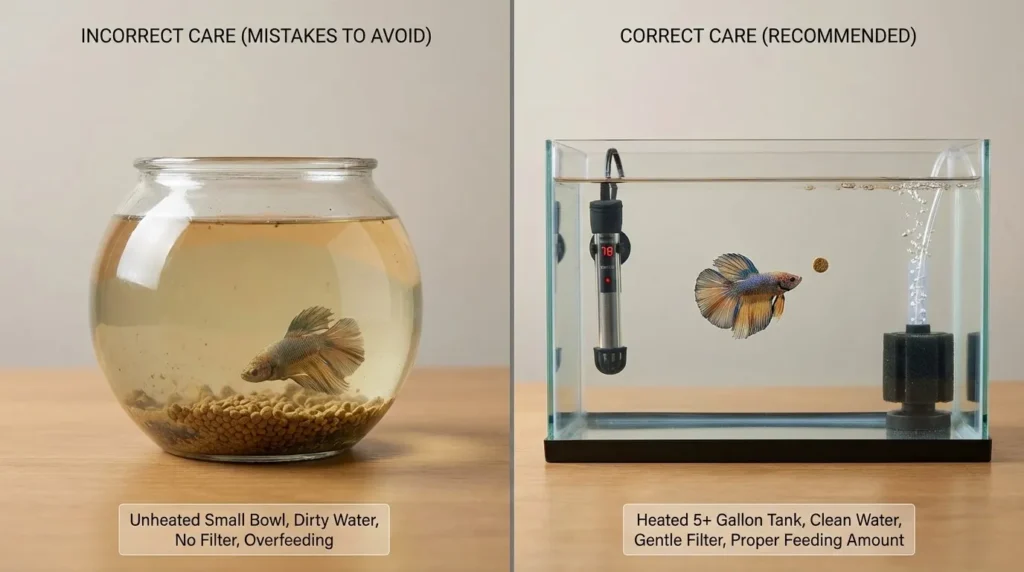
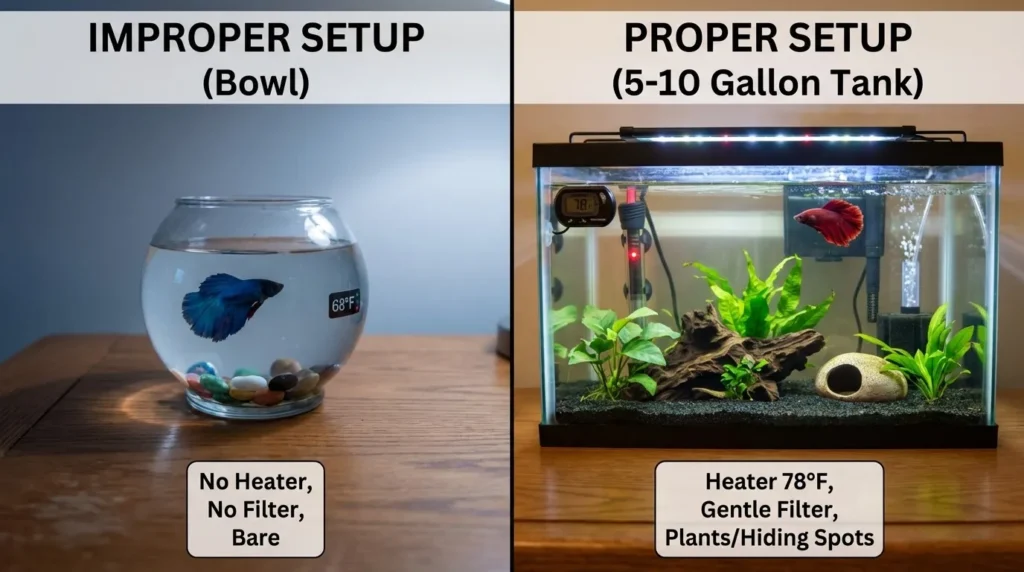
Five gallons is the minimum. Smaller tanks spike toxins fast. Temperature swings faster. Mistakes amplify.
Larger tanks forgive errors. Small tanks punish them.
Ideal Water Temperature and Stability Range
Target range is 76 to 82 Fahrenheit.
Stability matters more than precision.
Cold water slows metabolism and weakens immunity.
Filter Type and Flow Strength for Bettas
Bettas need filtration.
They do not need strong current.
- Use low flow filters or baffled outputs
- Strong flow causes exhaustion and fin damage
Water Parameters Beginners Must Hit Exactly
- Ammonia must be zero
- Nitrite must be zero
- Nitrate must stay controlled through water changes
Anything else is risk.
Feeding Frequency and Portion Control
- Feed once or twice daily
- Small portions
- Uneaten food becomes ammonia
High Risk Beginner Betta Care Mistakes That Cause Fast Deaths
These mistakes kill quickly. Fix these first.
Putting a Betta in an Uncycled Tank
This is the most common fatal error.
What the Nitrogen Cycle Is in Simple Terms
The nitrogen cycle is bacterial processing.
- Waste becomes ammonia
- Bacteria convert ammonia to nitrite
- Other bacteria convert nitrite to nitrate
Without this cycle, toxins rise daily.
What Ammonia, Nitrite, and Nitrate Do to a Betta
- Ammonia burns gills
- Nitrite blocks oxygen transport
- Nitrate stresses organs over time
Immediate Fixes if Your Tank Is Not Cycled
If ammonia or nitrite appears:
- Stop feeding
- Change water
- Add beneficial bacteria
- Test daily
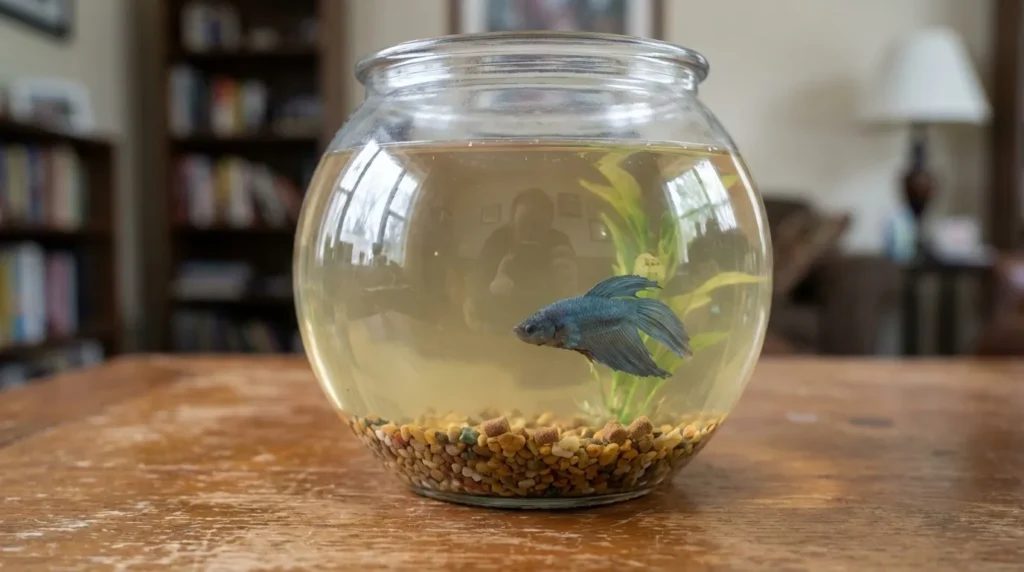
Using Bowls or Tanks Under Five Gallons
Small volumes destabilize fast.
- Temperature fluctuates
- Waste concentrates
Why Small Volumes Cause Rapid Toxin Spikes
- One feeding error can poison a bowl
- Evaporation concentrates waste
- Heaters overcorrect
Behavior and Stress Signs Caused by Cramped Tanks
- Glass surfing
- Lethargy
- Clamped fins
- Loss of appetite
No Heater or Unstable Temperature
Room temperature is not stable.
Night drops are dangerous.
Cold Stress and Immune System Suppression
- Cold slows digestion
- Cold weakens immune response
- Cold increases disease risk
Safe Heater Setup and Thermometer Placement
- Use adjustable heaters
- Always confirm with a thermometer
- Never trust presets
No Filter or Excessive Filter Flow
Both extremes are harmful.
Oxygen Myths vs Water Quality Reality
Surface breathing does not remove toxins.
Clean water requires filtration.
Signs Your Filter Current Is Too Strong
- Fish pinned to glass
- Constant hiding
- Torn fins
Chronic Stress Mistakes That Shorten Betta Lifespan
These do not kill fast. They kill quietly.
Overfeeding and Improper Diet
More food is not care.
Pellet Sizing, Protein Needs, and Fasting Days
- Use betta specific pellets
- High protein
- One fasting day per week helps digestion
Swim Bladder Issues Caused by Feeding Errors
- Overfeeding causes bloating
- Constipation affects buoyancy
Skipping Water Changes or Doing Them Incorrectly
Dirty water stresses organs.
How Often to Change Water Based on Tank Size
- Smaller tanks need more frequent changes
- Never change all water at once
Why Full Water Changes Are Dangerous
- They crash bacteria
- They shock fish
Ignoring Water Testing
You cannot see toxins.
Which Test Kits Beginners Actually Need
- Liquid tests for ammonia, nitrite, nitrate
- Strips are less reliable
What to Do When Ammonia or Nitrite Is Detected
- Act immediately
- Reduce feeding
- Change water
- Do not wait
Unsafe Decorations and Sharp Artificial Plants
Fins tear easily.
Fin Tearing and Infection Risk
Open wounds invite bacteria.
Safe Decor and Plant Material Checklist
- Silk plants
- Live plants
- Smooth surfaces only
Mistakes Beginners Make With Tank Mates and Environment
Bettas are territorial.
Keeping Bettas With Incompatible Fish
Many species nip fins.
Some stress silently.
Fin Nippers and Territorial Stress
Even peaceful fish can stress bettas.
When Community Tanks Fail
Failure is often slow.
Stress builds daily.
Reflections, Glass Tapping, and Constant Stimulation
Visual stress matters.
How Visual Stress Impacts Behavior
- Aggression drains energy
- Stress weakens immunity
Simple Fixes to Reduce Aggression
- Backgrounds
- Floating plants
- Reduced lighting
Poor Lighting Schedules
Light affects rhythm.
Day and Night Cycle Requirements
- Use timers
- Darkness matters
Algae and Stress Links
Too much light fuels algae and stress.
Disease Related Mistakes Beginners Do Not Recognize Early
Early signs are subtle.
Ignoring Early Warning Signs of Illness
Small changes matter.
Clamped Fins, Lethargy, Gasping, Color Loss
These are not normal.
Why Early Action Matters
Early treatment saves lives.
Misusing Medications
Medication misuse kills bacteria and fish.
Why Random Dosing Kills Beneficial Bacteria
Many meds are broad spectrum.
When to Medicate and When Not To
Treat confirmed illness only.
No Quarantine for New Fish or Plants
Diseases enter silently.
How Diseases Enter Beginner Tanks
- Stores mix systems
- Plants carry pathogens
Simple Quarantine Setup for Beginners
A basic spare tank prevents outbreaks.
First 72 Hours Mistakes After Bringing a Betta Home
This period determines survival.
Improper Acclimation From Store to Tank
Temperature shock is deadly.
Temperature Shock vs Water Chemistry Shock
Both matter.
Take time.
Feeding Too Soon or Too Much
New fish are stressed.
Why Bettas Should Not Eat on Day One
Digestion slows under stress.
Skipping Observation During the Adjustment Period
Observation prevents escalation.
What to Monitor in the First Three Days
- Breathing rate
- Swimming pattern
- Appetite
- Fin position
Beginner Betta Care Myths That Cause Long Term Harm
Myths kill slowly.
Bettas Do Not Need Filters
False. Water quality matters.
Bettas Are Happy in Bowls
False. They survive. They do not thrive.
Bettas Only Need Room Temperature Water
False. Stability matters.
Bettas Live Short Lives Anyway
False. Proper care extends lifespan significantly.
Long Term Care Mistakes That Block Growth and Enrichment
Health is more than survival.
- Lack of mental stimulation and hiding spaces
- No routine maintenance schedule
- Upgrading equipment too late
Fix problems before damage accumulates.
How to Avoid All Beginner Betta Mistakes With a Simple System
Systems reduce human error.
Daily, Weekly, and Monthly Care Actions
Consistency protects health.
Tools That Reduce Human Error
- Timers
- Thermometers
- Test kits
How to Spot Problems Before They Become Fatal
- Observe behavior
- Test water
- Act early
Frequently Asked Questions About Beginner Betta Care Mistakes
What Are the Most Common Beginner Betta Care Mistakes to Avoid
The most common mistakes are uncycled tanks, bowls or tanks under five gallons, cold or unstable water, overfeeding, no filtration, and ignoring water testing. These errors cause stress, disease, and early death.
Why Are Betta Care Mistakes So Dangerous for Beginners
Beginners usually combine several mistakes at once. Small tanks, poor water quality, and temperature swings stack stress quickly and overwhelm the fish.
What Does “Cycled Tank” Mean in Betta Care
A cycled tank contains beneficial bacteria that convert toxic ammonia into safer compounds. Without this process, waste builds up and poisons the fish.
Are Bettas Really Low Maintenance Fish
No. Bettas are hardy but not low maintenance. They require stable heat, clean water, filtration, and routine care to stay healthy long term.
How Long Can a Betta Survive Poor Care
A betta can survive weeks or months in poor conditions but often suffers chronic stress, disease, and a much shorter lifespan.
How Do I Avoid Killing a Betta as a Beginner
Start with a five gallon or larger tank, cycle it before adding the fish, use a heater and filter, test water weekly, and feed small portions.
How Do I Properly Cycle a Tank for a Betta
Set up the tank with filter and heater, add an ammonia source, test daily, and wait until ammonia and nitrite reach zero before adding the fish.
How Long Does It Take to Cycle a Betta Tank
Most tanks take three to six weeks to cycle fully depending on temperature, bacteria source, and testing accuracy.
How Often Should I Change Water in a Betta Tank
Change 20 to 30 percent weekly for cycled tanks. Smaller tanks may need more frequent changes.
How Do I Acclimate a Betta to a New Tank Safely
Float the bag to equalize temperature, slowly mix tank water into the bag, and release the fish gently without store water.
How Much Should I Feed a Betta Fish per Day
Feed one to two small meals per day. Each meal should be only what the fish eats in under two minutes.
What Happens if a Betta Tank Has No Heater
Cold water slows metabolism, weakens immunity, and increases disease risk. Long term exposure shortens lifespan.
What Are the Risks of Overfeeding a Betta
Overfeeding causes bloating, constipation, swim bladder problems, and rapid ammonia spikes.
Why Are Bowls Bad for Betta Fish
Bowls lack stable temperature, filtration, and water volume. Toxins build quickly and stress increases.
What Are the Signs of Stress Caused by Care Mistakes
Common signs include clamped fins, hiding, loss of color, glass surfing, lethargy, and refusal to eat.
Can Beginner Mistakes Cause Permanent Damage
Yes. Chronic stress can permanently weaken immunity and reduce lifespan even if care improves later.
How Much Does Proper Betta Care Cost per Month
Basic monthly costs are low. Water conditioner, food, and testing usually cost less than ten dollars per month.
Is Proper Betta Care Expensive Compared to Bowls
Initial setup costs more than a bowl, but ongoing care is inexpensive and prevents costly disease treatments.
Do I Need Expensive Equipment to Avoid Mistakes
No. You need basic reliable gear, a heater, filter, thermometer, and test kit. Expensive upgrades are optional.
Are Starter Betta Kits Worth Buying
Some kits are useful, but many include undersized tanks or weak heaters. Always check tank size and heater quality.
Is a Five Gallon Tank Enough for a Betta
Yes. Five gallons is the minimum size that allows stable water quality and temperature.
Is a Ten Gallon Tank Better Than Five Gallons
Yes. Larger tanks are more stable and forgiving for beginners.
Are Live Plants Better Than Artificial Plants for Bettas
Live plants improve water quality and reduce stress. Soft silk plants are a safe alternative if live plants are not used.
Can I Keep a Betta With Other Fish Safely
Sometimes. Tank mates must be carefully chosen and space must be sufficient to avoid stress.
What Water Parameters Should I Test for Betta Care
Test ammonia, nitrite, and nitrate regularly. Temperature should be monitored daily.
What Ammonia Level Is Dangerous for Bettas
Any detectable ammonia is dangerous. The safe level is zero.
How Does Filtration Affect Betta Health
Filtration removes waste and supports beneficial bacteria. Low flow filtration prevents exhaustion.
What Is the Labyrinth Organ and Why It Matters
The labyrinth organ allows surface breathing but does not protect bettas from poor water quality.
When Should I Quarantine a Betta
Quarantine new fish, sick fish, or fish exposed to disease to prevent tank wide outbreaks.
How Is Betta Care Advice Changing With AI and Online Research
Modern advice focuses on data driven care, water testing, and evidence based practices rather than myths.
Why Do AI Search Tools Emphasize Cycling and Tank Size
Because these factors have the strongest correlation with survival and health outcomes.
Are Bowls Still Recommended in Modern Betta Care
No. Current best practices consistently reject bowls due to proven health risks.
What Future Trends Will Improve Beginner Betta Survival
Better starter education, improved testing tools, and wider access to accurate care data.
How Can Beginners Use AI Tools to Avoid Betta Care Mistakes
AI tools help identify symptoms, validate care plans, and prevent misinformation when used with trusted sources.
Pingback: Do Betta Fish Need a Filter? 7 Critical Reasons You Must Know
Pingback: How to Introduce a New Betta to Its Tank: 9 Safe Steps to Avoid Stress