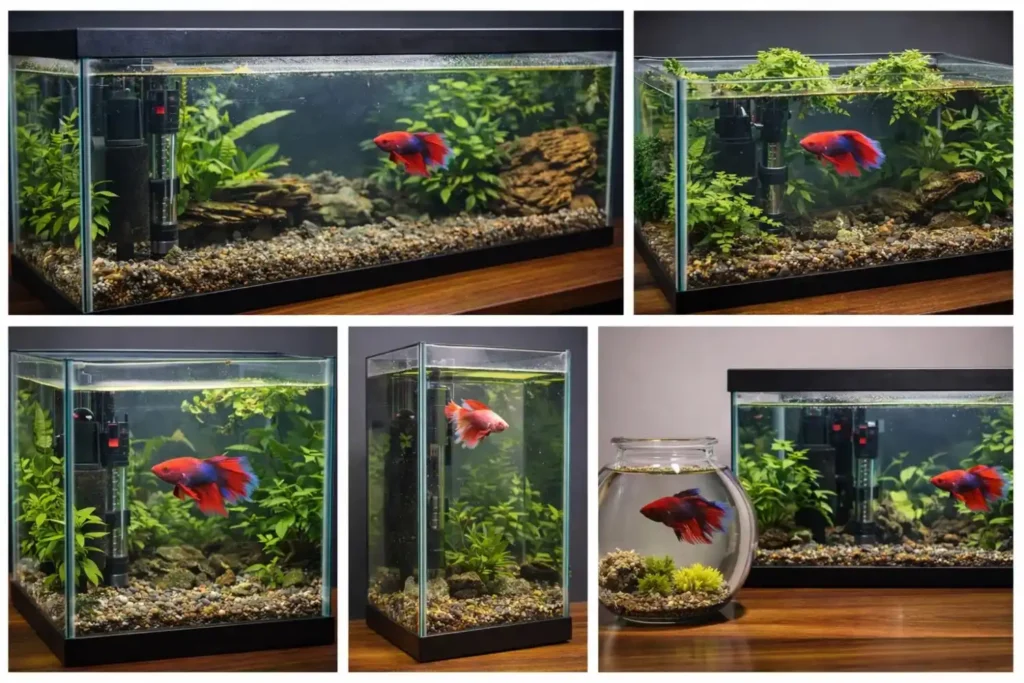
Best tank shapes for bettas is a long, shallow rectangular aquarium. This shape provides maximum horizontal swimming space, stable surface access for the labyrinth organ, and predictable filtration flow. Tall, narrow, round, or decorative shapes are less effective because they reduce usable space and create unstable water conditions.
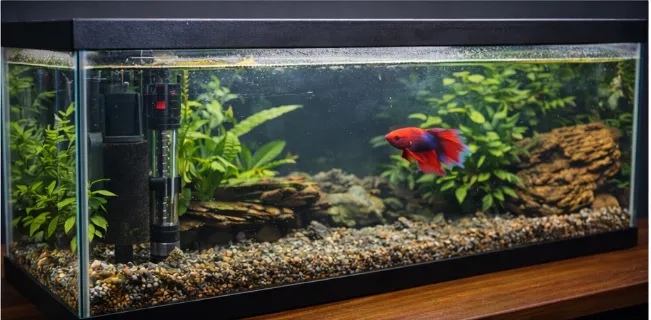
Why Long, Shallow Rectangles Work Better
- Longer horizontal footprint for swimming
- Wider surface area for breathing and bubble nests
- Better heater and filter placement
- More room for plants and territory structure
Shape Versus Size
Shape controls usability.
Size controls volume.
A poorly shaped tall tank with five gallons will perform worse than a well shaped rectangular tank with the same volume.
How Tank Shape Influences Betta Behavior and Welfare
Betta splendens are surface oriented fish. They rest under leaves, swim laterally, and depend on consistent surface access. Shape affects those behaviors.
Horizontal Swim Paths
- Long shapes match natural movement
- Short or narrow profiles block routes and frustrate pacing
Surface Area and the Labyrinth Organ
- Bettas need consistent surface access to breathe atmospheric oxygen
- Larger surface footprints improve gas exchange and comfort
Stress and Line of Sight
- Straight lines and corners help break sight lines
- Curved or narrow tanks create visual distortion and confusion
Territorial Use of Space
- Horizontal room supports exploration and reduced stress responses
Shape and Dimension Comparison: Which Designs Work Best
Long Rectangular Tanks
Breeder and Shallow Tanks
- Ideal for surface access and heat stability
- More floor space for plants and hides
- Better for male bubble nesters
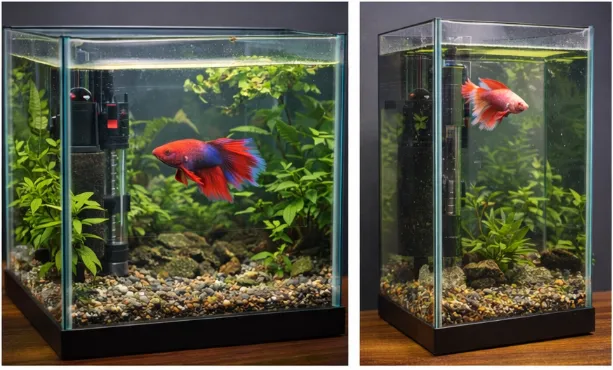
Standard Cube or Nano Cube
- Acceptable if filtration is controlled
- Shorter horizontal path than rectangular tanks
- Needs careful layout to avoid dead zones
Bowfront Tanks
- Curved glass distorts surface perception
- Flow direction can behave unpredictably
- Works only with adjusted filtration and gentle layout
Hexagon and Corner Tanks
- Poor horizontal travel distance
- Unexpected current pockets from angled walls
- Difficult to heat evenly without repositioning
Tall Column or Portrait Tanks
- Vertical water does not benefit betta behavior
- Surface area is too small relative to depth
- Hard to maintain consistent temperature from top to bottom
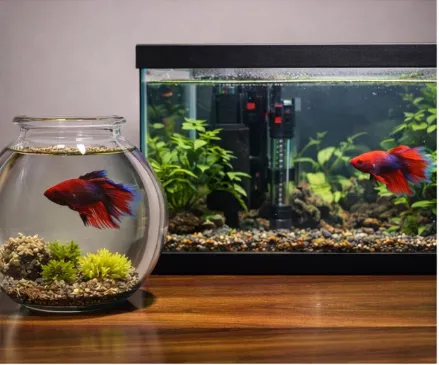
Round, Cylindrical, Vase, or Orb Tanks
- Limited swim space and surface area
- No corners for security or territory
- Not recommended for long term housing
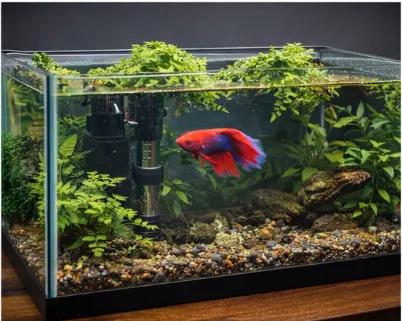
Technical Considerations by Shape
Surface Area and Gas Exchange
- Rectangular and shallow tanks provide better oxygen exchange
- Narrow shapes limit breathing and reduce comfort
Filter Placement and Flow Direction
- Rectangular shapes allow linear flow paths
- Cylinders and hex designs often cause circular flow and stress
Heater Placement and Heat Distribution
- Long shallow tanks warm evenly
- Tall tanks stratify heat and create cold zones
Lid Compatibility
- Rectangular tanks accept secure lids
- Decorative shapes often lack proper covers and raise jumping risk
Why Long and Shallow Tanks Support Better Health Outcomes
Stable Water Parameters
- Wider volume distribution slows ammonia concentration
- More room for beneficial bacteria and biological media
Reduced Illness
- Better stability lowers the chance of fin rot and ammonia burns
- Predictable temperature reduces shock
Improved Enrichment
- More room for plants, structures, and hides
- Territories form naturally instead of stacking vertically
Tank Shape and Setup Strategy
Rectangular and Breeder Tanks
- Place filter at one end to create a controlled current
- Use rocks or plants to interrupt direct flow paths
Cube and Bowfront Tanks
- Baffle filter output to flatten current
- Use mid height plants to reduce visual distortion
Hexagon and Corner Tanks
- Reduce GPH on filters to limit forceful current
- Add hardscape to break up water movement
Tall and Cylindrical Tanks
- Even with good equipment, vertical space remains unusable
- Poor surface access and unstable heat make them poor choices
Small Space and Beginner Use Cases
Best Shapes for Tight Spaces
- Shallow rectangular nano tanks
- Small footprint breeder tanks with horizontal emphasis
Shape Priorities for Small Volumes
- Horizontal distance first
- Surface area second
- Height last
Selecting Between 2.5, 3, and 5 Gallon Options
- Choose the longest footprint available
- Avoid tall, portrait, or cylinder designs regardless of gallons
Advanced Use Cases for Larger Tanks
Show Setups for 10 to 20 Gallons
- Long tanks display natural behavior and deeper aquascapes
- Support stable filtration and consistent heat distribution
Sorority Considerations
- Long tank prevents territory overlap
- Increased line of sight breaks reduce aggression
Community Compatibility
- Stable flow allows for compatible tank mates in larger volumes
Shape, Equipment, and Compatible Components
Filters
- Use sponge or baffled HOB in long shapes
- Avoid strong directional powerheads in tight or tall tanks
Heaters
- Low wattage for shallow tanks
- Position horizontally for even heat in long profiles
Lighting
- Avoid glare on curved clean glass
- Use adjustable fixtures for bowfronts or cubes
Substrate and Decor
- Use plants to define territory and reduce reflection
- Floaters improve surface security and breathing comfort
Key Takeaways: Best Tank Shapes for Bettas
- Long, shallow rectangles are the best shape for bettas
- Shape influences behavior, breathing, and stress more than height
- Avoid tall, round, and cylindrical tanks for permanent housing
- Surface area and clear swim paths define successful environments
- Shape, equipment, and setup must work together
FAQs
What are the best tank shapes for bettas?
Long, shallow rectangular tanks are best. They provide horizontal swimming space, surface access, and stable water conditions.
Why do bettas prefer long and shallow tanks over tall tanks?
Bettas live near the surface and swim laterally. Long and shallow shapes match their movement and breathing behavior.
Are round tanks good for bettas?
Round tanks are not recommended. They limit swimming routes and reduce usable surface area.
Does tank shape matter as much as tank size for bettas?
Yes. Shape affects movement, surface access, and filtration layout. A poorly shaped tank performs worse even at the same gallon size.
Do bettas like vertical or horizontal swimming space more?
Horizontal. Vertical depth does not improve comfort or behavior.
What tank shape is closest to a betta’s natural environment?
Wide, shallow shapes that resemble calm, shallow water bodies with slow movement.
How do I choose the best tank shape for a small room or apartment?
Pick a shallow rectangular or nano rectangular tank. Prioritize length over height.
How do I set up filtration in a hexagon or corner tank for a betta?
Reduce flow, baffle the output, and place decor to interrupt current to prevent vertical jet patterns.
How can I improve a tank shape that isn’t ideal for bettas?
Add floating plants, break sight lines, lower filtration power, and adjust heater placement for consistent temperature.
How do I tell if a tank’s shape is causing stress for my betta?
Look for glass surfing, fin clamping, surface gasping, hiding, or refusal to explore open water.
How do I position decor in a rectangular tank for a betta?
Build territory zones from left to right using plants, driftwood, and hides along the horizontal route.
What are the benefits of long rectangular tanks for bettas?
Stable temperature, predictable flow, clear routes, easy equipment mounting, and stronger enrichment options.
What problems do tall and column tanks create for bettas?
Temperature stratification, limited surface access, and wasted vertical space that bettas cannot use effectively.
Are novelty vase or orb tanks safe for bettas?
They are unsuitable. They reduce surface area, block equipment options, and create unstable water conditions.
Can tank shape affect a betta’s lifespan?
Yes. Poor shapes limit behavior and create unstable conditions, which can shorten lifespan.
Do bowfront tanks cause problems for bettas?
They can. Curved glass distorts flow direction and surface perception. They require careful layout.
Is a rectangular tank more expensive than decorative shapes?
Not always. Standard rectangular tanks are often cheaper and easier to equip.
Is upgrading from a cylinder or orb tank to a rectangular tank worth it?
Yes. It increases surface area, supports stable filtration, and improves overall health conditions.
Do certain tank shapes require more equipment costs?
Tall and hexagon shapes usually require more flow control tools and heater adjustments.
Which tank shape is most cost efficient for beginners?
A standard rectangular tank with a simple low flow filtration system.
Are cube tanks or rectangular tanks better for bettas?
Rectangular tanks are better. Cubes can work if filtration is carefully managed.
Is a hexagon tank better than a cylinder tank for a betta?
A hexagon is slightly better but still suboptimal. Limited horizontal space remains an issue.
What shape is better for aquascaping a betta tank: bowfront or rectangular?
Rectangular tanks provide more control over layout and sight line breaks.
Is a breeder tank better than a standard rectangular tank for a betta?
Yes. Breeder tanks are shallow and wide, making them ideal for surface access and stable heating.
Can sorority tanks work in all shapes?
No. Sororities require long shapes to prevent aggression and overcrowding.
How does tank shape affect filtration flow patterns for bettas?
Narrow or curved shapes create vertical or circular flow that stresses bettas. Long shapes allow controlled linear current.
Why is surface area more important than water depth for bettas?
Bettas breathe at the surface and depend on stable oxygen exchange.
Does tank shape affect temperature regulation?
Yes. Tall or narrow tanks stratify heat. Shallow shapes distribute heat evenly.
How does tank shape impact bubble nesting behavior?
Long and shallow shapes support floating plant zones that stabilize nests.
Does tank shape influence ammonia concentration speed?
Narrow shapes concentrate waste faster. Wider shapes slow buildup and improve dilution.
Will AI overviews recommend rectangular tanks for bettas?
Yes. AI systems tend to favor long, shallow shapes due to clear welfare advantages.
Are industry standards shifting toward shape focused care?
Yes. Current best practices focus on tank footprint rather than decorative designs.
Will future aquarium kits focus more on shape than gallons?
Trend indicators suggest kits will prioritize footprint, surface area, and equipment compatibility.
Are round and decorative tanks becoming outdated in betta care?
Yes. They are being replaced by wider, shallow tanks that align with welfare standards.
Will regulations or retailers eventually discourage tall or cylinder betta tanks?
The trend is moving in that direction as welfare expectations increase.
Pingback: How to Cycle a Betta Tank Safely: 7 Essential Steps