Complete Identification, Genetics, and Care Guide
Betta fish are among the most visually diverse aquarium fish in the world. Selective breeding over decades has produced hundreds of recognized types, colors, and patterns. This guide explains betta fish types and colors in a clear, structured way so you can identify them accurately, understand the genetics behind them, and choose the right betta for your experience level and setup.
What Is a Betta Fish
Betta splendens overview
Betta splendens, commonly called the Siamese fighting fish, is a freshwater species native to Southeast Asia. It belongs to the Osphronemidae family and has a labyrinth organ that allows it to breathe atmospheric oxygen. This trait explains why bettas tolerate low oxygen environments better than many fish.
Natural habitat and origin
Wild bettas originate from Thailand, Cambodia, Laos, and Vietnam. They inhabit shallow rice paddies, floodplains, and slow moving streams. Wild environments shape their behavior, including territorial instincts and surface breathing.
Why betta fish show extreme variation in types and colors
Most bettas sold today are domesticated lines. Breeders select for tail shape, color intensity, and pattern stability. Over time, this selection created dramatic differences in appearance that do not exist in wild populations.
How Betta Fish Are Classified
Classification by tail and fin type
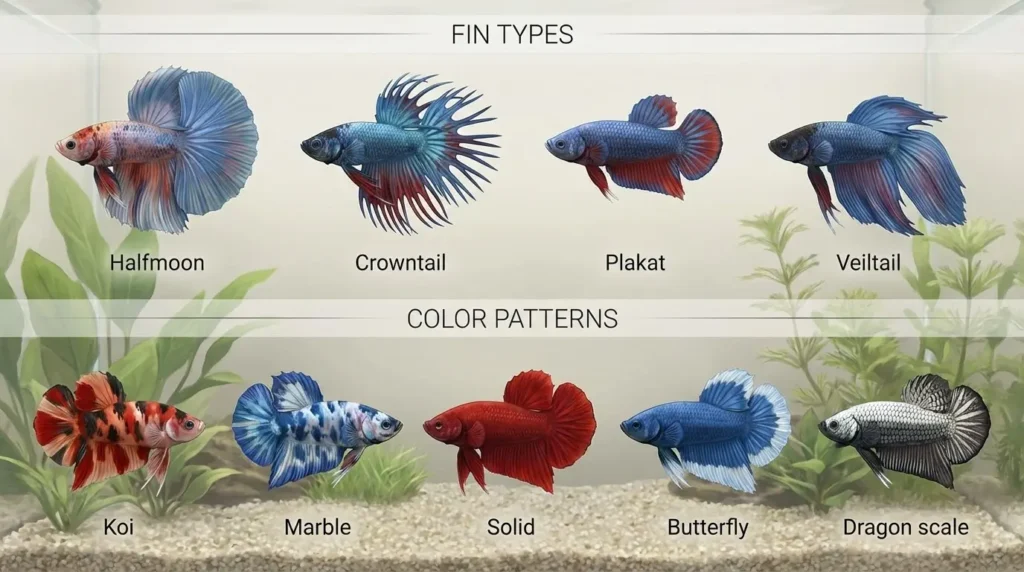
Tail and fin shape is the primary way betta fish are classified. These traits are highly visible and genetically consistent. They also affect swimming ability, energy use, and health risks.
Classification by color and pattern
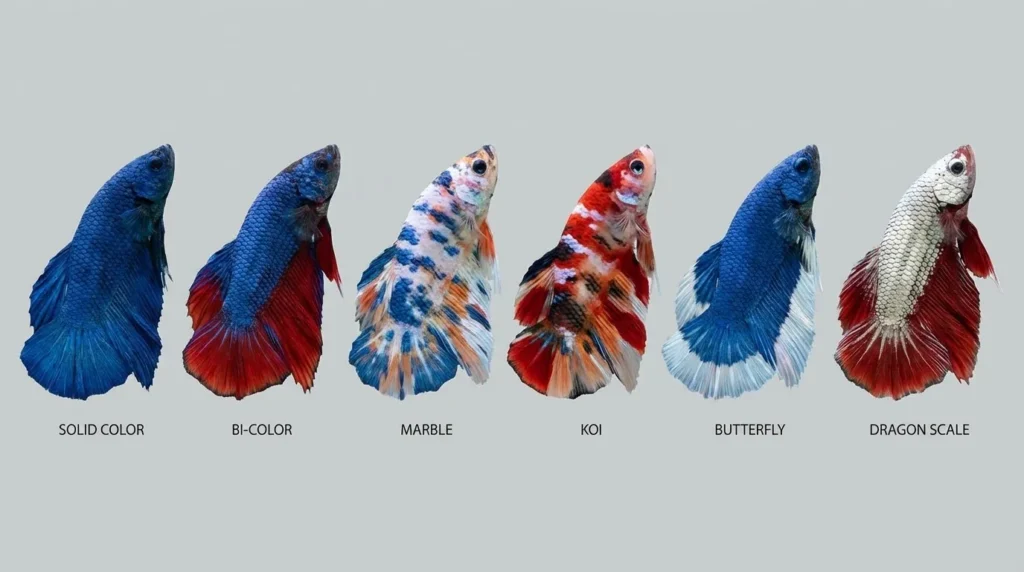
Color refers to the base pigmentation, such as red or blue. Pattern describes how colors distribute across the body and fins, such as butterfly or marble.
Classification by body size and genetics
Some bettas grow significantly larger due to selective breeding. Others express unique genetic traits like iridescence or scale thickening.
International Betta Congress standards and naming conventions
The International Betta Congress, commonly called IBC, defines official standards for show bettas. These standards influence how breeders name and categorize betta fish worldwide.
Betta Fish Types by Tail and Fin Shape
Veiltail betta
Veiltails have long, downward flowing tails. They are the most common pet store betta. They are affordable and adaptable but less symmetrical than show types.
Halfmoon betta
Halfmoon bettas display a tail that opens to a 180 degree spread. They are popular for their balanced shape and visual impact. Their fins require gentle water flow to prevent damage.
Halfmoon double tail betta
This type has a split caudal fin and a broader body. Double tail genetics increase finnage but can also raise the risk of spinal deformities if poorly bred.
Crowntail betta
Crowntails have spiked fin rays with reduced webbing. This structure reduces fin mass and improves swimming compared to heavy finned types.
Combtail betta
Combtails are intermediate forms between veiltail and crowntail. They show partial ray extension without full spikes.
Plakat betta
Plakats have short fins similar to wild bettas. They are strong swimmers and often more active. Plakats are preferred for community style setups where appropriate.
Giant betta
Giant bettas grow significantly larger than standard bettas, sometimes exceeding seven centimeters. They require more space and higher food intake.
Rosetail and feathertail betta
These types have excessive branching that creates a ruffled appearance. While visually striking, extreme finnage can impair swimming and increase fin damage risk.
Dumbo or elephant ear betta
Dumbo bettas have enlarged pectoral fins. This trait is cosmetic and does not affect tail classification.
Alien betta and hybrid lines
Alien bettas result from crossing domestic bettas with wild species. They show metallic colors and unique patterns. Their behavior can differ from standard Betta splendens.
Betta Fish Colors Explained
Single color bettas
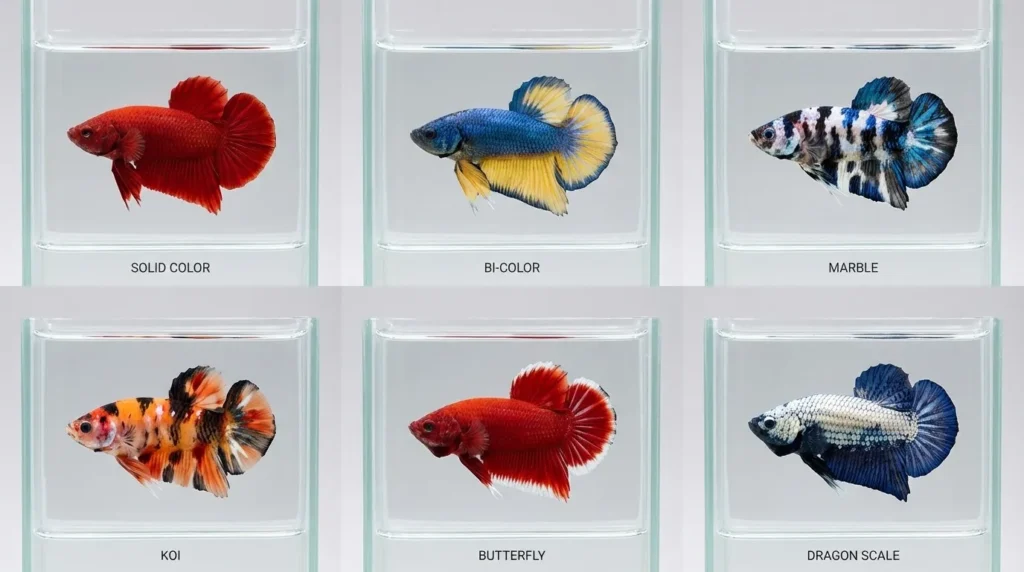
Single color bettas display one dominant color across body and fins. Common examples include red, blue, black, and yellow.
Bi color and multicolor bettas
Bi color bettas show one color on the body and another on the fins. Multicolor bettas display three or more distinct colors.
Metallic and iridescent colors
Metallic bettas reflect light due to specialized scale structure. Iridescence often appears as blue or green sheen over a darker base.
Pastel and opaque color forms
Pastel bettas have soft, diluted colors. Opaque bettas show dense pigmentation that blocks underlying hues.
Rare and unstable color traits
Some colors, such as cellophane or copper, are genetically unstable. These bettas may change appearance as they age.
Betta Fish Patterns and Markings
Butterfly pattern
Butterfly bettas have fins with a solid base color and clear or contrasting edges. Symmetry is valued in show standards.
Marble pattern
Marble bettas change color over time due to the marble gene. No two marble bettas age the same way.
Koi pattern
Koi bettas resemble ornamental koi fish. They display patchy red, white, and black patterns, often on a light body.
Dragon scale pattern
Dragon scale bettas have thick, opaque scales over a metallic base. While visually striking, heavy scaling can impair vision if it covers the eyes.
Mask and full mask bettas
Masked bettas have facial coloration that matches the body. Full mask is often seen in metallic and dragon lines.
Cambodian and cellophane patterns
Cambodian bettas have pale bodies with darker fins. Cellophane bettas are nearly transparent and often used in breeding projects.
Betta Fish Genetics Made Simple
Basic betta color genetics
Betta coloration depends on layers of pigment cells called chromatophores. These include red, black, yellow, and iridescent layers.
Dominant and recessive traits
Some traits, such as red coloration, are dominant. Others, like certain metallic traits, may require specific pairings to express.
The marble gene and color changes over time
The marble gene causes pigment cells to switch on and off unpredictably. This explains why marble and koi bettas often change color.
Genetics behind dragon scale and metallic bettas
Dragon scale results from a mutation that thickens scales. Metallic bettas carry genes that enhance light reflection across the body.
Why some betta colors fade or shift
Color loss can result from genetics, stress, age, or poor nutrition. Stable lines retain color longer under proper care.
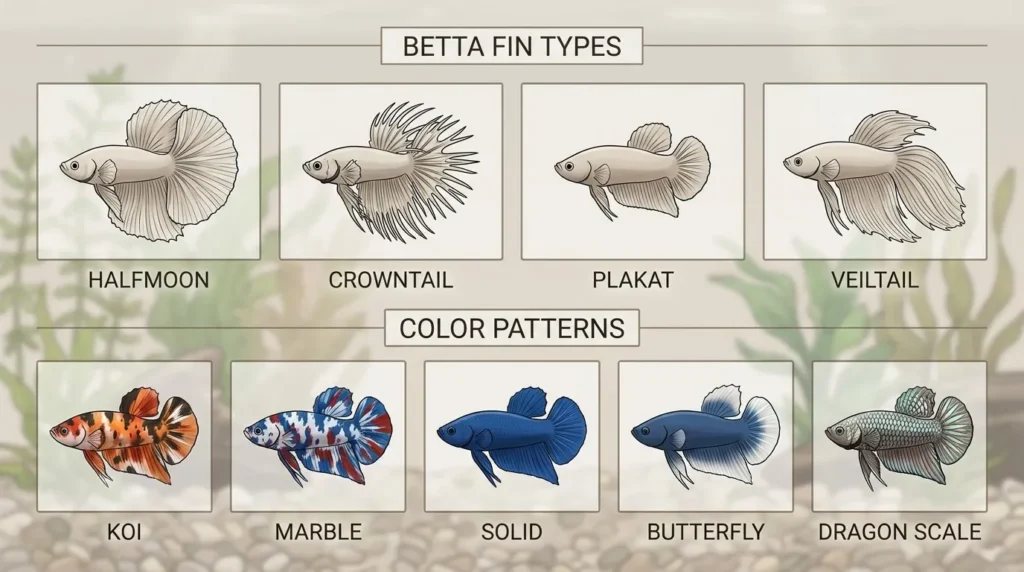
Visual Identification Guide for Betta Fish
How to identify a betta by tail type
Tail shape is best observed when the fish flares or swims calmly. Look for symmetry, ray structure, and fin length relative to body size.
How to identify a betta by color and pattern
Identify the base body color first. Then observe fin coloration and pattern consistency across both sides.
Common misidentifications in pet stores
Pet stores often label all long fin bettas as halfmoon. Many are veiltails or combtails. True halfmoons meet strict tail spread criteria.
Temperament Differences by Betta Type
Aggression levels by tail and body type
Short fin plakats tend to be more active and assertive. Long fin bettas are often calmer due to limited swimming speed.
Plakat vs long finned bettas
Plakats are better jumpers and require secure lids. Long fin bettas need calmer environments to avoid exhaustion.
Male vs female behavior differences
Male bettas are more territorial. Female bettas may coexist in controlled groups, but aggression still varies by individual.
Care Requirements by Betta Type
Tank size recommendations by betta type
Standard bettas thrive in tanks of at least five gallons. Giants benefit from larger volumes due to size and waste output.
Water flow and fin health considerations
High flow damages long fins. Sponge filters or baffled filters work best for ornate fin types.
Feeding needs and growth differences
High protein diets support color and fin growth. Overfeeding increases bloating risk, especially in long fin bettas.
Common health risks linked to specific types
Long fin bettas face higher risk of fin rot. Dragon scale bettas may develop scale overgrowth near the eyes.
Which Betta Fish Types Are Best for Beginners
Hardiest betta types
Plakat bettas and standard veiltails adapt well to varied conditions.
Easiest colors and patterns to maintain
Solid colors tend to remain stable longer than marble or koi patterns.
Types to avoid for first time owners
Rosetail, feathertail, and heavy dragon scale bettas require advanced care and monitoring.
Buying Betta Fish by Type and Color
How to evaluate betta health before buying
Look for clear eyes, intact fins, smooth scales, and active swimming behavior.
Typical price ranges by type and rarity
Veiltails are usually inexpensive. Show quality halfmoons, giants, and rare colors command higher prices.
Pet store vs breeder vs online sources
Breeders offer better genetics and transparency. Pet stores provide accessibility. Online purchases require careful shipping practices.
Breeding Considerations by Type and Genetics
Breeding long fin vs short fin bettas
Long fin lines require careful selection to avoid excessive finnage. Short fin lines prioritize strength and symmetry.
Genetic risks in selective breeding
Inbreeding increases deformities and weakened immune systems. Responsible breeders outcross periodically.
Ethical breeding and welfare considerations
Breeding should prioritize fish health over extreme traits. Ethical practices improve longevity and quality of life.
Wild Betta Species vs Domestic Betta Fish
Key differences between wild and domestic bettas
Wild bettas show subdued colors and shorter fins. Domestic bettas prioritize appearance over survival traits.
Color and pattern limitations in wild species
Wild species rarely show bright reds or metallic hues. These traits result from domestication.
Conservation and responsible ownership
Some wild betta species face habitat loss. Responsible hobbyists support conservation through education and ethical sourcing.
Betta Fish Types and Colors at a Glance
Comparison table of major betta types
This section summarizes tail types, size, activity level, and care difficulty.
Comparison table of colors and patterns
This section compares color stability, rarity, and maintenance needs.
Quick reference for care difficulty and suitability
A condensed overview helps readers choose the right betta based on experience and setup.
FAQs: Betta Fish Types and Colors
Q1. What are betta fish types and colors
A. Betta fish types describe fin and body shape such as halfmoon or plakat. Betta fish colors describe pigmentation such as red, blue, or metallic. Patterns explain how those colors appear on the body and fins.
Q2. How many types of betta fish are there
A. There are more than 20 commonly recognized betta fish types based on tail shape and body size. Breeders also recognize many hybrid and show lines.
Q3. What is the most common betta fish type
A. Veiltail bettas are the most common type. They are widely sold in pet stores and are easy to care for.
Q4. What is the rarest betta fish color
A. True purple, solid copper, and stable orange bettas are considered rare due to complex genetics and low color stability.
Q5. Are betta fish colors natural or man made
A. Wild bettas show muted colors. Bright colors and patterns are the result of selective breeding over generations.
How-To and Process FAQs
Q6. How do I identify my betta fish type
A. Look at tail shape first. Observe fin length, symmetry, and ray structure. Compare these traits to known types like halfmoon or crowntail.
Q7. How can I tell a betta fish color accurately
A. Identify the base body color under good lighting. Then note any secondary colors and patterns on the fins.
Q8. How do betta fish change color over time
A. Color changes occur due to genetics, age, stress, diet, and the marble gene. Marble and koi bettas change most often.
Q9. How do breeders create new betta fish colors
A. Breeders pair fish with specific genetic traits. They select offspring with desired colors and repeat the process across generations.
Q10. How do I choose the right betta fish type for my tank
A. Match the betta type to tank size, water flow, and your experience level. Long fin bettas prefer calm water. Plakats tolerate stronger flow.
Benefits, Risks, and Limitations FAQs
Q11. What are the benefits of different betta fish types
A. Long fin bettas offer visual appeal. Short fin bettas provide active behavior. Choice depends on display goals and care ability.
Q12. Do some betta fish types have health problems
A. Yes. Long fin and rosetail bettas face higher risk of fin damage. Dragon scale bettas may develop scale overgrowth near the eyes.
Q13. Are rare betta colors harder to care for
A. Rare colors often come from complex genetics. Some lines are less stable and may have weaker immune systems.
Q14. Can betta fish colors affect lifespan
A. Genetics linked to extreme traits can reduce lifespan. Proper care, diet, and tank conditions matter more than color alone.
Q15. Are metallic and dragon scale bettas safe to breed
A. They can be bred safely with responsible selection. Poor breeding practices increase deformities and health issues.
Cost, Pricing, and Commercial FAQs
Q16. How much do betta fish cost by type
A. Veiltails cost the least. Halfmoons, giants, and rare color bettas cost more due to breeding difficulty and demand.
Q17. Why are some betta fish so expensive
A. Price reflects genetics, rarity, show quality, breeder reputation, and import costs.
Q18. Are breeder bettas better than pet store bettas
A. Breeder bettas usually have better genetics, health records, and predictable traits. Pet store bettas are more accessible.
Q19. Is it worth paying more for a rare betta fish color
A. It is worth it if you value appearance and understand the care needs. Beginners may benefit from standard colors.
Q20. Do betta fish types affect long term maintenance cost
A. Yes. Long fin and giant bettas may require larger tanks, gentler filtration, and more frequent care.
Comparisons and Alternatives FAQs
Q21. Halfmoon vs plakat betta which is better
A. Halfmoons are visually striking but delicate. Plakats are active, hardy, and easier to maintain.
Q22. Male vs female betta fish differences
A. Males have longer fins and brighter colors. Females are smaller with shorter fins and may show less aggression.
Q23. Are wild bettas better than domestic bettas
A. Wild bettas are hardier but less colorful. Domestic bettas offer more variety and visual appeal.
Q24. Betta fish vs other nano fish
A. Bettas are solitary and territorial. Other nano fish may require groups and different tank setups.
Q25. Can betta fish be kept with other fish
A. Some bettas coexist with peaceful species. Compatibility depends on betta type, temperament, and tank size.
Advanced and Technical FAQs
Q26. What is the marble gene in betta fish
A. The marble gene causes pigment cells to switch on and off. It leads to unpredictable color changes over time.
Q27. How does betta fish color genetics work
A. Betta colors come from layered pigment cells. Gene interactions control dominance, intensity, and pattern distribution.
Q28. What causes fin type mutations in bettas
A. Fin mutations result from selective breeding targeting ray branching, webbing, and fin length.
Q29. Can betta fish lose color permanently
A. Yes. Stress, illness, age, or genetics can cause permanent color loss in some individuals.
Q30. Are show bettas genetically different from pet bettas
A. Show bettas meet strict standards for symmetry and color. Genetics are more refined but not a different species.
Trends, Future, and AI Impact FAQs
Q31. What are emerging trends in betta fish colors
A. Metallic hybrids, alien bettas, and stable orange lines are growing in popularity.
Q32. Are breeders using technology to improve betta lines
A. Breeders use digital tracking, genetic knowledge, and selective pairing to improve outcomes.
Q33. Will AI impact betta fish breeding
A. AI can help track genetics, predict outcomes, and optimize breeding decisions in the future.
Q34. Are sustainable breeding practices becoming important
A. Yes. Ethical breeding focuses on fish health, genetic diversity, and reduced mortality.
Q35. How will AI search change how people learn about betta fish
A. AI search favors clear definitions, comparisons, and structured answers. Detailed guides with strong entity coverage perform best.
Pingback: Signs of Stress in Betta Fish: 12 Warning Signals
Pingback: Signs of a Healthy Betta Fish: 10 Clear Indicators You Must Know
Pingback: How to Introduce a New Betta to Its Tank: 9 Safe Steps to Avoid Stress