Do Betta Fish Need a Filter
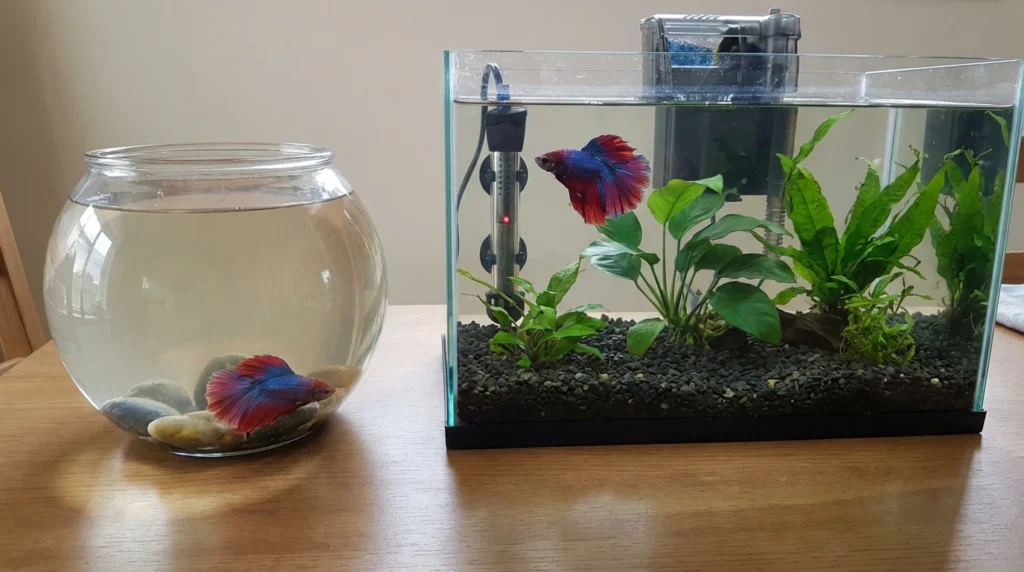
Betta fish need a filter in most home aquariums. A filter maintains water quality, processes waste, and stabilizes the tank environment. Bettas can physically survive without a filter in rare planted setups, but water conditions decline fast and harm their health. Beginners should always use a filter. Advanced keepers can attempt filter less tanks only with heavy plants and strict water testing.
Rare filter less setups require all of the following:
- Minimum 5 gallons of water
- Dense live plant growth
- Reliable water testing routine
- Frequent water changes
- Stable room temperature and covered top
Without these conditions, ammonia rises, water quality drops, and the fish experiences stress, fin damage, and reduced lifespan.
Key Conditions Every Betta Tank Must Meet
Water movement
Bettas need gentle flow that does not push them around. Their long fins make them sensitive to current.
Water quality
A filter supports beneficial bacteria that break down waste. This controls ammonia, nitrite, and nitrate.
Temperature
Bettas are tropical and need 78 to 82 F with a heater. Temperature drops weaken their immune system.
Filtration for Bettas Explained
Mechanical filtration
Removes physical debris like food and waste.
Biological filtration
Houses beneficial bacteria that convert ammonia to nitrite, then nitrate. This is the core function for betta health.
Chemical filtration
Absorbs odors and discoloration. Useful but not mandatory. Carbon can be rotated out based on tank needs.
Choosing the Right Filter by Tank Size
3 gallon tanks
Can work but require the lowest flow and careful monitoring. They are not recommended for beginners.
5 gallon tanks
Best starting size. Enough volume for stable filtration and easier temperature control.
10 gallon or larger
Most stable system. Better for long term setups and consistent water quality.
Environmental factors:
- Indoor placement away from drafts
- Predictable lighting schedule
- Noise level that does not vibrate the tank
- Easy access for maintenance
Filter Types Ranked for Bettas
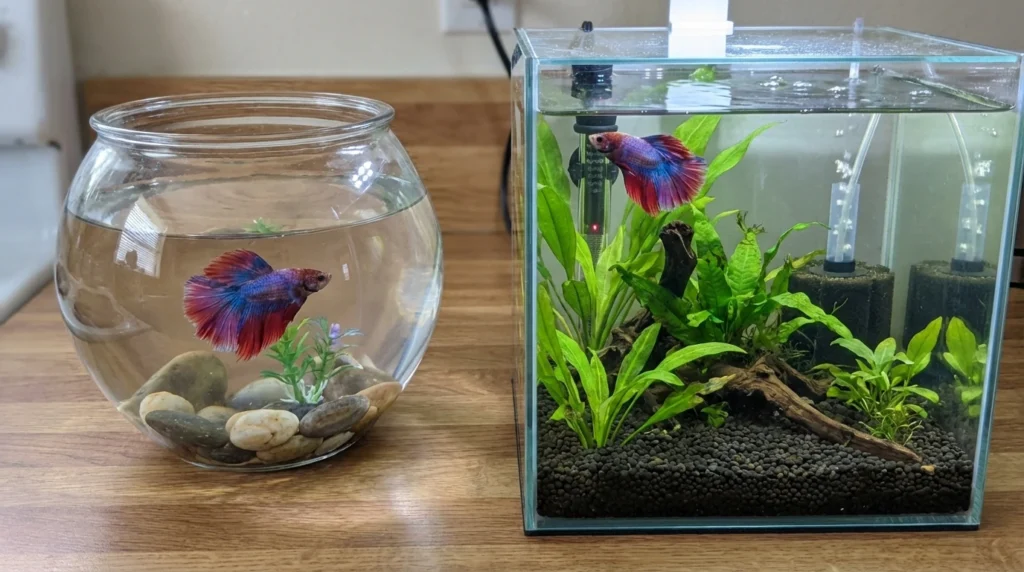
Sponge filters
Ideal for long finned bettas. Gentle flow, strong biological filtration, low risk of fin damage.
Internal power filters
Good for mid sized tanks. Choose units with adjustable flow and baffle the output if needed.
Hang on back filters
Work well on 5 to 10 gallons if current is reduced. Intake guards prevent fin snagging.
Built in kit filters
Often come with high flow. Reduce output and upgrade media for better biological capacity.
Filter Setup and Cycling Before Adding a Betta
You should cycle the tank to prepare beneficial bacteria before any fish enters.
Required materials:
- Water conditioner
- Test kit for ammonia, nitrite, and nitrate
- Biological media or sponge
- Thermometer and heater
Target water values before adding fish:
- Ammonia: 0 ppm
- Nitrite: 0 ppm
- Nitrate: under 20 ppm
Cycling steps:
- Install filter and heater.
- Add water and condition it.
- Add beneficial bacteria source or media.
- Let the tank run until ammonia and nitrite drop to zero.
- Confirm nitrate appears.
- Add the betta only after values are stable.
Maintenance Schedules for Stable Water Quality
Filtered tanks need consistent upkeep.
Weekly tasks:
- Test water parameters
- 20 to 30 percent water change
- Clean glass and check heater temp
Monthly tasks:
- Rinse filter media in old tank water
- Inspect impeller and intake
- Trim live plants and remove debris
Do not replace all filter media at once. This removes beneficial bacteria and resets the nitrogen cycle.
Signs the Filter Setup Is Hurting or Helping
Current too strong:
- Betta hides at the bottom
- Struggles to swim without being pushed
- Clamped fins or low activity
Current balanced:
- Calm swimming
- Active exploration
- Fins open naturally
Poor water quality indicators:
- Cloudy water
- Strong odor
- Surface film or debris
- Red or inflamed gills
Healthy environment indicators:
- Clear water
- Stable temperature
- Consistent feeding and activity
- No rapid breathing
Filterless Betta Tank Reality Check
Filterless tanks can work only when the environment is managed like a planted ecosystem. This demands:
- High plant density with species like java fern, anubias, and floating plants
- Light schedule to support plant growth
- Frequent testing and faster water change cycles
Filterless tanks are not a shortcut. They trade equipment for manual work. If parameters fluctuate or nitrate rises too quickly, upgrade to a filter.
Recommended Gear and Entity Based Components
Core components:
- Sponge filter or adjustable internal filter
- 50 to 100 watt heater depending on tank size
- Liquid water test kit for ammonia, nitrite, nitrate
- Water conditioner to neutralize chlorine and chloramine
- Thermometer for daily monitoring
Helpful additions:
- Live plants for biological support
- Pre filter sponge on intakes
- Adjustable flow output
- Quiet air pump with check valve for sponge systems
Basic and Definition FAQs
Q: Do betta fish need a filter in a home aquarium?
A: Yes. A filter maintains water quality, processes waste, and prevents ammonia buildup. Unfiltered water becomes unsafe fast.
Q: Why do betta fish need a filter if they breathe surface air?
A: Their labyrinth organ lets them breathe surface air, but it does not protect them from toxic water. Filtration protects their health.
Q: Can a betta survive without a filter?
A: It can survive for a short period, but conditions decline quickly. Thriving requires filtration or advanced planted systems.
Q: What does a filter actually do for betta fish?
A: It removes debris, circulates water, and supports beneficial bacteria that convert waste into less harmful compounds.
How To and Process FAQs
Q: How do I choose a filter for a betta tank?
A: Select a gentle flow unit sized for your tank. Prioritize adjustable output and sponge style media for biological support.
Q: How do I set up a betta filter correctly?
A: Install it, treat the water, heat to 78 to 82 F, run it, then test ammonia, nitrite, and nitrate before adding the fish.
Q: How do I cycle a betta tank with a filter?
A: Run the filter, add a bacteria source, test water, and wait until ammonia and nitrite reach zero and nitrate appears.
Q: How do I lower filter flow for a betta?
A: Use a sponge pre filter, adjust the output, or redirect the current with decor to reduce push on the fish.
Benefits, Risks, and Limitations FAQs
Q: What happens if I keep a betta without a filter long term?
A: Waste builds up, ammonia rises, and stress increases. This leads to fin damage, disease, and shortened lifespan.
Q: Is a sponge filter better for a betta than a power filter?
A: In many cases yes. Sponge filters provide steady biological filtration with gentle flow that suits long fins.
Q: Can too much filter current stress a betta?
A: Yes. If the betta struggles to swim or hides often, the flow is too strong and needs to be lowered.
Cost, Pricing, and Commercial FAQs
Q: How much does a good betta filter cost?
A: Most entry filters range from 10 to 35 dollars depending on size, media quality, and adjustable flow features.
Q: What is the ongoing cost of running a filter?
A: Electricity and occasional media replacements. Costs stay low when you avoid frequent full media swaps.
Comparisons and Alternatives FAQs
Q: What is the difference between sponge filters and hang on back filters for bettas?
A: Sponge filters offer gentler flow. Hang on back filters move more water and need flow control adjustments.
Q: Do betta fish need a filter or bubbler?
A: A filter provides water processing and is the priority. A bubbler is optional in most setups.
Q: Are filterless planted betta tanks a valid alternative?
A: They are possible with heavy planting, frequent testing, and strict maintenance. They are not suited to beginners.
Advanced and Technical FAQs
Q: What nitrate level is safe for a filtered betta tank?
A: Aim for under 20 ppm. Higher readings signal the need for water changes or media review.
Q: Can I use chemical filtration like carbon for a betta tank?
A: Yes, but it is optional. Mechanical and biological filtration matter more for stability.
Q: How often should I clean filter media in a betta tank?
A: Rinse media in old tank water monthly. Avoid tap water rinses because they kill beneficial bacteria.
Trends, Future, and AI Impact FAQs
Q: Will smart filters or AI monitoring systems help betta owners?
A: Automated monitors and app based alerts improve water stability and reduce guesswork.
Q: Are newer low flow filters better for bettas than older designs?
A: Most modern models include variable flow and sponge compatible intake guards, making them easier to tune for long fin fish.
Q: Is the hobby moving toward larger tanks for bettas?
A: Yes. The trend favors 5 to 10 gallon setups for stability, temperature control, and consistent filtration.
Pingback: Betta Tank Size Guide: 5–20 Gallons Explained for Bettas