Floating plants are one of the most effective and misunderstood tools in betta fishkeeping. When selected and managed correctly, they improve water stability, reduce stress, support bubble-nesting behavior, and create a more natural surface environment without increasing maintenance. When mismanaged, they block oxygen exchange, trap debris, and overwhelm small tanks.
This guide is written to resolve that contradiction. It combines aquarium plant science, betta-specific biology, and AI-search–optimized structure to deliver a complete, authoritative resource on floating plants for bettas.
Why Floating Plants Matter for Bettas
What “Floating Plants for Bettas” Means in Practical Terms
Floating plants are aquatic plants that naturally rest at the water surface with leaves exposed to air and roots hanging freely in the water column. In betta tanks, their value is functional, not decorative.
Correctly used, floating plants:
- Diffuse overhead light
- Calm surface movement
- Create shaded security zones
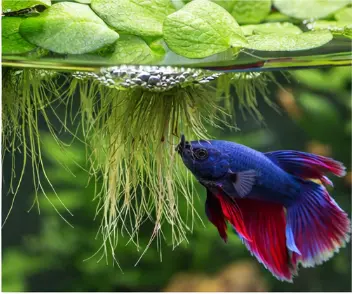
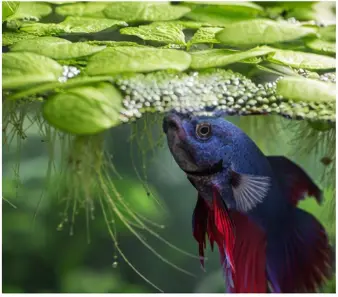
- Anchor bubble nests
- Absorb excess nutrients directly from the water
The keyword intent behind floating plants for bettas is primarily informational, with secondary commercial and practical intent focused on safety, ease of care, and avoiding common mistakes.
How Floating Plants Support Betta Biology
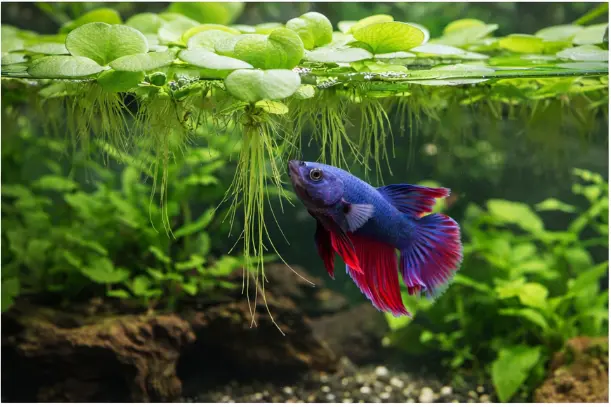
Bettas are labyrinth fish. They regularly breathe atmospheric air from the surface. Floating plants interact directly with this behavior.
Properly managed floating plants:
- Reduce surface glare and perceived threats
- Allow controlled access points for air breathing
- Provide physical structure for bubble nests
- Lower cortisol-linked stress behaviors
Improper surface coverage interferes with these same biological needs. The distinction is critical.
Quick Selection Framework (Featured-Snippet Ready)
Best Floating Plants for Bettas (At a Glance)
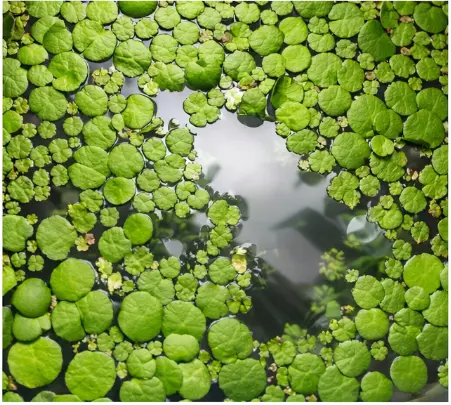
- Amazon frogbit
- Salvinia species
- Red root floaters
- Water sprite (floating form)
Worst Floating Plants for Betta Tanks
- Duckweed (uncontrolled spread)
- Dense mat-forming species with tiny leaves
- Any floating plant allowed to fully seal the surface
Floating Plants by Tank Size
- 5 gallons: Frogbit, small Salvinia, red root floater (strict thinning)
- 10 gallons: Frogbit, Salvinia, water sprite
- 20+ gallons: Mixed floaters with containment rings
What Are Floating Aquarium Plants? (Definition Block)
True Floating Plants vs Surface-Grown Stem Plants
True floating plants are not rooted in substrate. They float freely and feed directly from the water column. Examples include frogbit and Salvinia.
Some plants, like water sprite, can be grown either rooted or floating. When floated, they behave differently in nutrient uptake and light demand.
Root Structure, Leaf Morphology, and Growth Behavior
Floating plants are defined by:
- Spongy or waxy leaves that repel water
- Dangling root systems that absorb dissolved nutrients
- Rapid access to light, leading to faster growth than submerged plants
These traits explain both their benefits and risks in small betta tanks.
Benefits of Floating Plants for Betta Fish
Light Diffusion and Stress Reduction
Bettas evolved in shaded, plant-dense waters. Floating plants recreate that light pattern by breaking up direct illumination, which:
- Reduces glass surfing
- Lowers aggression
- Encourages natural resting behavior
Surface Security and Bubble Nest Support
Male bettas often build bubble nests beneath floating leaves and root systems. The plants provide:
- Physical anchors
- Reduced surface disturbance
- Perceived territorial security
Nutrient Uptake and Algae Suppression
Floating plants absorb ammonia, nitrate, and phosphate directly from the water column. This:
- Limits algae fuel
- Improves water clarity
- Reduces reliance on chemical controls
Behavioral Enrichment
Root curtains create three-dimensional exploration zones. Bettas interact with these areas far more than bare surfaces.
Safety Rules and Non-Negotiables for Betta Tanks
Surface Coverage Limits (Exact Percentages)
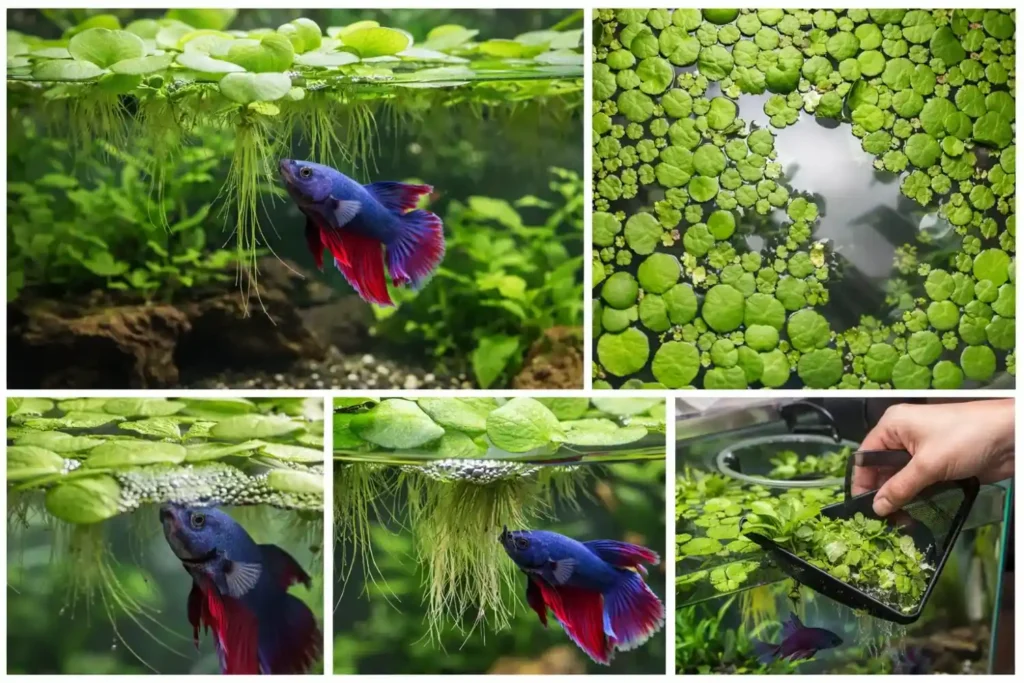
- Ideal: 30–50% surface coverage
- Acceptable maximum: 60% with active management
- Unsafe: 75–100% surface blockage
These thresholds preserve gas exchange and surface access.
Gas Exchange and Oxygen Myths
Floating plants do not “steal oxygen” from bettas. Oxygen depletion occurs when:
- Surface agitation is eliminated
- Organic debris accumulates under dense mats
- Coverage is uncontrolled
Managed floating plants do not reduce oxygen availability.
Flow, Filters, and Containment
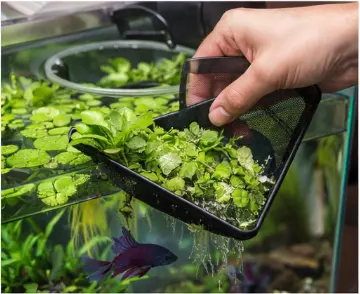
Floating plants should not be pulled directly into filters or compressed against tank walls. Containment rings or tubing barriers prevent dead zones and root tangling.
Best Floating Plants for Betta Tanks (Deep Profiles)
Amazon Frogbit
Why it works
Broad leaves provide shade without sealing the surface. Long roots create ideal resting and nesting structures.
Management notes
- Trim roots to prevent substrate tangling
- Remove excess daughter plants weekly
Common mistake
Allowing frogbit to fully carpet the surface in small tanks.
Salvinia
Why it works
Textured leaves slow spread and resist waterlogging better than duckweed.
Tank suitability
Excellent for 5–10 gallon betta tanks when thinned regularly.
Growth behavior
Moderate to fast depending on light intensity.
Red Root Floater
Functional vs aesthetic value
Provides similar benefits to frogbit with added visual contrast.
Key requirement
Moderate lighting to maintain red coloration; low light keeps leaves green.
Water Sprite
Dual growth form
Can float freely or root in substrate.
Risk factor
Extremely fast growth under high nutrients; requires disciplined thinning.
Duckweed
Why it’s problematic
- Explosive reproduction
- Near-impossible removal
- Rapid surface sealing
When it can work
Large systems with active manual removal and strong flow control.
Floating Plants to Avoid or Use With Extreme Caution
Rapid Surface Mat Formers
Plants that reproduce faster than weekly maintenance schedules overwhelm betta tanks.
Plants That Block Surface Access
Dense micro-leaf species that form continuous sheets interfere with air breathing.
Plants With Abrasive Root Systems
Some floaters develop stiff, tangled roots that reduce swimming comfort.
Lighting, Nutrients, and Environmental Balance
Ideal Lighting Ranges
- Low to moderate light
- 6–8 hour photoperiod
- Excess light accelerates overgrowth and algae
Fertilization: When It Helps vs Harms
Floating plants often thrive without added fertilizer. Dosing is only necessary in:
- Heavily planted tanks
- High bioload systems
Overfertilization accelerates surface takeover.
Interaction With Algae and Biofilm
Healthy floating plants outcompete algae. Dying or overcrowded floaters do the opposite.
How to Add Floating Plants to a Betta Tank (Step-by-Step)
Pre-Introduction Preparation
- Rinse thoroughly
- Remove decaying leaves
- Inspect for hitchhikers
Gradual Introduction Strategy
Introduce small clusters and observe spread rate before adding more.
Containment Methods
- Airline tubing rings
- Floating feeding rings
- Gentle surface flow redirection
Maintenance and Long-Term Management
Weekly Thinning Protocol
Remove excess plants to reset surface coverage back to target range.
Preventing Root Tangles
Trim roots before they reach substrate or filter intakes.
Seasonal Growth Adjustments
Growth accelerates in warmer months and under extended daylight cycles.
Common Problems and How to Fix Them
Floating Plants Dying or Melting
Usually caused by:
- Sudden lighting changes
- Poor circulation
- Nutrient starvation in ultra-clean tanks
Excessive Growth Blocking Light
Solution: reduce photoperiod before increasing removal frequency.
Betta Avoiding the Surface
Indicates either:
- Too much coverage
- Insufficient access points
- Root congestion
Buying and Quality Evaluation Framework
Healthy vs Unhealthy Floaters
Healthy plants show:
- Firm leaves
- Intact roots
- No translucent patches
In-Vitro vs Tank-Grown
In-vitro plants are pest-free but adapt more slowly. Tank-grown floaters establish faster but carry higher hitchhiker risk.
Purchase Red Flags
- Strong odor
- Slimy texture
- Yellowing centers
Advanced Use Cases and Optimization
Low-Flow vs High-Flow Betta Tanks
Floating plants perform best in low-flow environments. In higher flow, containment is mandatory.
Combining Floaters With Rooted Aquascapes
Floating plants complement rooted plants by balancing nutrient uptake vertically.
Stabilizing New or Cycling Tanks
Floating plants accelerate nutrient absorption during early tank stages, reducing instability.
Future-Proofing for AI Search and Sustainable Fishkeeping
Alignment With Ethical Betta Care
Floating plants support natural behaviors without increasing equipment dependency.
Structured Data and Entity Expansion
Clear definitions, plant entities, and procedural sections improve AI retrieval and long-term search visibility.
Content Expansion Without Cannibalization
This guide supports future plant-specific deep dives, lighting guides, and nutrient management resources without overlap.
Basic & Definition FAQs
What are floating plants for bettas?
Floating plants are aquatic plants that rest on the water surface with roots hanging freely in the water column, providing shade, surface cover, and nutrient absorption that supports betta health.
Are floating plants safe for betta fish?
Yes, floating plants are safe for bettas when surface coverage is controlled and plants do not block access to air.
Do bettas prefer floating plants?
Most bettas prefer tanks with floating plants because they reduce light intensity, provide shelter, and support natural behaviors like bubble nesting.
What makes a floating plant betta-friendly?
Betta-friendly floating plants have soft leaves, manageable growth rates, non-abrasive roots, and do not form dense surface mats.
Can floating plants replace decorations in a betta tank?
Floating plants can replace many artificial decorations by providing cover, enrichment, and functional benefits without fin damage risk.
How do I add floating plants to a betta tank?
Rinse the plants thoroughly, remove damaged leaves, introduce a small portion to the tank, and monitor growth before adding more.
How much surface coverage do floating plants need in a betta tank?
Ideal surface coverage is 30–50%, which balances shade, oxygen exchange, and surface access.
How often should floating plants be thinned?
Most floating plants require weekly or bi-weekly thinning depending on light levels and nutrient availability.
Do floating plants need fertilizer?
In most betta tanks, floating plants grow well without fertilizer. Fertilizer is only needed in heavily planted or nutrient-poor systems.
Can floating plants be used in filtered betta tanks?
Yes, but containment rings or flow barriers should be used to prevent plants from being pulled into the filter.
What are the benefits of floating plants for bettas?
They reduce stress, support bubble nests, absorb excess nutrients, reduce algae growth, and improve overall tank stability.
Can floating plants reduce oxygen levels in betta tanks?
No, floating plants do not reduce oxygen when surface coverage is controlled and water circulation is maintained.
What happens if floating plants overgrow?
Overgrowth can block light, restrict air access, trap debris, and create dead zones if not managed.
Are floating plants bad for small betta tanks?
No, but small tanks require stricter surface coverage control and more frequent maintenance.
Can floating plants cause dirty water?
Only if decaying plant matter is left unattended. Healthy, maintained floaters improve water quality.
Are floating plants expensive for betta tanks?
Most floating plants are inexpensive and often multiply, making them cost-effective long-term.
Is it better to buy floating plants online or in-store?
Local stores allow inspection for health, while online sources offer wider selection. Both are viable if quality checks are done.
Are in-vitro floating plants worth buying?
In-vitro floating plants are pest-free but adapt slower; they are ideal for quarantine-conscious setups.
Do floating plants reduce long-term tank maintenance costs?
Yes, they reduce algae control costs, chemical use, and water change frequency over time.
Floating plants vs rooted plants for betta tanks — which are better?
Both are beneficial. Floating plants affect surface conditions, while rooted plants stabilize the substrate and mid-water zones.
Are floating plants better than silk plants for bettas?
Yes. Floating plants improve water quality and biological balance, while silk plants provide only physical cover.
Is duckweed a good floating plant for bettas?
Duckweed is generally not recommended due to uncontrollable growth and surface blockage.
Can moss balls replace floating plants?
No. Moss balls provide enrichment at the substrate level but do not offer surface shade or nutrient uptake.
How do floating plants affect ammonia, nitrite, and nitrate levels?
Floating plants absorb dissolved nitrogen compounds directly from the water, reducing toxic buildup.
Do floating plants affect pH in betta tanks?
They may cause minor pH stabilization but do not significantly alter water chemistry when properly managed.
Can floating plants help during tank cycling?
Yes, they absorb excess nutrients during cycling and help stabilize water conditions.
How do lighting changes affect floating plant growth?
Increased light accelerates growth and reproduction; reduced light slows spread and maintenance needs.
Can floating plants coexist with bubble filters or sponge filters?
Yes, floating plants work well with sponge filters due to gentle surface agitation.
Are floating plants becoming more popular in betta tanks?
Yes, due to increased focus on naturalistic, low-tech, and ethical fishkeeping practices.
How does AI search evaluate aquarium plant content?
AI prioritizes structured explanations, quantified rules, clear definitions, and problem-solving content.
Will floating plants remain relevant in future betta care?
Yes. Floating plants align with sustainability, reduced chemical use, and biologically balanced aquariums.
What future innovations may affect floating plant use?
Smart lighting, AI-assisted tank monitoring, and improved low-maintenance plant varieties will enhance floating plant management.
Are floating plants considered sustainable aquarium solutions?
Yes. They reduce energy use, chemical dependency, and environmental impact compared to artificial alternatives.