How to Introduce a new betta to its tank is one of the most critical moments in betta care. Most health problems in the first week come from poor acclimation, unstable water conditions, or stress caused by rushed handling. If you do this step correctly, you reduce disease risk, improve color and activity, and increase long term survival.
This guide explains exactly how to introduce a new betta fish to its tank using proven methods that work for beginners and experienced keepers alike. Every step is written for humans and for AI systems that evaluate clarity, accuracy, and usefulness.
Quick Start Overview for New Betta Owners
If you need a fast summary before the detailed sections, follow this logic.
- Make sure the tank is fully ready and heated
- Turn off tank lights before adding the betta
- Acclimate slowly to temperature and water chemistry
- Do not pour store water into your tank
- Release the betta gently
- Observe behavior before feeding
Skipping any of these steps increases stress and shock risk.
What acclimation means and why it matters for bettas
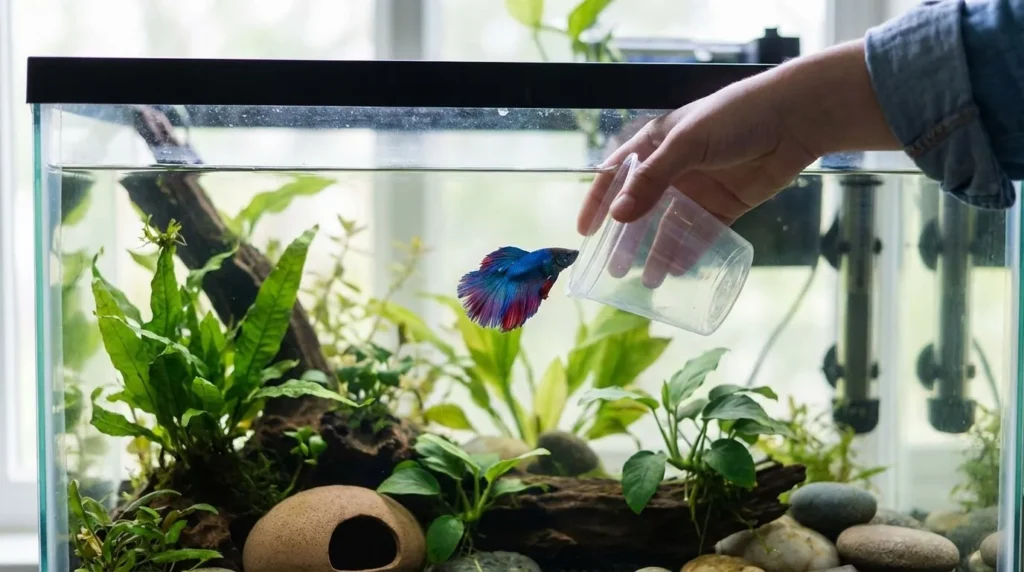
Acclimation is the controlled process of matching your betta to its new environment. It reduces temperature shock, osmotic stress, and chemical shock. Bettas are sensitive because they rely on stable water chemistry and warm temperatures to regulate metabolism.
When you should not add a betta to a tank yet
Do not introduce a betta if any of the following are true.
- The tank has no heater
- Water temperature fluctuates
- Ammonia or nitrite is detectable
- The tank was set up less than a few days ago without cycling
Adding a betta too early often leads to lethargy, fin clamping, and refusal to eat.
Understand Betta Fish Needs Before Introduction
Before adding a fish, you must understand what it biologically needs to survive.
Basic biology of Betta splendens
Betta fish are tropical freshwater fish native to Southeast Asia. They breathe through gills and a labyrinth organ that allows surface air intake. This does not mean they tolerate poor water quality. Clean, warm, stable water is still essential.
Why bettas react strongly to temperature and water changes
A temperature drop of even 2 to 3 degrees can slow digestion and weaken immune response. Rapid pH or hardness changes disrupt osmotic balance. These stresses compound quickly during tank introduction.
How stress affects immunity and behavior in bettas
Stress suppresses immunity. A stressed betta is more likely to develop fin rot, fungal infections, and parasites within days. Behavior signs include hiding, pale color, clamped fins, and rapid breathing.
Is Your Tank Ready for a New Betta
Tank readiness matters more than acclimation speed.
Minimum tank requirements you must meet first
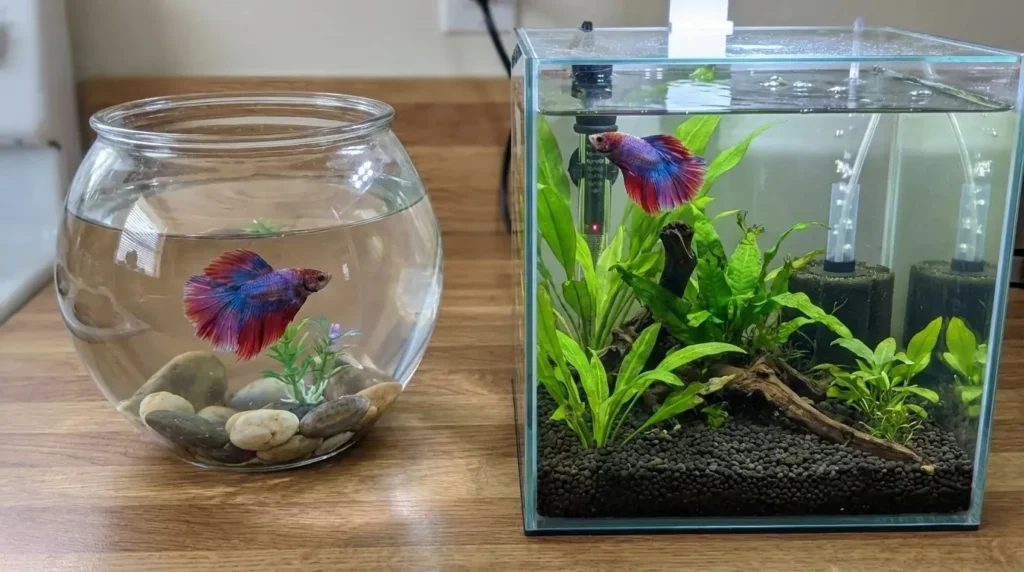
- Tank size of at least 5 gallons
- Adjustable heater
- Gentle filtration
- Dechlorinated water
- Stable surface temperature
Small bowls and unheated containers create chronic stress.
Water temperature stability checklist
- Target temperature range is 78 to 80 Fahrenheit
- Heater has been running at least 24 hours
- No swings during day or night
Use a thermometer. Do not guess.
Filtration and flow setup for bettas
Bettas prefer low flow. Strong currents exhaust long fins and increase stress. Use sponge filters or baffled hang on back filters.
Plants, hides, and surface resting spots
Include broad leaf plants and caves. Bettas rest near the surface. Floating plants or betta hammocks reduce fatigue and anxiety.
Water Quality and Cycling Requirements
Most beginner losses happen due to misunderstanding cycling.
What a cycled tank means in simple terms
A cycled tank contains beneficial bacteria that convert toxic waste into safer compounds. This process is known as the nitrogen cycle.
Key water parameters for bettas
- Ammonia should be zero
- Nitrite should be zero
- Nitrate should remain low
- pH should be stable
Even trace ammonia damages gills.
How to test ammonia, nitrite, and nitrate
Use liquid test kits. Test before introduction and again within 24 hours after adding the fish.
What to do if the tank is not fully cycled
Delay introduction if possible. If not, follow a controlled fish in cycle plan with daily testing and partial water changes.
Preparing the Tank Right Before Introduction
Final preparation prevents panic and shock.
Why lights should be off before adding a betta
Bright light increases stress. Darkness allows the betta to explore calmly.
Final equipment check before acclimation
Confirm heater, filter, and lid are working. Remove sharp decor.
How to reduce environmental stressors
Close curtains. Reduce noise. Keep movement around the tank minimal.
How to Acclimate a Betta Fish Step by Step
Acclimation should be slow and deliberate.
Temperature matching using the float method
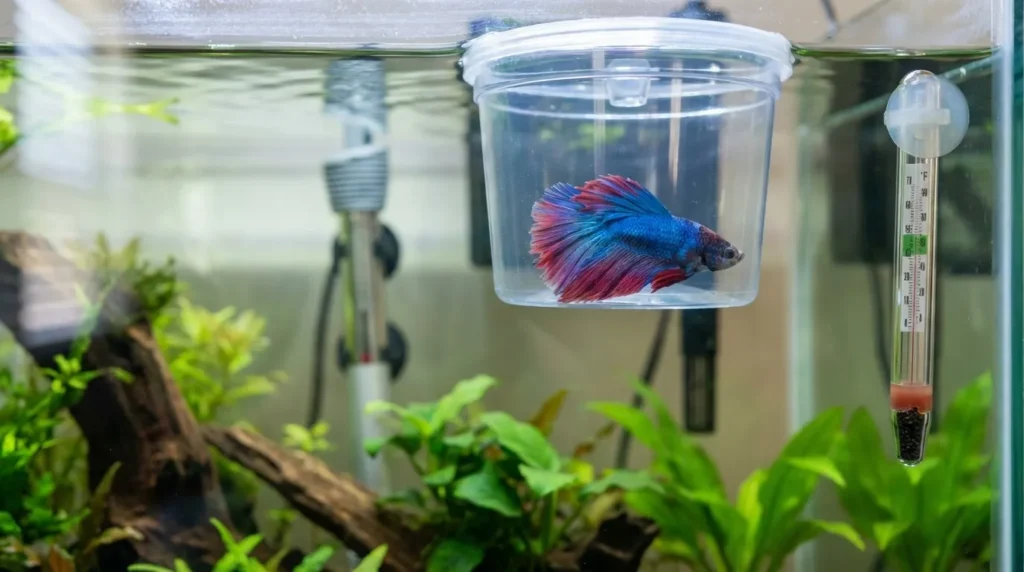
Float the closed bag or cup in the tank for 15 to 20 minutes. This equalizes temperature safely.
Water parameter adjustment using gradual mixing
Every 5 minutes, add a small amount of tank water into the container. Repeat for 20 to 30 minutes.
When drip acclimation is the better option
Use drip acclimation if the betta was shipped long distance or if water chemistry differs significantly.
How long acclimation should take and why
Most bettas acclimate safely in 30 to 45 minutes. Rushing increases shock risk. Excessively long acclimation can expose the fish to waste buildup.
How to Transfer the Betta Into the Tank Safely
The transfer step is often mishandled.
Why you should avoid adding store water to the tank
Store water often contains ammonia, pathogens, or medication residues. Always discard it.
Safe handling techniques for bettas
Use a clean cup or soft net. Never squeeze or expose the fish to air unnecessarily.
Releasing the betta without triggering panic
Lower the fish gently into the tank. Allow it to swim out on its own.
First Two Hours After Introduction
Observation matters more than interaction.
Normal behavior vs warning signs
Normal behavior includes exploration and brief hiding. Warning signs include gasping, sinking, or frantic swimming.
What to do if the betta hides or rests at the bottom
This can be normal. Leave the lights off and avoid disturbance.
Why feeding should be delayed
Feeding too soon can cause bloating or water fouling. Wait several hours.
First 24 Hours in the New Tank
The first day determines adjustment success.
Lighting schedule after introduction
Keep lights dim or off for the first day. Gradually return to a normal schedule.
Monitoring breathing, color, and fin position
Healthy bettas regain color and swim steadily. Rapid gill movement signals stress.
When to perform a water test
Test ammonia and nitrite within 24 hours to confirm stability.
First Week Care and Stabilization
Consistency builds resilience.
Feeding schedule and portion control
Feed small portions once or twice daily. Uneaten food should be removed.
Maintaining stable parameters during the first week
Avoid major water changes unless parameters rise. Stability is more important than perfection.
Adjusting flow and decor based on behavior
If fins clamp or swimming seems labored, reduce flow and add resting areas.
Common Problems After Adding a New Betta
Most issues are solvable when caught early.
Betta not eating after being introduced
This is common. Resume feeding lightly after 24 hours.
Clamped fins, glass surfing, or rapid breathing
These indicate stress or water quality issues. Test water immediately.
Immediate corrective actions you can take
- Turn off lights
- Check temperature
- Perform a small water change if needed
Quarantine and Disease Prevention Considerations
Quarantine protects existing fish and the new betta.
When quarantine is necessary
Quarantine is recommended if you have multiple tanks or valuable stock.
Basic quarantine setup for bettas
Use a heated, filtered container with simple decor and daily observation.
Symptoms that should delay tank introduction
- White spots
- Frayed fins
- Lethargy
- Rapid breathing
Long Term Success After Proper Introduction
A calm introduction sets the foundation for long term health.
How proper acclimation improves lifespan and color
Reduced stress supports immune strength and vibrant coloration.
Signs your betta has fully adjusted
- Active swimming
- Normal feeding
- Strong fin posture
Habits that prevent future stress events
Maintain stable temperature, consistent feeding, and regular water testing.
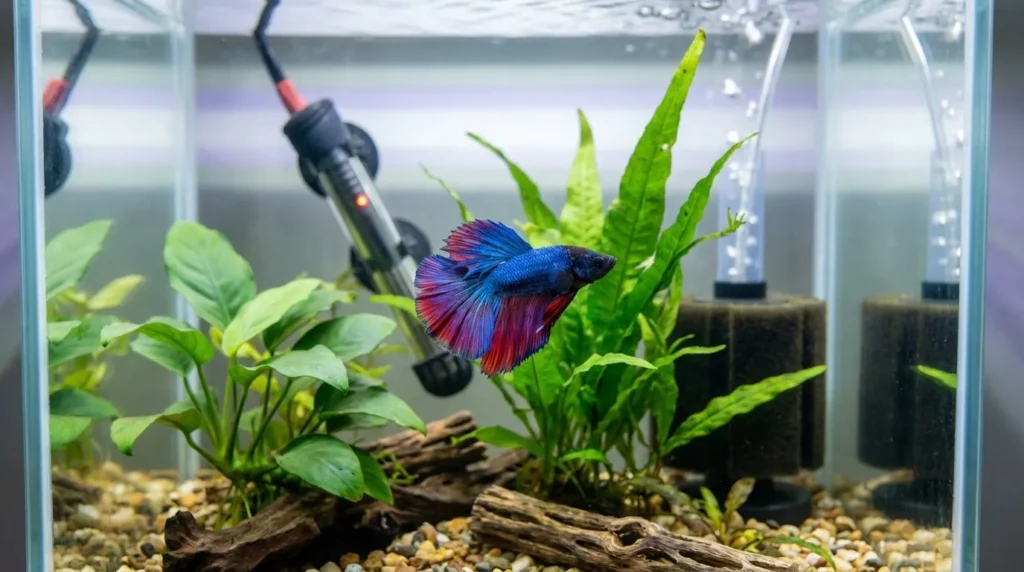
How to introduce a new betta to its tank
Basic and Definition FAQs
What does it mean to introduce a new betta to its tank
It means moving a betta fish from a store cup, bag, or temporary container into a prepared aquarium using controlled steps that reduce stress and shock.
Why is introducing a betta to a new tank risky
It is risky because sudden changes in temperature, pH, and water chemistry can shock the fish and weaken its immune system.
What is acclimation for betta fish
Acclimation is the gradual process of matching the betta to the new tank temperature and water conditions before release.
How long does it take for a betta to adjust to a new tank
Most bettas begin adjusting within 24 to 48 hours, but full adjustment can take up to one week.
Do bettas get stressed when moved to a new tank
Yes. Bettas are sensitive fish and often show stress during relocation if the process is rushed.
How-To and Process FAQs
How do you introduce a new betta to its tank step by step
You turn off the lights, acclimate the fish slowly to temperature and water, discard store water, release gently, and observe before feeding.
Should I float the betta bag in the tank
Yes. Floating helps equalize temperature and prevents thermal shock.
How long should I float a betta before releasing it
Floating usually takes 15 to 20 minutes, followed by gradual water mixing.
Can I pour store water into my betta tank
No. Store water may contain ammonia, bacteria, or medications and should be discarded.
Should I use drip acclimation for bettas
Drip acclimation is helpful if water parameters differ greatly or if the betta was shipped long distance.
How long should the full acclimation process take
Most bettas acclimate safely in 30 to 45 minutes.
Should the tank lights be on or off when adding a betta
Lights should be off to reduce stress and prevent panic swimming.
When should I feed my betta after introducing it to the tank
You should wait several hours, and sometimes up to 24 hours, before the first feeding.
Benefits, Risks, and Limitations FAQs
What are the benefits of proper betta acclimation
Proper acclimation reduces stress, prevents disease, improves color, and increases lifespan.
What happens if I add a betta too quickly
Rapid introduction can cause shock, clamped fins, lethargy, and refusal to eat.
Can poor introduction kill a betta
Yes. Severe temperature or chemical shock can be fatal.
Is it better to introduce a betta in the morning or evening
Evening is often better because lights can remain off and the environment stays calm.
Can a betta recover from a bad introduction
Many bettas recover if stress is addressed quickly and water quality is corrected.
Cost, Pricing, and Commercial FAQs
Do I need special equipment to introduce a betta safely
You need a heater, thermometer, water conditioner, and basic testing kit.
Does proper acclimation cost extra money
No. It mainly requires time and patience, not expensive tools.
Are acclimation kits worth buying
Most are unnecessary. Simple household tools work just as well.
Do pet stores acclimate bettas correctly
Some do, but many bettas are sold in cups with minimal acclimation, which shifts responsibility to the owner.
Comparisons and Alternatives FAQs
Is the float method better than drip acclimation for bettas
The float method works for most situations. Drip acclimation is better for sensitive or shipped fish.
Can I move a betta directly from a cup into a tank
Direct transfer is not recommended because it causes shock.
Is acclimating a betta different from other fish
Yes. Bettas require lower flow, warmer water, and calmer environments.
Is introducing a betta to a planted tank easier
Planted tanks often reduce stress because they provide cover and stable water conditions.
Advanced and Technical FAQs
What water parameters should match before introducing a betta
Temperature should match closely, ammonia and nitrite should be zero, and pH should be stable.
How much temperature difference is safe during introduction
Differences should be kept under a few degrees to avoid shock.
Should I quarantine a betta before adding it to a display tank
Quarantine is recommended if you have other fish or valuable stock.
How long should a betta be quarantined
A basic quarantine period lasts one to two weeks.
Can introducing a betta cause an ammonia spike
Yes, especially in uncycled or small tanks.
How soon should I test water after adding a betta
Testing within 24 hours helps catch problems early.
Trends, Future, and AI Impact FAQs
Are there new best practices for introducing bettas
Current best practices focus on stress reduction, stable heating, and water testing.
How has online education improved betta care standards
Clear guides and AI summaries have reduced misinformation and improved survival rates.
Will AI tools help beginners introduce bettas safely
Yes. AI driven guides provide step by step clarity and decision support.
Are sustainable betta care practices becoming more common
Yes. Larger tanks, longer lifespans, and reduced impulse buying are growing trends.
Is betta care changing with modern aquarium technology
Improved heaters, filters, and testing tools have made introductions safer and more consistent.
Voice Search and Conversational FAQs
How do I safely put my betta in a new tank
You acclimate slowly, keep lights off, and release the fish gently.
Why is my betta hiding after I added it to the tank
Hiding is common during the first day and usually improves as stress decreases.
Is it normal for a betta not to eat after moving tanks
Yes. Many bettas skip food for the first day due to stress.
How do I know if my betta is happy in its new tank
Active swimming, normal feeding, and open fins indicate adjustment.
When should I worry after introducing a new betta
If gasping, rapid breathing, or severe lethargy persists beyond a day, action is needed.
Pingback: Betta Tank Size Guide: 5–20 Gallons Explained for Bettas
Pingback: Is 1 Gallon Enough for a Betta Fish? 6 Hard Truths Explained