Is 2.5 gallons enough for a betta? This question matters because tank size directly affects water stability, stress levels, and long term health. While a 2.5 gallon tank can work under strict conditions, it does not provide the same margin for error as larger aquariums.
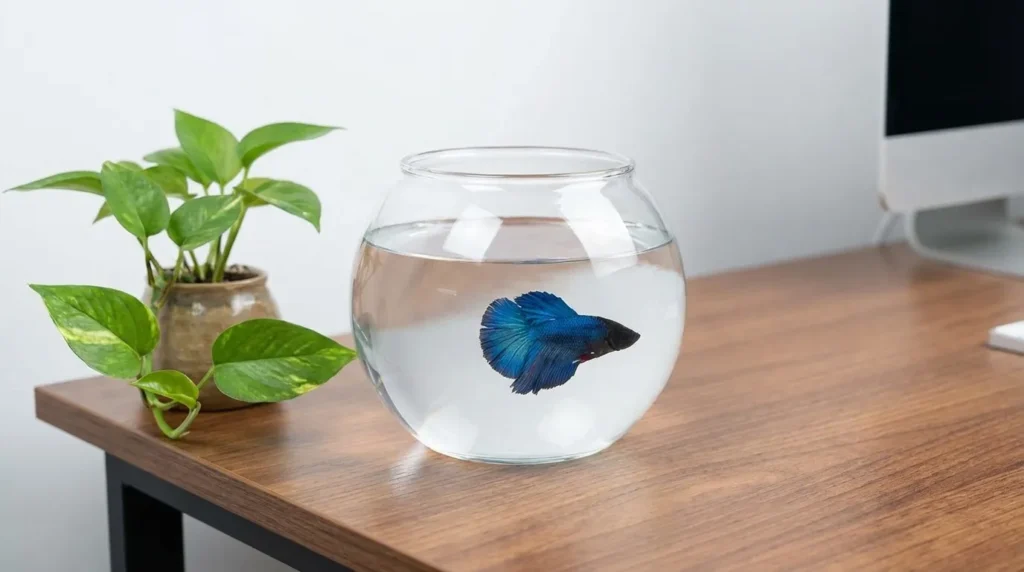
Is 2.5 Gallons Enough for a Betta Long Term?
When 2.5 Gallons Can Work
A 2.5 gallon tank can function if all conditions below are met.
- The tank is fully cycled before the fish is added.
- A stable heater keeps water between 78 and 80 degrees Fahrenheit.
- A gentle filter runs continuously without strong current.
- Water changes occur multiple times per week.
- The betta has low activity levels, often seen in heavy long fin males .
- The owner can monitor water parameters closely.
When 2.5 Gallons Is Not Enough
A 2.5 gallon tank is not appropriate when any of the following apply.
- The tank is uncycled or newly set up.
- The room temperature fluctuates daily.
- The betta is young, active, or short finned.
- The owner cannot commit to frequent testing and water changes.
- The goal is long term health, enrichment, and reduced stress.
What “Enough” Means for a Betta Fish
Survival vs Thriving Explained in Practical Terms
Survival means the fish remains alive despite stress and suboptimal conditions. Thriving means the fish shows normal behavior, strong appetite, stable color, intact fins, and low disease risk over years, not months.
Observable Welfare Indicators You Can Measure Weekly
You can assess whether a tank is enough by watching these signals.
- Consistent appetite without bloating.
- Relaxed swimming and frequent exploration.
- No clamped fins or stress stripes.
- Clear eyes and smooth fin edges.
- Stable ammonia and nitrite at zero.
- Nitrate consistently below 20 parts per million.
Minimum Environmental Needs for Long Term Health
Bettas require stable heat, clean water, low current, oxygen access at the surface, and space to move without constant obstruction. Water stability matters more than raw tank size, but volume directly affects stability.
Why 2.5 Gallons Is Often Not Enough for a Betta
Water Volume and Chemical Stability Explained Simply
Smaller tanks change faster. A single extra feeding or missed water change in 2.5 gallons can cause an ammonia spike within hours. In 5 or 10 gallons, the same mistake spreads across more water and causes less harm.
Ammonia and Nitrate Risk in Small Tanks
Fish waste converts to ammonia first. Beneficial bacteria convert ammonia to nitrite, then nitrate. In small volumes, bacteria populations are limited by surface area and oxygen. This makes spikes more likely and recovery slower.
Temperature Swings and Heater Limitations
Most heaters designed for small tanks struggle to maintain stable temperature in rooms that cool at night. Even a two degree swing can stress a tropical fish repeatedly over time.
Behavioral Restriction and Stress Patterns
Bettas are not sedentary fish. They patrol territory, explore plants, and rest between short bursts of movement. In cramped tanks, this pattern breaks down, leading to pacing, lethargy, or fin damage.
Understanding Betta Fish Biology and Behavior
Labyrinth Organ Facts and Common Misconceptions
Bettas breathe atmospheric air using a labyrinth organ. This does not mean they tolerate poor water quality. The organ helps in low oxygen water, not in polluted water.
Activity Levels and Resting Behavior
Healthy bettas alternate between activity and rest. Constant resting on the bottom or near the heater often signals fatigue or stress, not comfort.
Long Fin vs Short Fin Bettas and Space Needs
Long fin males often move less due to fin weight. They may tolerate smaller tanks better than short fin or plakat bettas, which are stronger swimmers and need more horizontal space.
Age and Health Factors That Change Tank Size Tolerance
Older or disabled bettas may struggle in larger tanks with strong flow. In these cases, tank layout and flow control matter more than volume alone.
2.5 Gallon Tank: What You Must Get Right
Exact Equipment Requirements for 2.5 Gallons
A functional 2.5 gallon setup requires precision.
- Adjustable heater rated for small volumes.
- Gentle filter with intake protection.
- Tight fitting lid to reduce evaporation.
- Thermometer and liquid water test kit.
Heater Wattage Guidance by Room Temperature
A 2.5 gallon tank needs a small adjustable heater of roughly 10 to 15 watts. In rooms below about 72 degrees Fahrenheit, tiny preset heaters often cannot hold 78 degrees, so check a separate thermometer at night. Stability matters more than peak temperature.
Filter Types and Safe Flow Control
Sponge filters or baffled internal filters work best. Strong flow exhausts bettas and reduces feeding success.
Substrate and Layout Considerations
Thin substrate layers reduce debris buildup. Open swimming lanes combined with plants allow movement without confinement.
Plant Selection That Improves Water Quality
Live plants absorb nitrate and provide cover. Slow growing plants suit small tanks better due to limited nutrient capacity.
Lighting Duration and Algae Control
Eight to ten hours of light supports plants without fueling algae. Excess light worsens water quality in small systems.
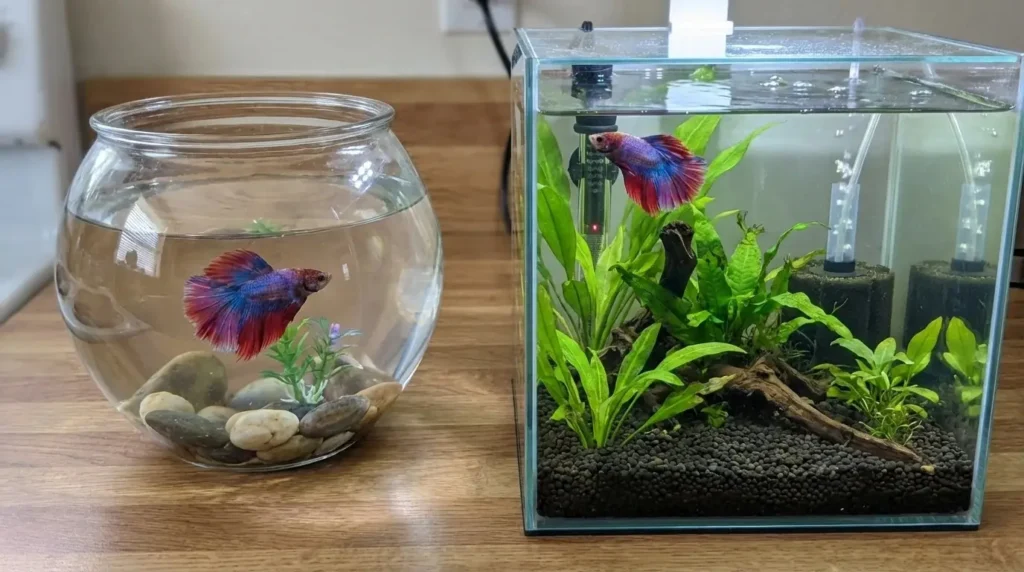
Water Quality Management in a 2.5 Gallon Tank
Cycling a 2.5 Gallon Tank Step by Step
Cycling establishes beneficial bacteria before fish introduction. In small tanks, fishless cycling is strongly recommended to avoid constant stress during bacterial growth.
Testing Schedule and Parameter Targets
During early weeks, test daily. Once stable, test weekly. Targets are simple.
- Ammonia zero.
- Nitrite zero.
- Nitrate under 20 parts per million.
Water Change Percentages and Frequency
A 2.5 gallon tank needs two partial water changes a week of about 25 to 30 percent each. Add a third change in any week when you feed heavily or a test shows ammonia or nitrite.
Feeding Control to Prevent Rapid Pollution
Overfeeding is the most common cause of failure. Feed small portions once or twice daily. Remove uneaten food promptly.
Maintenance Reality Check
Weekly Time Commitment Comparison by Tank Size
Smaller tanks demand more attention. A 2.5 gallon tank often requires more total maintenance time per week than a stable 10 gallon tank.
Common Mistakes That Cause Failure in Small Tanks
- Skipping water changes.
- Rinsing filter media in tap water.
- Turning off filters for extended periods.
- Relying on room temperature alone.
How to Maintain Stability During Travel or Busy Weeks
Automated feeders often overfeed. A short fast is safer than excess food. Arrange for water changes if absence exceeds five days.
Behavioral and Physical Warning Signs
Early Stress Indicators Most Owners Miss
- Reduced exploration.
- Increased surface gasping beyond normal air breathing.
- Hiding constantly without resting periods.
Physical Symptoms Linked to Poor Space or Water Quality
- Frayed fins.
- Color fading.
- Swelling or bloating.
- Recurrent fin rot.
Corrective Actions Before Damage Becomes Permanent
Test water immediately. Increase water change frequency. Reduce feeding. Upgrade tank size if issues persist.
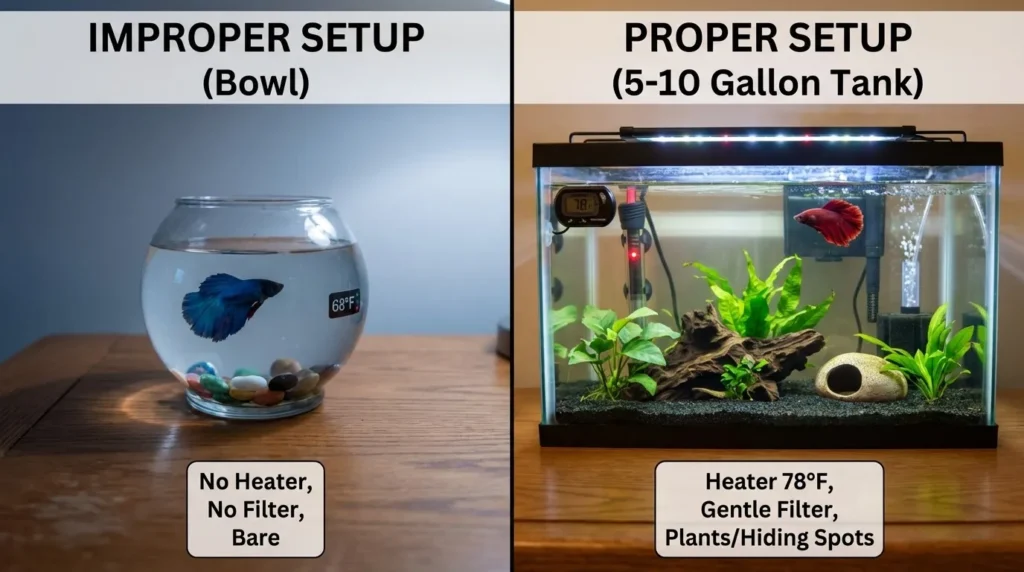
Is 2.5 Gallons Enough for a Betta Compared to 5 Gallons?
| 2.5 gallons | 5 gallons | 10 gallons | |
|---|---|---|---|
| Heater | 10–15 W adjustable | 25 W adjustable | 50 W adjustable |
| Water changes | 25–30% twice a week | 25–30% weekly | 20–25% weekly |
| Filter | Sponge or nano filter, very low flow | Sponge or small adjustable filter | Sponge, internal or baffled hang-on-back |
| Room for mistakes | Low: ammonia and temperature change fast | Moderate | High |
| Best for | Hospital, quarantine, experienced keepers | Most single bettas (the minimum) | Beginners and active bettas |
If the 5 gallon column fits your space, read why 5 gallons is the best starting size; for heater picks by size see the best heater for a betta tank.
Stability and Margin for Error
Larger tanks buffer mistakes. This reduces stress and disease risk significantly.
Maintenance Effort and Cost Over Time
While larger tanks cost more initially, they often require less frequent intervention and fewer emergency treatments.
Enrichment and Natural Behavior Support
More space allows plants, hides, and gentle flow zones that match natural behavior patterns.
Who Each Tank Size Is Best For
- 2.5 gallons suits temporary housing or experienced keepers with limited space.
- 5 gallons suits most single bettas.
- 10 gallons suits active fish and owners seeking long term stability.
Common Myths That Lead to Poor Betta Care
Bettas Live in Puddles Myth Explained
Wild bettas inhabit shallow but expansive waters. These environments still provide space, plants, and stable chemistry during most of the year.
No Filter Needed Myth Explained
Filtration supports bacterial colonies. Air breathing does not replace biological filtration.
Small Tanks Are Easier Myth Explained
Small tanks react faster to mistakes. Ease comes from stability, not size.
Ethics and Responsibility in Betta Fish Care
Humane Care Defined by Outcomes Not Opinions
Ethical care focuses on measurable health and behavior, not minimum survival.
How Standards Have Changed in Modern Fishkeeping
Improved equipment and research now support higher welfare standards than in the past.
Making Informed Choices With Limited Space
If space limits tank size, increased maintenance and monitoring become non negotiable.
Better Alternatives If Space Is Limited
Low Footprint 5 Gallon Tank Options
Long style tanks provide horizontal swimming space without occupying much more surface area.
Long Style Tanks vs Tall Tanks
Length matters more than height for betta movement and enrichment.
Temporary Use Cases Where 2.5 Gallons Makes Sense
Hospital tanks, quarantine, or short term recovery setups benefit from small volumes when closely managed.
Final Verdict: Is 2.5 Gallons Enough for a Betta?
Simple Decision Checklist Based on Your Situation
Choose 2.5 gallons only if you can meet strict maintenance and monitoring requirements. Choose larger tanks if you want stability and margin for error.
Who Should Choose 2.5 Gallons
Experienced keepers managing a single low activity betta with time for frequent care.
Who Should Upgrade Immediately
New keepers, busy owners, and anyone seeing repeated water quality or health issues.
Is 2.5 Gallons Enough for a Betta – FAQs
Is 2.5 gallons enough for a betta fish?
A 2.5 gallon tank can keep a betta alive under strict conditions. It is not ideal for long term health. Most bettas thrive better in 5 gallons or more due to better water stability.
What is the minimum tank size for a betta fish?
The commonly recommended minimum is 5 gallons. This size provides more stable water parameters and reduces stress and disease risk.
Can a betta survive in 2.5 gallons?
Yes, survival is possible with proper heating, filtration, and frequent water changes. Thriving long term is less likely compared to larger tanks.
Is a 2.5 gallon tank humane for a betta?
It can be humane only if water quality, temperature, and enrichment are tightly controlled. For most owners, larger tanks offer more reliable welfare outcomes.
Why do people say 2.5 gallons is too small?
Smaller tanks experience faster ammonia buildup, temperature swings, and limited swimming space. These factors increase stress and maintenance demands.
How do you properly set up a 2.5 gallon betta tank?
Use a heater, gentle filter, lid, thermometer, and liquid test kit. Fully cycle the tank before adding the fish and include plants for cover and stability.
How often should you change water in a 2.5 gallon betta tank?
Two partial water changes of about 25 to 30 percent per week. Add an extra change if a test shows ammonia or nitrite.
Can you cycle a 2.5 gallon tank with a betta inside?
It is possible but risky. Fish in cycling causes repeated exposure to ammonia and nitrite. Fishless cycling is strongly recommended.
What heater size does a 2.5 gallon betta tank need?
About 10 to 15 watts, and choose an adjustable model so you can set 78 to 80°F. A heater much larger than that can overheat such a small volume quickly if it sticks on.
Is a 2.5 gallon tank better than a bowl?
Yes. A 2.5 gallon tank with a heater and a gentle filter is far more stable than an unheated bowl. It is still harder to keep stable than a 5 gallon tank.