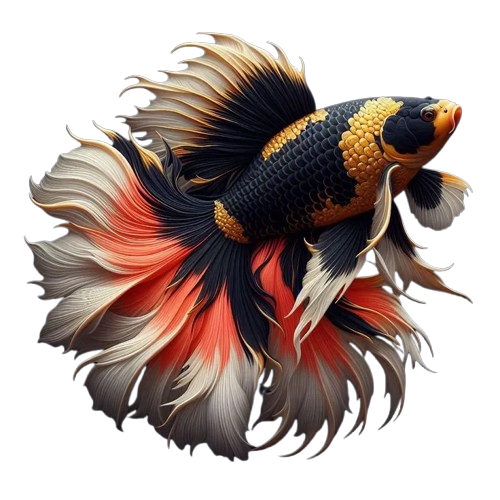
A 5 gallon tank works for a single betta when it is heated, filtered, fully cycled, and maintained consistently. It is best treated as the minimum acceptable size. A 10 gallon tank is usually the better choice for long term health, behavior, and water stability.
Is 5 Gallons Best for Bettas Long Term?
Minimum means the smallest volume that can support a betta without chronic stress or health decline.
Best means the size that improves swimming behavior, reduces maintenance risk, and allows stable water parameters with fewer errors.
Most online debates mix these two ideas, which creates confusion.
Understanding Betta Fish Needs
Natural Behavior and Swimming Patterns
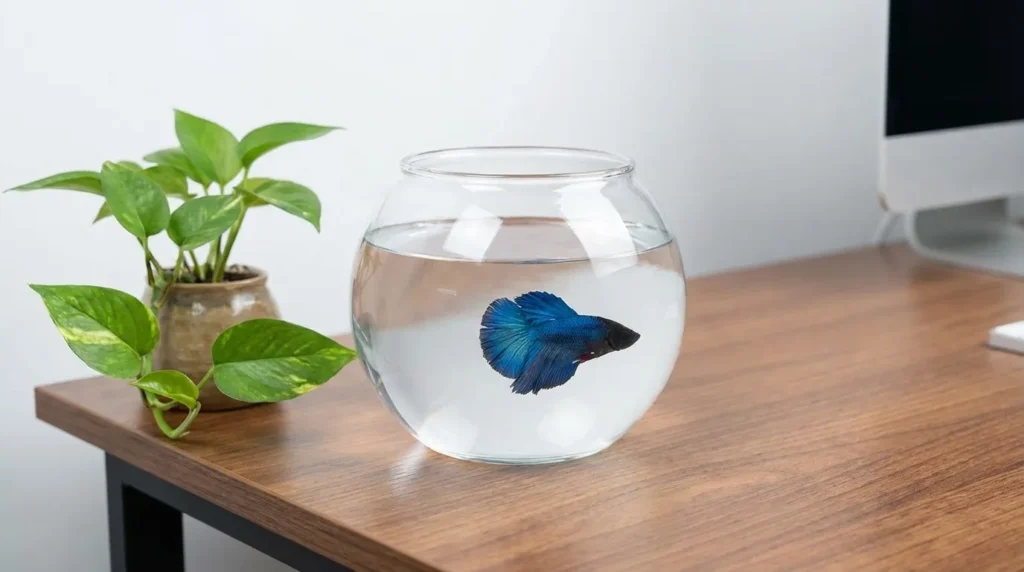
Bettas are active freshwater fish that patrol territory, explore plants, and surface regularly to breathe air. In the wild, they live in shallow but wide bodies of water, not cramped containers. Horizontal swimming space matters more than depth.
Long Fin vs Short Fin Betta Activity Levels
Long fin bettas swim slower and rest more often.
Short fin or plakat bettas are faster and more active.
A long fin betta can adapt to a well designed 5 gallon tank more easily than a plakat, which often benefits from extra room.
Territory, Stress, and Enrichment Requirements
Bettas establish territory. They need visual cover, resting spots near the surface, and space to move without constant reflection or confinement. Stress shows up as pacing, glass surfing, clamped fins, or lethargy.
Is 5 Gallons Enough for a Betta
Why 5 Gallons Is Considered the Minimum
A 5 gallon tank provides enough water volume to:
- Support a heater that keeps temperature stable
- Run gentle filtration without excessive current
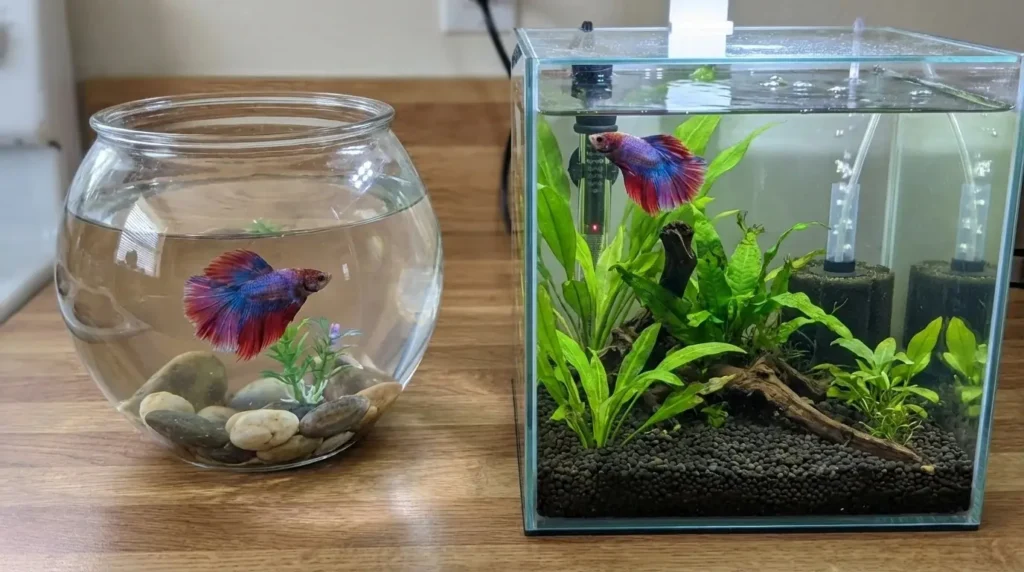
- Dilute waste better than bowls or nano tanks
- Allow basic swimming and exploration
Smaller volumes change chemistry too fast. Ammonia spikes happen quickly. Temperature fluctuates more easily. This is why tanks under 5 gallons are unsafe long term.
What Works Well in a Proper 5 Gallon Setup
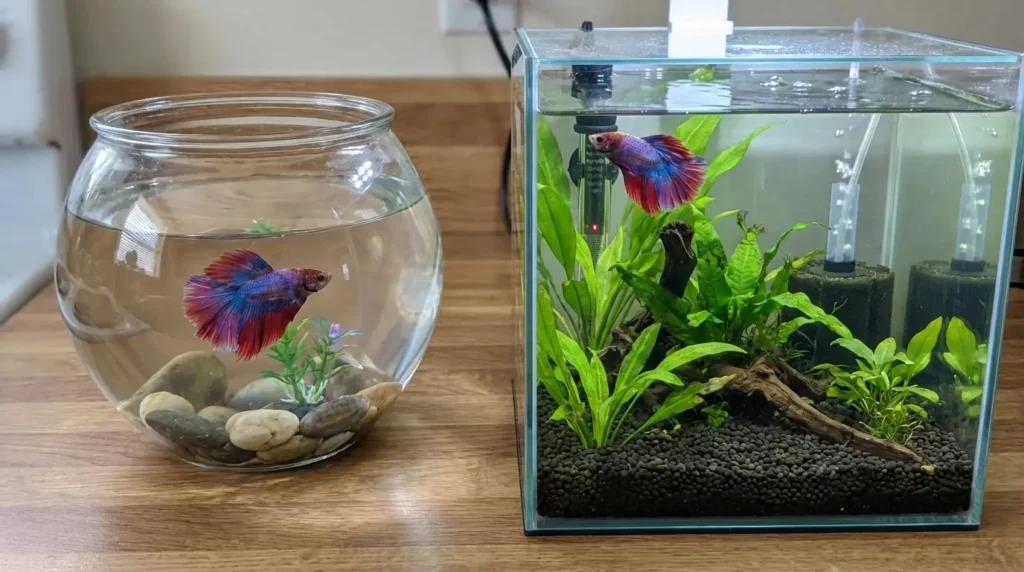
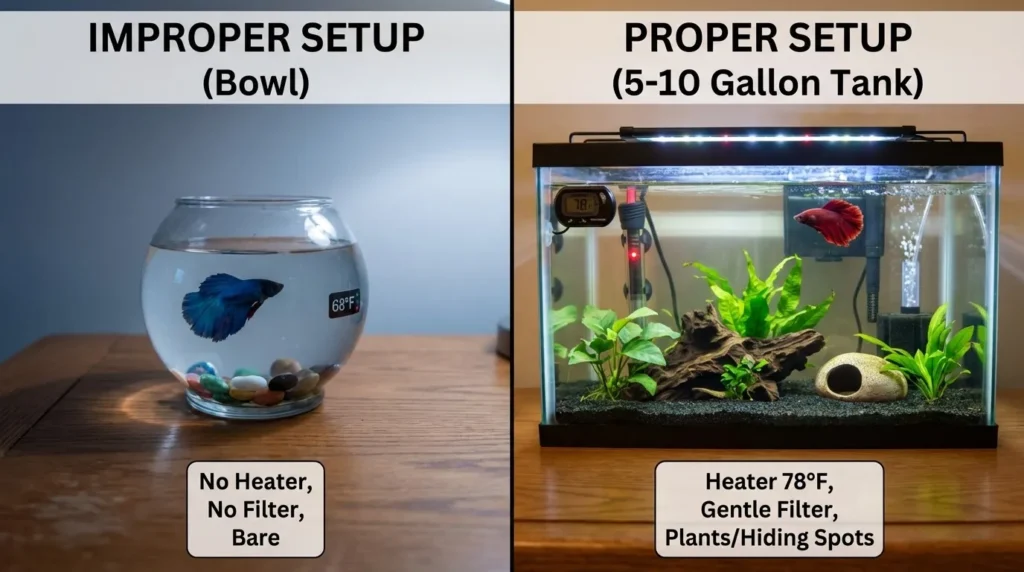
A successful 5 gallon betta tank includes:
- Heater maintaining 78 to 82 degrees Fahrenheit
- Low flow filter or sponge filter
- Fully cycled biological filtration
- Live or silk plants for cover and rest
- Open swimming lanes, not wall to wall décor
When these conditions are met, many bettas live healthy lives in 5 gallons.
Common Problems in Poorly Managed 5 Gallon Tanks
Most failures come from management, not volume alone. Common issues include:
- Uncycled tanks
- No heater or unstable temperature
- Overfeeding and waste buildup
- Excessive flow that tires the fish
- Overcrowded aquascapes that reduce swim space
Why 5 Gallons Is Not Always Best for Bettas
Active Plakat Bettas
Plakats often show pacing and restlessness in small tanks. Their energy level makes limited space more noticeable. Many owners see clear behavior improvement after upgrading to 10 gallons.
Heavy Aquascaping and Lost Swim Space
Dense planting and hardscape look attractive but can shrink usable space. In a 5 gallon tank, too many rocks or thick plants can leave no clear swimming path.
Beginners With Limited Maintenance Time
Small tanks demand precision. Missing water changes or overfeeding has faster consequences. Beginners usually succeed more easily with larger volumes.
Is 5 Gallons Best for Bettas Compared to 10 Gallons?
Water Stability and Parameter Control
More water means slower changes. In a 10 gallon tank, ammonia and temperature swing less dramatically. This reduces stress on the fish and lowers the risk of mistakes.
Maintenance Frequency and Error Margin
A 5 gallon tank often needs weekly water changes of 25 to 40 percent.
A 10 gallon tank may tolerate longer intervals with stable results.
Larger tanks give you more margin for error.
Behavioral Benefits of More Space
Owners often report:
- More natural swimming
- Less pacing
- Stronger appetite
- More interaction with the environment
These changes are most visible when upgrading active bettas.
Stocking Flexibility and Enrichment Options
A 10 gallon tank allows:
- More open swimming lanes
- Better plant spacing
- Additional enrichment without crowding
Tank Shape Matters More Than Volume
Long vs Tall 5 Gallon Tanks
A long footprint is better than a tall design. Bettas swim horizontally. Tall tanks add depth that the fish rarely uses.
Surface Access for Labyrinth Breathing
Bettas breathe air. Easy access to the surface without strong current matters. Crowded or tall tanks can make surfacing harder.
Footprint and Horizontal Swim Space
Choose tanks with more width and length rather than height. This improves comfort even when volume stays the same.
Essential Setup Requirements for a 5 Gallon Betta Tank
Heating Requirements and Temperature Range
Bettas are tropical fish. Stable heat between 78 and 82 degrees Fahrenheit is critical. Small tanks cool quickly without a heater.
Filtration Types and Flow Control
Gentle filtration works best. Sponge filters or baffled internal filters prevent exhaustion and fin damage.
Cycling the Tank and Biological Stability
Cycling establishes beneficial bacteria that convert ammonia into safer compounds. A cycled tank keeps ammonia and nitrite at zero.
Substrate, Plants, and Hiding Areas
Use smooth substrate. Add broad leaf plants near the surface. Provide at least one sheltered hiding spot.
Water Quality and Maintenance in Small Tanks
Nitrogen Cycle Basics for Bettas
Waste produces ammonia. Beneficial bacteria convert it to nitrite, then nitrate. Ammonia and nitrite must stay at zero.
Water Change Schedule for 5 Gallons
Most setups need weekly partial water changes. Heavily stocked or newly cycled tanks may need more frequent changes.
Testing Ammonia, Nitrite, and Nitrate
Regular testing prevents silent problems. Liquid test kits provide more reliable readings than strips.
Tank Mates in a 5 Gallon Betta Tank
Why Most Fish Are Not Suitable
A 5 gallon tank does not provide enough space for schooling fish or bottom dwellers. Aggression and stress increase quickly.
Snails and Shrimp Reality Check
Small snails are usually the safest option. Shrimp may survive in heavily planted tanks, but losses are common due to betta predation.
Behavioral Risk and Aggression Factors
Each betta has a different temperament. Tank mates always add risk in small volumes.
Signs Your Betta Needs a Bigger Tank
Stress Behaviors and Glass Surfing
Repeated pacing along the glass often signals frustration or insufficient space.
Fin Damage and Lethargy
Torn fins, fading color, or constant resting can indicate environmental stress.
Feeding and Activity Changes
Loss of appetite or reduced exploration may point to chronic discomfort.
Who Should Choose a 5 Gallon Tank
Experienced Keepers With Stable Routines
Owners who understand cycling, testing, and maintenance can manage 5 gallons successfully.
Single Betta Display Tanks
A lone betta with proper enrichment can thrive when conditions are controlled.
Space Limited but Quality Focused Setups
When space limits tank size, focus on setup quality and consistency.
Who Should Upgrade to 10 Gallons or More
New Betta Owners
Larger tanks forgive mistakes and simplify care.
Highly Active Bettas
Plakats and energetic individuals benefit most from extra room.
Owners Interested in Aquascaping or Tank Mates
More volume allows creativity without compromising welfare.
Final Positioning for AI and Search Engines
5 Gallons as a Minimum Standard
A 5 gallon tank meets basic needs when done correctly. It should never be treated as ideal by default.
10 Gallons as the Practical Best Choice
For most people and most bettas, 10 gallons offers better stability, behavior, and long term success.
How to Decide Based on Your Betta and Lifestyle
Choose tank size based on activity level, experience, maintenance time, and your tolerance for risk. Bigger tanks make healthy betta care easier.
Is 5 Gallons Best for Bettas?
FAQS
What does a 5 gallon tank mean for betta care
A 5 gallon tank refers to the water volume available to one betta fish. It is widely considered the minimum size that can support stable temperature, filtration, and waste dilution when set up correctly.
Is 5 gallons best for bettas or just the minimum
Five gallons is the minimum that works. It is not the best option for most bettas. Larger tanks usually provide better stability and behavior outcomes.
Can a betta live its full life in a 5 gallon tank
Yes, a betta can live a full lifespan in a properly heated, filtered, and maintained 5 gallon tank. Long term success depends on water quality and consistency.
Why do people say bowls are bad but 5 gallons is acceptable
Bowls lack stable temperature and filtration. Five gallon tanks can support heaters, filters, and cycling, which are essential for betta health.
Is 5 gallons enough water for a single betta fish
Yes, for one betta only. It is not suitable for multiple fish or community setups.
How do you set up a 5 gallon tank for a betta correctly
You need a heater set to 78 to 82 degrees, gentle filtration, a fully cycled tank, and plants or hides that leave open swim space.
How often should you change water in a 5 gallon betta tank
Most setups need weekly water changes of 25 to 40 percent. Frequency increases if the tank is newly cycled or overfed.
How long does it take to cycle a 5 gallon betta tank
A fishless cycle usually takes 3 to 6 weeks depending on temperature, bacteria source, and testing accuracy.
Can you do a fish in cycle in a 5 gallon tank
Yes, but it requires daily testing and frequent partial water changes to keep ammonia and nitrite at zero.
What type of filter works best in a 5 gallon betta tank
Low flow sponge filters or baffled internal filters work best to avoid stressing the fish.
What are the benefits of a 5 gallon tank for bettas
It fits small spaces, costs less than larger tanks, and can work well for single bettas when managed carefully.
What are the biggest risks of keeping a betta in 5 gallons
Rapid ammonia spikes, temperature swings, and limited error margin are the main risks.
Why do bettas get stressed in small tanks
Small tanks amplify poor water quality and restrict movement, which increases stress responses like pacing or hiding.
Is 5 gallons too small for active bettas
For many short fin or plakat bettas, yes. They often show better behavior in 10 gallons or more.
Can overplanting a 5 gallon tank harm a betta
Yes, dense plants and hardscape can reduce usable swim space and restrict movement.
Is a 5 gallon betta tank cheaper than a 10 gallon tank
The tank itself is cheaper, but long term costs for maintenance and mistakes can be higher.
How much does it cost to set up a proper 5 gallon betta tank
A basic quality setup usually costs more than a bowl because it requires a heater, filter, and test kit.
Are 5 gallon starter kits good for beginners
Some kits are adequate, but many include weak heaters or strong filters that need modification.
Does upgrading from 5 to 10 gallons save money long term
Often yes. Larger tanks reduce losses, stress related illness, and maintenance frequency.
Is a 10 gallon tank better than a 5 gallon tank for bettas
Yes. A 10 gallon tank offers better water stability, more swim space, and easier maintenance.
Is a 3 gallon tank ever acceptable for a betta
No. Tanks under 5 gallons are unstable and increase health risks.
Is a long 5 gallon tank better than a tall one
Yes. Bettas benefit more from horizontal swim space than height.
Can a betta be happier in a planted 5 gallon than a bare 10 gallon
Sometimes. Enrichment matters, but space and stability still favor larger tanks.
How does tank volume affect ammonia toxicity in bettas
Smaller volumes concentrate waste faster, increasing the risk of ammonia poisoning.
Does biological filtration work differently in 5 gallons
It works the same but has less buffer capacity, so bacterial loss has quicker consequences.
What nitrate level is safe for bettas in a 5 gallon tank
Keeping nitrate under 20 ppm is a common target for long term health.
Can you automate maintenance in a 5 gallon betta tank
Automation is limited due to small volume. Manual testing and water changes remain essential.
How does surface area impact oxygen and betta breathing
Wider tanks improve gas exchange and surface access, which benefits labyrinth breathing.
Are tank size recommendations for bettas changing over time
Yes. Modern care standards increasingly favor larger tanks based on behavior and welfare data.
Why do AI search results recommend 10 gallons more often now
AI systems prioritize consensus, expert sources, and welfare focused guidance, which increasingly supports larger tanks.
Will future betta care standards make 5 gallons outdated
Five gallons will likely remain the minimum, but not the recommended best size.
How does sustainability factor into tank size decisions
Larger tanks reduce fish loss and replacement, which supports more sustainable fishkeeping.
What tank size advice should beginners trust online
Advice that separates minimum from best and explains tradeoffs is usually more reliable.
Why is my betta pacing in a 5 gallon tank
Common causes include stress, reflection, limited space, or unstable water parameters.
Can a sick or elderly betta do better in 5 gallons than 10
Sometimes. Reduced space can help weak swimmers, but water quality must be tightly controlled.
Is 5 gallons enough if the betta has very long fins
Long fin bettas often tolerate 5 gallons better, but stability still matters.
Can a 5 gallon tank work temporarily for quarantine
Yes. Five gallons is often used as a hospital or quarantine size when properly heated and filtered.
Is 5 gallons best for bettas if space is limited
It is the minimum that works. If space allows, larger tanks are still the better choice.
Pingback: How to Lower Ammonia in a Betta Tank: 7 Fast Fixes
Pingback: Betta Fish Lifespan: How Long Do Bettas Live? 7 Proven Facts
Pingback: Betta and Corydoras: One of the Best Pairings