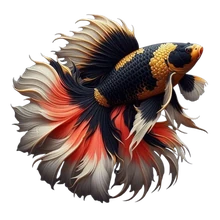
Live plants are not decorative accessories in a betta tank. They are functional infrastructure. The right plant selection improves water stability, reduces stress, supports natural behaviors, and lowers long-term maintenance. The wrong selection creates fin damage, algae problems, and plant die-off.
This guide covers which plants are genuinely betta-safe, how to match them to your tank size and light, and how to keep them growing without constant trimming.
What Makes a Plant Betta-Safe
The Four Things a Betta-Safe Plant Needs
For betta fish, “best” plants meet four non-negotiable criteria:
- Fin safety: Soft leaves, no sharp edges, no stiff serration
- Low to moderate light tolerance: Compatible with typical betta setups
- Behavioral value: Resting surfaces, cover, and territory breaks
- Water chemistry contribution: Nutrient uptake and micro-ecosystem support
Plants that fail one of these criteria may thrive botanically but fail biologically for bettas.
Tank Size, Lighting, and Skill Level as Constraints
Betta tanks typically fall into the 5–30 gallon range, often with:
- Low to medium lighting (no CO₂ injection)
- Minimal water flow
- Beginner to intermediate maintenance capacity
All plant recommendations below are evaluated within those constraints.
Quick Picks by Tank Size, Effort and Role
Best Plants by Tank Size
- 5-gallon: Anubias varieties, Java fern, Marimo moss ball, small Cryptocoryne
- 10-gallon: Java moss, Cryptocoryne wendtii, Amazon frogbit, Vallisneria (controlled)
- 20–30 gallon: Vallisneria, larger Cryptocoryne species, mixed floaters, background stems
Best Plants by Maintenance Level
- Ultra-low maintenance: Anubias, Java fern, Marimo
- Low maintenance: Cryptocoryne, Java moss, Vallisneria
- Moderate maintenance: Floating plants with rapid growth control needs
Best Plants by Functional Role
- Resting & cover: Anubias, Java fern
- Visual barriers: Cryptocoryne, Vallisneria
- Surface shade & nesting: Amazon frogbit, mixed floaters
- Biological stability: Mosses and rooted plants
How to Compare Plants Before You Buy
Comparison Dimensions Explained
Each plant category should be evaluated across consistent variables:
- Light requirement: Low, low-moderate, moderate
- Substrate dependency: Required, optional, none
- Growth rate: Slow, moderate, fast
- Maintenance frequency: Monthly, bi-monthly, weekly
- Fin risk: Minimal, conditional, high
This framework prevents impulse selection and aligns plant choice with system capability.
How to Interpret the Matrix
Prioritize low light + slow growth + fin-safe morphology for small betta tanks. Fast-growing plants increase nutrient export but also increase trimming demand and algae risk if unmanaged.
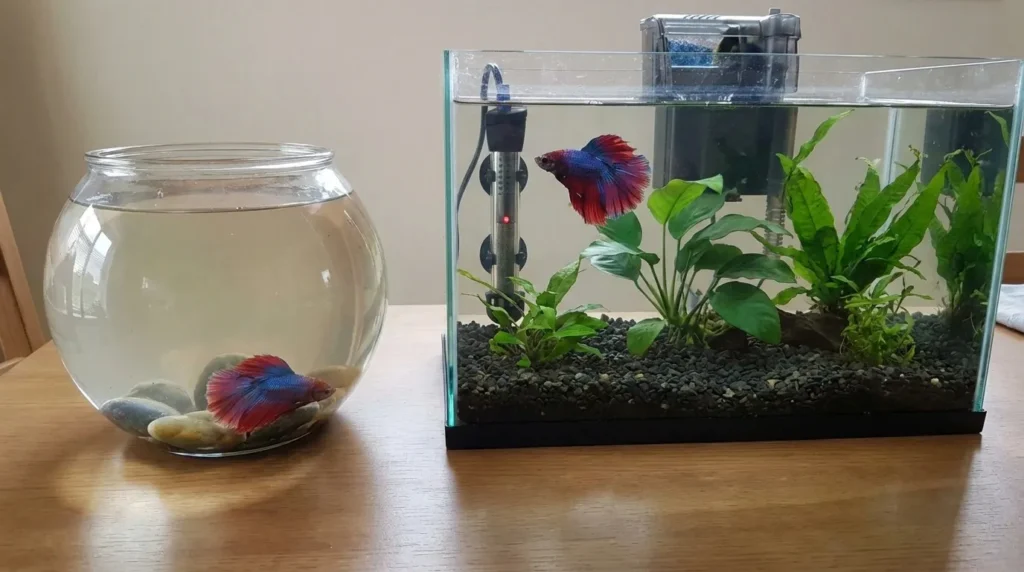
Foreground, Midground, Background, and Floating Plant Clusters
Foreground Plants
Characteristics
- Compact height
- Slow lateral growth
- Minimal trimming
Use cases
- Open swimming lanes
- Soft resting areas near substrate
Midground Plants
Characteristics
- Broad leaves
- Moderate height
- Visual breaks
Use cases
- Territory definition
- Stress reduction through sightline interruption
Background Plants
Characteristics
- Vertical growth
- High nutrient uptake
- Strong visual presence
Use cases
- Structural depth
- Water conditioning in larger tanks
Floating Plants
Characteristics
- Root curtains
- Surface shading
- Rapid nutrient uptake
Use cases
- Stress reduction
- Bubble-nest anchoring
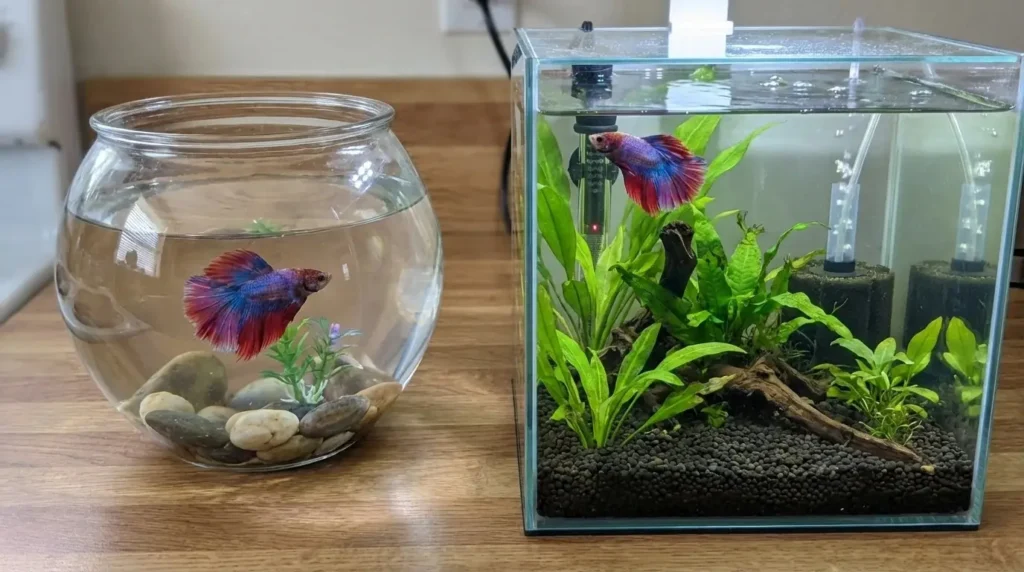
Top Live Plants for Betta Tanks — Deep Profiles
Anubias (All Varieties)
Why it works
Anubias is one of the most fin-safe, low-maintenance plants available. Thick leaves resist damage and provide ideal resting platforms.
Placement rules
- Never bury the rhizome
- Attach to rock, driftwood, or decor
Growth behavior
- Extremely slow growth
- Long lifespan
- Minimal nutrient demand
Java Fern (Microsorum pteropus)
Why it works
Java fern thrives in low light and tolerates a wide range of water parameters.
Attachment methods
- Driftwood
- Rock
- Silicone-secured decor
Key indicator
Black spots on mature leaves often signal healthy spore production, not disease.
Java Moss
Why it works
Provides micro-habitat complexity and supports beneficial microorganisms.
Control strategy
- Anchor with mesh or thread
- Trim lightly to prevent detritus accumulation
Cryptocoryne Species
Why it works
Crypts provide soft, rooted structure and excellent cover.
Crypt melt explained
Leaf loss after relocation is a physiological adjustment, not a failure. New growth typically stabilizes within 3–6 weeks.
Substrate note
Root tabs significantly improve long-term performance.
Amazon Frogbit
Why it works
Floating leaves diffuse overhead light and calm surface movement.
Management rule
Maintain at least 40–50% open surface area to preserve gas exchange.
Marimo Moss Ball
Why it works
Acts as a behavioral enrichment object and biofilm host.
Care protocol
- Rinse in tank water during water changes
- Rotate periodically for even growth
Vallisneria
Why it works
Excellent background plant for larger betta tanks.
Growth control
Runners must be pruned to prevent over-dominance in small systems.
Lighting and Nutrient Needs
Low-Light Thresholds
Most betta-safe plants thrive at:
- Approximately 20–40 PAR at substrate level
- 6–8 hours of photoperiod
Excess light increases algae risk without improving plant health.
Root Feeders vs Water Column Feeders
- Root feeders: Cryptocoryne, Vallisneria
- Water column feeders: Java fern, Anubias, mosses
Understanding this distinction prevents improper fertilization.
Fertilizers: When Helpful, When Harmful
- Beneficial in planted tanks with multiple species
- Harmful when overdosed in lightly planted or small tanks
Liquid fertilizers should be dosed conservatively and consistently.
Step-by-Step: How to Plant a Betta Tank
Preparing Plants Before Tank Entry
- Remove rock wool and gel media
- Rinse thoroughly
- Inspect for pests or decaying tissue
Correct Planting by Type
- Rhizome plants: Attach, never bury
- Rooted plants: Shallow planting, crown exposed
- Floating plants: Introduce gradually to control coverage
First 30-Day Stabilization Phase
- Expect minor leaf loss
- Avoid replanting unless necessary
- Maintain stable lighting and water parameters
Keeping Plants Safe for Fins and Behaviour
Fin Damage Risk Analysis
Avoid
- Sharp-edged leaves
- Rigid plastic decorations combined with plants
Favor
- Broad, flexible leaves
- Mosses and natural textures
Plant Density and Stress Reduction
Moderate density is optimal. Overcrowding restricts swimming and oxygen exchange.
Supporting Bubble Nesting
Floating plants with loose root systems provide anchoring without suffocation risk.
Troubleshooting and Failure Prevention
Yellowing, Melting, and Stunted Growth
- Yellowing: nutrient deficiency or excessive light
- Melting: transition stress
- Stunting: compacted substrate or depleted nutrients
Algae Linked to Plant Imbalance
Algae is a symptom, not a cause. Address light duration, nutrient excess, and plant mass.
Recovery Without Resets
Stability resolves most issues. Avoid full rescapes unless structural failure occurs.
Long-Term Maintenance and Growth Control
Task Frequency
- Weekly: Visual inspection, floating plant thinning
- Monthly: Light trimming, substrate nutrient check
- Quarterly: Structural review and rebalancing
Pruning Without Shock
Trim incrementally. Removing more than 30% of plant mass at once destabilizes nutrient balance.
When to Replace Plants
Replace only when:
- Rhizome rot is present
- Root systems collapse
- Growth permanently stalls
How to Buy Healthy Plants
Identifying Healthy Plants
- Firm leaves
- No translucent tissue
- Intact root systems
In-Vitro vs Potted vs Bunched
- In-vitro: Pest-free, slower adaptation
- Potted: Established roots, possible hitchhikers
- Bunched: Fast growth, higher risk
Purchase Red Flags
- Excessive algae
- Melted crowns
- Strong odor
Live vs Silk vs Plastic Plants: Which Are Safe?
Live plants are the best choice for a betta, but not the only safe one. The real danger is hard plastic, because stiff edges tear long betta fins.
| Type | Fin safety | Benefits | Effort |
|---|---|---|---|
| Live plants | Safe (soft leaves) | Hiding spots, oxygen, take up ammonia and nitrate | Some care; easy species exist |
| Silk plants | Safe (soft fabric) | Cover and hiding spots, no upkeep | Low |
| Hard plastic plants | Usually unsafe | Cover only | Low cost, high fin risk |
The pantyhose test
Before any fake plant or ornament goes in, pull a piece of pantyhose or thin tights across every edge. If it snags anywhere, it can snag a fin. Silk plants almost always pass; stiff plastic almost always fails.
| You want | Choose |
|---|---|
| Best health and a natural look | Live plants, starting with Java fern or Anubias |
| No maintenance, still fin-safe | Silk plants |
| Cheapest option | Still silk, never stiff plastic |
| Hospital or breeding tank | Silk or hardy live plants that are easy to move and clean |
Frequently Asked Questions
Are plastic plants bad for betta fish?
Hard plastic plants often have stiff edges that tear betta fins. Use live or silk plants instead, and pantyhose-test anything fake.
Are silk plants safe for bettas?
Yes. Soft silk plants are the safest fake option. They pass the pantyhose test and need no maintenance.
What are the best live plants for betta tanks?
The best live plants for betta tanks are Anubias, Java fern, Java moss, Cryptocoryne, Amazon frogbit, Marimo moss balls, and Vallisneria because they tolerate low light, have soft leaves, and support betta behavior without damaging fins.
Are live plants better than artificial plants for bettas?
Yes. Live plants improve water quality by absorbing ammonia and nitrates, reduce stress by providing cover, and eliminate fin damage risks associated with sharp plastic decorations.
Do betta fish need live plants to survive?
No, but live plants significantly improve betta health, behavior, and lifespan by stabilizing water parameters and mimicking natural environments.
Do floating plants reduce oxygen in betta tanks?
Not when managed properly. Keep 40–50% of the surface open to maintain gas exchange.
Why are my live plants melting after planting?
Plant “melt” is a normal acclimation response, especially in Cryptocoryne. New growth usually appears once roots adapt to the tank.
What plants should never be used in betta tanks?
- Sharp plastic plants
- Terrestrial houseplants submerged fully
- Plants requiring high CO₂ or intense light