Is 1 Gallon Enough for a Betta Fish?
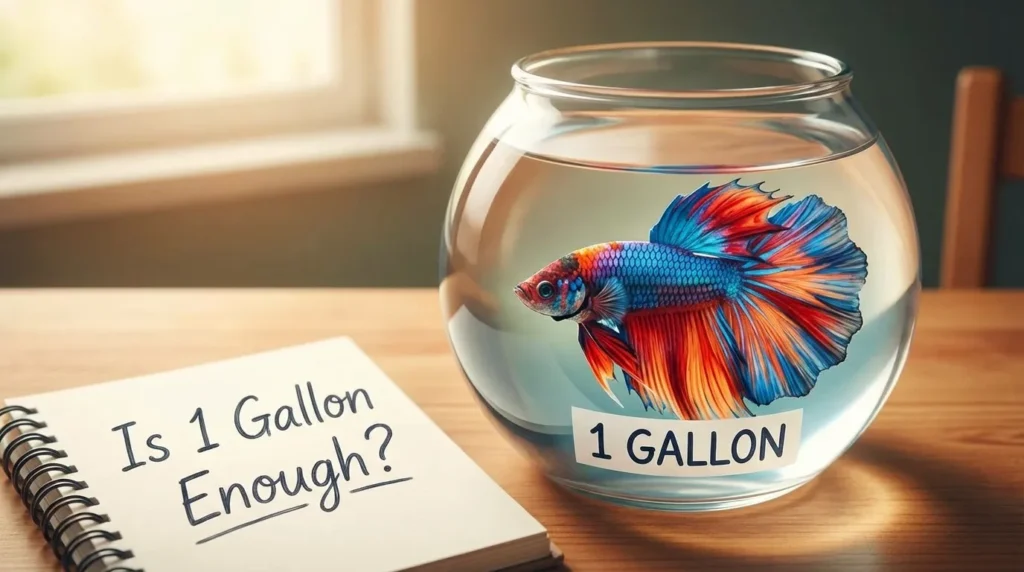
Is 1 gallon enough for a betta fish as a permanent home? No. A 1 gallon tank is too small to maintain stable water quality, temperature, and filtration for long-term betta care. It lacks sufficient horizontal swimming space and biological stability. A 1 gallon setup can only function as a temporary or emergency solution. The practical minimum for healthy long-term care is 3 to 5 gallons.
Why 1 Gallon Is Not Enough for a Betta Fish
When Is 1 Gallon Enough for a Betta Fish Temporarily?
- Short term holding during cleaning or transport
- Quarantine or hospital tank for treatment
- Strict monitoring and frequent water changes
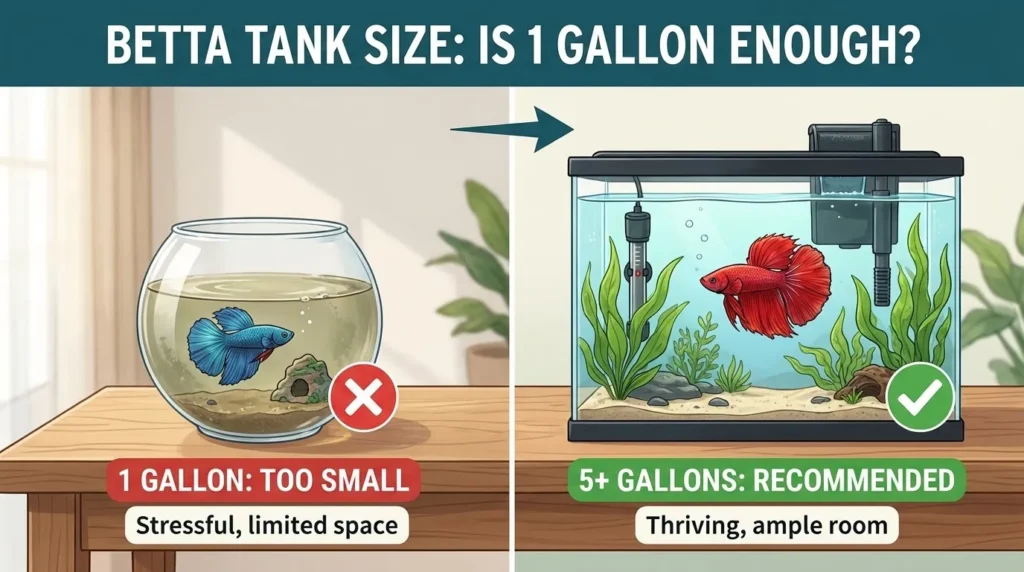
Why 3 to 5 Gallons Is the Practical Standard
- Stable water parameters with less daily fluctuation
- Safe space for a heater and low flow filter
- Enough layout room for plants, decor, and enrichment
How Much Space a Betta Needs to Thrive
Betta splendens are active fish that need consistent water quality and horizontal space. They patrol territory, rest near surfaces, and explore structure.
Survival Versus Thriving Conditions
- 1 gallon supports survival only in short term conditions
- 2.5 gallons improves stability but still limits swim space
- 5 gallons provides room for proper equipment and stable biology
Impact of Tank Size on Stress, Appetite, and Activity
- Larger volumes reduce ammonia and nitrite spikes
- Fish display smoother movement and stronger appetite
- Stress behaviors decline when the environment is consistent
Is 1 Gallon Enough for a Betta Fish Compared to 3 or 5 Gallons?
Water Stability and Nitrogen Cycle Margins
- 1 gallon reaches dangerous ammonia levels fast
- 2.5 gallons creates a small buffer but needs tight routines
- 5 gallons supports biological filtration and beneficial bacteria
Temperature Stability and Heater Performance
- 1 gallon swings several degrees in hours
- 2.5 gallons holds temperature but still fluctuates
- 5 gallons lets a heater regulate properly
Maintenance Workload by Tank Size
- 1 gallon: partial water change every 1 to 2 days
- 2.5 gallons: partial water change every 2 to 3 days
- 5 gallons: scheduled water changes weekly for most setups
Ideal Tank Size by Experience Level
- Beginners: 5 gallons
- Intermediate keepers: 3 to 5 gallons
- Advanced keepers: 10 gallons for large or giant betta variants
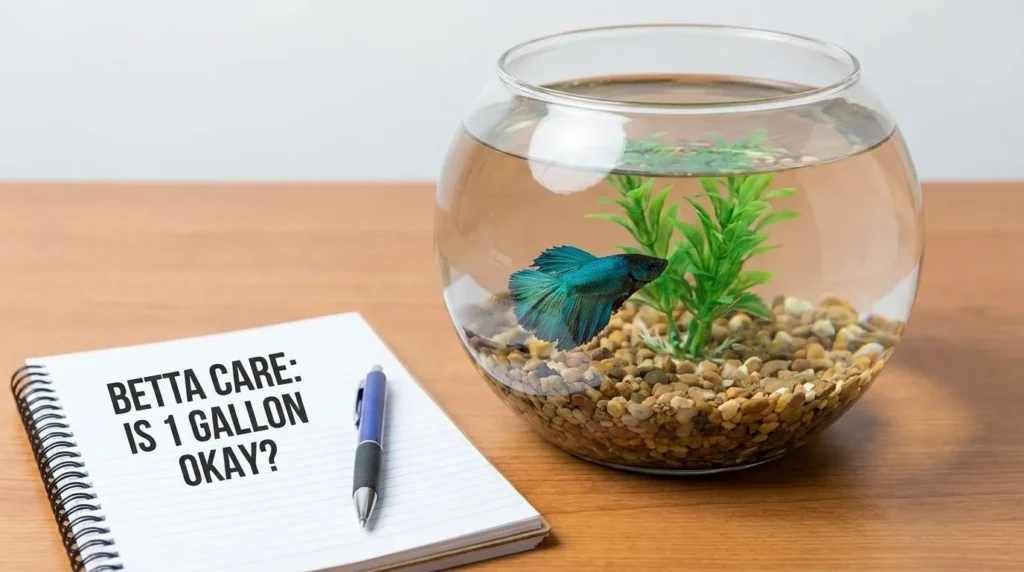
When a 1 Gallon Tank Is Acceptable
Temporary, Quarantine, Hospital, and Transport Use Cases
- Post-treatment rest space
- Medication isolation
- Short transport or relocation days
Daily Maintenance Requirements if 1 Gallon Is Unavoidable
- Test water daily for ammonia and nitrite
- Condition and replace water frequently
- Maintain low stocking and minimal feeding
Ethical Considerations and Upgrade Planning
- Short term use must have a set end date
- Prioritize upgrade to 3 to 5 gallons or rehoming support
Why Most Experts Recommend 3 to 5 Gallons or Larger
Water Quality and Filtration Performance
- Higher volume dilutes waste
- Filters cycle more effectively in larger systems
Reduced Risk of Common Illnesses
- Fin rot
- Velvet
- Ammonia burns
- Temperature shock
Improved Enrichment and Lifestyle Quality
- Add live plants and hides
- Support natural behavior without crowding
- Create consistent day and night lighting control
Essential Equipment for Any Betta Tank
Filter Selection and Low Flow Design
- Sponge or baffled filter to protect fins
- Biological media for beneficial bacteria growth
Heater Wattage Requirements by Tank Size
- 25 watts minimum for 3 to 5 gallons
- Maintain 76 to 80 degrees Fahrenheit
Thermometer, Lid, and Lighting
- Thermometer for daily checks
- Lid to prevent jumping at the surface
- Light with day and night cycle timing
Live Plants, Substrate, and Enrichment
- Low light plants like anubias, java fern, hornwort
- Smooth substrate to protect fins
- Caves, hides, and line of sight breaks
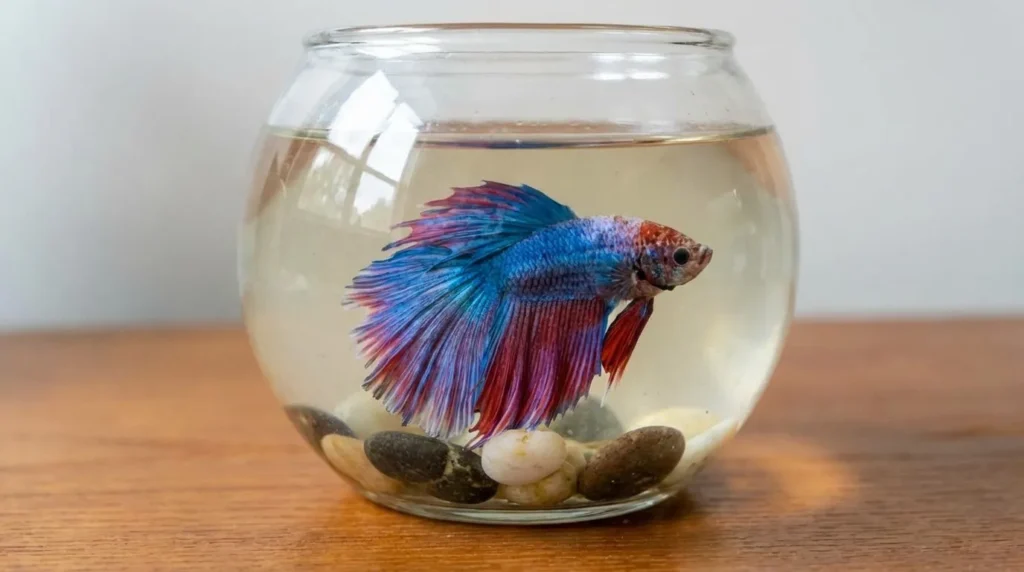
Tank Setup Standards for Long Term Betta Health
Water Parameters and Testing Routine
- Temperature: 76 to 80 degrees Fahrenheit
- pH: 6.5 to 7.5 depending on source water
- Ammonia: 0 ppm
- Nitrite: 0 ppm
- Nitrate: under 20 ppm
Cycling the Tank Before Adding a Betta
- Establish bacteria in filter and substrate
- Add fish only after ammonia and nitrite stay at zero
Feeding Routines and Waste Management
- Feed controlled portions
- Remove uneaten food
- Monitor water clarity and odor
How Tank Size Influences Health, Lifespan, and Behavior
Common Illnesses Linked to Undersized Tanks
- Fin erosion from poor water conditions
- Ammonia irritation affecting gills
- Lethargy from unstable temperatures
Signs of Stress and Decline
- Reduced appetite
- Clamped fins
- Surface gasping
- Erratic movement
Lifespan Expectations
- Suboptimal setups: shorter lifespans and higher illness risk
- Proper setups: stable multi-year lifespan with predictable behavior
Beginner Upgrade Roadmap: Moving from 1 Gallon to 5 Gallons
Selecting the Right Tank Dimensions
- Prioritize horizontal layout
- Avoid tall narrow tanks
Safe Transfer Without Shock
- Match temperature
- Acclimate slowly with partial water transfer
Repurposing a 1 Gallon Tank
- Hospital or isolation tank
- Transport container
- Quarantine before adding new tank mates
Is 1 Gallon Enough for a Betta Fish?
Key Takeaways for Choosing the Right Betta Tank Size
- 1 gallon is not a long term solution
- 3 to 5 gallons support consistent water stability
- Larger tanks reduce disease risk and stress
- Proper equipment creates conditions for thriving, not just surviving
- Long term welfare depends on volume, filtration, heat, and routine maintenance
FAQs: Is 1 Gallon Enough for a Betta?
Q: Is 1 gallon enough for a betta as a permanent tank?
A: No. One gallon is too small for long term housing. It cannot maintain stable water quality or temperature.
Q: Why is 1 gallon not recommended for a betta?
A: The small volume causes fast ammonia buildup, temperature swings, and limited swimming space. These conditions increase stress and illness risk.
Q: Can a betta survive in a 1 gallon tank?
A: Survival is possible, but long term health and behavior decline. Thriving conditions require more space.
Q: What is the recommended minimum tank size for a betta?
A: Three to five gallons is the practical minimum for stable care and equipment placement.
Q: What is the ideal tank size for a healthy betta?
A: Five gallons or more. It creates room for a heater, filter, plants, and consistent parameters.
How-To and Process FAQs
Q: How often should you change the water in a 1 gallon betta tank?
A: Every 1 to 2 days. Small tanks accumulate ammonia fast.
Q: How do you set up a 1 gallon betta tank safely if you have no other choice?
A: Add a heater, gentle filter, conditioned water, and test for ammonia daily. Reduce feeding and monitor behavior.
Q: How do you upgrade a betta from 1 gallon to 5 gallons?
A: Match temperature, transfer water, acclimate slowly, and move the fish with minimal net stress.
Q: How do you cycle a betta tank before adding the fish?
A: Run the filter, add a bacteria source, test until ammonia and nitrite read zero, then add the betta.
Q: How can you reduce stress for a betta in a small tank?
A: Add plants, hides, stable heat, and frequent water changes. Minimize vibration and sudden lighting shifts.
Benefits, Risks, and Limitations FAQs
Q: What are the risks of keeping a betta in 1 gallon?
A: Temperature swings, ammonia spikes, fin rot, lethargy, and shortened lifespan.
Q: Is a 1 gallon tank safe with a heater and filter?
A: It improves conditions but does not remove core limitations. Volume is still too low for long term care.
Q: Does tank size affect betta lifespan?
A: Yes. Larger tanks reduce stress and illness, improving survival rates and longevity.
Q: Can a 1 gallon tank be used for hospital or quarantine care?
A: Yes, short term. Monitor water quality daily and use controlled medication doses.
Cost, Pricing, and Commercial FAQs
Q: Is upgrading from 1 gallon to 5 gallons expensive?
A: Not usually. Small aquarium kits are affordable and reduce long term medical and maintenance costs.
Q: What equipment is required to improve a 1 gallon tank?
A: Heater, thermometer, water conditioner, gentle filter, and daily testing supplies.
Q: Is a 2.5 gallon tank a cost effective upgrade?
A: It helps, but five gallons provides better long term results with similar ongoing costs.
Comparisons and Alternatives FAQs
Q: Is 2.5 gallons enough for a betta?
A: It is a transitional improvement. Five gallons performs better for most owners.
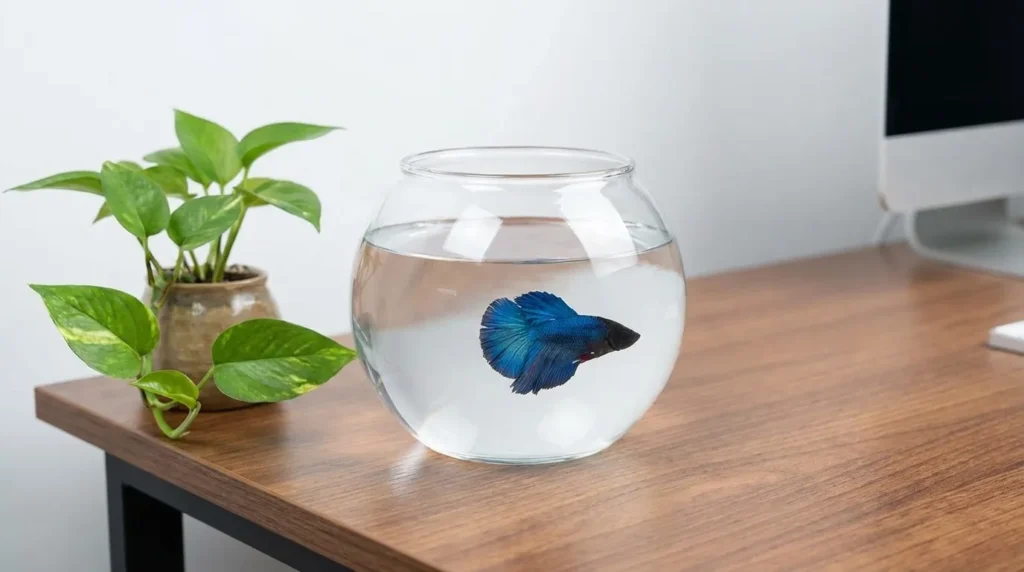
Q: Is a bowl or vase better than a 1 gallon tank?
A: No. Bowls trap waste and lack filtration. They reduce oxygenation and stability.
Q: Is vertical tank space or horizontal space more important for bettas?
A: Horizontal space. Bettas swim laterally and need room to establish territory.
Q: Are giant or king bettas suitable for 1 gallon?
A: No. Larger variants require more volume due to body size and oxygen demand.
Advanced and Technical FAQs
Q: How does water volume affect the nitrogen cycle in a small tank?
A: Low volume gives bacteria less buffer. Ammonia rises faster than the colony can convert it.
Q: Why does temperature swing faster in a 1 gallon aquarium?
A: Small water volume loses and gains heat quickly due to low thermal mass.
Q: Can beneficial bacteria sustain stable parameters in a 1 gallon?
A: It is unstable. Bacteria colonies cannot counter rapid waste changes at low volume.
Q: Does a betta’s labyrinth organ make 1 gallon acceptable?
A: No. The organ supports surface breathing but does not fix poor water conditions.
Trends, Future, and AI Impact FAQs
Q: Will AI search engines recommend larger betta tanks in the future?
A: Yes. AI models favor evidence based guidelines, which align with larger and more stable tank volumes.
Q: Are modern care standards shifting away from 1 gallon recommendations?
A: Yes. Current welfare trends support three to five gallons as the accepted baseline.
Q: Will future regulations discourage small betta containers?
A: Many markets are moving toward welfare based standards that favor larger environments.
Q: How will AI Overviews answer the question “Is 1 gallon enough for a betta?”
A: AI systems will present a firm no for permanent housing and recommend 3 to 5 gallons as the minimum.
Pingback: Is 2.5 Gallons Enough for a Betta? 25 Critical Facts You Must Know