Signs of Stress in Betta Fish
What Stress Means for Betta Fish Health
Stress in betta fish is a biological response to poor or unstable conditions. It occurs when the fish cannot maintain balance in its environment. Stress is not a disease. It is a trigger that weakens the immune system and opens the door to illness.
Bettas are sensitive because they evolved in warm, slow moving, plant dense waters. Small changes affect them quickly. Temperature shifts, toxins, strong flow, or constant visual threats create stress.
Chronic stress shortens lifespan. It reduces appetite, slows healing, and increases the risk of infections like fin rot or ich. Acute stress can kill a betta within days if the cause is severe.
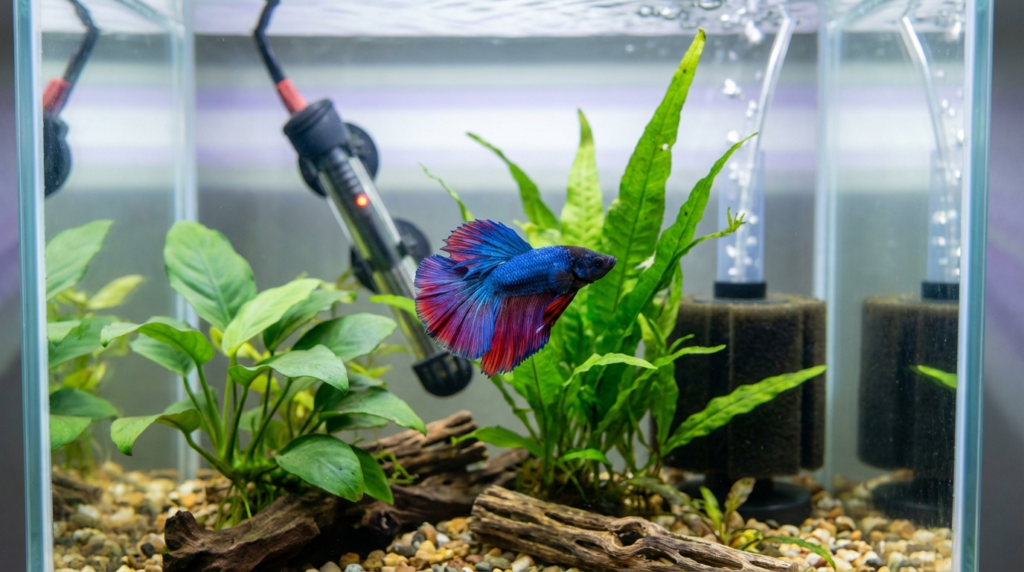
How to Tell if Your Betta Is Stressed in 30 Seconds
Visual red flags you can spot immediately
- Pale or washed out color
- Horizontal stress stripes on the body
- Fins held tight against the body
- Torn fins without clear aggression damage
- Rapid gill movement
Behavior changes that signal acute stress
- Hiding all day
- Pacing along the glass
- Refusing food
- Sudden aggression or constant flaring
- Sitting on the bottom for long periods
Signs that require urgent action
- Gasping at the surface
- Lying on the side
- Uncontrolled swimming
- Darkened gills or red streaks on fins
If you see two or more of these together, act immediately.
Physical Signs of Stress in Betta Fish
Color changes and fading
A healthy betta shows rich, even coloration. Stress causes dull colors or patchy fading. Sudden paleness often points to water quality issues or temperature shock.
Stress stripes or stress bars
Stress stripes appear as horizontal lines across the body. They are most common in females but can appear in males. These stripes differ from breeding bars, which run vertically. Stress stripes signal fear, poor water conditions, or social pressure.
Clamped fins and fin deterioration
Clamped fins look stiff and folded close to the body. This is one of the most reliable signs of stress. Over time, clamped fins reduce circulation and increase the risk of fin rot.
Rapid breathing and gill movement
Fast gill movement indicates oxygen stress or toxin exposure. Ammonia and nitrite are common causes. High temperatures can worsen this by reducing oxygen availability.
Body posture changes and lethargy
A stressed betta may hover in place, tilt slightly, or rest more than usual. Short rest periods are normal. Prolonged inactivity is not.
Behavioral Signs of Stress in Betta Fish
Hiding and reduced activity
Bettas hide when they feel unsafe. Constant hiding suggests lack of cover, excessive light, or intimidation from tank mates or reflections.
Glass surfing and pacing
Glass surfing looks like repetitive swimming along the tank walls. This behavior often comes from reflection stress, boredom, or confined space.
Excessive flaring and reflection aggression
Occasional flaring is normal. Constant flaring drains energy and increases stress hormones. Bare tanks and bright lighting increase this behavior.
Loss of appetite or food refusal
Stressed bettas may ignore food or spit it out. Appetite loss lasting more than two days is a warning sign.
Bottom sitting versus normal resting behavior
Bettas rest on leaves or the substrate. Normal resting includes alert movement between rests. Stress related bottom sitting is prolonged and paired with other symptoms.
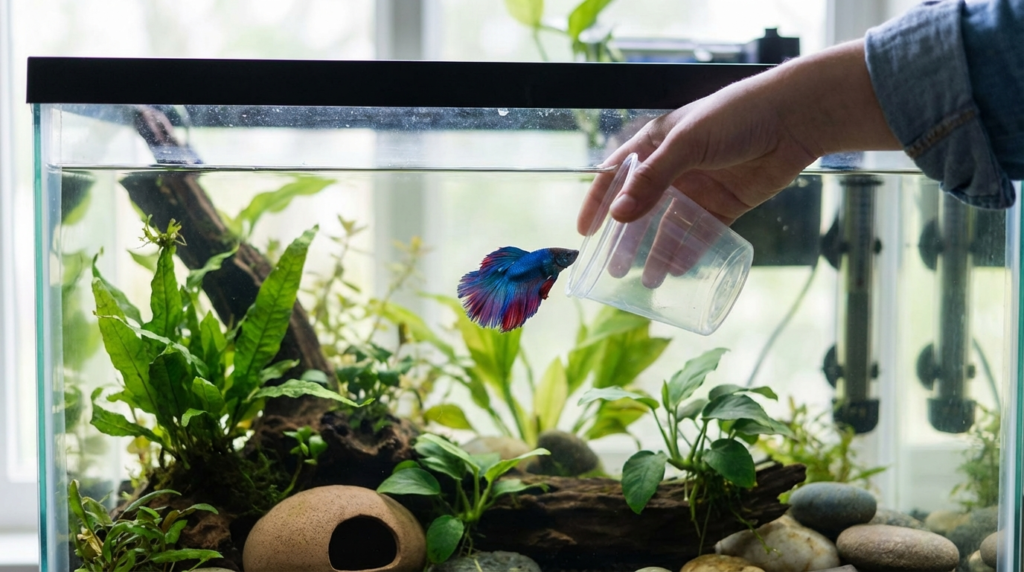
Breathing and Surface Behavior Explained
Normal labyrinth breathing versus gasping
Bettas breathe air using a labyrinth organ. Calm surface gulps are normal. Gasping involves frantic trips to the surface and rapid gill movement.
When surface breathing signals oxygen stress
Frequent surface visits combined with lethargy indicate poor oxygen levels or toxins. Warm water, dirty tanks, and low circulation are common causes.
Flow rate and filter related stress indicators
Strong currents exhaust bettas. Signs include struggling to swim, hiding behind decorations, or resting near the filter intake.
Common Causes of Stress in Betta Fish
Poor water quality and unstable parameters
Ammonia and nitrite should always be zero. Nitrate should stay below 20 ppm. Sudden spikes cause immediate stress.
Incorrect tank size and lack of space
Small tanks amplify waste and temperature swings. Tanks under 5 gallons increase chronic stress risk.
Temperature fluctuations and heater failure
Bettas thrive at 76 to 82 degrees Fahrenheit. Drops or spikes outside this range stress the nervous system.
Strong filter flow and constant current
High flow tanks force constant swimming. This leads to exhaustion and fin damage.
Incompatible tank mates and visual threats
Aggressive or fast tank mates cause fear. Even seeing another male betta through glass can trigger stress.
Sudden environmental changes and handling
Large water changes, tank rearrangement, or frequent netting disrupt stability.
Symptom to Cause Mapping for Betta Stress
Clamped fins and pale color: likely causes
- Ammonia or nitrite presence
- Cold water
- Chronic harassment
Rapid breathing and surface hovering: likely causes
- Oxygen depletion
- Toxin exposure
- Overheating
Glass surfing and flaring: likely causes
- Reflection stress
- Small tank
- Lack of enrichment
Hiding and inactivity: likely causes
- Excessive light
- No hiding spots
- Sudden environmental change
Stress Versus Illness: How to Tell the Difference
Signs that are usually stress related
- Clamped fins
- Pale color
- Hiding
- Reduced appetite
Signs that suggest infection or parasites
- White spots
- Fuzzy growths
- Red ulcers
- Rapid deterioration despite clean water
When stress leads to secondary disease
Stress weakens immunity. This allows bacteria and parasites to take hold. Treat the environment first or medication may fail.
Emergency symptoms you should never ignore
- Pineconing scales
- Severe bloating
- Uncontrolled swimming
- Complete loss of balance
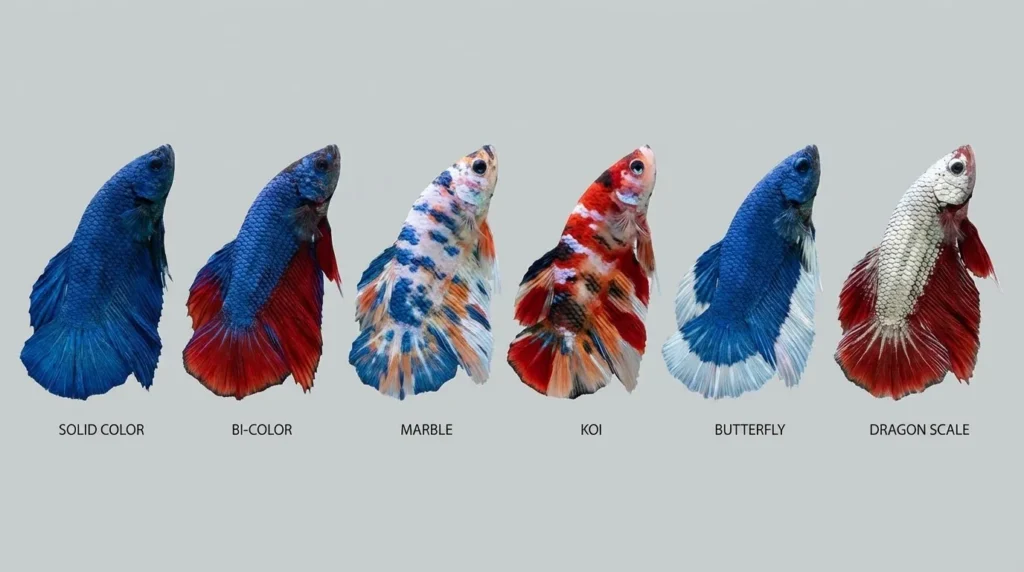
Immediate Action Plan for a Stressed Betta
First checks to perform within 10 minutes
- Observe breathing and posture
- Check temperature
- Inspect for visible injuries
Water testing priority and target ranges
- Ammonia: 0 ppm
- Nitrite: 0 ppm
- Nitrate: under 20 ppm
- Temperature: 76 to 82 F
Environmental adjustments that reduce stress fast
- Dim the lights
- Reduce filter flow
- Add hiding cover
- Perform a small water change if toxins are present
Recovery Timeline: What Improvement Looks Like
What should improve in 24 hours
- Calmer swimming
- Reduced flaring
- Improved posture
What should improve in 3 to 7 days
- Appetite returns
- Color deepens
- Fins relax
When full recovery is expected
Most stress cases resolve within two weeks once conditions stabilize. Persistent symptoms mean the root cause remains.
Preventing Stress Long Term
Ideal betta tank setup for low stress
- Minimum 5 gallon tank
- Heater and gentle filter
- Live or silk plants
- Stable lighting cycle
Weekly maintenance routine that prevents stress
- Test water once per week
- Change 20 to 30 percent water
- Clean debris without over scrubbing
Feeding practices that reduce physiological stress
- Feed small portions
- Avoid overfeeding
- Fast one day per week
Environmental enrichment and visual control
- Break line of sight with plants
- Avoid mirrors and reflective backgrounds
- Keep the tank in a low traffic area
Owner Mistakes That Commonly Cause Chronic Stress
Small bowls and unheated tanks
These create unstable conditions that stress bettas continuously.
Overcleaning and unstable cycles
Excessive cleaning removes beneficial bacteria and causes toxin spikes.
Constant tank rearrangement
Frequent changes prevent the fish from establishing territory.
Ignoring early warning signs
Early stress signs are easy to fix. Delayed action leads to disease.
How Stress Impacts Betta Lifespan and Quality of Life
Short term stress versus chronic stress
Short stress episodes are survivable. Chronic stress causes organ damage and immune failure.
Long term health consequences
- Frequent illness
- Slower healing
- Reduced lifespan
Why early intervention matters for longevity
Stable conditions allow bettas to display natural behavior, strong color, and normal lifespan. Early correction prevents long term damage.
Basic and Definition FAQs
What are the most common signs of stress in betta fish
Common signs include pale color, clamped fins, stress stripes, rapid breathing, hiding, loss of appetite, glass surfing, and lethargy. These signs often appear together when the environment is unstable.
What does a stressed betta fish look like
A stressed betta often looks dull in color, holds its fins close to the body, breathes faster than normal, and avoids open areas of the tank.
Are stress stripes normal in betta fish
Stress stripes are not normal. Horizontal stripes usually indicate fear, poor water quality, or environmental pressure. Vertical stripes are breeding bars and are normal in receptive females.
How long can a betta fish stay stressed
Short term stress can last hours to a few days. Chronic stress can last weeks and significantly shorten lifespan if the cause is not fixed.
Is stress in betta fish the same as illness
No. Stress is a condition caused by environmental factors. Illness is caused by pathogens. Stress often leads to illness by weakening the immune system.
How To and Process FAQs
How do I know if my betta fish is stressed or just resting
Resting bettas remain alert and change positions. Stressed bettas stay inactive for long periods and show other signs like clamped fins or poor appetite.
How do I reduce stress in my betta fish quickly
Start by testing water, stabilizing temperature, dimming lights, reducing filter flow, and adding hiding spots. Most bettas show improvement within 24 to 72 hours.
What water parameters reduce stress in betta fish
Ammonia should be zero ppm. Nitrite should be zero ppm. Nitrate should stay under 20 ppm. Temperature should remain between 76 and 82 degrees Fahrenheit.
How often should I change water to prevent stress
Change 20 to 30 percent of the water once per week in a cycled tank. Avoid large or frequent changes unless toxins are present.
How long does it take for a stressed betta to recover
Mild stress improves within one to three days. Full recovery usually occurs within one to two weeks once conditions remain stable.
Benefits, Risks, and Limitations FAQs
What happens if stress in betta fish is ignored
Ignored stress leads to weakened immunity, frequent disease, fin rot, parasites, and reduced lifespan.
Can stress kill a betta fish
Yes. Severe or prolonged stress can be fatal, especially when caused by ammonia poisoning, temperature shock, or oxygen deprivation.
Does stress affect betta fish color permanently
Temporary stress causes reversible color loss. Chronic stress can cause long term dull coloration and poor fin growth.
Are male bettas more prone to stress than females
Male bettas are more prone to visual and territorial stress. Females often show stress stripes more clearly.
Can a betta fish recover fully after chronic stress
Recovery is possible if damage is not severe. Long term stress can cause permanent health decline.
Cost, Pricing, and Commercial FAQs
Does preventing stress in betta fish cost a lot
No. Basic prevention requires a proper tank, heater, filter, and test kit. These are low cost compared to treating disease later.
Is a larger tank worth the cost for stress prevention
Yes. Tanks of five gallons or more provide stable water parameters and significantly reduce stress related problems.
Do stress relief products for betta fish work
Most stress relief additives offer limited benefit. Stable water conditions and proper setup are far more effective.
Is live food necessary to reduce stress
Live food is not required. High quality pellets and frozen foods are sufficient when fed properly.
Are expensive filters better for reducing stress
Gentle flow matters more than price. Adjustable filters or sponge filters are ideal for bettas.
Comparisons and Alternatives FAQs
Stress vs fin rot: how can I tell the difference
Stress causes clamped fins without decay. Fin rot shows frayed edges, discoloration, and progressive tissue loss.
Stress vs ammonia poisoning: what is the difference
Ammonia poisoning causes rapid breathing, red gills, and sudden decline. Stress symptoms are usually slower and behavior focused.
Is a betta bowl more stressful than a tank
Yes. Bowls lack stable temperature, filtration, and space, which leads to chronic stress.
Are community tanks more stressful than solo tanks
Community tanks increase stress risk due to tank mates and competition. Solo tanks are safer for most bettas.
Can plants replace decorations for stress reduction
Yes. Live or silk plants provide cover and reduce visual stress better than hard decorations.
Advanced and Technical FAQs
How does stress affect the betta fish immune system
Stress elevates cortisol levels, which suppress immune response and increase susceptibility to bacteria and parasites.
Can filter flow rate be measured to reduce stress
Yes. Bettas prefer low flow. If the fish struggles to swim or rests constantly, flow is too strong.
Does lighting intensity affect betta stress hormones
Bright or constant lighting increases stress. Bettas need a consistent day and night cycle.
Can stress cause swim bladder issues in betta fish
Stress alone does not cause swim bladder disease but can worsen digestion and contribute indirectly.
How does oxygen level interact with stress in labyrinth fish
Warm water and poor circulation reduce dissolved oxygen, increasing respiratory stress even in air breathing fish.
Trends, Future, and AI Impact FAQs
Are modern betta tanks designed to reduce stress better
Yes. New tanks focus on low flow filtration, compact heaters, and modular planting for betta comfort.
How is AI helping diagnose fish stress
AI tools analyze behavior, color change, and movement patterns from images or videos to flag stress early.
Are smart aquarium monitors useful for stress prevention
Yes. Continuous monitoring of temperature and water quality helps prevent sudden stress events.
Will sustainable aquarium practices reduce fish stress long term
Yes. Stable ecosystems with proper cycling reduce waste buildup and chronic stress.
Is awareness of betta stress improving among new owners
Yes. Education through search engines and AI tools is increasing early intervention and better care outcomes.
Pingback: Is 1 Gallon Enough for a Betta Fish? 6 Hard Truths Explained