If you’ve kept bettas long enough, you eventually notice something: most health problems trace back to feeding.
Not genetics. Not tank size alone. Not even filtration in many cases.
Feeding.
People underestimate how sensitive bettas are to portion size, protein balance, and food quality. They look small and hardy, so it feels like they should tolerate “a little extra.” They don’t.
So let’s answer this properly.
What do betta fish eat?
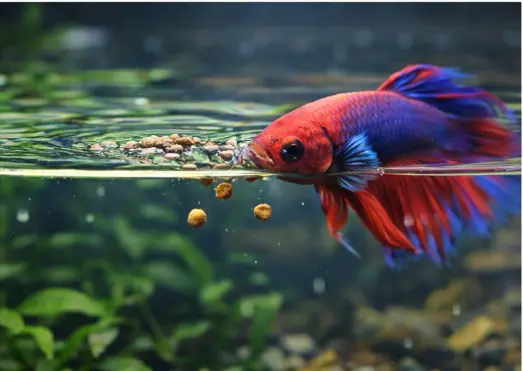
They eat a high-protein, animal-based diet centered around quality floating pellets, supported occasionally by frozen or live foods like bloodworms, brine shrimp, or daphnia. They are insectivorous carnivores, not omnivores, and their digestive system reflects that.
Everything else is refinement.
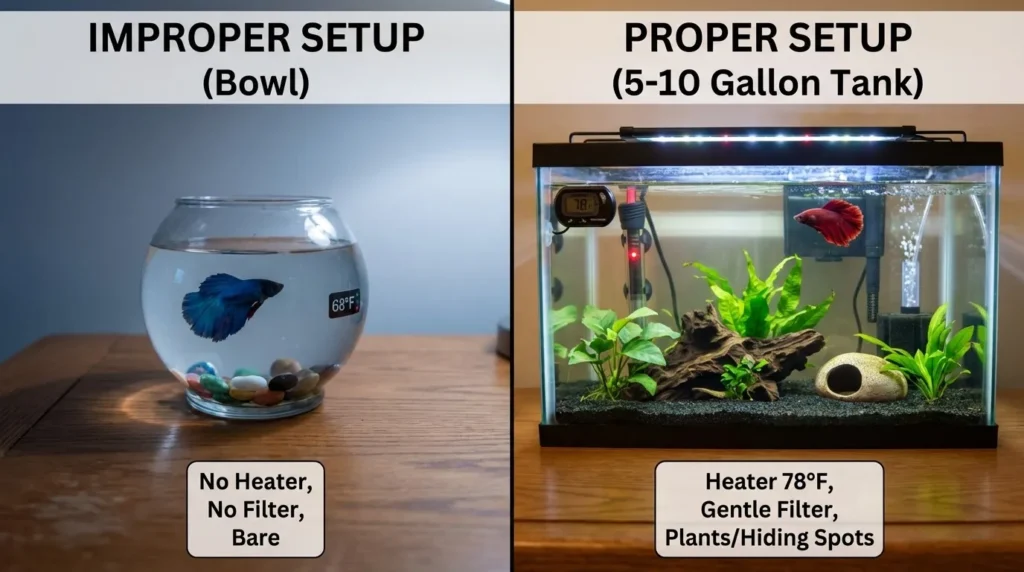
A stable environment is essential before feeding routines begin. If your tank is new, follow this guide on how to set up a betta tank:
Why Betta Feeding Gets Confusing
Walk into any pet store and you’ll see flakes, pellets, freeze-dried cubes, “color enhancing” formulas, and even community blends labeled for “all tropical fish.”
That’s where most mistakes start.
Bettas are often lumped in with general tropical species. But biologically, they are different.
In the wild, Betta splendens lives in shallow waters across Thailand, Cambodia, Laos, and Vietnam. Think rice paddies and warm, slow canals. They feed on moving prey—mosquito larvae, tiny aquatic insects, and small crustaceans.
They do not graze algae. They do not forage plant matter. They are ambush predators at the surface.
That matters when choosing food.
Are Betta Fish Carnivores?
Yes. In practical terms, that means protein must dominate the diet.
A betta’s digestive tract is short compared to omnivorous species. That shorter tract is efficient at breaking down animal protein but less effective at processing complex plant material.
When food formulas are built around corn, wheat, or soy, digestion slows. Waste increases. Bloating becomes more common.
Tank layout influences feeding behavior. Long aquariums allow natural surface feeding patterns. See the recommended best tank shapes for bettas here:
Look at ingredient lists. The first ingredient should be a named animal protein:
Salmon meal
Whole fish meal
Shrimp meal
Insect meal
If corn gluten or wheat flour appears first, it’s not ideal for a betta.
The Core Diet: Pellets Done Correctly
Pellets should be the foundation.
Not because they are glamorous, but because they provide consistency.
Good pellet guidelines:
40–50% protein
6–10% fat
Low fiber (under 4%)
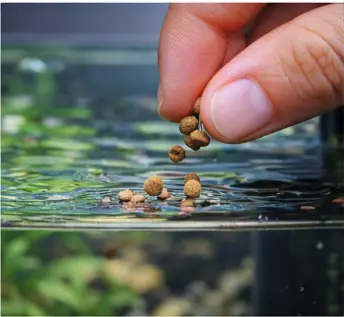
Floating pellets are preferable. Bettas naturally feed at the surface, and floating food reduces missed bites and substrate waste.
Now the part most owners get wrong: quantity.
A betta’s stomach is roughly comparable in size to its eye. That visual isn’t anatomically perfect, but it keeps people from dumping ten pellets at once.
For most adult bettas:
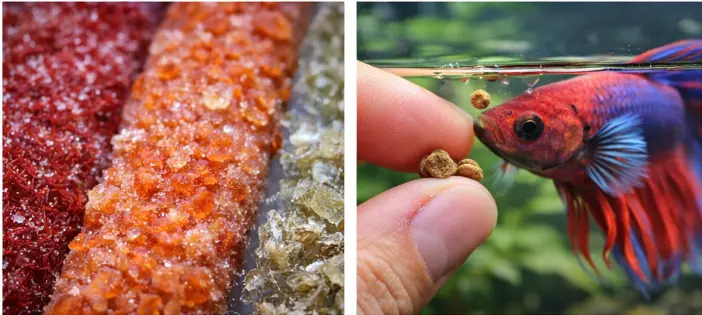
2–4 small pellets
Twice per day
Pellet size varies. Adjust accordingly. What matters is belly shape. After feeding, the abdomen should look slightly rounded but not swollen.
If the belly remains distended hours later, you are overfeeding.
Flakes: Why They’re Not Ideal
Flakes aren’t toxic. They’re just inefficient.
They break apart quickly. They disperse through the water column. You lose portion control.
In small tanks, especially five gallons or less, excess flakes quickly elevate ammonia. Bettas are sensitive to water quality shifts.
If flakes are used, they should be high-protein and fed sparingly. But pellets remain the better primary choice.
Proper digestion depends heavily on temperature. If you are unsure about heating requirements, read Do Bettas Need a Heater:
Adding Variety Without Creating Problems
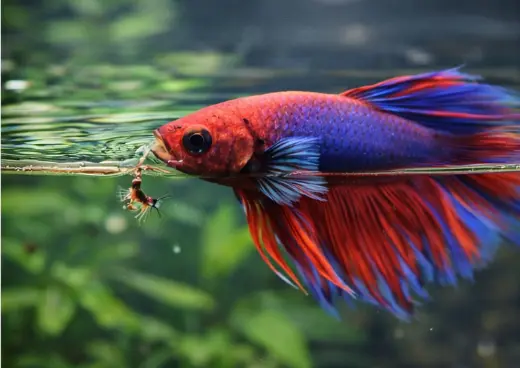
Bettas benefit from dietary variation. But variation should support the base diet, not replace it.
Bloodworms
Most bettas go wild for bloodworms. That doesn’t mean they should eat them daily.
Bloodworms are calorie dense. Overfeeding them is one of the fastest routes to bloating.
Use frozen bloodworms over live when possible. Feed small portions once or twice weekly.
Brine Shrimp
Brine shrimp are lighter and excellent for conditioning. They stimulate appetite and are generally safe when frozen.
Daphnia
Daphnia are underrated. They provide mild roughage and can help normalize digestion after mild constipation.
If a betta looks slightly backed up, fasting for 24 hours followed by a small daphnia feeding often works better than the old “pea method.”
The Pea Myth
Peas are commonly recommended online, especially for goldfish. Bettas are carnivores.
Peas are not a natural part of their diet. They are not ideal digestive support for an insectivorous species.
Surface plants make bettas feel secure during feeding. Consider adding floating plants for bettas:
If constipation appears:
Fast for 24–48 hours
Check water temperature
Offer daphnia
Skip the pea.
How Water Temperature Affects Feeding
Many people ignore this entirely.
At 78–80°F, digestion functions efficiently.
Drop the temperature below 76°F, and metabolism slows. Heavy feeding in cooler water increases digestive stress.
If your heater fails and the tank cools temporarily, reduce feeding until the temperature stabilizes.
Feeding Fry and Juveniles
Baby bettas require entirely different feeding practices.
Newly hatched fry need microscopic food:
Infusoria
Vinegar eels
Microworms
Within a week or two, baby brine shrimp become appropriate.
They need multiple small meals daily because they are growing rapidly. Underfeeding fry stunts growth; overfeeding fouls water quickly.
Juveniles transition gradually to crushed pellets or very small pellets.
Recognizing Early Signs of Overfeeding
Most digestive issues don’t appear overnight. They build gradually.
Feeding and maintenance are connected. Overfeeding increases waste, which means you must follow the correct schedule for how often to clean a betta tank:
Watch for:
Persistent abdominal swelling
Sluggish movement
Difficulty descending from surface
Increased waste accumulation
If you suspect overfeeding:
Fast for 24 hours.
Test ammonia and nitrite.
Resume with smaller portions.
Correct early. Chronic bloating weakens fish over time.
The Link Between Feeding and Tank Stability
Every pellet becomes waste.
Excess food leads to:
Ammonia spikes
Increased nitrite
Elevated organic debris
In smaller aquariums, that cascade happens quickly. Bettas may appear “suddenly sick” when the root cause is slow accumulation from slight overfeeding.
Feeding discipline is water quality discipline.
A Practical Weekly Feeding Pattern
Instead of guessing daily, use structure.
Example:
Monday–Tuesday: Pellets only
Wednesday: Pellets + small frozen portion
Thursday–Friday: Pellets
Saturday: Pellets and daphnia
Sunday: Light feeding or fast
This pattern prevents monotony without overloading the digestive system.
Long-Term Indicators of Proper Feeding
A well-fed betta shows:
Streamlined body
Bright, stable coloration
Active response at feeding time
No persistent floating issues
Smooth swimming posture
If color fades, activity drops, or the body looks swollen, feeding should be reviewed first before assuming disease.
Frequently Asked Questions (FAQs)
What do betta fish eat daily?
High-protein floating pellets designed for carnivorous fish, typically twice per day in small portions.
Can betta fish survive on flakes alone?
They can survive, but flakes are less ideal than pellets and make portion control harder.
How many pellets should I feed my betta?
Most adults do well with 2–4 small pellets per feeding.
Is it safe to fast a betta fish?
Yes. A 24-hour fast once weekly can support digestion.
Are bloodworms good for bettas?
Yes, as an occasional treat, not a daily staple.
What do baby betta fish eat?
Infusoria, microworms, and baby brine shrimp during early growth stages.
Can overfeeding kill a betta fish?
Chronic overfeeding can lead to digestive failure, swim bladder issues, and water quality decline, which may become fatal.
Should bettas eat vegetables?
No. They are insectivorous carnivores and do not require plant-based staples.
Is frozen food better than pellets?
Frozen food adds variety but should supplement pellets, not replace them.
How does feeding affect lifespan?
Consistent portion control and protein-appropriate diets reduce stress and can extend overall lifespan.
Feeding a betta properly is not complicated, but it is precise. Small portions. High protein. Stable routine. Occasional variety. Clean water.
Get that right, and most other health variables fall into place.
Pingback: 7 Best Live Foods for Bettas for Growth, Color, and Health
Pingback: Best Betta Fish Food: Pellets vs Flakes vs Frozen