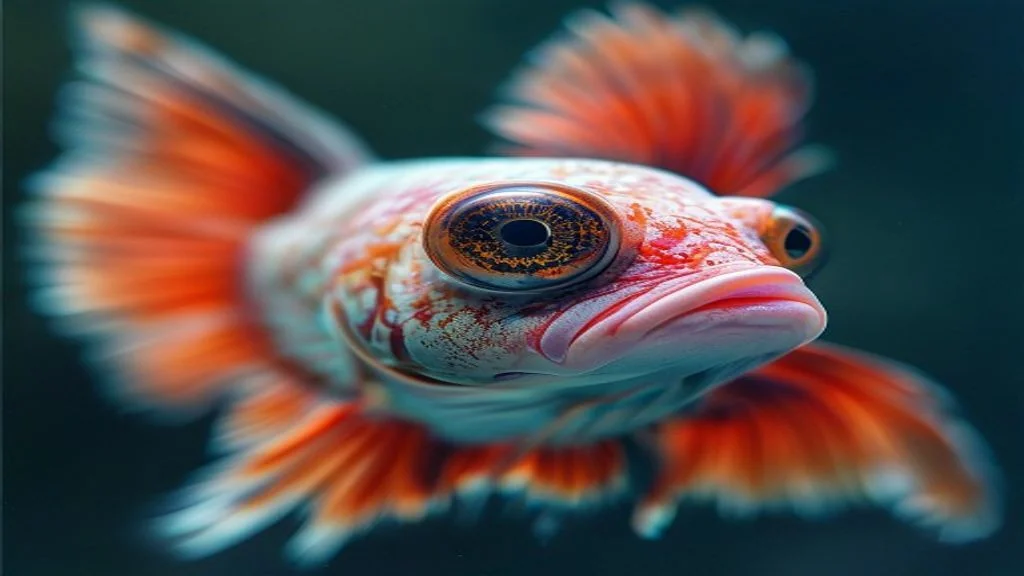
Betta popeye is the condition where one or both of a betta’s eyes visibly swell and bulge outward from fluid building up behind the eye. The single most important thing to determine is whether one eye or both eyes are affected, because that tells you whether you’re dealing with a treatable injury or a deeper infection. In this guide you’ll learn exactly how to tell injury popeye from infection popeye, the precise Epsom-salt and antibiotic protocol for each, realistic recovery expectations, when popeye signals a more serious disease like dropsy or septicemia, and how to prevent it for good.
One Eye vs. Both Eyes — This Decides Treatment
| Pattern | Most likely cause | First treatment |
|---|---|---|
| One eye (unilateral) | Physical injury — bumped decor, fight, net | Clean water + Epsom-salt baths |
| Both eyes (bilateral) | Infection or chronic poor water quality | Epsom salt + antibiotic, fix water |
Epsom-salt-only treatment works when popeye is from physical harm, not parasites or systemic infection — so identifying the pattern first saves time and the fish. Sharp ornaments are the usual injury source; review safe decor in how to set up a betta tank step by step.
Symptoms
- One or both eyes visibly bulging or pushed outward.
- Cloudy or whitish film over the eye in some cases.
- Lethargy, clamped fins, reduced appetite if infection is involved.
- Sometimes a ring of swelling around the eye.
Step-by-Step Betta Popeye Treatment
Step 1 — Fix water quality first
Test and correct the water: ammonia and nitrite at 0, nitrate low. Bilateral popeye is very often a water-quality alarm. Follow how to lower ammonia in a betta tank and do daily partial water changes.
Step 2 — Epsom-salt baths
Epsom salt (magnesium sulfate) draws fluid out from behind the eye. Common dose: 1 tablespoon per 5 gallons in a hospital container, or short daily baths. Do not substitute aquarium/table salt for this purpose.
Step 3 — Antibiotic if needed
If popeye is bilateral, has not improved in 2–3 days, or comes with infection signs, add a betta-safe antibiotic (kanamycin or erythromycin-based; some keepers use doxycycline/minocycline products). Remove filter carbon first. See our betta medication guide for safe dosing principles.
Step 4 — Recovery
Keep water pristine and warm (78–80°F) and reduce stress. Mild injury popeye often improves within 1–2 weeks. Severe cases can cause permanent eye damage or loss of the eye — a one-eyed betta can still live a normal life with calm tank mates and easy-to-find food.
What NOT To Do
- Don’t use Epsom salt alone if it’s clearly an infection — it won’t cure that.
- Don’t ignore water quality and just dose meds.
- Don’t try to “pop” or touch the eye — never.
- Don’t keep sharp decor that caused the injury.
Prevention
Smooth decor, stable clean water, low stress, and quarantining new fish prevent most popeye. Chronic mild ammonia is the silent cause — keep up maintenance (how often to clean a betta tank) and watch early stress cues (signs of stress in betta fish).
Unilateral vs. Bilateral: The Decision That Changes Everything
The most important diagnostic step in popeye is counting eyes. It tells you the likely cause, the treatment, and the prognosis:
| One eye (unilateral) | Both eyes (bilateral) | |
|---|---|---|
| Likely cause | Physical injury — decor, fight, net | Infection or chronic poor water |
| First treatment | Clean water + Epsom-salt baths | Epsom + antibiotic; fix water |
| Prognosis | Good if treated early | Guarded — points to a systemic problem |
| Watch for | Recurring injuries (sharp decor) | Dropsy/septicemia as the real disease |
Bilateral popeye is rarely “just an eye problem” — it’s usually the eye telling you the whole system (water, or an internal infection) is failing. Treat the bigger picture, not just the bulge.
When Popeye Is a Symptom of Something Worse
Popeye can be the visible tip of a more serious internal disease. Before settling on “just popeye”, scan for these:
- Bloating + pinecone scales → it’s likely dropsy; treat that.
- Red streaks under the scales → likely septicemia; urgent.
- Chronic mild popeye that keeps returning → almost always ongoing low-level ammonia from an uncycled tank; fix via lowering ammonia and cycling.
- One-eyed betta long-term → if an eye is lost, the fish adapts well; keep tank mates calm and food easy to find.
Recovery expectation: mild injury popeye often settles in 1–2 weeks with clean water and Epsom salt; severe or infection-driven cases can leave permanent cloudiness or eye loss but the betta still lives a normal life. The recurring-popeye pattern is a water-quality flag — handle it like a prevention problem, not a one-off.
What Is Popeye? A Clear Definition
Popeye, medically called exophthalmia, is the abnormal protrusion of one or both eyes caused by a build-up of fluid in or behind the eyeball. It is not a disease in itself — it is a sign that something has gone wrong, either locally (a physical injury to the eye) or systemically (an infection or osmotic problem from poor water). Think of it the way a doctor treats a swollen joint: the swelling is the alarm, and the job is to find and treat what caused it.
In bettas, the eye may also develop a cloudy or whitish film, and in severe cases the cornea can rupture or the eye can be lost entirely. Even a betta that loses an eye usually adapts well and lives a normal life, so a popeye diagnosis is rarely hopeless — especially the common single-eye injury type.
The Two Types of Popeye in Detail
Injury (unilateral) popeye
This is the most common and most treatable form. It happens when a betta bumps its eye on sharp decor, gets injured during a fight or netting, or scrapes it while exploring. Because the cause is mechanical trauma to one eye, the other eye is normal. The fish is usually still active, eating, and otherwise healthy. With clean water and Epsom-salt support, the swelling typically subsides over one to two weeks as the injury heals.
Infection / water-quality (bilateral) popeye
When both eyes bulge, the cause is almost never coincidental injury to both — it is a systemic problem. Chronic ammonia or nitrite exposure, a bacterial infection, or an internal disease drives fluid retention that pushes both eyes outward. This form often comes with lethargy, clamped fins, and loss of appetite, and it requires an antibiotic alongside water correction. Bilateral popeye should also prompt you to check for dropsy and septicemia.
Step-by-Step: Diagnosing Popeye Correctly
- Count the affected eyes. One eye points to injury; both eyes point to infection or water quality. This single observation drives the entire treatment plan.
- Test the water immediately. Record ammonia, nitrite, nitrate, pH, and temperature. Bilateral popeye is very frequently a chronic ammonia alarm.
- Inspect the body. Look from above for pinecone scales (dropsy) and along the body for red streaks (septicemia). Popeye can be a secondary sign of these more serious diseases.
- Assess behaviour. An otherwise bright, eating fish with one swollen eye is likely a simple injury. A lethargic fish with both eyes out and clamped fins has a systemic problem.
- Check the environment for hazards. Sharp plastic plants, jagged ornaments, or aggressive tank mates explain recurring injury popeye.
Setting Up a Hospital Tank for Popeye
Moderate, infected, or bilateral cases do best in a dedicated hospital container:
- Size: 1–2 gallons — stable temperature, economical dosing.
- Heater: steady 78–80°F to support healing and immune function.
- Gentle aeration: a soft air stone; avoid strong current near an injured fish.
- No carbon: remove activated carbon before adding any medication.
- Smooth, minimal decor: nothing sharp that could re-injure the eye; one silk plant for security.
- Daily partial water changes: pristine water is half the treatment for both injury and infection popeye.
The Epsom Salt Bath for Popeye
Epsom salt (magnesium sulfate) helps draw the trapped fluid out from behind the eye through osmosis, reducing the bulge and giving the tissue a chance to recover. It is not the same as aquarium salt and the two are not interchangeable for this purpose. A common approach is around 1 tablespoon of fully dissolved Epsom salt per gallon as a short 10–15 minute daily bath in temperature-matched water, watching the fish closely throughout, or a lower continuous concentration in the hospital tank per reputable betta-health guidance. Epsom salt supports injury cases well on its own; infection cases also need an antibiotic.
Recovery Timeline and What to Expect
| Time | Injury (unilateral) popeye | Infection (bilateral) popeye |
|---|---|---|
| Day 1–3 | Swelling stops worsening with clean water + Epsom | Begin antibiotic + Epsom; expect slower response |
| Week 1 | Visible reduction in bulge; eye clearer | Bulge stabilising; systemic signs should ease |
| Week 2–3 | Often largely resolved | Gradual improvement; finish full antibiotic course |
| Long-term | Usually full recovery; occasionally minor cloudiness | May leave cloudiness or eye loss; fish still lives normally |
Common Popeye Mistakes
- Treating infection popeye with Epsom salt alone. Epsom reduces swelling but won’t clear a bacterial infection — bilateral cases need an antibiotic.
- Ignoring the water test. Recurring or bilateral popeye is usually a water-quality problem; dosing meds without fixing water guarantees relapse.
- Touching or trying to “pop” the eye. Never. This causes catastrophic injury and infection.
- Leaving sharp decor in place. The ornament that caused the injury will cause it again.
- Missing the bigger disease. Popeye with pineconing or red streaks means dropsy or septicemia — treat the serious condition, not just the eye.
Sources & Further Reading
Hygger — popeye treatment; Our Aquarium Life — betta popeye; PetMD/Aquarium Store Depot — fish popeye; Merck Veterinary Manual — Exophthalmia in fish.
Frequently Asked Questions
What causes popeye in betta fish?
Fluid building up behind the eye, usually from physical injury (one eye) or infection/poor water quality (both eyes).
Can betta popeye be cured?
Often yes, especially injury-related, single-eye cases treated early with clean water and Epsom-salt baths. Severe cases may leave permanent eye damage.
How do you treat popeye in a betta?
Fix water quality, give Epsom-salt baths to draw out fluid, and add a betta-safe antibiotic if it’s bilateral, infected, or not improving in 2–3 days.
Will a betta’s eye go back to normal after popeye?
Mild cases often return to normal in 1–2 weeks. Severe swelling can cause lasting damage or loss of the eye, but bettas live fine with one eye.
Is betta popeye contagious?
Injury popeye is not. Infection-driven popeye reflects bacteria/water issues that can affect other stressed fish, so improve conditions for the whole tank.
How long does betta popeye take to heal?
Mild injury (single-eye) popeye often improves within 1–2 weeks with clean water and Epsom-salt baths. Bilateral or infection-driven popeye heals more slowly and requires a full antibiotic course; some severe cases leave permanent cloudiness or eye loss.
Can a betta live with one eye after popeye?
Yes. If popeye damages or destroys one eye, a betta typically adapts very well and lives a normal lifespan. Keep tank mates calm, decor smooth, and food easy to find so a partially blind fish can feed comfortably.
Is Epsom salt or aquarium salt used for betta popeye?
Epsom salt (magnesium sulfate), not aquarium salt. Epsom salt helps draw the trapped fluid out from behind the eye through osmosis; aquarium salt does not do this and is not a substitute for treating popeye.
Does popeye in bettas mean my water is bad?
Often yes, especially if both eyes are affected or popeye keeps returning — chronic low-level ammonia or nitrite is a leading cause of bilateral popeye. Always test the water and correct it; dosing medication without fixing water quality leads to relapse.