Knowing how to quarantine a betta is the single highest-impact habit in the entire hobby, it prevents most of the diseases covered across this site by catching them in isolation before they ever reach your main tank. In this guide you’ll get the exact hospital-tank setup and equipment list, a step-by-step 4–6 week quarantine routine, what symptoms to watch for daily, how to quarantine plants and live food, the biosecurity rules that make it actually work, and the common mistakes that quietly defeat the whole process. Quarantine is cheap, simple, and almost nobody does it, which is exactly why most betta disease outbreaks are preventable.
How to Quarantine a Betta: Step-by-Step Routine
Step 1 — Set up and run the tank
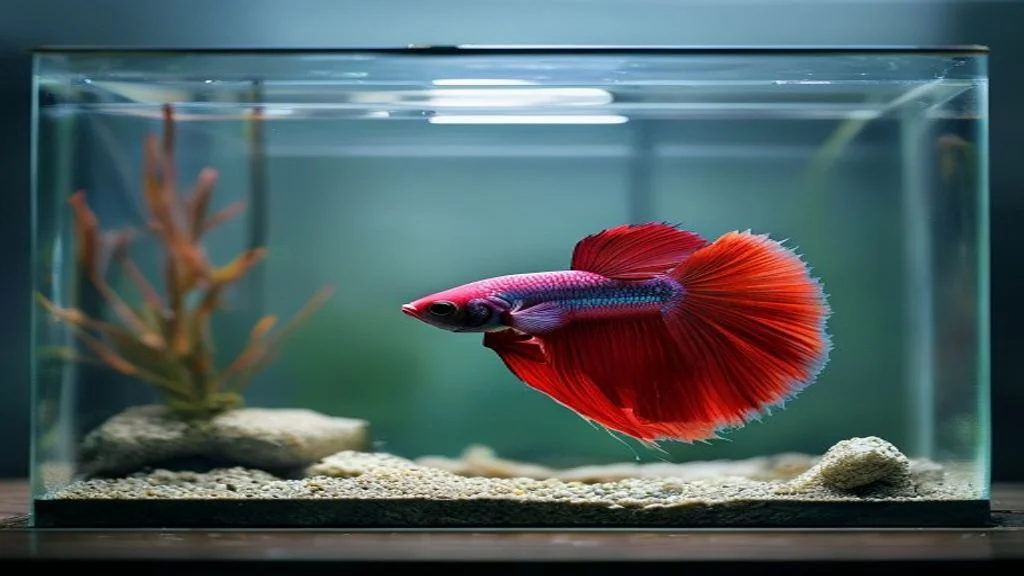
Assemble the tank, dechlorinate, heat to 78–80°F, and let it run 24 hours before the fish goes in. A pre-seeded sponge filter (squeezed from an established filter) keeps ammonia at 0.
Step 2 — Acclimate the new betta
Float and slowly mix tank water in over 30–45 minutes to avoid shock, the same gentle method in how to introduce a new betta to its tank.
Step 3 — Observe for 4–6 weeks
Watch daily for flashing, white spots, gold dust, clamped fins, stringy poop, lethargy, or appetite loss. Don’t medicate a healthy-looking fish “just in case”, only treat if symptoms appear. Use signs of a healthy betta fish and signs of stress as your checklist.
Step 4 — Treat if needed
If disease shows, the quarantine tank is the hospital tank, treat here, never in the main display. Dosing principles are in our betta medication guide.
Step 5 — Release
If the betta is symptom-free for the full period, it’s safe to move to the main tank. Keep the quarantine gear stored and ready for the next fish or emergency.
The Real Cost of Skipping Quarantine (a Reality Check)
Quarantine feels optional until the one time it isn’t. Put the maths plainly: a quarantine setup is a few dollars of basic gear. Skipping it risks every fish, plant, and the biofilter in your main tank to a single un-screened newcomer.
| Scenario | Without quarantine | With quarantine |
|---|---|---|
| New fish carries ich/velvet | Whole tank infected; possible wipeout | Contained & treated in isolation |
| New fish carries internal parasites | Spreads via shared water/food | Caught & dewormed alone |
| Newcomer is just stressed/weak | Stress + disease hits display tank | Recovers quietly, then joins healthy |
| A betta gets sick later | No hospital tank ready, scramble | Same tank doubles as hospital, ready |
This is the cheapest insurance in the hobby, and it doubles as your emergency hospital tank, see how it’s used in ich, columnaris, and the medication guide.
Common Quarantine Mistakes
- Too short. Two weeks isn’t enough, many pathogens incubate longer. Hold the full 4–6 weeks.
- Medicating healthy fish “to be safe”. Don’t. Treat only if symptoms appear; needless meds stress the fish and breed resistance.
- Shared nets/siphons. Cross-contamination defeats the entire purpose, dedicate tools to the quarantine tank.
- Carbon left in the filter. It strips medication if you do need to treat, remove it.
- Skipping plants and live food. Ich, velvet, and parasites hitchhike on these too, quarantine or disinfect them, a point reinforced in beginner mistakes.
- Bare, cold, stressful box. Quarantine still needs a heater, gentle filtration, and a hide, stress alone can sink a healthy newcomer.
Run quarantine properly once and it becomes routine, the highest-leverage habit in preventing betta disease.
What Quarantine Actually Is (A Clear Definition)
Quarantine is the practice of housing any new fish, or any fish you’ve bought, traded, or rescued, in a separate, simple, controlled tank for a fixed observation period before it ever shares water with your established fish. The same tank does double duty as a hospital tank for treating illness later. The principle is borrowed directly from human and livestock medicine: isolate the unknown, observe it over the incubation window of likely diseases, and only integrate it once it has proven healthy. A new betta from a store has been exposed to many other fish, shared water systems, and shipping stress, so it is statistically the highest disease risk you will ever introduce to your tank.

Step-by-Step: Building the Quarantine Tank
- Choose a 2.5–5 gallon container. Big enough for stable temperature and a comfortable fish, small enough for cheap, precise medicating.
- Add a reliable heater set to a stable 78–80°F. Cold quarantine causes the very stress that triggers disease.
- Use a gentle sponge filter, no carbon. Sponge filters provide biological filtration and gentle flow; carbon must be absent so it can’t strip out medication if you need to treat.
- Seed the filter if possible. Squeeze out an established sponge or add seeded media so ammonia stays at 0 from day one.
- Add one hide. A PVC elbow or silk plant gives the fish security and reduces stress.
- Keep the bottom bare. Bare-bottom tanks are easy to keep spotless, let you see waste and uneaten food, and simplify dosing calculations.
- Cover it. Stressed and sick bettas jump; a lid prevents a needless death.
- Dedicate tools. A separate net and siphon for this tank only, never share with the display tank.
How to Disinfect Plants and Live Food
Pathogens hitchhike on more than fish. To close these entry routes:
- Live plants: quarantine them fishless for a few weeks (many parasites die off without a host), or use an appropriate plant dip/disinfectant rinse, then rinse thoroughly before adding.
- Live food: source from reputable suppliers; live food from unknown tanks can carry parasites and bacteria straight into your tank.
- Decor and equipment from other tanks: clean and dry thoroughly before introducing; many pathogens don’t survive complete drying.
Biosecurity: The Rules That Make Quarantine Work
- Never share nets, siphons, or buckets between the quarantine tank and the main tank.
- Wash and dry hands after working in the quarantine tank, especially before touching the display tank.
- Work on the main tank first, the quarantine tank last, to avoid carrying anything back.
- Keep the quarantine tank physically separated, ideally a different room, at minimum well away from the display.
- Don’t top up the main tank with quarantine water, and never pour quarantine water into the display.
Skipping any one of these silently reconnects the two systems and undoes the entire point of quarantine.
The Two Quarantine Methods: Observation-Only vs. Treated
There is an ongoing debate in the hobby about whether quarantine should be passive (just watch and wait) or active (proactively treat every newcomer for common pathogens). Both have a place, and choosing correctly for your situation matters.
Observation-only quarantine (recommended for most keepers)
You set the fish up in the quarantine tank, keep the water pristine and warm, and simply watch for 4–6 weeks, treating only if symptoms appear. This is the right default for a single-betta keeper or anyone without strong reason to suspect a specific disease. The logic is straightforward: medicating a healthy fish “just in case” stresses it, can damage the developing biofilter, and contributes to pathogen resistance. If nothing appears in the full window, the fish goes to the display tank disease-free with no unnecessary chemical exposure.
Treated (proactive) quarantine
Some experienced fishkeepers run new arrivals through a planned schedule, typically a general antiparasitic, a dewormer, and sometimes a broad antibacterial, spaced out over several weeks even if the fish looks healthy. This is more aggressive and is mainly justified when you are adding fish to a valuable established community, when the source has a known disease history, or when you have been burned before. It is not recommended for beginners with a single betta because the risk of over-medicating a healthy fish usually outweighs the benefit. If you do go this route, treat one medication at a time, never stack them, follow each label exactly, and always finish the full course before starting the next.
A sensible middle path
For most single-betta keepers the best balance is: observation-only quarantine, but with the gear, salt, and one general medication already on hand so you can respond within minutes the moment a real symptom appears. You get the safety of not medicating a healthy fish and the speed of being ready if it turns out the newcomer was incubating something.

Reading the Quarantine Fish Day by Day: A Symptom Field Guide
Quarantine only works if you actually know what you are looking for. During the observation window, run this quick visual and behavioural check once or twice a day. The earlier you catch any of these in isolation, the less damage they do and the easier they are to treat.
| What you see | Likely meaning | First response in quarantine |
|---|---|---|
| Flashing, darting and scraping against decor or the substrate | Skin irritation; very early ich, velvet, or external parasites | Look closely under good light; test water; prepare to treat ich/velvet if spots/dust follow |
| Tiny white salt-like grains on body and fins | Ich (white spot) | Begin the heat-and-salt ich protocol promptly |
| Fine gold or rusty dust, best seen with a torch in a dark room | Velvet, fast and dangerous | Treat for velvet urgently; dim the tank |
| Clamped fins, faded colour, hiding, sitting on the bottom | Stress or early illness onset | Confirm clean warm water; keep observing; do not medicate blindly |
| White, stringy, or pale clumpy droppings; eating but thinning | Internal parasites or digestive infection | Plan a parasite/deworming treatment if it persists |
| Cottony tufts, grey film, or rapidly receding fins | Fungus, columnaris, or fin rot | Identify precisely, then treat the specific condition; columnaris is an emergency |
| Refusing food for more than a day | Significant stress or developing disease | Recheck water and temperature first; watch closely for other signs |
The single most useful habit during quarantine is a daily phone photo in the same spot and light. Many of these conditions advance slowly enough that a comparison photo reveals the change before your eye does, and that head start is the entire value of quarantine.
How Long Common Pathogens Take to Show — and Why 4–6 Weeks
New keepers often ask why two weeks is not enough. The answer is incubation time: a fish can carry a pathogen that is present but not yet visible, and shipping or rehoming stress can delay the flare for days or weeks. Quarantine has to be longer than the incubation window of the diseases you are screening for, or it gives a false “all clear”.
| Pathogen | Why it can stay hidden | Why the long window catches it |
|---|---|---|
| Ich | The parasite cycles through a non-visible stage in the water and substrate before reappearing on the fish | A multi-week window covers more than one full life cycle, so a missed early case shows up later in isolation |
| Velvet | Light early infections are nearly invisible without a torch and can smoulder before exploding | Several weeks of close observation catches the bloom before it would have hit the display tank |
| Internal parasites | Often produce no obvious sign until the fish slowly thins or droppings change | The extended window lets subtle weight loss and dropping changes become noticeable |
| Bacterial infections | Frequently flare only after the immune dip from transport and settling in | 4–6 weeks spans the post-stress flare period most reliably |
This is the entire reason the recommendation is a firm 4–6 weeks, not “a week or two until it looks fine”. A fish that looks perfect on day 10 can break with disease on day 24, and the whole point is that it breaks in the quarantine tank, not your main one.

What To Do When the Quarantine Fish Actually Gets Sick
Quarantine succeeding looks like a fish showing symptoms, that is the system working exactly as designed, not a failure. Here is the calm sequence when it happens:
- Do not move it to the main tank “to use the bigger filter”. This is the single most common panic mistake and it defeats the entire quarantine. The sick fish stays exactly where it is.
- Identify the disease precisely before medicating. Match the symptoms against the relevant disease guide. Treating the wrong condition wastes time the fish may not have, especially with fast killers like velvet or columnaris.
- Remove carbon and prepare the tank for treatment. Carbon strips medication. Confirm stable heat, gentle aeration, and that you have the correct medication or salt on hand.
- Treat the full course, do not stop early. Stopping when the fish “looks better” is how infections rebound, sometimes resistant. Finish exactly what the protocol or label specifies.
- Extend the clock. Restart the clean-observation window after the fish has fully recovered, so it leaves quarantine genuinely healthy rather than mid-recovery.
- Do not introduce until it is symptom-free for the full observation period post-recovery. A treated fish still needs to prove it stays well before joining the display tank.
Detailed, condition-specific treatment steps and exact salt and medication dosing are in the individual disease guides and the betta medication guide. The job of this article is to make sure that whatever the newcomer was carrying surfaces here, in a controlled, treatable, contained setting, and never in the tank you have worked hard to keep healthy.
Ending Quarantine: How to Release the Fish Safely
Releasing the fish at the end of quarantine is not just “scoop and drop”. Two tanks that have been kept separate for weeks can have different temperature and water chemistry, and a sudden transfer is a needless stress spike on a fish you have just spent weeks protecting.
- Confirm the full clean window first. The fish should have been completely symptom-free, normal colour, open fins, eager appetite, active and level swimming, for the entire 4–6 week period (or post-recovery period if it was treated).
- Match temperature. Bring the quarantine and display water within about a degree of each other before transfer.
- Acclimate to the new water gradually. Float the fish and slowly mix in display-tank water over 30–45 minutes so it adjusts to any difference in pH and hardness, exactly as you would acclimate a brand-new fish.
- Transfer the fish, not the water. Net the betta or cup it across, do not pour quarantine water into the display tank, which would reconnect the two systems you kept apart.
- Watch closely for the first few days. Even a healthy fish can clamp or stress briefly after a move; keep observing against your normal health checklist.
- Strip, clean, and store the gear ready. Empty and clean the quarantine tank, keep the dedicated net and siphon with it, and store the whole kit assembled so it can become a hospital tank the moment any fish needs it.
Done this way, the newcomer joins your display tank healthy, acclimated, and low-stress, and you finish with a hospital tank already on standby, which is the second, quieter payoff of building a quarantine habit at all.
Sources & Further Reading
Aquarium Co-Op, How to Quarantine New or Sick Aquarium Fish; Nippy Fish, Setting Up a Hospital and Quarantine Tank; Aquarium Science, Quarantine Tanks; Merck Veterinary Manual, Quarantine and biosecurity for ornamental fish.
Frequently Asked Questions
How long should you quarantine a new betta?
4–6 weeks. That covers the incubation time of the common pathogens so problems show up in isolation, not in your main tank.
What size tank do I need to quarantine a betta?
A simple 2.5–5 gallon heated, gently filtered, bare-bottom tank with no carbon is enough.
Do I need to medicate a betta during quarantine?
No, only treat if the fish shows symptoms. Medicating healthy fish is unnecessary and stressful.
Can I quarantine a betta in the same room as my main tank?
It’s better in a separate room with dedicated tools, but the key is not sharing nets/siphons and washing hands to avoid cross-contamination.
Should I quarantine plants too?
Yes. Ich, velvet, and parasites travel on plants and live food, so quarantine or disinfect them before adding to the main tank.
Is two weeks long enough to quarantine a betta?
No. Two weeks is too short because several common pathogens, including some parasites, can incubate longer before symptoms appear. A full 4–6 week quarantine reliably covers the incubation window so problems surface in isolation rather than your display tank.