This betta medication guide cuts through the single most dangerous source of confusion in fishkeeping: knowing which betta medicine to use, at what dose, and when not to medicate at all. You’ll learn exactly what aquarium salt, Epsom salt, antibiotics, and antifungals each do, the safe dosing for each, the critical carbon rule, which products should never be mixed, a symptom-to-medication decision table, and the pre-dose safety checklist that prevents the most common treatment deaths. The wrong medicine at the wrong dose kills more sick bettas than the diseases themselves — so use this as your reference before you reach for any bottle.
The Big Three in This Betta Medication Guide — and What Each Does
| Product | What it is | Use for | Typical dose |
|---|---|---|---|
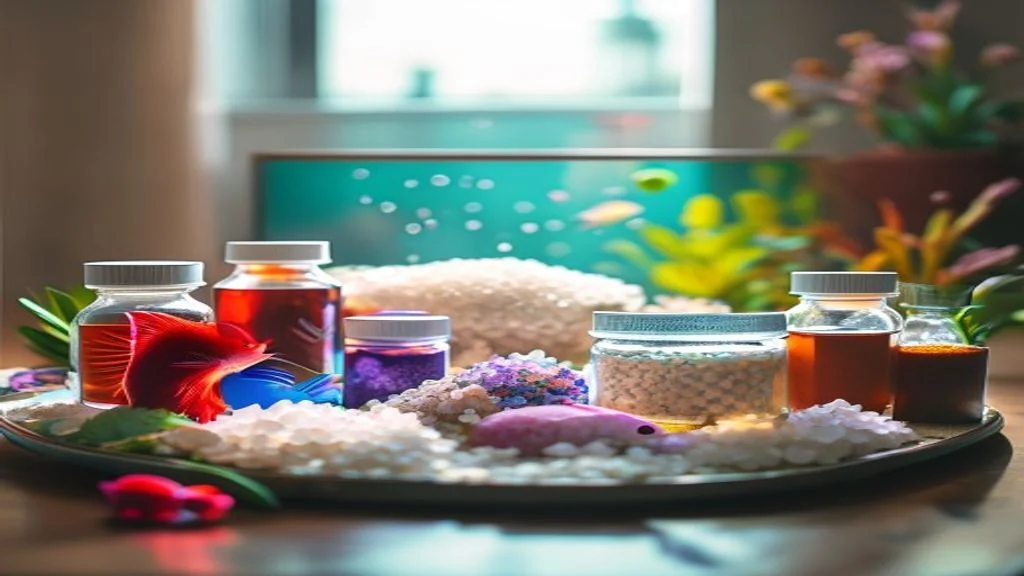
| Aquarium salt | Sodium chloride (NaCl) | Mild external issues, stress support, mild fin rot, ich support | 1 tsp/gal (treatment); 1 tbsp/3–5 gal for ich; max ~10 days |
| Epsom salt | Magnesium sulfate (MgSO₄) | Constipation/swim bladder, dropsy, popeye (fluid) | ~1 tbsp/gal as a 10–15 min bath |
| Antibiotic | e.g., kanamycin, erythromycin, minocycline | Bacterial: severe fin rot, columnaris, septicemia, bilateral popeye | Per product label for your exact gallons |
| Antifungal | e.g., methylene blue, malachite green | True fungus (fluffy white tufts) | Per product label |
Aquarium Salt vs. Epsom Salt (the mistake everyone makes)
These are not the same and are not interchangeable. Aquarium salt is sodium chloride — a general external aid. Epsom salt is magnesium sulfate — it works like a laxative and draws out fluid, which is why it’s the right tool for constipation, dropsy, and popeye but useless and even harmful as a substitute for the other. Using table salt for either is also a no.
Universal Rules Before You Dose Anything
- Remove activated carbon from the filter — carbon absorbs medication and makes it useless.
- Diagnose first. Match the medicine to the disease (use the disease guides on this site). Wrong medicine wastes time the fish may not have.
- Dose by actual water volume, not tank “rated” size. Overdosing stresses the fish more than the disease.
- Don’t mix medications unless a product is specifically designed to be combined.
- Treat in a hospital tank when possible (see how to quarantine a new betta) — protects tank mates, plants, and your biofilter.
- Fix the water too — most disease is environmental (how to lower ammonia in a betta tank).
Quick “Which Medicine?” Decision Table
| Symptom | Likely need |
|---|---|
| Bloated, can’t swim level, constipated | Fasting + Epsom salt |
| Pinecone scales | Epsom salt + strong antibiotic |
| Red streaks under scales | Broad-spectrum antibiotic (urgent) |
| White salt-grain spots | Heat + aquarium salt (ich) |
| Gold dust sheen | Darkness + anti-parasite med (velvet) |
| Flat grayish fast-spreading patch | Antibiotic (columnaris — urgent) |
| Fluffy 3-D white tuft on wound | Antifungal |
| Mild ragged fin edges | Clean water ± aquarium salt |
What NOT To Do
- Don’t swap aquarium salt and Epsom salt — different chemicals, different jobs.
- Don’t leave carbon in the filter while medicating.
- Don’t “shotgun” multiple meds hoping one works.
- Don’t medicate the main display tank by default — use a hospital tank.
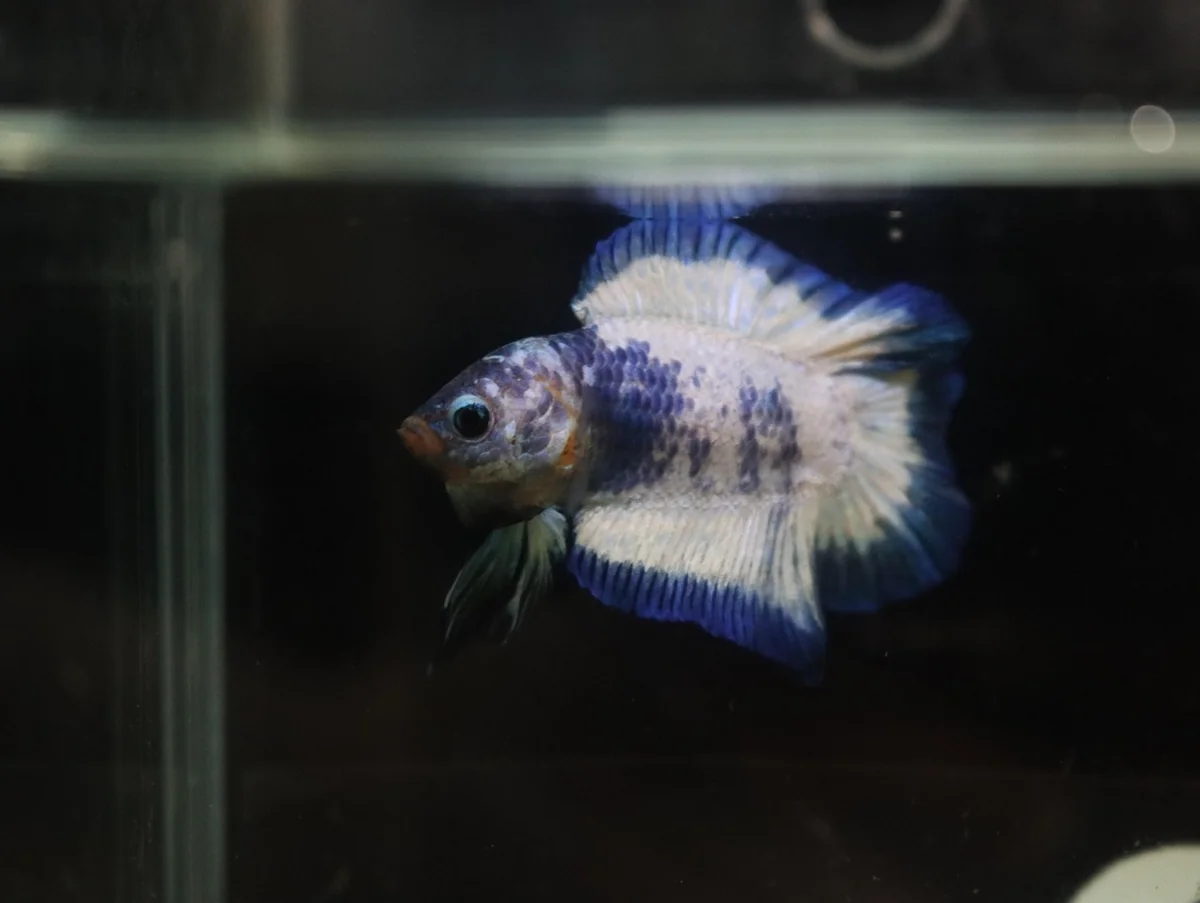
The Salt Confusion That Kills Bettas (Settle It Forever)
More bettas are harmed by salt mix-ups than by the diseases being treated. Three different “salts” exist and they are not interchangeable:
| Salt | What it is | Use for | Never use for |
|---|---|---|---|
| Aquarium salt | Sodium chloride (NaCl) | Mild external issues, stress, ich/fin-rot support | Constipation/dropsy fluid removal |
| Epsom salt | Magnesium sulfate (MgSO₄) | Constipation, swim bladder, dropsy, popeye (draws out fluid) | As a substitute for aquarium salt |
| Table salt | Iodised/anti-caking NaCl | Nothing — additives can harm fish | Any aquarium use |
Memory hook: Aquarium salt = external/stress. Epsom salt = internal/swelling. Mixing these two up is the classic fatal error.
The Pre-Dose Safety Checklist
Run this every single time, before any medication touches the water — it prevents the most common treatment deaths:
- Diagnose first. Match the medicine to the disease using the symptom guides. Wrong medicine = wasted time the fish may not have.
- Remove activated carbon from the filter — it absorbs medication and makes it useless.
- Dose by actual water volume, not the tank’s “rated” size (substrate/decor displace water). Overdosing stresses the fish more than the disease.
- One thing at a time. Never combine medications unless a product is designed for it — “shotgunning” kills.
- Hospital tank when possible — protects tank mates, plants, and your biofilter (quarantine/hospital setup).
- Fix the water too. Most “disease” is environmental — medication without fixing ammonia just relapses.
- Finish the full course. Stopping when symptoms fade is why infections rebound resistant.
Treat the medicine cabinet as the last step, not the first — confirm it’s not just a water problem (the philosophy behind disease prevention).
Understanding Antibiotics: Gram-Positive vs. Gram-Negative
Most beginners think “antibiotic” is one thing. It isn’t, and choosing the wrong type is a common reason treatment fails. Bacteria are broadly divided into gram-positive and gram-negative groups, and different antibiotics target different groups. Crucially, the bacteria responsible for the most serious betta infections — fin rot’s deeper stages, columnaris, septicemia, and ulcers — are typically gram-negative (Aeromonas, Pseudomonas, Flavobacterium).
| Antibiotic type | Spectrum | Common betta uses |
|---|---|---|
| Kanamycin | Broad, strong gram-negative | Severe fin rot, columnaris, septicemia, dropsy (with Epsom) |
| Erythromycin | Mainly gram-positive | Some early fin/body bacterial issues |
| Minocycline / doxycycline | Broad-spectrum | Septicemia, columnaris, popeye (bilateral) |
| Nitrofurans (furan-2) | Broad, often combined | Columnaris combo, general bacterial |
| Metronidazole | Anti-protozoal/anaerobic | Internal parasites/Hexamita (often in food) |
This is why generic advice like “just use an antibiotic” is risky. Match the drug class to the likely pathogen, and for the dangerous gram-negative diseases lean toward a strong broad-spectrum or gram-negative-effective product.
Aquarium Medication Comparison (Active Ingredients)
Product brand names vary widely by country, but the active ingredients are what matter. Use this to recognise equivalents on whatever shelf you’re standing at. Names are common product lines; always read the active-ingredient label and dose for your true water volume.
| Product | Active ingredient | Best for | Key caution |
|---|---|---|---|
| API Aquarium Salt | Sodium chloride | Mild external issues, stress, ich/fin-rot support | Not for plants long-term; max ~10 days |
| Epsom Salt (magnesium sulfate, USP) | Magnesium sulfate | Constipation, swim bladder, dropsy, popeye (fluid) | Never a substitute for aquarium salt |
| API Furan-2 | Nitrofurazone + furazolidone | Broad bacterial; columnaris combos | Remove carbon; stains |
| Seachem KanaPlex | Kanamycin | Severe gram-negative: columnaris, septicemia | Strong; dose precisely |
| Seachem MetroPlex | Metronidazole | Internal parasites/Hexamita (ideally in food) | Best delivered via food |
| API Pimafix / Fungus Cure / Methylene Blue | Antifungal actives | True fungus (fluffy white tufts) | Confirm it’s fungus, not columnaris |
| API Stress Coat | Aloe-based slime-coat aid + dechlorinator | Slime-coat support, post-injury, water changes | Supportive only, not curative |
How to Dose Correctly (Step-by-Step)
- Calculate true water volume. Substrate, decor, and the gap below the rim mean a “5-gallon” tank often holds noticeably less. Under-dosing is ineffective; over-dosing is toxic.
- Remove activated carbon and chemical media from the filter; leave biological media in place.
- Pre-dissolve salts fully in a cup of tank water before adding — never drop crystals onto a fish.
- Add medication slowly and, for staged dosing products, follow the day-by-day schedule exactly.
- Maintain aeration. Many medications and salt reduce oxygen availability or stress the fish — gentle surface movement helps.
- Do prescribed water changes between doses if the label requires, replacing only the medication for the water removed.
- Complete the full course even after symptoms improve, then clear residue with water changes and restore carbon.
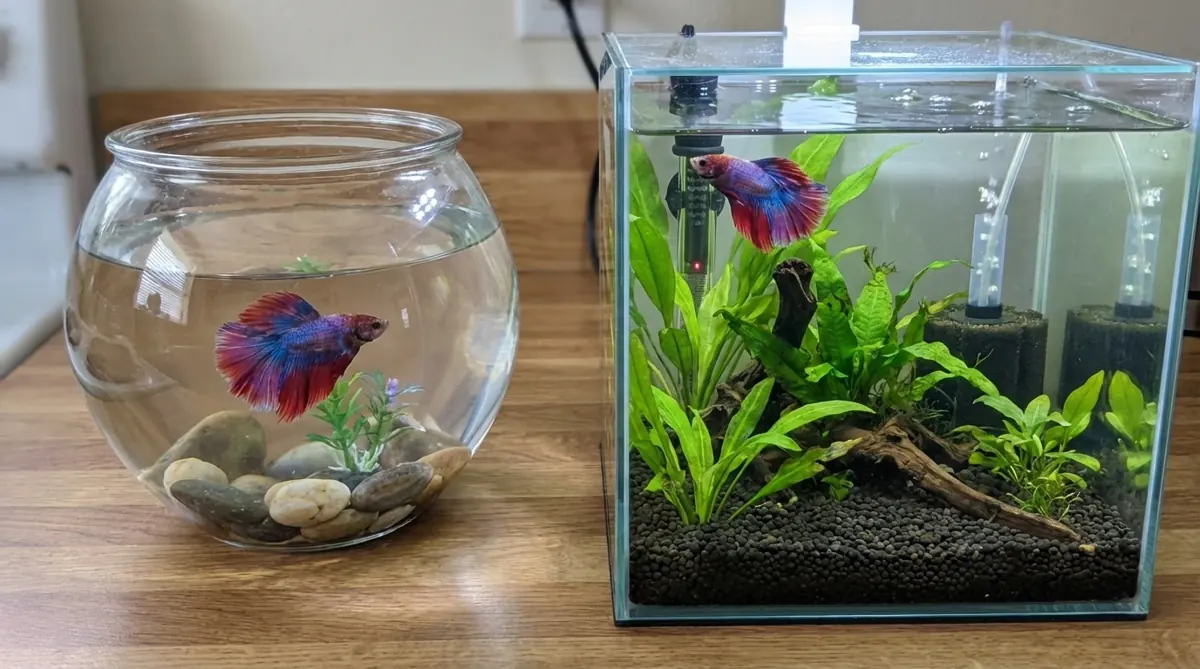
Salt Baths and Dips Explained
A “bath” or “dip” is a short, higher-concentration immersion in a separate container, used when you don’t want to medicate the whole tank. Two common ones:
- Epsom salt bath: ~1 tablespoon per gallon, fully dissolved, 10–15 minutes, once daily for up to ~3 days — used for constipation, dropsy, and popeye to draw out fluid.
- Aquarium salt support: usually a longer, lower-concentration in-tank treatment (~1 tsp/gallon) for stress and mild external issues rather than a short dip.
For any bath: match the water temperature within ~1°F, never use undissolved crystals, watch the fish the entire time, and remove it immediately if it shows severe distress (rolling, violent gasping, loss of balance worse than before).
When NOT to Medicate at All
One of the most valuable lessons in this guide is that many “sick” bettas don’t need medication — they need their environment fixed:
- Mild ragged fins with no discolouration — usually physical damage; clean water alone regrows them.
- Heavy breathing with high ammonia — a water change, not an antibiotic, is the cure.
- A single stringy poop after a diet change — observe; don’t deworm yet.
- Stress colour or clamped fins after a move — stabilise the environment and wait.
- Bloating after overfeeding with flat scales — fasting and a pea, not antibiotics.
Needless medication stresses the fish, harms the biofilter, and can breed resistant bacteria. The skill is knowing when the medicine cabinet is the wrong tool.
Common Medication Mistakes That Kill Bettas
- Swapping aquarium salt and Epsom salt. Different chemicals, different jobs — the classic fatal mix-up.
- Leaving carbon in the filter. It silently removes the medication you just dosed.
- Shotgunning multiple medications. Combining drugs that aren’t designed to mix overdoses and stresses the fish.
- Stopping the course early. Symptoms fade before the infection is cleared, causing a resistant rebound.
- Dosing the display tank by default. Nukes the biofilter and exposes healthy fish — use a hospital tank.
- Guessing with leftover human antibiotics. Wrong drug or dose can kill; use aquarium products or consult an aquatic vet.
- Medicating instead of testing water. Most disease is environmental; skipping the water test treats the symptom and not the cause.
Sources & Further Reading
Aquarium Co-Op — medication & salt guides; Bettafish.org — disease library; Seachem product references; Merck Veterinary Manual — Antimicrobial therapy in fish.
Frequently Asked Questions
What’s the difference between aquarium salt and Epsom salt for bettas?
Aquarium salt is sodium chloride for mild external issues and stress; Epsom salt is magnesium sulfate that acts as a laxative and draws out fluid (constipation, dropsy, popeye). They are not interchangeable.
How much aquarium salt do I add for a betta?
A common treatment dose is about 1 teaspoon per gallon (or 1 tablespoon per 3–5 gallons for ich), pre-dissolved, for no more than around 10 days.
Why do I remove carbon before medicating a betta?
Activated carbon absorbs medication out of the water, making the treatment ineffective. Always remove it first.
Can I mix betta medications together?
No, unless a product is specifically designed to be combined. Mixing risks overdosing and extra stress.
Are human antibiotics safe for bettas?
Don’t guess with them. Use aquarium-specific products or ask an aquatic vet; wrong drug or dose can kill the fish.
What is the best all-around antibiotic for betta fish?
There is no single “best” antibiotic — it depends on the infection. For the dangerous gram-negative diseases (severe fin rot, columnaris, septicemia) a strong broad-spectrum or gram-negative product such as a kanamycin or minocycline type is appropriate, while internal parasites need metronidazole, ideally delivered in food.
How long should I medicate my betta?
Follow the product’s full recommended course, which is typically several days to about two weeks, and complete it even if symptoms improve early. Stopping when the fish looks better is a leading cause of resistant, rebounding infections.
Can aquarium salt be used long term in a betta tank?
No. Aquarium salt is a treatment aid, not a permanent additive — continuous use beyond about 10 days stresses the fish’s osmoregulation and harms live plants and many invertebrates. Use it as a short course, then clear it with water changes.
Do I need a hospital tank to medicate a betta?
It is strongly recommended. A separate hospital tank lets you dose precisely, protects tank mates and live plants, and prevents medication from destroying the beneficial bacteria in your display tank’s biological filter. The quarantine tank doubles as the hospital tank.