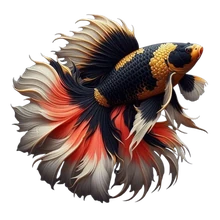
Betta clamped fins, when a betta holds its fins pinched tight against its body instead of flowing them open, are one of the most valuable early-warning signs in fishkeeping, because they usually appear before spots, fading, or lethargy and tell you something is wrong while it’s still easy to fix. Clamped fins are a symptom, not a disease. This guide covers all eight causes (ammonia, cold, stress, small tank, aggression, illness, parameter swings, and new-environment shock), a step-by-step first-response routine, how to tell environmental clamping from disease clamping, and how to keep your betta’s fins open and healthy. Catch it at this stage and you usually avoid a full-blown disease entirely.
Why Clamped Fins Are Your Best Early-Warning System
Here’s the reframe that makes this symptom valuable: clamped fins are almost always the first thing a betta does when something is wrong, before spots, before fading, before lethargy. Treat it as a free early alert, not a minor annoyance.
| If clamped fins appear with… | You’ve likely caught… early |
|---|---|
| Nothing else, recent skipped water change | An ammonia rise, test & change water now |
| Sluggishness, tank feels cool | Cold stress, check the heater |
| Flashing/rubbing | Onset of ich or velvet, act before spots |
| Hiding after a new fish was added | Stress/aggression, reassess tank mates |
| Faded colour | General stress, work the water-first checklist |
Acting at the clamped-fin stage often means you fix the problem before it becomes a named disease at all, the cheapest possible “treatment”.
What Clamped Fins Actually Are (A Clear Definition)
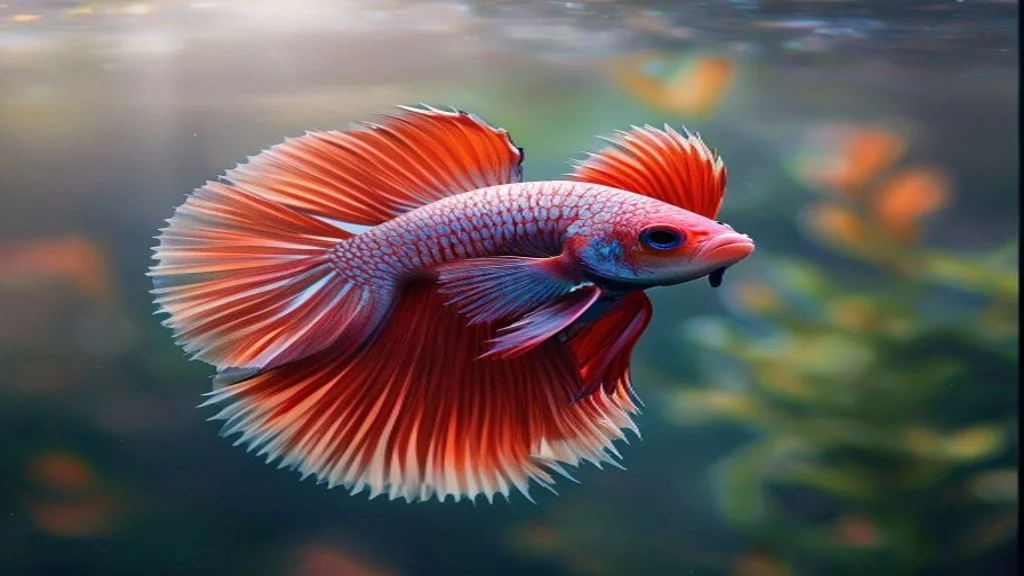
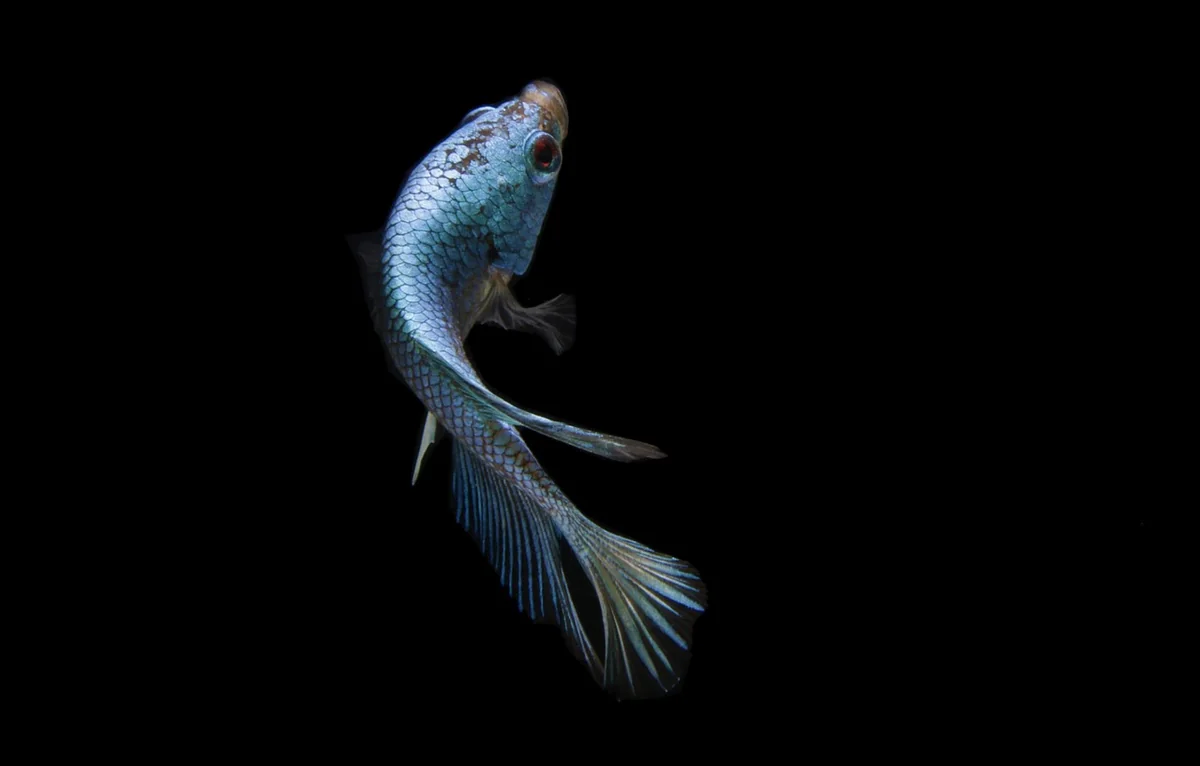
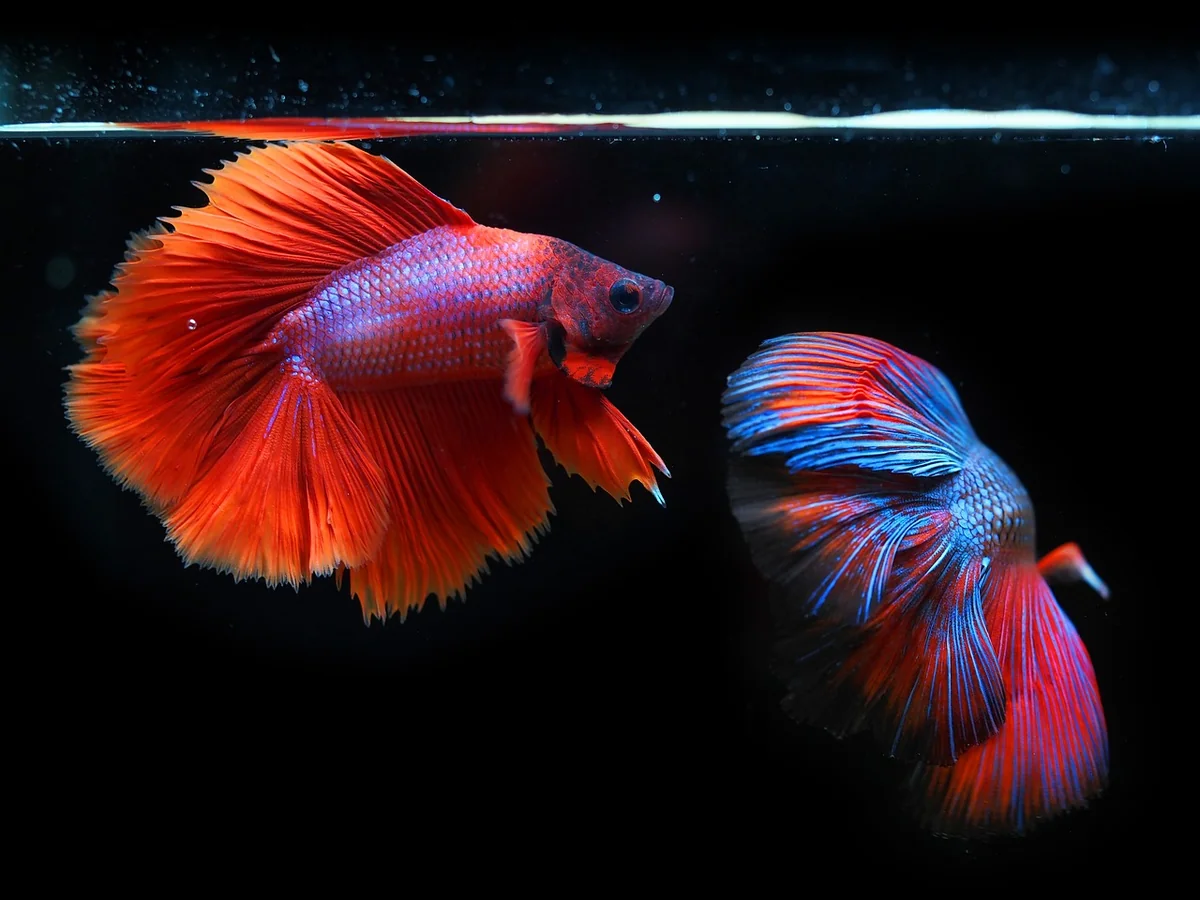
A healthy, relaxed betta carries its fins spread open and flowing, displaying its full finnage. Clamped fins describe the opposite posture: the dorsal, caudal, anal, and pelvic fins are held folded and pressed tightly against the body, making the fish look smaller and “pinched”. This is a behavioural and physiological stress response, the fish instinctively reduces its profile when it feels unwell, threatened, cold, or uncomfortable. Crucially, clamped fins are not damaged fins; the fin tissue itself is usually intact (unlike fin rot, where the edges are eroding). It is a posture, and a posture can change quickly once the underlying cause is fixed, which is exactly why this symptom is so useful as an early alarm.
Clamped Fins vs. Look-Alikes
| What you see | Likely | Action |
|---|---|---|
| Fins folded tight to body, edges intact, no discolouration | True clamped fins (stress/environment) | Test water, stabilise heat, reduce stress |
| Fin edges ragged, receding, blackened | Fin rot | See the fin rot treatment guide |
| Clamped + white salt grains / flashing | Ich onset | Treat for ich |
| Clamped + gold dusty sheen | Velvet onset | Treat for velvet (urgent) |
| Briefly clamped while resting/sleeping, normal when active | Normal behaviour | None, observe |
The deciding question: are the fins simply held closed (clamped, a posture) or are they physically deteriorating (fin rot, tissue damage)? They need very different responses.
Each Cause in Detail
1. Ammonia and nitrite (the most common)
Toxins from an uncycled or poorly maintained tank irritate the gills and skin and make the fish feel unwell, so it clamps. Usually accompanied by lethargy. A water test and immediate change is the fix.
2. Cold or unstable temperature
Below about 76°F a betta becomes sluggish and uncomfortable and frequently clamps. A stable 78–80°F resolves it.
3. General stress
A new environment, recent move, bright lighting, constant disturbance, or rough handling all trigger clamping as a stress response. Reducing stressors and giving time usually restores normal finnage.
4. Tank too small
Tiny bowls swing in temperature and chemistry and offer no security, keeping the fish chronically stressed and clamped. An adequately sized tank is the long-term fix.
5. Aggressive or incompatible tank mates
Being chased or nipped keeps a betta in a permanent defensive, clamped, hiding state. Separating the fish resolves it.
6. Illness onset
Clamping alongside spots, gold dust, fuzz, redness, or stringy poop indicates a specific disease beginning, treat that disease directly.
7. pH or parameter swing
A sudden large change in water chemistry (often from a too-large or poorly matched water change) stresses the fish. Smaller, consistent, parameter-matched changes prevent it.
8. New-environment shock
A freshly rehomed betta often clamps for a day or two while adjusting. Calm conditions, stable warm water, and patience usually resolve this normal acclimation clamping.
How Long Recovery Takes
| Cause | Typical improvement time after correction |
|---|---|
| Stress / new environment | Often 1–3 days once conditions are calm and stable |
| Cold water | 1–2 days after stable 78–80°F is restored |
| Ammonia/nitrite | 1–3 days after water is corrected and kept clean |
| Disease-driven | Improves as the underlying disease is successfully treated |
Common Mistakes With a Clamped Betta
- Medicating before testing water. Most clamping is environmental, medication won’t fix bad water or cold temperatures.
- Dismissing it as “just mood”. Clamped fins are typically the earliest warning you’ll get; ignoring it wastes the easy-fix window.
- Confusing it with fin rot. Clamping is a posture with intact fins; fin rot is tissue erosion, different problems, different treatment.
- Leaving the fish in a tiny unheated bowl. This is itself a leading cause; “treating” without fixing it guarantees recurrence.
- Keeping aggressive tank mates. A constantly harassed betta will stay clamped no matter what else you do.
Clamped Fins Plus One Other Sign: A Fast Diagnostic Table
Clamped fins on their own are almost always environmental. But clamping rarely travels completely alone for long, and the second sign that appears with it is the fastest way to narrow down what is actually wrong. Use this as a rapid triage.
| Clamped fins, plus… | Most likely cause | First action |
|---|---|---|
| Lethargy and sitting on the bottom, uncycled or unmaintained tank | Ammonia/nitrite poisoning | Test water now; large dechlorinated change; fix the cycle |
| Sluggishness, the tank feels cool to the touch | Cold or unstable temperature | Check the heater and thermometer; restore a stable 78–80°F |
| Flashing, darting and rubbing on decor | Onset of ich, velvet, or external parasites | Inspect closely under light; prepare to treat before spots/dust spread |
| Tiny white salt-like grains | Ich | Begin the ich heat-and-salt protocol |
| Fine gold/rusty dust seen with a torch | Velvet (urgent) | Treat for velvet immediately; dim the tank |
| Faded colour, hiding, recently moved or rehomed | Stress / new-environment shock | Stable warm water, hides, calm location, patience |
| Hiding and clamping only when a tank mate is near | Aggression / intimidation | Reassess the pairing; separate if needed |
| Ragged, receding, discoloured fin edges | This is fin rot, not simple clamping | Follow the fin rot treatment plan |
The logic is consistent with the rest of this library: clamping is the early alarm, and the accompanying sign tells you which specific problem the alarm is for. Read both together and you almost never have to guess.
The Step-by-Step Clamped-Fin Recovery Protocol
Because the causes overlap heavily, a single ordered protocol resolves the large majority of cases without guesswork. Work it in order, the early steps fix the most common causes before you spend time hunting a disease.
- Confirm it is clamping, not fin rot. Look at the fin edges under good light. Intact, smooth edges held closed = clamping (continue this protocol). Ragged, eroding, discoloured edges = fin rot (switch to the fin rot guide).
- Test the water immediately. Ammonia and nitrite must read 0; nitrate under 20 ppm. Any ammonia or nitrite reading is almost certainly the cause and the priority fix.
- Perform a 25–50% dechlorinated, temperature-matched water change. This dilutes toxins and is harmless even if water turns out not to be the cause, it is always a safe first move.
- Verify and stabilise temperature. Confirm a steady 78–80°F against an actual thermometer, not just the heater dial. If it was cold, warm it gradually rather than with a sudden jump.
- Scan thoroughly for disease. Check for white grains, gold dust (use a torch in a dark room for velvet), fuzz, grey film, redness, or stringy droppings. If any are present, treat that specific disease directly.
- Reduce stressors. Add or restore plants and hides, dim harsh lighting, stop glass-tapping, move the tank away from heavy traffic, and remove or separate any aggressive tank mate.
- Give it time and keep observing. With the cause corrected and conditions stable, clamping alone typically eases within one to three days. Daily observation confirms the trend.
If clamping persists for several days despite confirmed clean, warm, stable water and no visible disease, re-examine the fins very closely for early rot, reassess tank-mate harassment, and consider whether the tank is simply too small to ever provide stable, low-stress conditions. Persistent unexplained clamping is itself a prompt to audit the whole setup against how to prevent betta diseases.
Keeping Fins Open Long-Term: The Prevention Routine
Because clamped fins are fundamentally a stress and water-quality readout, preventing them is identical to good general husbandry. A betta in genuinely good conditions flows its fins open as a matter of course; persistent clamping is almost always a setup problem the fish is flagging early.
- A fully cycled tank. Zero ammonia and nitrite is the single biggest factor, chronic low-level toxins are the most common quiet cause of ongoing clamping.
- Stable, correct heat. A reliable adjustable heater holding a steady 78–80°F, verified with a separate thermometer checked regularly. Temperature swings alone keep a fish clamped.
- An adequately sized tank. Larger, more stable water resists the rapid chemistry and temperature swings that keep fish in small bowls chronically stressed and clamped.
- Routine partial water changes. Consistent weekly maintenance keeps toxins low and conditions stable, removing the most common trigger before it ever starts.
- Cover, structure, and calm placement. Plants, a hide, gentle lighting, and a low-traffic location give the security that lets a betta relax and display its full finnage.
- Compatible (or no) tank mates. A betta that is never harassed never adopts the permanent defensive clamped posture; if in doubt, keep it solo.
- Gentle filter flow. Strong current exhausts a fish built for calm water and can keep it clamped against the flow; baffle the outflow if needed.
- Daily observation. A 30-second look catches clamping the moment it appears, while the cause is still trivially easy to fix and before it becomes a named disease.
The recurring lesson across this entire library applies here exactly: clamped fins are rarely a disease in themselves, they are the fish telling you, early and clearly, that the environment needs attention. Treat the environment, not the posture, and the fins open on their own.
Sources & Further Reading
Betta Care Fish Guide, Clamped Fins: 8 Causes; Petco (vet content), clamped fins in bettas; Aquariadise, clamped fins; Merck Veterinary Manual, Behavioral signs of stress & toxicity in fish.
Frequently Asked Questions
What do clamped fins mean on a betta?
They’re an early stress signal, the fish holds its fins tight instead of open because something in the environment or its health is wrong. It’s a warning, not a disease itself.
How do you fix clamped fins in a betta?
Test water and do a 25–50% dechlorinated change, stabilise temperature at 78–80°F, reduce stressors, and treat any underlying disease if symptoms are present.
Can clamped fins go away on their own?
Often yes, once the cause (usually ammonia, cold, or stress) is corrected. Persistent clamping with other symptoms needs disease treatment.
Are clamped fins always a sign of illness?
No. Most cases are environmental (water/temperature/stress). It only indicates disease when spots, fuzz, redness, or lethargy appear too.
What is the difference between clamped fins and fin rot?
Clamped fins are a posture, the fins are held folded tight against the body but the tissue is intact. Fin rot is physical deterioration where the fin edges become ragged, discoloured, and recede. They look different and need different treatment, so check whether the edges are eroding or just closed.
Should I treat clamped fins with aquarium salt?
Not as a first step. Because most clamping is caused by ammonia, cold, or stress, the priority is testing and correcting the water and temperature. Aquarium salt may give mild supportive relief in some stress cases, but it does not fix the underlying environmental cause.