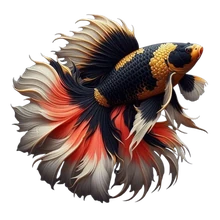
The question of whether betta and guppies can share a tank gets a confident “yes” all over the internet and a much messier answer in real aquariums. Bright, long-finned fancy male guppies look like a rival betta and provoke attacks, while guppies can nip a betta’s trailing fins right back, so the danger runs in both directions. This guide gives the honest, experience-based verdict, the exact conditions that give the pairing any chance, and why most beginners are better off choosing a calmer companion.
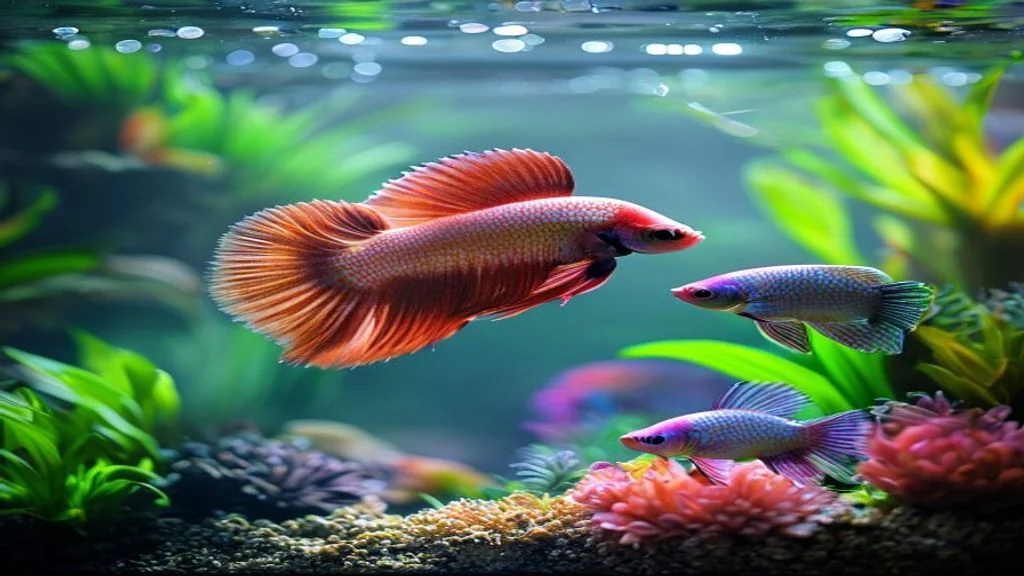
Male vs. Female Guppies: A Huge Difference in Risk
“Can bettas live with guppies?” has very different answers depending on which guppies. This is the detail most quick answers skip:
| Fancy male guppies | Female / plain guppies | |
|---|---|---|
| Appearance | Bright, long flowing tails | Plainer, shorter fins |
| Betta reaction | High, looks like a rival betta | Lower, less “trigger” |
| Risk level | Worst-case pairing | Risky but the better option |
| Breeding issue | , | Females breed fast → overstock → more waste |
If you attempt this at all, plain/short-finned or female guppies in a large planted tank are the only version with a fighting chance, fancy males are close to a guaranteed problem.
The Hidden Second Problem: Guppy Fry & Overstocking
Most guppy-betta guides only discuss aggression. There’s a quieter issue: guppies are prolific livebearers. Even if the betta tolerates the adults, you can end up with a population explosion that:
- Overloads the bioload: more fish = more waste = rising ammonia/nitrate, undoing your water quality (a key reason this needs a big, well-filtered tank, tank size guide).
- Turns the betta into a hunter: bettas readily eat guppy fry, which can switch on predatory behaviour toward the adults too.
- Creates constant low-level stress: a crowded, busy tank keeps a territorial betta permanently “on”, a setup for fin damage and infection.
Honest verdict: for beginners this pairing is more trouble than it’s worth. The water-parameter side actually matches (both tropical, ~76–80°F), so the conflict is behavioural and reproductive, both avoidable by simply choosing a calmer companion from best betta tank mates (neon tetras, snails, or corydoras succeed far more reliably). If you still try it, quarantine first, watch the first 48 hours, and keep a backup tank ready.
The Compatibility Scorecard
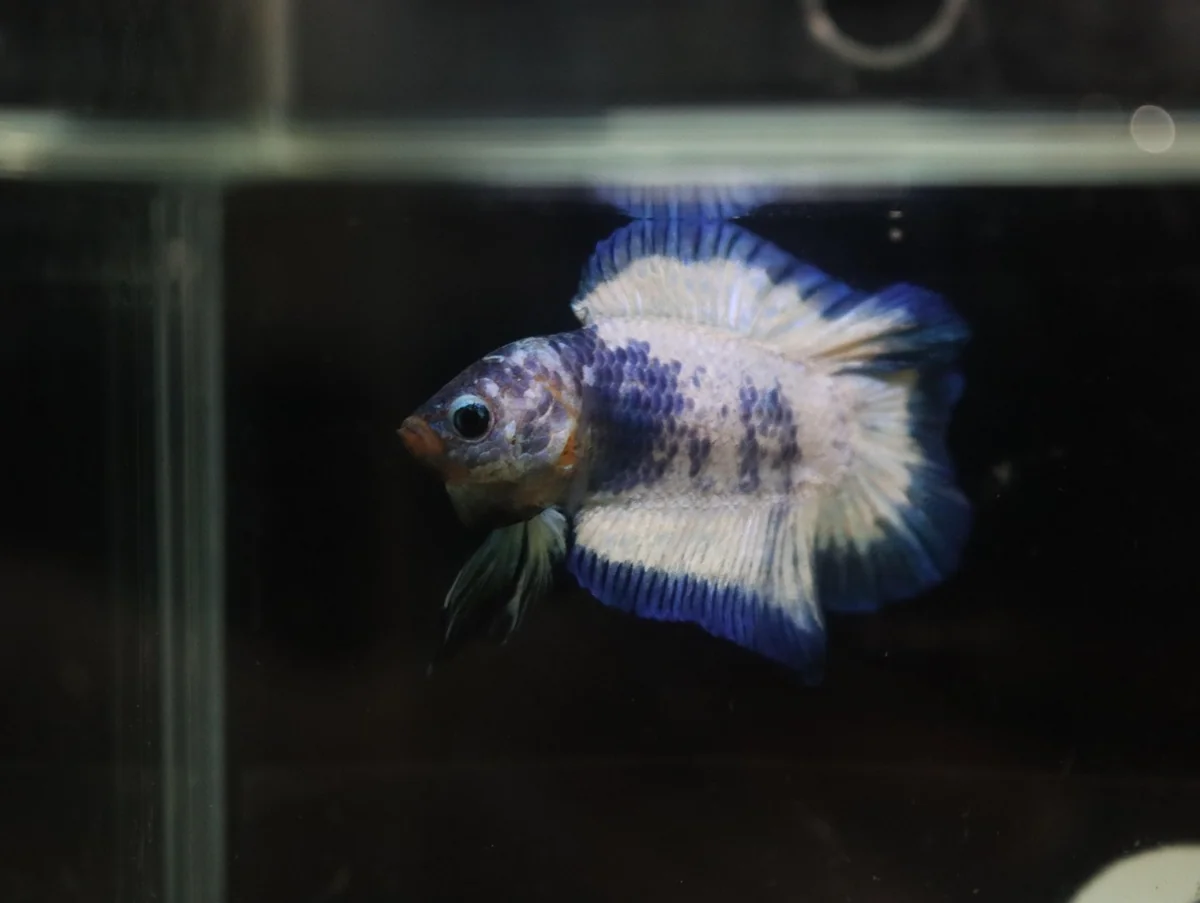
It helps to see exactly where this pairing scores well and where it falls apart. Water chemistry is genuinely a match, the failure points are behavioural and reproductive, which is why the verdict is “risky” rather than “impossible”.
| Factor | Betta + guppy rating | Notes |
|---|---|---|
| Temperature | Match | Both tropical, ~76–80°F |
| pH / hardness | Workable | Overlapping ranges; compromise easy |
| Aggression risk | High | Fancy males trigger betta attacks |
| Fin-nipping (both ways) | High | Guppies nip; betta long fins are a target |
| Breeding / bioload | Poor | Guppies breed fast and overstock the tank |
| Overall | Risky, not beginner-friendly | Needs ideal conditions and luck |
The single highest-leverage decision is guppy type. Choosing female or plain short-finned guppies over fancy males shifts the aggression risk from “very high” toward merely “elevated”, it does not make the pairing safe, but it is the difference between a slim chance and almost none.
Acclimation and Introduction, Step by Step
Because this pairing is already on the edge, a sloppy introduction is often what tips it into failure. Slow, deliberate steps give it the best possible start.
- Quarantine the guppies 4–6 weeks. Guppies are notorious carriers of disease into established tanks, never skip this (quarantine guide).
- Heavily plant and rescape first. Add plants, caves, and sight breaks before the guppies go in, and rearrange decor so the betta does not hold established territory.
- Float and drip acclimate for 30–45 minutes to equalise temperature and chemistry, then net the guppies in, do not pour store water into the tank.
- Add a group, not one guppy. A small group spreads the betta’s attention; a single guppy becomes a focused target.
- Dim the lights for the first day and watch the first 48 hours closely. Persistent chasing, nipping, or constant flaring means separate now.
Warning Signs This Pairing Is Failing
With guppies the failure can be fast (a betta locking on a fancy male) or slow (constant low-level harassment that wears fins down over weeks). Watch for both.
- Locked-on flaring or chasing aimed at one guppy, this escalates, it does not settle.
- Frayed or shortening fins on either fish: bidirectional nipping is the classic guppy-betta signature and a direct route to fin rot.
- Guppies hiding constantly or refusing to feed in the open, chronic stress, even without visible injuries.
- The betta abandoning normal patrol to patrol the guppies instead, a sign it now treats them as rivals.
- Sudden fry everywhere: a population spike that crashes water quality and switches on predatory behaviour. Watch for early stress signs across the whole tank.
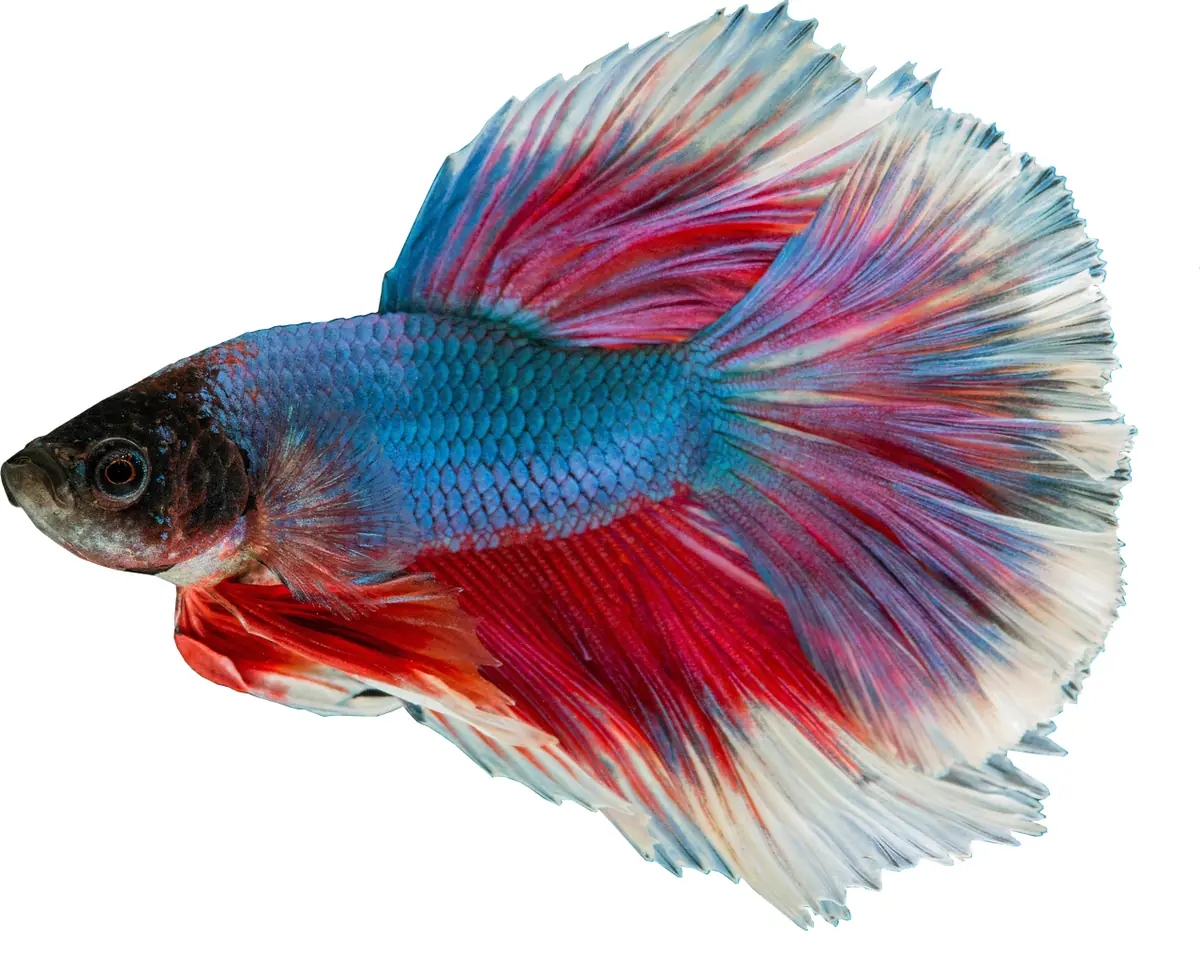
Better Alternatives If You Want That “Active Tank” Look
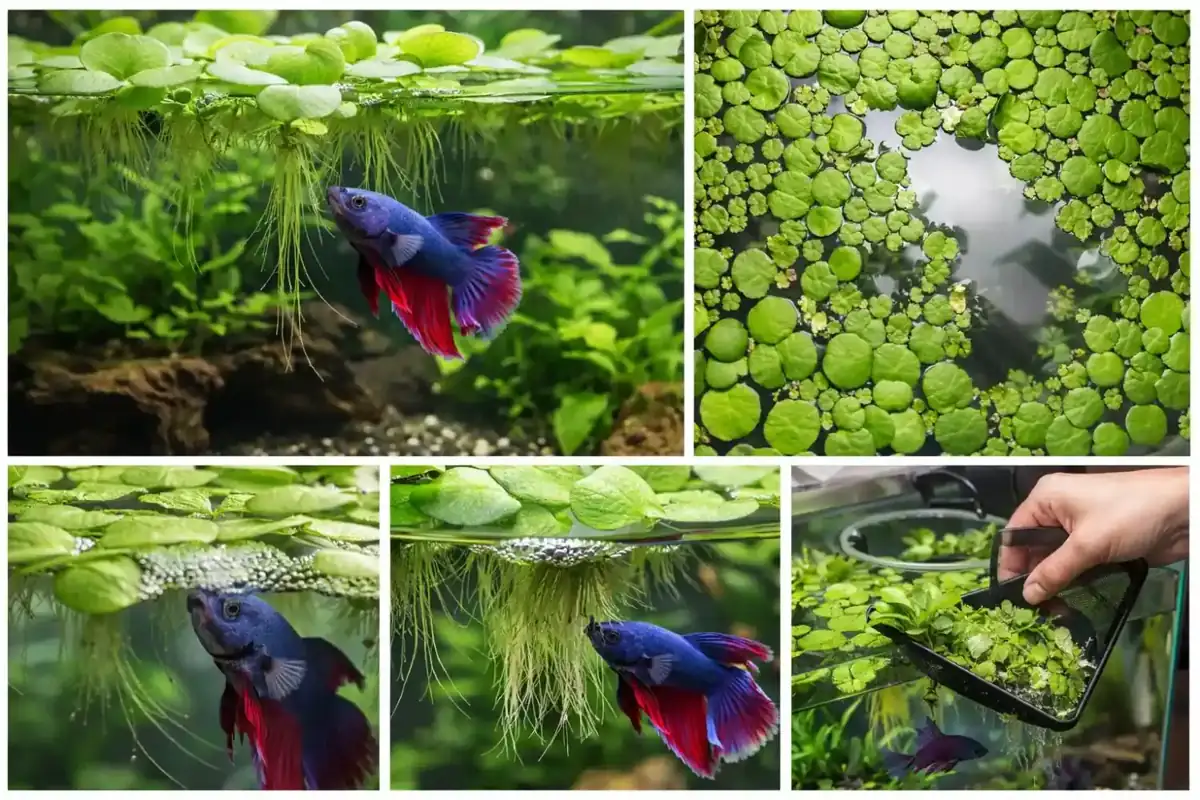
Most people want guppies for the same reason: lively, colourful movement. You can get that far more safely with species that do not trip betta aggression.
- Neon or ember tetras: fast, modestly coloured schoolers that bring constant movement without the rival-fin trigger. See bettas and neon tetras.
- Harlequin rasboras: reliable, peaceful, and quick enough that even an aggressive betta rarely catches them (bettas and rasboras).
- Corydoras: busy, social bottom activity in a completely different zone, with almost no rivalry (bettas and corydoras).
- Cherry shrimp colony: colour and constant grazing activity at the bottom, with the population buffering any losses (bettas and shrimp).
Each of these delivers the “alive” tank people want from guppies, with a fraction of the risk, the full ranking is in best betta tank mates.
Why This Pairing Fails Both Directions at Once
Most risky betta pairings fail in one direction, either the betta is the aggressor or the betta is the victim. The guppy pairing is unusual and especially dangerous because it can fail both ways simultaneously, which is why experienced keepers treat it with more caution than the cheerful pet-store advice suggests.
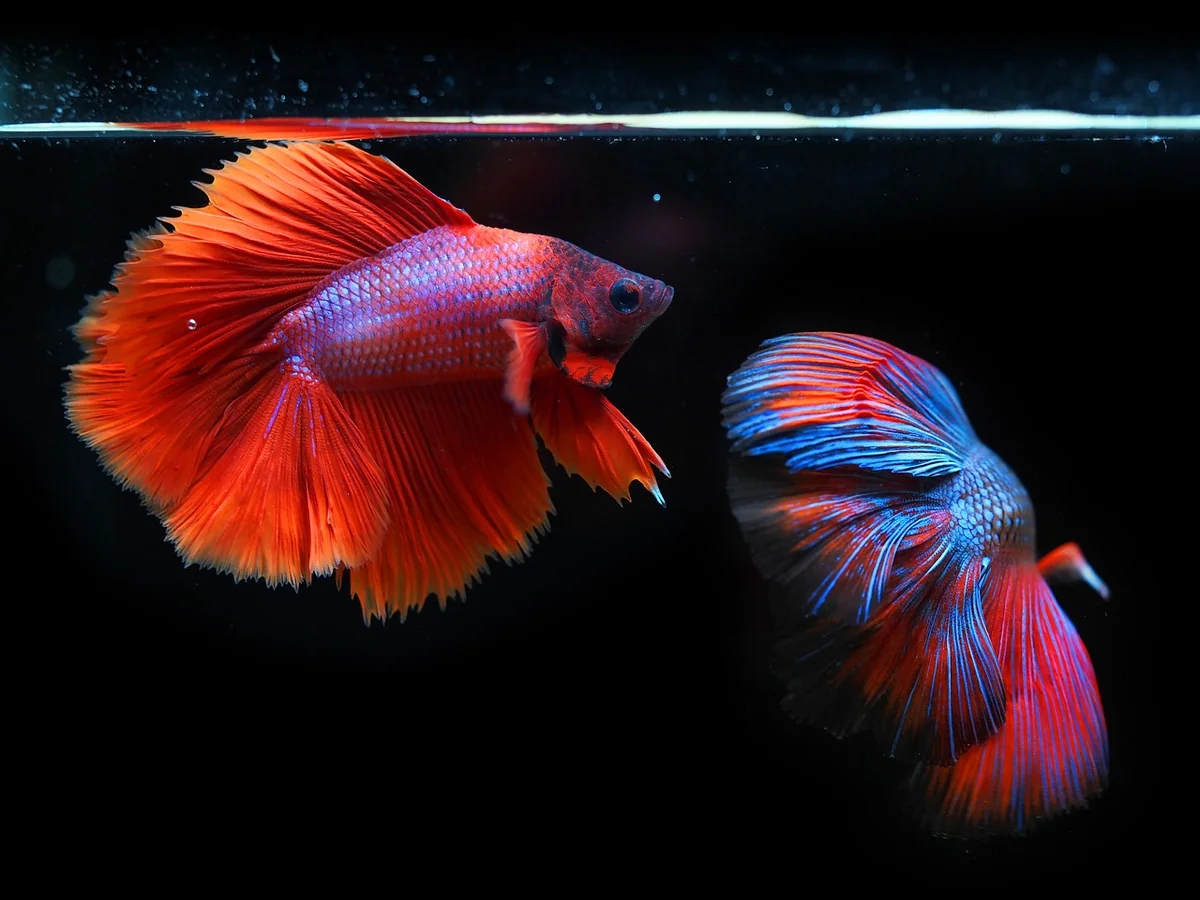
In one direction, a fancy male guppy’s bright body and trailing tail trip the betta’s hardwired rival-recognition response. The betta does not see “a different species”; it sees the silhouette of another male betta in its territory and responds with flaring, chasing, and eventually contact. In the other direction, guppies themselves are opportunistic nibblers. A betta that is resting, sleeping on a leaf, or simply slow-moving presents long, trailing fins that a curious guppy will nip at. Each nipped fin is an open wound, and in a warm aquarium that is a direct invitation to fin rot and secondary bacterial infection.
The reason this matters: even if you somehow have a betta calm enough to ignore the guppies, you have not solved the problem, because the guppies can still be the ones doing the damage. A pairing that can fail from either side has roughly double the number of ways to go wrong, and that is exactly why the honest verdict is “risky” rather than “fine in a big tank”.
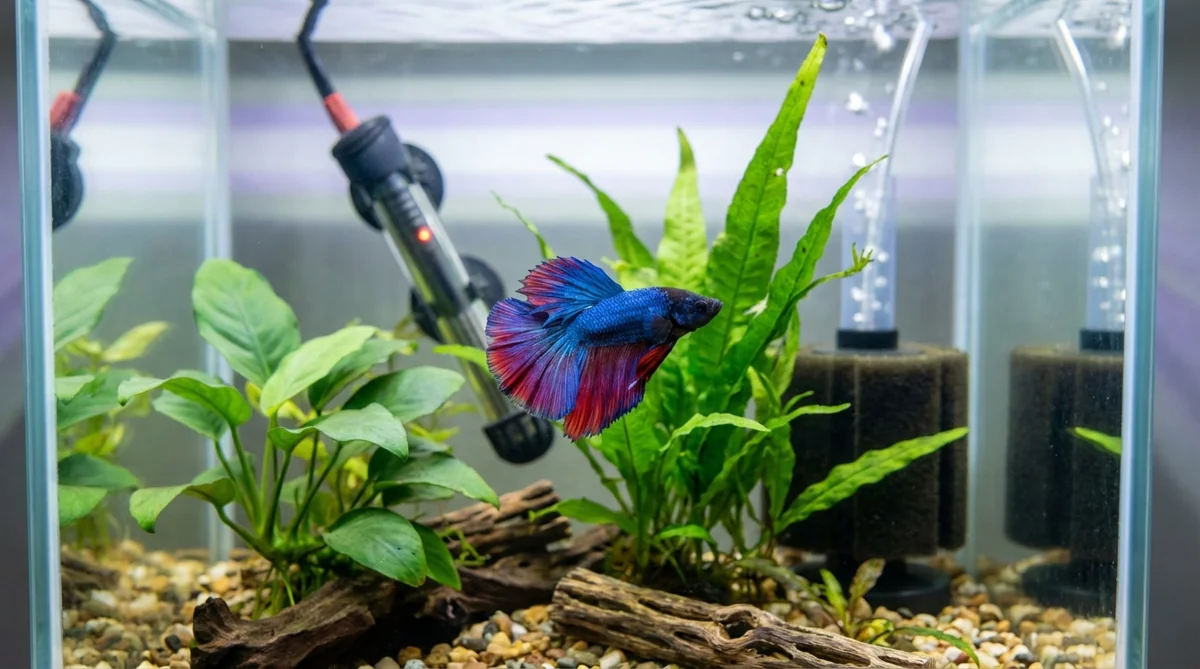
Tank Setup That Gives This Pairing Its Best Chance
If you have read the warnings and still want to attempt it, the physical setup is what separates a slim chance from none. The goal of every choice below is the same: break line of sight, give the guppies escape routes, and dilute the betta’s sense of “owned” territory.
Volume and Footprint
Twenty gallons is the realistic floor, and a longer, wider footprint beats a tall one because horizontal swimming distance and surface area are what actually disperse aggression. A long 20 or a 29 gallon gives guppies room to stay out of the betta’s patrol path; anything under 20 gallons concentrates every fish into the same disputed space.
Dense Planting and Sight Breaks
The single most effective intervention is heavy planting. Tall stem plants, broad-leaf species, and floating cover divide the tank into visual “rooms” so the betta cannot see, and therefore cannot fixate on, every guppy at once. A betta that cannot see a rival usually does not pursue one. Caves, driftwood, and dense background planting all serve the same purpose: they convert one open arena into many smaller territories.
Stable, Compromise Water
Both species are tropical and broadly overlap, so keep the tank at a stable 78°F with a reliable heater and a gentle filter that does not create strong current. Guppies tolerate the betta’s preferred neutral water far better than mollies do, so chemistry is the one area where this pairing has a genuine advantage, do not waste it with unstable conditions.
Group Size and Sex Ratio
Always introduce a small group of guppies rather than a single fish, because one guppy becomes a focused target while a group spreads the betta’s attention. Lean toward females or plain short-finned strains, and avoid an all-male group of fancy guppies, which both maximises the rival trigger and adds male-on-male guppy harassment to the tank.
Sources & Further Reading
FishLab, Can Betta Fish Live With Guppies?; Aquarium Store Depot, betta tank mates; Betta Care Fish Guide, guppies with betta; The Spruce Pets, community tanks.
Frequently Asked Questions
Can bettas live with guppies?
Possibly, but it’s risky. Bright long-finned guppies trigger betta aggression and guppies can nip back. It needs a calm betta, plain guppies, a large planted tank, and a backup plan.
Will a betta kill guppies?
It can, especially fancy male guppies that look like a rival betta. Outcomes depend heavily on the individual betta’s temperament.
Are female guppies safer with a betta than males?
Generally yes, females are plainer and shorter-finned, so they trigger less aggression than colourful long-finned males.
What size tank for a betta and guppies?
20 gallons or more, heavily planted, so fish can escape and break line of sight.
Will a betta eat guppy fry?
Almost certainly. Bettas readily hunt guppy fry, and that predatory switch can extend to harassing the adult guppies too. A breeding guppy population also overloads the tank’s bioload.
What is the best alternative to guppies for a betta?
Neon or ember tetras, harlequin rasboras, corydoras, or a cherry shrimp colony all deliver active, colourful tanks with far less aggression risk than guppies.