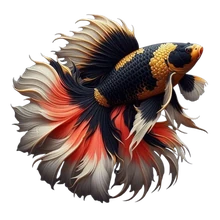
Choosing the right betta tank mates is the single decision that turns a community tank into either a calm, planted display or a fin-shredding disaster within 48 hours. The safest betta fish companions share four traits, peaceful, fast or bottom-dwelling, dull-coloured, and short-finned, but the species list is only half the story. This guide ranks the nine best tank mates for betta fish, gives the exact minimum tank size for each, and walks through the introduction protocol that experienced keepers use to stack the odds in their favour.
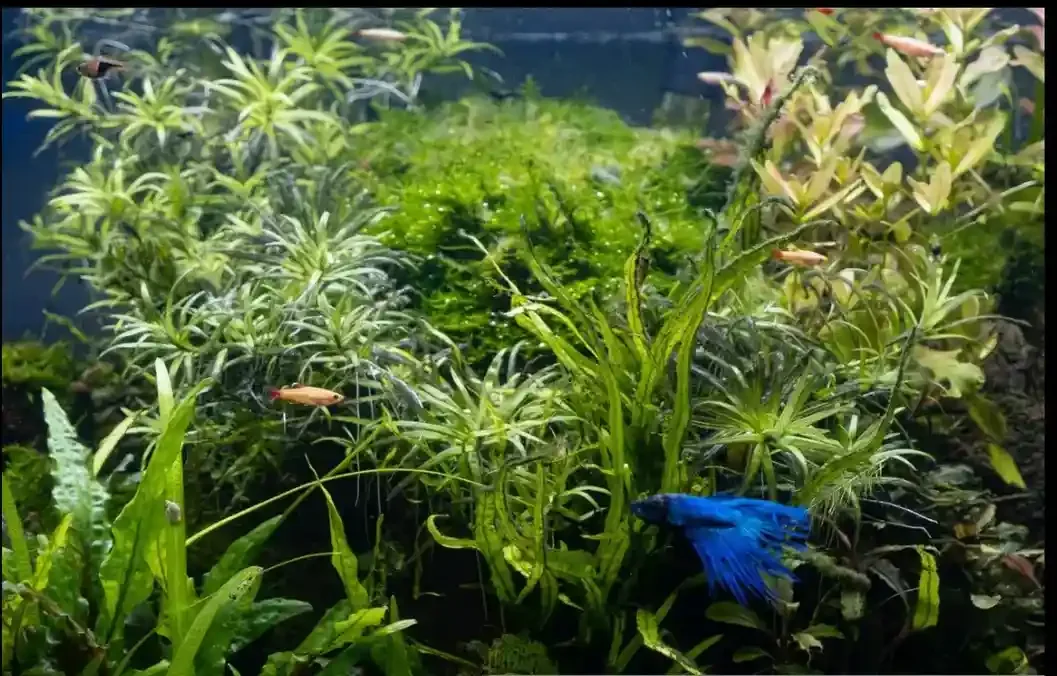
The 4 Golden Rules (read before buying anything)
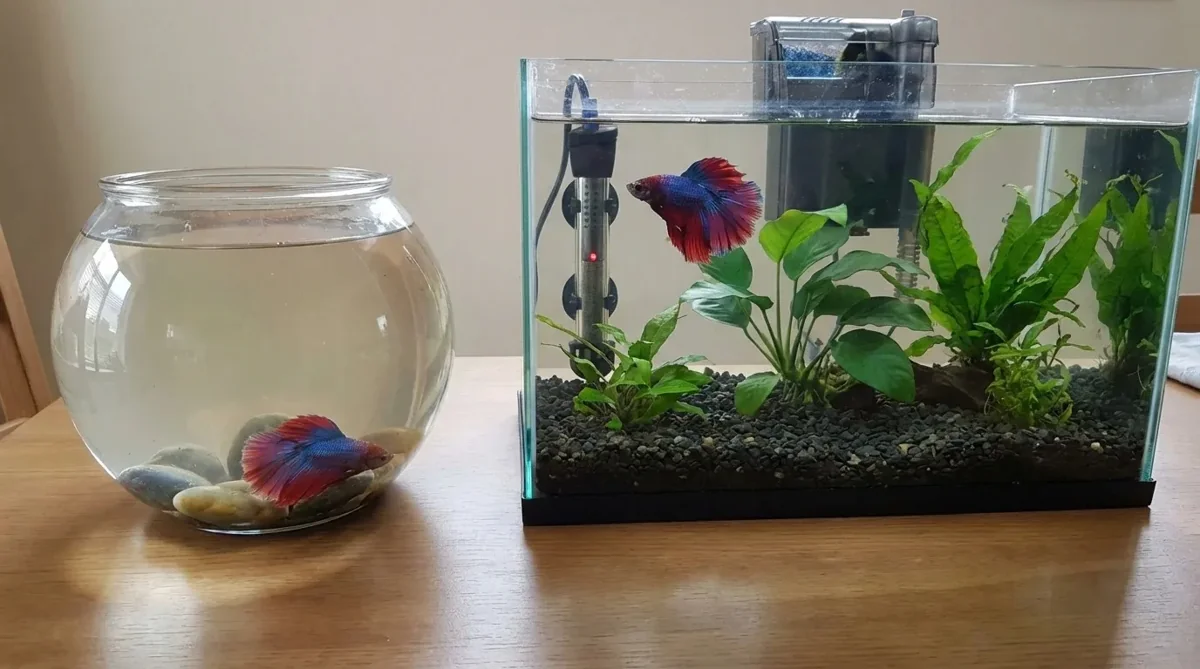
- Tank size first. A 5-gallon tank is for a betta alone. Snails work in 5 gal; shrimp/small schools need 10 gal minimum; most community fish need 15–20+ gallons. Cramped tanks turn any betta aggressive, see our betta tank size guide.
- Temperament rules over lists. Every betta is an individual. Some ignore everything; some attack on sight. No list overrides your specific fish.
- Avoid the “betta look”. Bright colours and long flowing fins (like a male betta) trigger aggression and fin-nipping. Pick plain, short-finned species.
- Always have a backup tank. If it goes wrong, you need somewhere to move a fish today, not next week.
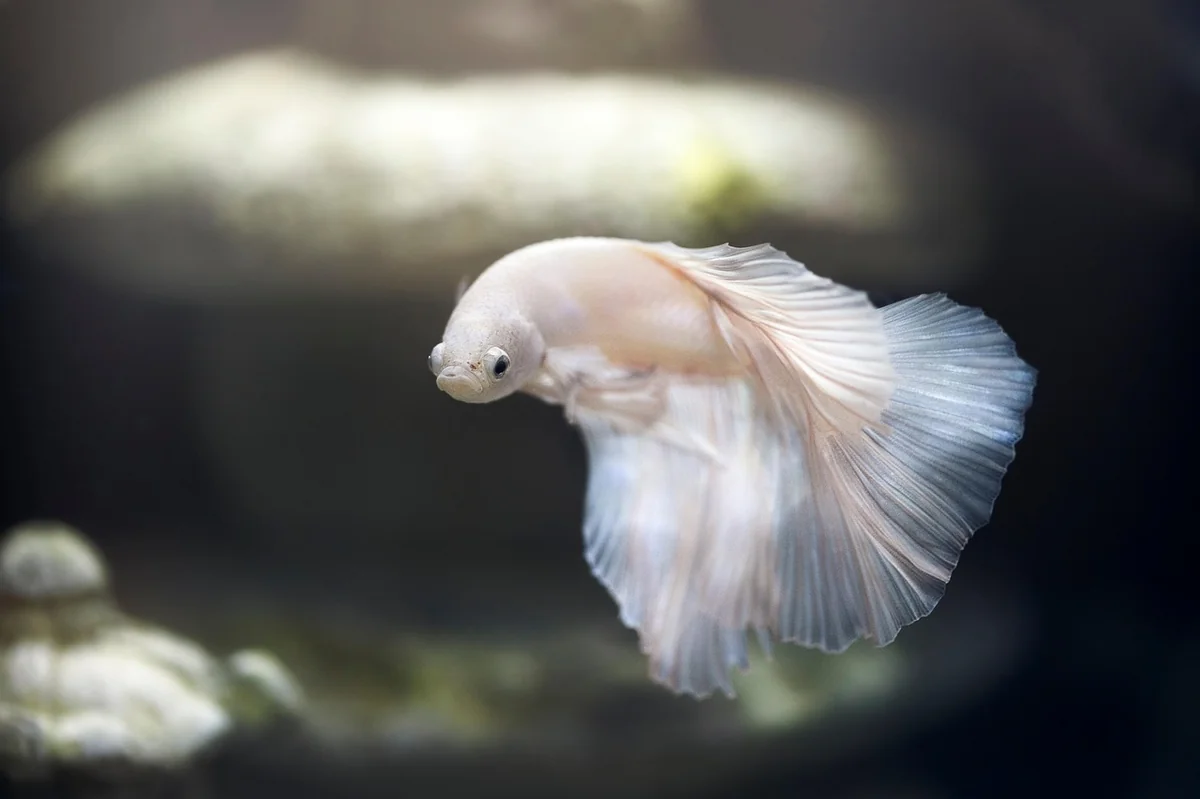
The 9 Best Betta Tank Mates
| Tank mate | Min tank size | Why it works | Risk level |
|---|---|---|---|
| Nerite / Mystery snails | 5 gal | No fins to nip, peaceful, clean algae | Very low |
| Amano shrimp | 10 gal (planted) | Larger, fast, mostly ignored | Low–medium |
| Cherry shrimp (colony) | 10 gal (heavily planted) | Breed fast enough to survive losses | Medium |
| Ember tetras | 10 gal | Tiny, peaceful, dull, fast schoolers | Low |
| Neon tetras | 10–20 gal | Fast schoolers, short fins | Medium |
| Corydoras catfish | 20 gal | Bottom-dwellers, peaceful, school of 6+ | Low |
| Kuhli loaches | 20 gal | Hidden bottom dwellers, no conflict | Low |
| Harlequin rasboras | 20 gal | Peaceful mid schoolers, short fins | Low–medium |
| Bristlenose pleco | 15–20 gal | Stays small-ish, cleans, ignores betta | Low |
Each of these has its own deep-dive guide: snails, shrimp, neon tetras, corydoras, and rasboras.
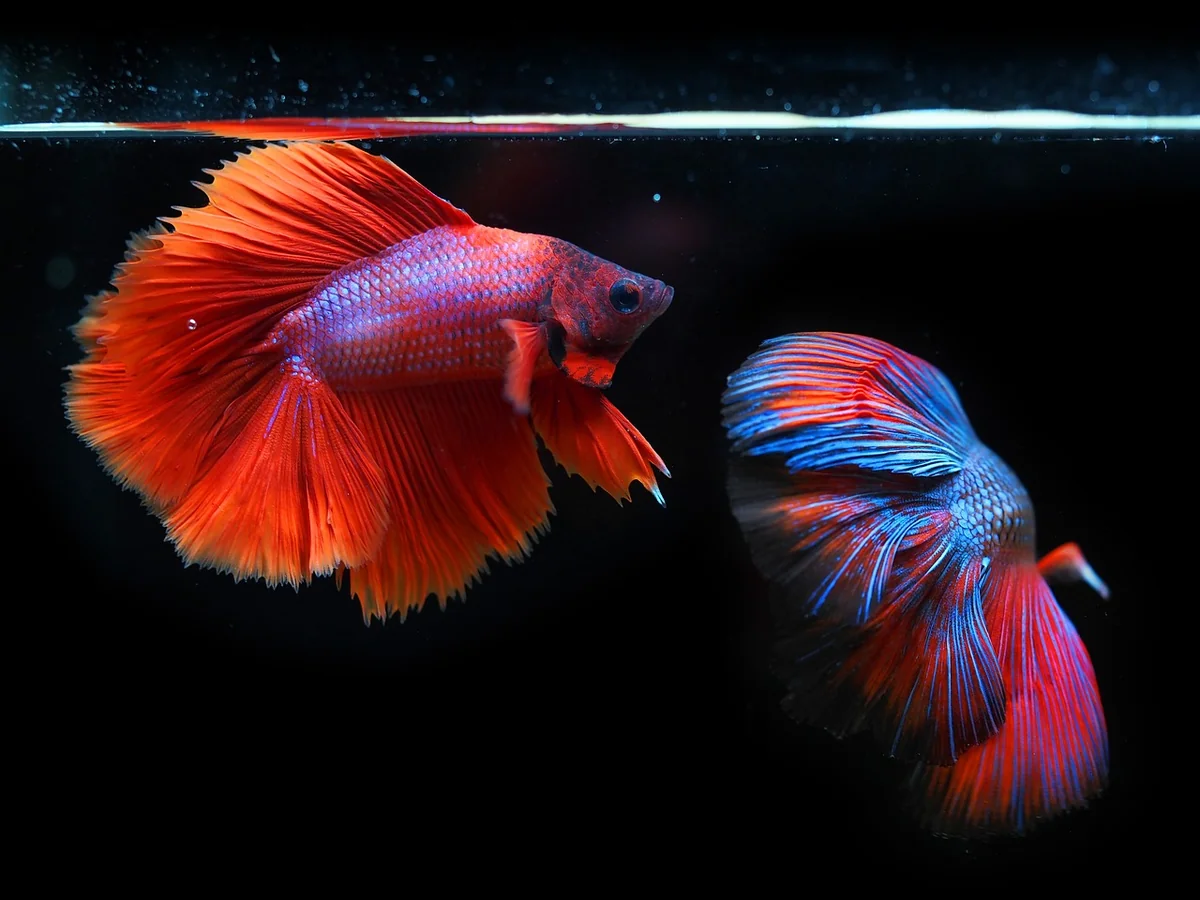
What Makes a Bad Tank Mate
Avoid bright/long-finned fish (guppies, fancy goldfish), known fin-nippers (tiger barbs, some tetras in small groups), aggressive or territorial fish, anything big enough to eat or be eaten, and other bettas in the same space. Full list with reasons: worst tank mates for betta fish.
How to Add Tank Mates Safely (step by step)
- Quarantine new fish 4–6 weeks first, never add straight to the betta tank. See how to quarantine a new betta.
- Add tank mates before or with the betta when possible, or rearrange decor so the betta doesn’t “own” all territory.
- Heavily plant and add hides/caves so fish can break line of sight and escape.
- Watch the first 48 hours closely. Nipped fins, chasing, hiding, or a betta flaring constantly = separate now.
- Match the water. All tank mates must suit betta conditions: ~78–80°F (heater) and a gentle filter (do betta fish need a filter).
Why “Compatible” Always Comes With an Asterisk
No tank-mate list is a guarantee, and pretending otherwise gets fish killed. The single biggest predictor of success isn’t the species, it’s your individual betta’s temperament. Some bettas peacefully ignore a whole community; others attack anything that moves. Build around this reality:
- Temperament first. A known-calm betta widens your options; a known-aggressive one may need to live alone, and that’s perfectly healthy.
- Tank size buys peace. Cramped water concentrates aggression; more space and sight-breaks defuse it (tank size guide).
- Heavily planted, not bare. Escape routes and broken lines of sight prevent most conflict before it starts.
- Fin damage is a health issue, not just drama. Torn fins from a bad pairing routinely become fin rot, watch for early stress signs.
- Always have an exit plan. The keepers who succeed with community tanks are the ones who were ready to separate at a moment’s notice.
Treat every “yes” on a compatibility list as “yes, if your betta allows it and you’re prepared to undo it”.
Minimum Tank Size and Water Parameters for a Betta Community
The most common cause of a failed community tank is not the wrong species, it is the right species in too little water. Aggression is density-dependent: the same betta that ignores a school of rasboras in 20 gallons will hunt them down in 5. Before you choose any companion, anchor the setup to these numbers.
| Setup | Minimum volume | What it supports |
|---|---|---|
| Betta alone | 5 gallons | One betta, plants, no fish tank mates |
| Betta + snails only | 5 gallons | 1–2 nerite or mystery snails |
| Betta + shrimp colony | 10 gallons (heavily planted) | Amano or a cherry colony |
| Betta + small school | 15–20 gallons | Ember/neon tetras, rasboras (6+) |
| Betta + bottom shoal | 20 gallons | Corydoras, kuhli loaches (6+) |
Every betta community shares the same core water targets: temperature 78–80°F held stable by a reliable heater, pH roughly 6.5–7.5, ammonia and nitrite at zero, and nitrate kept under 20 ppm with weekly water changes. The filter must be gentle, bettas are weak swimmers and a strong current is a chronic stressor that makes any fish more reactive. If a prospective tank mate needs cold water, hard or brackish water, or a fast current, it is incompatible no matter how peaceful it is, because one animal will live permanently outside its comfort zone.
Reading Aggression: Warning Signs in the First 48 Hours
Most disasters are preventable if you know what to watch for and act on the first day rather than the first week. There is a clear difference between normal settling-in behaviour and a pairing that is failing.
| Behaviour | Normal (settling) | Danger (separate now) |
|---|---|---|
| Flaring | Brief flares, then ignores | Constant flaring, locked on one fish |
| Chasing | A short investigatory dart, then stops | Relentless pursuit across the tank |
| Fins | Intact on all fish | Any nipped, split, or missing tissue |
| Hiding | Tank mates explore within hours | Tank mates pinned in a corner all day |
| Feeding | Everyone eats | Betta blocks others from food |
A betta that patrols, glances at a new fish, and goes back to its routine has accepted the addition. A betta that abandons normal behaviour to track one animal will not “settle down”, that is the early stage of a kill, and waiting almost always means a dead or maimed fish. Trust the behaviour in front of you over any article, including this one.
The Mistakes That Sink Most Community Tanks
After running both thriving and failed betta communities, the same handful of errors come up again and again. Avoiding them matters more than picking the “perfect” species.
- Skipping quarantine. Adding a new fish straight from the store is the fastest way to wipe out an established tank with ich or velvet. A 4–6 week quarantine is non-negotiable, see how to quarantine a new betta.
- Adding the betta last. A betta that has owned the tank for months treats every newcomer as an intruder. Add tank mates first, or fully rearrange decor so no fish holds established territory.
- A bare or lightly planted tank. Without dense plants, caves, and broken sight lines there is nowhere to escape and nowhere to de-escalate. Heavy planting prevents most conflict before it starts.
- Under-stocking schooling fish. Three tetras are not a school, they are three stressed fish that turn into fin-nippers. Schoolers need 6+ to behave calmly.
- No backup tank. The keepers who succeed are simply the ones who could move a fish the same day it went wrong. A cycled spare tank or sponge filter ready to go is the real safety net.
- Trusting a list over the fish. No compatibility chart overrides your individual betta. Treat every “compatible” rating as a starting hypothesis to test, not a guarantee.
Corydoras and Rasboras: The Two Most Reliable Choices
Corydoras catfish (bottom zone)
Corydoras are one of the safest companions because they almost never meet the betta. They live on the bottom while the betta patrols the top, they eat sinking food, and their dull, armoured, short-finned bodies do not look like a rival.
- Group: 5–6 or more. A lone cory is stressed and hides.
- Tank: 15–20 gallons or more. Floor space matters more than height.
- Substrate: soft sand or smooth gravel. Sharp gravel wears down their barbels.
- Feeding: drop sinking wafers after lights out so the betta does not steal them.
- Warning sign: eroded barbels mean sharp or dirty substrate. Switch to clean sand.
Harlequin rasboras (middle zone)
Harlequin and lambchop rasboras are fast, peaceful and modestly coloured. A slow, long-finned betta rarely catches them, and they rarely nip fins when kept in a proper group.
- Group: at least 6, ideally 8–10. Small groups scatter, stress, and are more likely to nip.
- Tank: around 20 gallons for harlequins. Chili rasboras suit a smaller planted tank but need a bigger, tighter group.
- Water: 78°F, pH 6.0–7.0, soft to moderate hardness, ammonia and nitrite at 0.
- Warning sign: the betta locked on to one fish and chasing it. Separate them before fins are damaged.
Quarantine new fish for a few weeks before adding them. A new school is the most common way disease enters a betta tank. See how to quarantine new fish.
Sources & Further Reading
Bettafish.org, Safe Betta Tank Mates; FishLab, betta tank mate compatibility list; Aquarium Store Depot, betta tank mates; Chewy/PetMD, compatible betta companions; Hepper, Harlequin Rasbora & Betta; Betta Care Fish Guide, bettas and rasboras; Aquariadise, harlequin rasbora & betta; Bettafish.org, safe tank mates; Betta Care Fish Guide, Corydoras and Bettas; Keeping Catfish, cory & Aquarium Co-Op, corydoras care.
Frequently Asked Questions
What fish can live with a betta?
Peaceful, dull, short-finned or bottom species in a 10-gallon-plus planted tank: snails, shrimp, ember/neon tetras, corydoras, kuhli loaches, rasboras. Temperament still decides per fish.
Can a betta live with other fish in a 5-gallon tank?
Generally no, 5 gallons is for a betta alone. Only snails reliably work at that size. Community fish need 15–20+ gallons.
What is the best tank mate for a betta?
Nerite snails and Amano shrimp are the safest, lowest-risk options; corydoras and ember tetras are excellent in larger tanks.
Why do bettas attack some tank mates?
Bright colours and long fins resemble a rival betta and trigger aggression and fin-nipping. Cramped tanks make it worse.
How many tank mates can a betta have?
It depends on tank volume, not the betta. As a rough guide, a 20-gallon community might hold a betta plus a school of 6–8 small fish and a clean-up crew of snails or shrimp. Stock conservatively, an overstocked tank raises waste, drops water quality, and concentrates aggression.
What is the safest betta tank mate for a beginner?
Nerite or mystery snails, then a school of harlequin rasboras or corydoras in a larger tank. These have the highest success rate and the lowest chance of triggering betta aggression.
Can bettas live with corydoras?
Yes, it is one of the best pairings. Keep 5-6 or more corydoras in a 15-20 gallon or larger tank with soft sand, and feed sinking food after lights out.
Can bettas live with rasboras?
Yes. Harlequin rasboras are fast and peaceful. Keep at least 6, ideally 8-10, in a tank of about 20 gallons.