If you are searching why is my betta glass surfing, you have probably been watching your fish pace frantically up and down one pane for far longer than looks healthy, and your instinct is right. Betta glass surfing is repetitive, fixated swimming against the tank wall, and it is a stress or boredom signal, not a quirky habit. This guide explains what it means, decodes the pattern to pinpoint the cause, and walks you step by step through stopping it for good.
Glass Surfing Decoder: Match the Pattern to the Cause
Glass surfing isn’t random, how and where the betta paces often points straight to the trigger. Read the pattern:
| Pattern | Most likely cause | First fix |
|---|---|---|
| Surfs one wall, often flaring | Its own reflection | Dim light, move tank from light, add background |
| Started after a skipped water change | Poor/unstable water | Test & do a change (ammonia) |
| Constant patrol, empty tank | Boredom / no enrichment | Add plants, caves, varied décor |
| Surfs away from a faster fish | Stressful tank mate | Reassess pairing (worst tank mates) |
| Just moved in, then easing | New-tank shock | Time + stable conditions |
This is why “why is my betta glass surfing” rarely has one answer, but the pattern usually narrows it to one fix fast.
Active Stress vs. Shut-Down: Two Opposite Warnings
It’s worth understanding where glass surfing sits on the betta-distress spectrum, because the opposite extreme is just as serious in a different way:
- Glass surfing = hyper-active stress. The fish is “doing too much”, pacing, frantic, fixated. Usually environmental (reflection, boredom, water, mate) and very fixable once you find the trigger.
- Lethargy / lying at the bottom = shut-down. The opposite, “doing too little.” Often more medically serious (water toxicity, illness, cold). See why is my betta lethargic.
- Both are the fish communicating: neither is a personality quirk to ignore. The mistake is dismissing surfing as “he’s just energetic.”
- Sustained surfing has a cost: chronic stress weakens immunity and can lead to clamped fins, fading, and disease, the same cascade as in disease prevention.
Practical rule: test the water first (it’s the most common hidden driver and the fastest to rule out), then work the pattern table above. A betta in a stable, enriched, reflection-free tank rarely glass surfs at all.
What Glass Surfing Actually Is
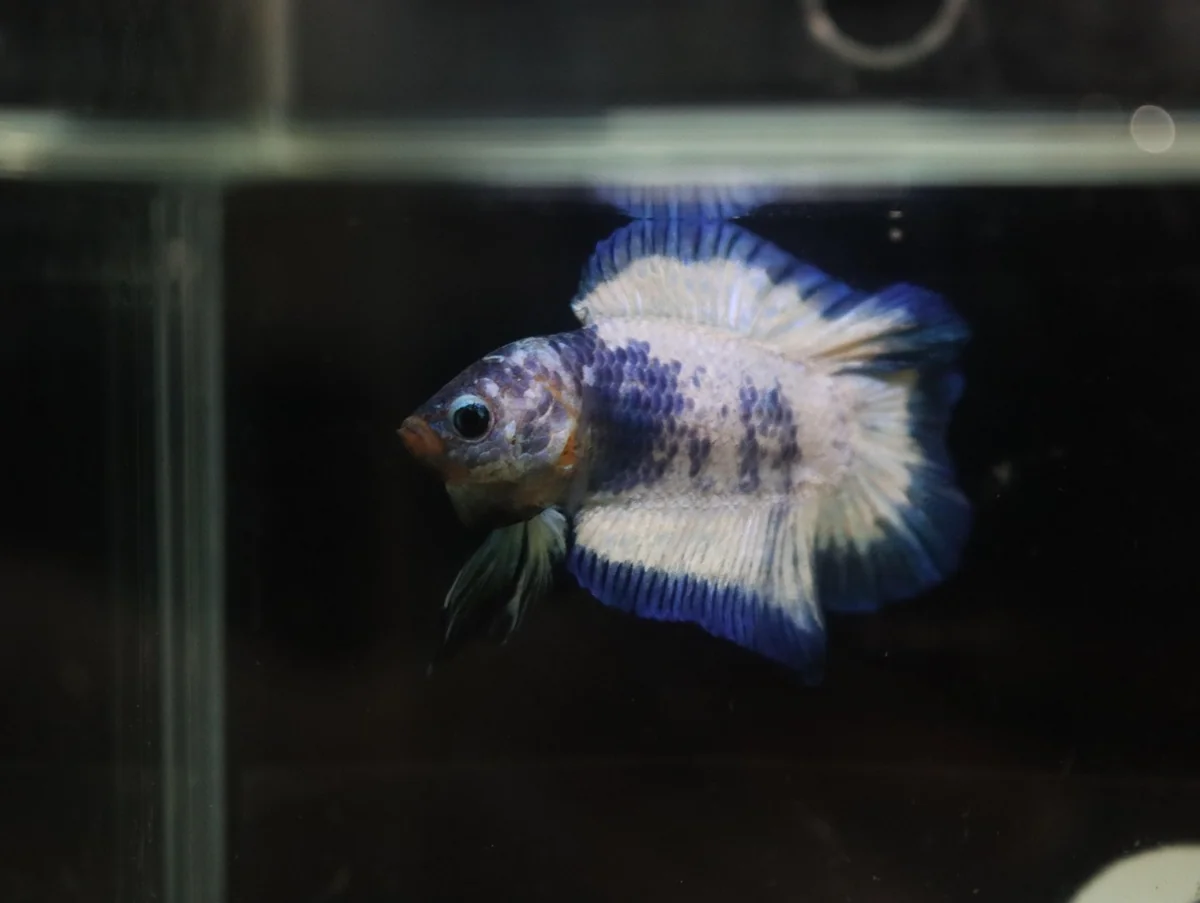
Glass surfing, sometimes called pacing or glass dancing, is repetitive, often rapid swimming up and down (or back and forth) directly against the inside of the tank glass, frequently in the same spot for long stretches. In behavioural terms it is closest to a stereotypy: a repetitive, fixated motion an animal performs when it is stressed, frustrated, or has no outlet for normal behaviour. Zoo animals pacing a fence is the same category of behaviour. That framing matters, because it tells you glass surfing is not a personality trait to admire or ignore, it is the fish doing the aquatic equivalent of pacing a cage.
How to tell it apart from normal activity
A healthy, active betta is varied and relaxed: it patrols the whole tank, investigates décor, hovers, rests on a leaf, comes over to greet you, then drifts off again. Glass surfing is the opposite of varied, it is repetitive, fast, and fixated, usually along one wall, often for many minutes at a time, and the fish seems unable to settle into anything else. The tell is the fixation, not the activity. A betta that swims energetically around an enriched tank is a good sign; a betta that does nothing but rake one pane is not.
Where it sits on the distress spectrum
It is also worth knowing that glass surfing is the hyper-active end of betta distress. The opposite extreme, lethargy or lying at the bottom, is “doing too little” and is often more medically serious. Both are the fish communicating that something is wrong; the mistake is dismissing the surfing one as “he’s just energetic.”
Betta Glass Surfing — Causes Ranked
“Why is my betta glass surfing” rarely has a single universal answer, but the pattern almost always narrows it to one of these, listed roughly most-to-least common.
1. Its own reflection
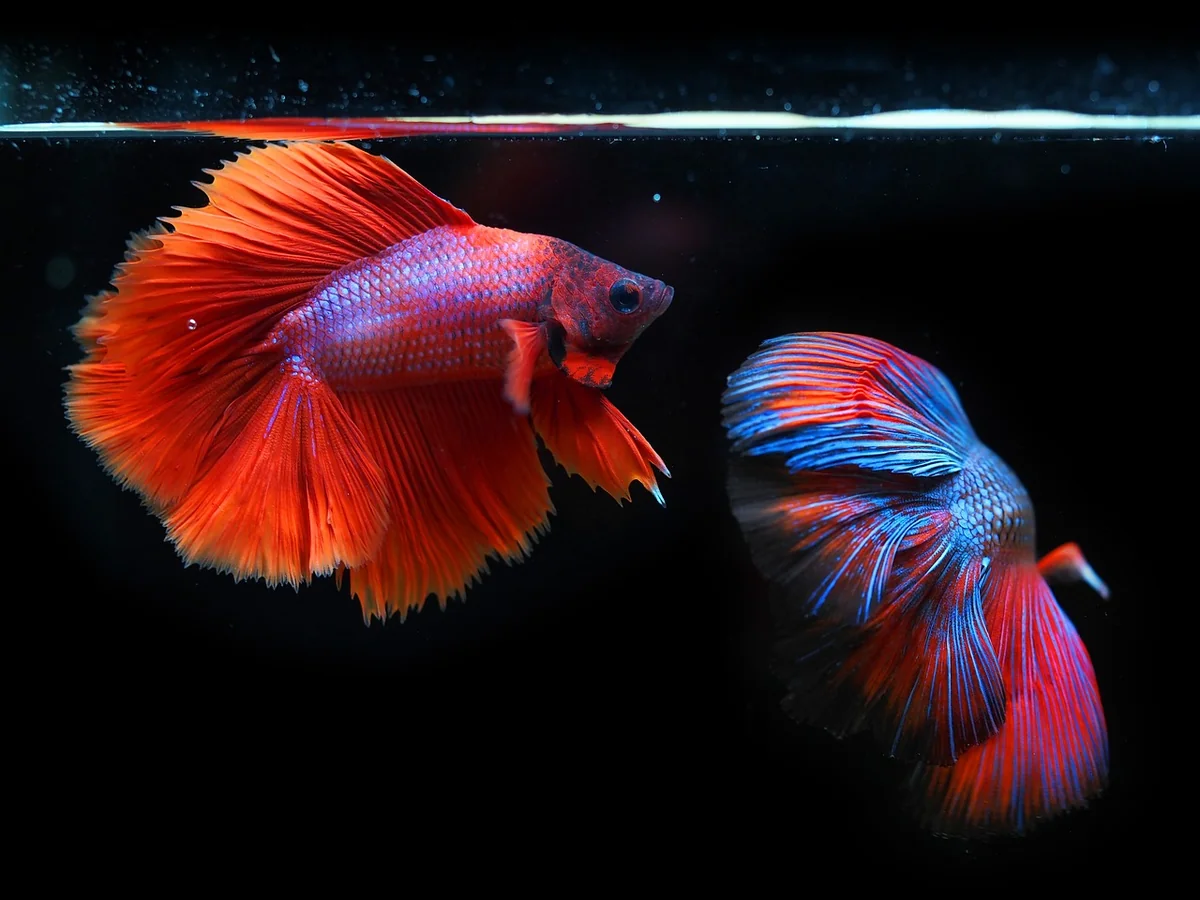
A leading cause. When the tank is brighter than the room, the glass mirrors the betta, and it surfs and flares at the “rival” that mirrors its every move. Tell-tale: it works one specific wall, often with flaring, and the behaviour tracks the lighting. Fix: dim the tank light, move the tank away from windows and lamps, even out room-vs-tank brightness, and add a dark or printed background.
2. Poor or unstable water
Ammonia, nitrite, or a sudden parameter swing makes a betta agitated and restless, and frantic pacing is a classic response. Tell-tale: it started after a skipped water change, in a new uncycled tank, or after a big change. This is the most common hidden driver and the fastest to rule out, test the water and do a dechlorinated change (lower ammonia).
3. Boredom and a bare tank
A betta in an empty, featureless tank has nothing to do and patrols the glass relentlessly out of sheer lack of stimulation. Tell-tale: constant patrolling in a tank with little or no plants or décor. Fix: enrich heavily, plants, caves, leaf litter, varied hardscape.
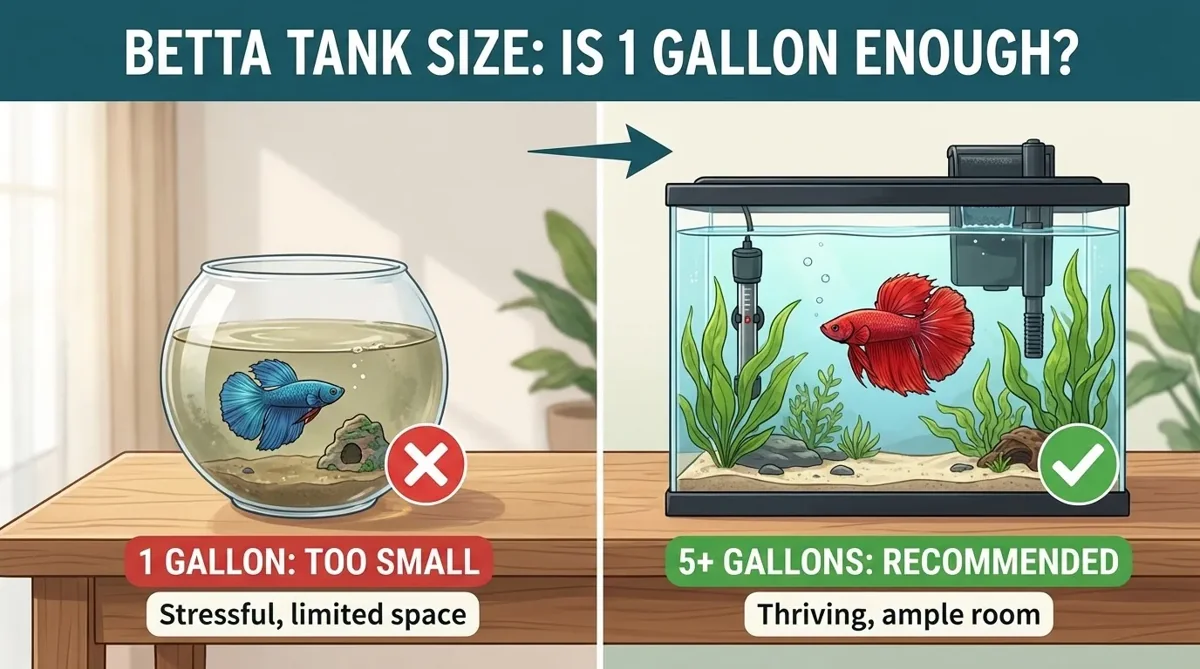
4. A tank that is too small
Cramped quarters magnify stress and boredom and leave nowhere to escape line of sight. Tell-tale: a bowl or a tank under about five gallons. Fix: upgrade, see the tank size guide.
5. A stressful tank mate
A faster or nippy companion can keep a betta in flight mode, pacing away from the aggressor. Tell-tale: it surfs at the end of the tank away from a particular fish. Fix: reassess the pairing, see worst tank mates for betta fish.
6. New-tank shock
A recently moved betta may surf for a few days while it adjusts. Tell-tale: it just moved in and the behaviour is already easing. Fix: stable, calm conditions and time, this kind is usually self-limiting.
Step-by-Step: How to Stop Glass Surfing
Work these in order. The water test comes first deliberately, it is the most common hidden cause and the quickest to eliminate.
- Test the water first. Ammonia and nitrite must read 0; do a partial dechlorinated change. Unstable water is the single most common hidden driver of pacing.
- Kill the reflection. Lower or shorten the lighting, move the tank away from windows and lamps, balance room-vs-tank brightness, and add a dark or printed background to the back and ends.
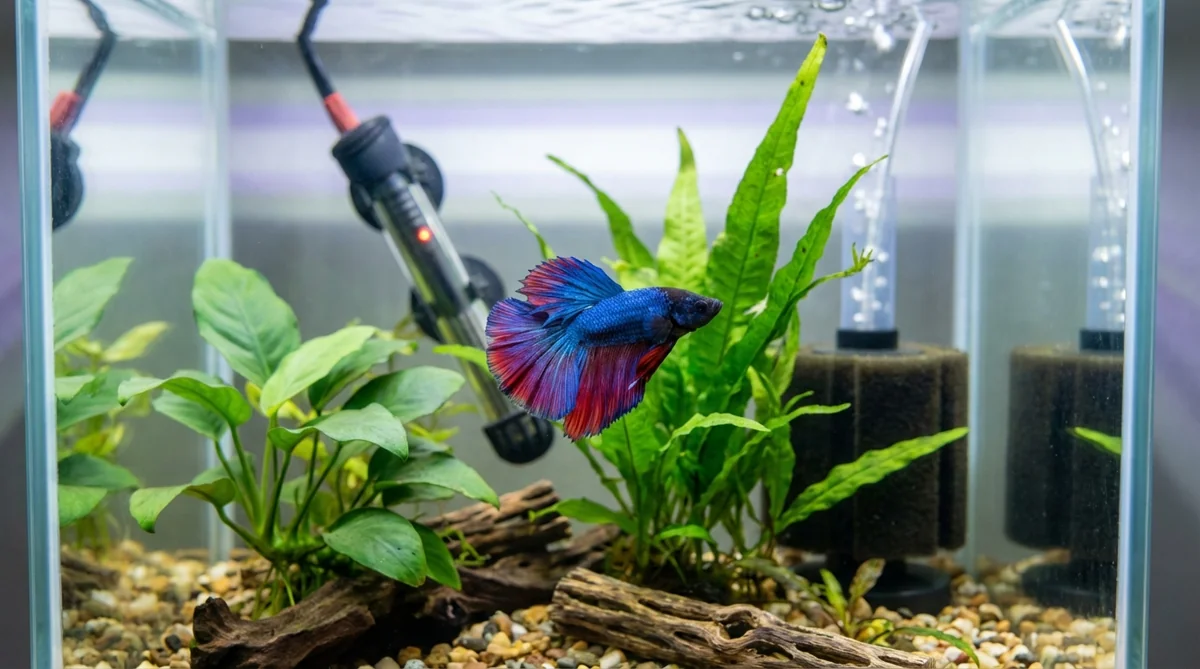
- Enrich the tank. Add plants, caves, leaf litter, and varied décor. A betta with things to explore and break line of sight surfs far less.
- Check tank size. If it is in a bowl or under about five gallons, upgrade. Space plus enrichment lowers baseline stress.
- Reassess tank mates. Remove or rehome anything fast, nippy, or stressful the betta is pacing away from.
- Give a new betta a few days. If it just moved in, stable calm conditions usually settle new-tank surfing without further intervention.
- Reassess after each change. Fix one variable, watch for a few days, and you will usually see which one was the trigger.
When to Worry
Use this to decide how urgently to act:
- Brief surfing in a new tank that is already easing: low concern. Keep conditions stable and give it days.
- Persistent daily surfing in an established tank: a genuine problem. Sustained pacing is chronic stress that weakens immunity and can lead to clamped fins, fading, and disease, work the causes now, the same mindset as disease prevention.
- Surfing plus faded colour, clamped fins, or appetite loss: the stress is already taking a toll. Test water, check temperature, and remove the trigger urgently.
- Surfing that flips to lethargy or bottom-lying: escalate, the opposite extreme is often more medically serious. See why is my betta lethargic.
Mistakes to Avoid
These keep bettas surfing or make it worse:
- Calling it “personality.” The most common and most damaging error. Sustained surfing is chronic stress, not energy or character.
- Skipping the water test. Unstable water is the top hidden cause; assuming it is “just boredom” can leave a betta in toxic water.
- Leaving a reflection in place. A permanent mirror image means permanent surfing. Killing reflections ends a large share of cases by itself.
- Stripping the tank bare. An empty tank causes more surfing, not less. Enrichment is part of the fix, never the problem.
- Adding a tank mate for stimulation. A surfing betta usually needs better conditions, not company that may add stress.
- Treating it in isolation. Glass surfing is a symptom; fix the environment, do not just wait for the fish to “tire out.”
Practical rule: test the water first (it’s the most common hidden driver and the fastest to rule out), then work the pattern systematically. A betta in a stable, enriched, reflection-free, adequately sized tank rarely glass surfs at all, and reliably shows the broader signs of a happy betta instead. If glass surfing comes with non-stop flaring at a reflection, or with aggression and chasing, treat them as the same environmental problem and fix the trigger once.
Sources & Further Reading
Betta Care Fish Guide, Betta Glass Surfing; Hepper (vet-approved), glass surfing fixes; Betta World for Bettas, glass surfing welfare; A-Z Animals, bottom-lying causes.
Frequently Asked Questions
What is betta glass surfing?
Repetitive, frantic pacing up and down the tank glass. It’s a stress or boredom signal, not a harmless quirk.
Why is my betta glass surfing?
Common causes are its own reflection, poor or unstable water, a bare/boring tank, a too-small tank, a stressful tank mate, or being newly moved.
How do I stop my betta from glass surfing?
Test and fix water, reduce reflections (dim light, add a background), enrich the tank with plants and hides, and check tank size and mates.
Is glass surfing dangerous for a betta?
Sustained glass surfing is chronic stress that weakens immunity and can lead to clamped fins, fading, and disease, so address the cause.
Is glass surfing the same as lethargy?
No, glass surfing is hyper-active stress; lethargy or lying at the bottom is the opposite and often a more serious medical sign.
Why is my betta glass surfing at night or with the light off?
If it surfs more in the dark it’s less likely a reflection and more likely water quality, boredom, or stress. Test the water and review enrichment and tank size.