
A betta lethargic and lying at the bottom of the tank, barely moving, is the behaviour I take most seriously, because unlike flaring or hiding, it is often the first visible sign of something medical. The hard part is that bettas also rest and sleep on the bottom completely normally. This guide gives you a fast, reliable way to separate harmless rest from a genuine emergency, ranks the nine causes, and tells you exactly what to do first.
The “Responsive Test”: Resting vs. In Trouble
Lethargy is the symptom most worth getting right, because bettas rest on the bottom normally, so the question is never “is it lying down?” but “is it still responsive?” Use this 30-second test:
| Check | Probably just resting | Probably in trouble |
|---|---|---|
| Approach the glass | Notices, reacts, may swim over | No reaction, doesn’t rouse |
| Feeding response | Comes up, eats eagerly | Ignores food entirely |
| Colour | Normal/bright | Faded, washed out |
| Fins & breathing | Fins relaxed, calm gills | Clamped, laboured/rapid gills |
| Posture | Upright, rests then moves | On its side, can’t stay level |
A betta that rests but passes this test (eats, reacts, normal colour) is likely fine, see normal rest in do bettas sleep. Failing several points means treat it as medical, fast.
What “Lethargic” Actually Means in a Betta
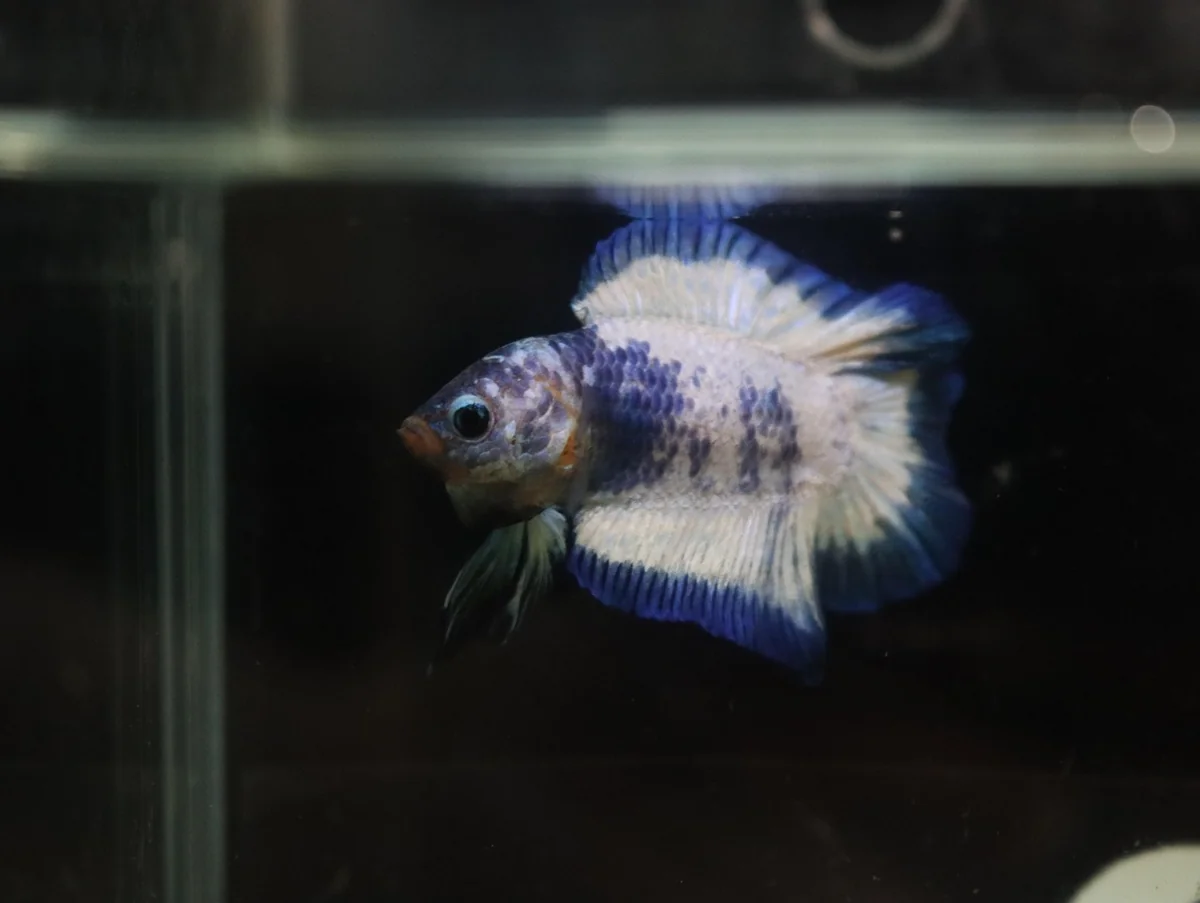
Lethargy is not a disease, it is a behaviour, and specifically a non-specific one, meaning many different problems all produce the same lying-around picture. A lethargic betta moves little, often rests on the substrate or wedged in décor, may keep its fins low, and is slow or unwilling to respond to things it would normally react to: food, your approach, light. The reason it is the symptom I respect most is that fish hide illness well; by the time a betta is visibly slowed down, something has usually been wrong for a while. That makes the speed and accuracy of your read genuinely important.
Why bettas rest on the bottom normally
The complication is that resting low is also completely normal. Bettas are not constant swimmers, they are ambush-style fish that spend a lot of time hanging near plants, perched on broad leaves, or settled on the substrate, especially as they age or around lights-off. They genuinely sleep, sometimes lying on their side or in a posture that looks alarming to a new owner (see do bettas sleep). So the question is never “is my betta lying down?”, healthy ones do that every day, but “is this fish still responsive and eating?”
Why a Betta Is Lethargic: The 9 Causes, Ranked
A betta lethargic and lying at the bottom almost always has a findable cause. Work these roughly in order, the first two explain the majority of cases and are the quickest to fix.
1. Cold or unstable temperature (most common)
Bettas are tropical and cold-blooded; below about 76°F their metabolism slows and they go sluggish, often sitting on the bottom. Unstable temperature is just as bad. Tell-tale: very low energy, water reads cool, fish may rest near the heater. Fix: stabilise 78–80°F (heater guide). Cold-sluggish bettas often “wake up” once warmed slowly.
2. Ammonia or poor water
Toxic water poisons and exhausts the fish. Tell-tale: gasping, reddened gills, clamped fins alongside the lethargy. Fix: test and do a dechlorinated change (lower ammonia). With temperature, this explains most lethargy.
3. Illness (dropsy, septicemia, and others)
Many infections present first as lethargy. Tell-tale: bloating or a pinecone scale look, red streaks, spots, or ulcers. Match the additional signs to the disease guides and treat the specific condition.
4. Constipation or swim bladder trouble
A bloated betta or one that cannot hold itself level often rests on the bottom because swimming is hard. Tell-tale: visible bloating, tilting, sinking, or floating. Fix: usually a short fast and supportive care per the swim-bladder guide.
5. Stress or a new tank
A recent move or ongoing stress can flatten a betta’s energy. Tell-tale: also faded or hiding, recently relocated. Fix: calm, stable conditions and time.
6. Old age
Older bettas naturally slow down and rest more. Tell-tale: a known older fish with a gradual, non-acute decline. Fix: comfort care, warmth, clean water, easy food (lifespan guide).
7. Boredom and a bare tank
A betta with nothing to do in an empty tank can become listless. Tell-tale: low activity in a featureless tank, otherwise eating and responsive. Fix: enrich with plants and hides.
8. Low oxygen
Poor surface gas exchange leaves a betta sluggish and surface-gasping. Tell-tale: lying low and repeatedly going to the surface to gulp. Fix: add gentle surface agitation.
9. Recovery after illness
A fish that recently fought off disease or finished treatment recovers gradually. Tell-tale: slow but steady improvement after a known illness. Fix: patience and supportive conditions.
Step-by-Step: What To Do Right Now
- Test the water. Ammonia and nitrite must be 0. High readings mean act immediately with a dechlorinated change (lower ammonia).
- Check the heater. Confirm a stable 78–80°F. Cold is a top cause of “my betta won’t move”; warm it slowly rather than shocking it.
- Scan for disease signs. Bloating or pinecone → dropsy; red streaks → septicemia; can’t stay level → swim bladder; gasping → breathing problems.
- Assess age and recovery context. An older or recently treated fish slowing gradually may simply need comfort care, not aggressive treatment.
- If it is crashing: unresponsive and barely breathing, follow the emergency steps in how to revive a dying betta.
When to Worry — and How Urgently
- Low concern: rests but passes the responsive test (eats, reacts, normal colour, upright). Likely normal rest or sleep, keep husbandry tight and observe.
- Investigate today: lethargic during active daytime hours, sluggish to rouse, and not eating well, or with faded colour or clamped fins. Test water and temperature now and scan for disease.
- Emergency: unresponsive, on its side, can’t stay level, or breathing hard and not eating at all. Treat water/temperature immediately and follow the revival protocol; act in hours, not days.
Mistakes to Avoid
- Reaching for medication first. The single biggest error. Temperature and water explain most lethargy and are the fastest to fix, confirm those before dosing anything.
- Assuming “he’s just sleeping” without testing. Sleep is a fair guess only if the fish passes the responsive test. If it fails, sleeping is the wrong assumption and costs time.
- Raising temperature suddenly. A rapid jump shocks a cold, weakened fish. Warm gradually toward 78–80°F.
- Skipping the water test because the tank “looks clean.” Ammonia and nitrite are invisible. Clear water can still be toxic.
- Treating lethargy as the diagnosis. It is a symptom pointing to a cause. Fix the cause, not the symptom.
- Overfeeding a sluggish, possibly constipated fish. If bloating or swim-bladder trouble is in play, more food makes it worse, a short fast is often the right call.
The single biggest mistake is reaching for medication first. Temperature and water explain the majority of lethargy and are the fastest to fix, confirm those before treating anything, the same principle as disease prevention. A recovered, energetic fish should tick the broader signs of a happy betta. Remember lethargy is the shut-down end of the stress spectrum, its hyper-active opposite is glass surfing, and a fish that suddenly goes quiet and tucked away may instead be hiding, which is checked differently.
Sources & Further Reading
A-Z Animals, Betta Lying on the Bottom: Reasons Why; Bettafish.org, disease library; Hepper, lethargic betta; Merck Veterinary Manual, Behavioral signs of illness in fish.
Frequently Asked Questions
Why is my betta lying at the bottom of the tank?
Most often cold water, ammonia/poor water, or illness, though bettas also rest and sleep on the bottom. Check whether it’s eating and responsive to tell rest from sick.
Is my betta sleeping or dying?
Sleeping bettas rouse, eat, and keep normal colour. A dying betta is faded, not eating, unresponsive, and breathing hard, treat that as an emergency.
Do bettas lie at the bottom when old?
Yes, older bettas slow down and rest more. Provide warmth, clean water, and easy-to-reach food for comfort.
My betta is at the bottom but breathing fast — what does that mean?
Lying low plus rapid or laboured breathing usually points to poor water (ammonia), low oxygen, or illness. Test the water immediately, check temperature, and scan for disease signs.
Can cold water make a betta lie on the bottom?
Yes, it’s the most common cause. Bettas are tropical, and below about 76°F they become very sluggish and sink to the bottom. Stabilise the tank at 78–80°F and they often recover.