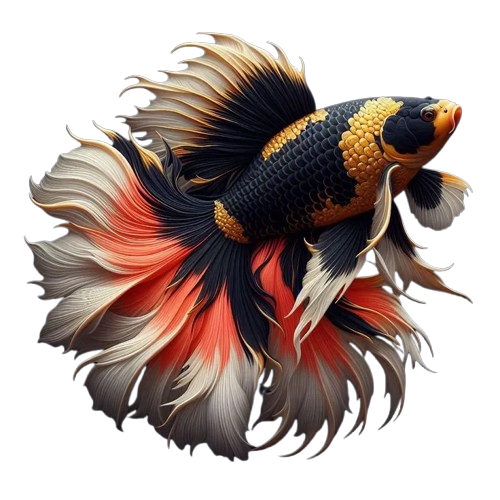
If you only add one companion to a betta tank, the answer to “can betta and snails live together?” is the easiest yes in the hobby. Snails have no fins to nip or trigger aggression, carry a protective shell, share a betta’s exact water needs, and are the only tank mate that reliably works even in a 5-gallon. This guide covers the best snail species, why the pairing almost never fails, the one mistake that quietly kills snails, and how to keep them thriving alongside a betta.
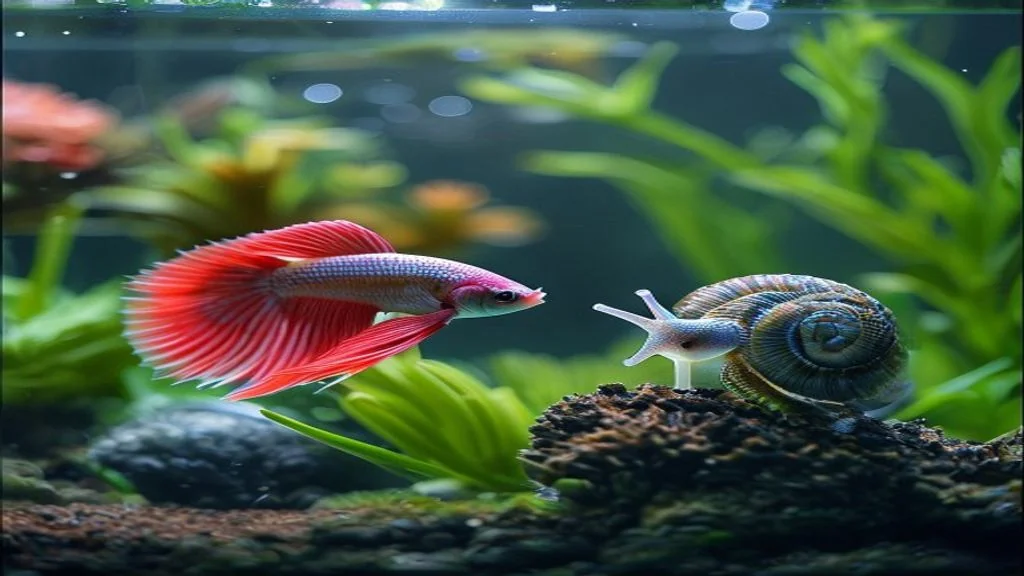
Why Betta and Snails Just Work
- No fins to trigger aggression or get nipped — removes the #1 betta-community problem.
- Protective shell: Mystery snails have an operculum (a trap door) to seal themselves off if a betta gets curious.
- Different zone & job: they graze glass/algae and leftover food, helping keep the tank clean.
- Same water needs: 75–80°F, pH ~6.5–7.5 — identical to a betta (heater guide).
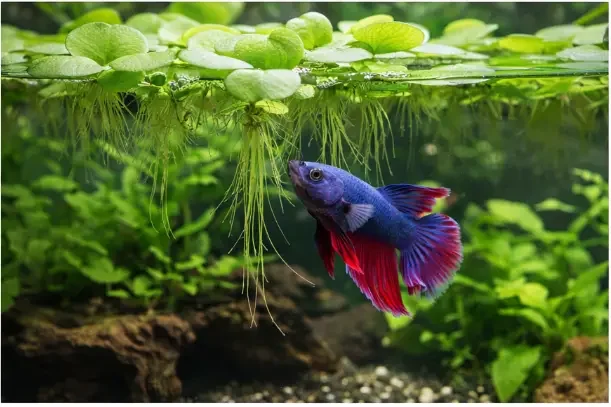
Best Snails for a Betta Tank
| Snail | Notes | Min tank |
|---|---|---|
| Nerite snail | Best algae-eater, won’t overbreed (eggs need brackish water) | 5 gal |
| Mystery snail | Large, operculum trap-door, peaceful, fun to watch | 5 gal (10+ ideal) |
| Ramshorn / bladder | Harmless but breed fast — can overrun a tank | 5 gal |
| Assassin snail | Eats pest snails; fine with bettas | 5–10 gal |
Nerite and Mystery are the recommended pair — see how they rank against other options in our best betta tank mates guide.
The One Thing That Occasionally Goes Wrong
A small minority of very aggressive bettas will flare at or nip a snail’s antennae/feelers, stressing it. Watch the first few days; if the betta persistently harasses the snail, separate them. Also avoid bare tiny tanks — even snails do better with stable parameters and the routine in disease prevention.
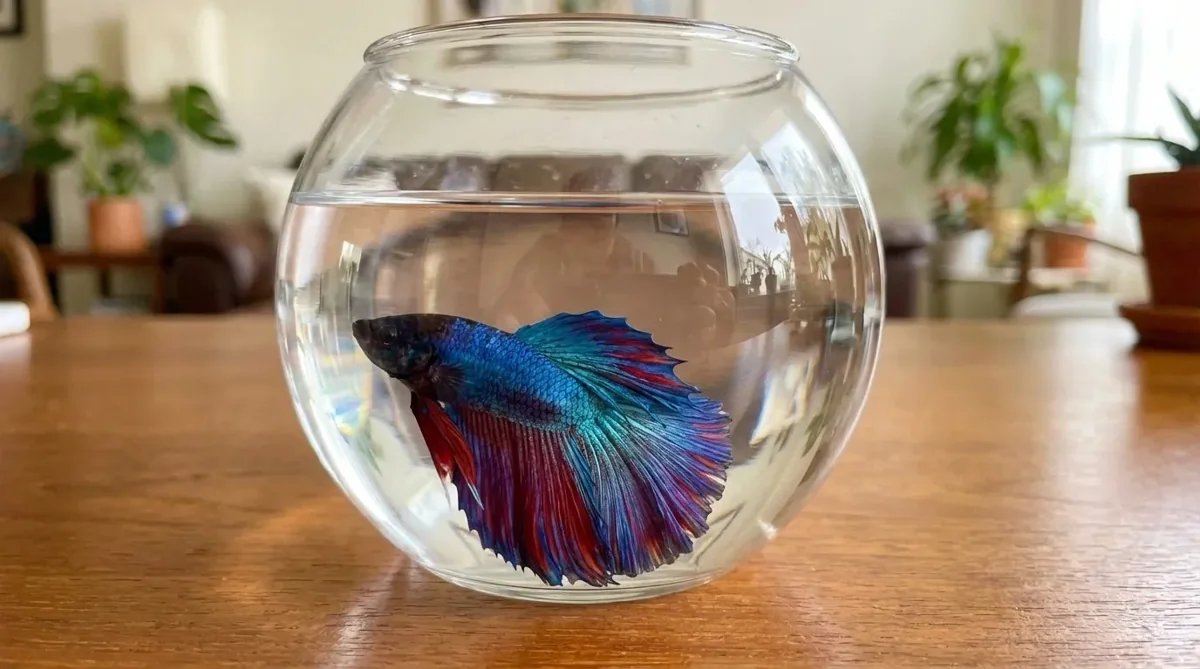
Snail Showdown: Nerite vs. Mystery vs. the Rest
“Snails are safe” is true, but which snail still matters for tank size, breeding, and clean-up value. Quick decision table:
| Snail | Best for | Watch out for | Min tank |
|---|---|---|---|
| Nerite | Best algae-eater; won’t breed in freshwater | Lays harmless white eggs on surfaces | 5 gal |
| Mystery | Large, peaceful, fun; operculum “trap door” | Big bioload — needs supplemental food | 5 gal (10+ ideal) |
| Ramshorn/bladder | Cheap cleaners | Breed fast — can overrun the tank | 5 gal |
| Assassin | Eats pest snails | Won’t harm betta, but a predator of snails | 5–10 gal |
For most betta keepers the answer is Nerite (no overbreeding, top algae control) or Mystery (personality, protective trap-door). The rest are situational.
The One Hidden Danger: Copper in Medications
Snails are the lowest-drama tank mate — but there’s a single way owners accidentally kill them, and it’s almost never mentioned:
- Copper-based fish medications are lethal to all invertebrates. Many common treatments for ich, velvet, and parasites contain copper. Dose the main tank with a snail in it and the snail dies even though the betta is fine.
- The rule: if the betta needs medicating, treat it in a separate hospital tank (quarantine/hospital setup) — never medicate the display tank while inverts are in it.
- Also watch: a rare hyper-aggressive betta will harass a snail’s antennae/feelers; monitor the first few days and separate if it persists.
- Feed them. In a clean tank there isn’t enough algae — supplement with algae wafers or blanched vegetables so the snail doesn’t slowly starve.
Get those right and snails are genuinely the safest companion for a betta — the only one that reliably works even in a 5-gallon, and a useful clean-up crew. They top the low-risk end of best betta tank mates for good reason.
The Compatibility Scorecard
Snails are the rare pairing that scores well on every single axis — which is exactly why they top the low-risk end of the safe list and work even where no fish would.
| Factor | Betta + snail rating | Notes |
|---|---|---|
| Temperature | Match | 75–80°F suits both |
| pH / hardness | Match (with caveat) | Both like ~6.5–7.5; very soft water can erode shells |
| Aggression trigger | None | No fins, no rival-betta resemblance |
| Zone overlap | Minimal | Snails graze glass and substrate, not open water |
| Tank size needed | Lowest of any tank mate | Works in 5 gallons |
| Overall | Safest companion that exists | Only copper meds and starvation are real risks |
The takeaway: the things that endanger snails are almost never the betta. They are keeper mistakes — dosing copper, very soft water, or letting them slowly starve in a too-clean tank.
Acclimation: Snails Need a Slow, Gentle Drip
Snails look indestructible but are surprisingly sensitive to sudden water-parameter changes. A fast transfer can shock them into sealing up for days or kill them outright.
- Quarantine new snails 2–4 weeks. Snails can introduce parasites and pest-snail eggs into the display tank (quarantine guide).
- Drip acclimate over 1–2 hours. Like shrimp, snails need a long, gentle adjustment to pH and hardness — not a quick float-and-dump.
- Never drop a snail upside down. Place it right-side up on the glass or substrate so it can grip and right itself without exhausting energy.
- Give it time to emerge. A new snail may stay sealed for a day or two — that’s normal stress behaviour, not death. A foul smell means a dead snail; remove it promptly.
- Check the betta’s reaction over the first few days; a rare hyper-aggressive betta will pester antennae and the snail should then be moved.
Keeping Snails Healthy: Diet and Shell Care
Most snail deaths in a betta tank are not from the betta at all — they are slow starvation or shell erosion that owners don’t notice until it’s too late.
- Supplement their food. A clean betta tank doesn’t grow enough algae to sustain a snail. Offer algae wafers, blanched zucchini, spinach, or cucumber a few times a week.
- Protect the shell. Very soft or acidic water dissolves shells, leaving pitted, thin, or cracked spots. A little crushed coral or a cuttlebone keeps calcium and hardness adequate.
- Mind the bioload. Mystery snails are large and produce noticeable waste; in a small tank that means slightly more frequent water changes to protect both snail and betta.
- Watch for a sealed, floating, or foul-smelling snail. Prolonged sealing can mean poor water; a strong rotten smell means it has died and must be removed immediately to avoid an ammonia spike.
Get diet and shell care right and a snail will outlast most fish tank mates while keeping glass and substrate clean — see how it ranks against everything else in best betta tank mates.
Will Snails Overrun My Betta Tank?
A common worry is waking up to a hundred snails. Whether that happens depends entirely on the species you choose.
- Nerite snails — won’t breed in freshwater. They lay small white eggs that never hatch in a freshwater tank, so the population stays exactly what you bought. This is why they’re the top pick.
- Mystery snails — controllable. They lay clutches above the waterline that are easy to spot and remove; without a male/female pair you won’t get a population at all.
- Ramshorn and bladder snails — breed fast. Harmless to the betta but they multiply quickly with excess food, so they can overrun a tank if you overfeed.
- Assassin snails — a natural control. They eat pest snails and are safe with bettas, useful if a ramshorn population gets out of hand.
The simplest way to avoid a snail explosion is to stick with nerite or mystery snails and not overfeed — the same habit that keeps water quality high for the betta.
A Species-by-Species Deep Dive
The quick tables tell you which snail to buy; this section explains how each one actually behaves day to day in a betta tank, so you can match the snail to your tank size, your maintenance habits, and what you want out of it.
Nerite Snails — the Default Recommendation
Nerites are the snail most experienced betta keepers reach for first, and for good reason. They are the most efficient algae grazers available at this size, methodically clearing glass, hardscape, and broad leaves of the green and brown films that build up in any lit tank. Their defining advantage is that they cannot reproduce in freshwater: females will dot hard surfaces with tiny white eggs, but those eggs require brackish water to hatch, so the population in your tank stays permanently at whatever you bought. The only mild downsides are cosmetic — the white eggs can be unsightly on glass — and a tendency to occasionally wander above the waterline, so a lid is sensible. For a single-betta tank that needs a tireless, non-breeding cleaner, the nerite is hard to beat.
Mystery Snails — Personality in a Shell
Mystery snails are the choice for keepers who want a tank mate with visible character. They are large, often brightly coloured (gold, blue, ivory, magenta), and genuinely engaging to watch as they glide across the glass and extend a long siphon to the surface to breathe. Crucially, they carry an operculum — a hard “trap door” that seals the shell opening completely — which makes them essentially invulnerable to an over-curious betta. The trade-off is bioload: a mystery snail is a substantial animal that produces noticeable waste, so it belongs in a tank with stable filtration and ideally ten gallons or more. They also need supplemental feeding, because no clean betta tank grows enough algae to sustain one.
Ramshorn and Bladder Snails — the Accidental Arrivals
These two often arrive uninvited on plants and are completely harmless to a betta. In small numbers they are useful detritus and algae grazers, and many keepers tolerate a modest population as a free clean-up crew. The catch is reproduction: both breed rapidly in proportion to available food, so a tank that is overfed can develop a large population quickly. They are not a danger — just an aesthetic and bioload consideration controlled almost entirely by feeding discipline.
Assassin Snails — the Specialist
Assassin snails are predatory toward other snails but completely indifferent to a betta. Their role is narrow but valuable: if a pest population of ramshorn or bladder snails has exploded, a few assassins will steadily bring it back under control. They will not harm a betta, a nerite is usually too tough for them to bother, and they breed slowly, so they rarely become a problem themselves.
Water Chemistry and the Shell-Erosion Trap
The single most overlooked snail problem in a betta tank is not behavioural at all — it is water that is too soft or too acidic slowly dissolving the shell. Because bettas are often kept in soft, slightly acidic water that suits them perfectly, an owner can do everything right for the betta and still be quietly harming the snail.
| Parameter | Healthy snail range | What goes wrong outside it |
|---|---|---|
| Temperature | 75–80°F, stable | Cold slows grazing; swings cause sealing/stress |
| pH | 7.0–7.8 ideal | Below ~6.5 actively dissolves shell over time |
| General hardness (GH) | Moderate | Very soft water starves the shell of calcium |
| Carbonate hardness (KH) | Some buffering present | Near-zero KH lets pH and shell both crash |
| Calcium | Adequate, supplemented if needed | Deficiency causes pitting, thinning, white erosion at the apex |
The warning sign is the shell itself: a healthy snail has a smooth, intact shell, while a calcium-starved one shows a pitted, chalky, or eroded spire — usually worst at the oldest part near the tip. The fix is simple and cheap: add a piece of cuttlebone or a small amount of crushed coral to the tank or filter to gently raise hardness and provide calcium. This is the rare case where the betta’s ideal water and the snail’s ideal water diverge slightly, and a small calcium source is the bridge that satisfies both without compromising the betta.
Why Snails Are the One Tank Mate for Small Tanks
Every other companion in this cluster has a tank-size floor — schooling fish need volume to disperse aggression, shrimp need a planted footprint, and most fish need swimming room. Snails are the single exception, and it is worth understanding precisely why, because it is what makes them the only honest answer for a five-gallon betta.
- They add no aggression to manage. The reason small tanks fail with fish is concentrated aggression in tight space. A snail contributes zero aggression, so the core problem of a small community simply does not exist.
- They occupy a separate zone entirely. A betta patrols open water and the surface; a snail grazes glass and substrate. There is almost no spatial overlap to create conflict even in a small footprint.
- They need no school or group. Schooling fish in a small tank are stressed by inadequate numbers — which is why corydoras and rasboras need far more volume. A single snail is perfectly content alone, removing the stocking pressure that makes small tanks unsuitable for shoaling species.
- Their needs match the betta’s exactly. Same temperature, same broad water range (with the calcium caveat above). No compromise has to be negotiated, unlike larger or chemistry-mismatched tank mates.
The one genuine constraint is bioload. In a five-gallon, keep it to one or two small snails and skew toward a nerite over a large mystery snail, because waste in a small volume is the only way a snail can indirectly stress a betta. Within that limit, this is the only pairing in the entire cluster that is genuinely recommended for the smallest practical betta tank.
Day-One to Week-Four: What Normal Looks Like
New snail keepers frequently panic at completely normal behaviour and, conversely, miss the early signs of a real problem. Here is a realistic timeline of what to expect.
- Hours 0–48: sealing and stillness. A newly added snail often retreats into its shell and stays put for a day or two. This is normal acclimation stress, not death. Resist the urge to poke or move it.
- Days 2–5: emergence and exploration. The snail begins gliding across glass and hardscape, grazing visibly. The betta may investigate; brief curiosity that fades is the expected, harmless reaction.
- Week 1: routine established. The snail settles into a steady grazing pattern. This is when you confirm there is enough food — if the tank is very clean, begin supplementing with algae wafers or blanched vegetables now, before it starves.
- Weeks 2–4: health becomes readable. A thriving snail grows visibly, adds clean new shell at the opening, and moves consistently. New shell that is pale or eroded means a calcium or pH problem to correct.
Two reliable danger signals override this timeline at any point: a snail that floats or stays sealed for many days alongside no grazing, and — unmistakably — a strong rotten smell, which means the snail has died and must be removed immediately to prevent an ammonia spike that would endanger the betta. Cross-reference anything ambiguous with the broader routine in betta disease prevention.
Sources & Further Reading
Bettafish.org — Betta Fish and Mystery Snails; Aqulator — mystery snails with bettas; Aquarium Co-Op forum — betta & nerite; The Spruce Pets — snail care.
Frequently Asked Questions
Can bettas live with snails?
Yes — snails are the safest betta tank mate and the only one that reliably works in a 5-gallon tank. Nerite and Mystery snails are best.
What snails are best with a betta?
Nerite snails (top algae-eaters, won’t overbreed) and Mystery snails (large, peaceful, with a protective trap-door operculum).
Will a betta attack a snail?
Usually not. Most bettas ignore snails, but a few aggressive ones nip at antennae — monitor when first introduced and separate if it persists.
Can a snail live with a betta in a 5-gallon tank?
Yes. Snails are the one tank mate that reliably works in 5 gallons, though 10+ gallons is better for Mystery snails.
Do I need to feed snails in a betta tank?
They eat algae and leftovers, but in a clean tank supplement with algae wafers or blanched vegetables so they don’t starve.
Will snails overrun my betta tank?
Not if you choose nerite snails (they don’t breed in freshwater) or mystery snails (clutches are easy to spot and remove). Ramshorn and bladder snails breed fast, especially if you overfeed.
Can I use fish medication with snails in the tank?
Not copper-based medications — copper is lethal to all invertebrates. If the betta needs treating, move it to a separate hospital tank rather than dosing the display tank.
Why did my snail die in the betta tank?
Usually not the betta. The common causes are copper medication, very soft or acidic water dissolving the shell, or slow starvation in a tank too clean to graze. A foul smell confirms a dead snail — remove it immediately.
How many snails can I keep with a betta?
In a 5-gallon, one or two small snails. Mystery snails have a large bioload, so a single one suits a small tank; add more only with more volume and slightly more frequent water changes.
Do snails need a heater in a betta tank?
Yes — tropical snails like nerite and mystery snails need the same stable 75–80°F as a betta. The shared heater that keeps the betta comfortable also suits the snail.