Betta constipation — a bloated, swollen belly with no poop — is one of the most common worries owners have, and the reassuring news is that it’s almost always simple over-feeding, which is highly treatable and very preventable. The single most important step is the “view from above” test to confirm it’s constipation and not the far more serious dropsy. This guide explains exactly how to tell them apart, the safe step-by-step fasting, cooked-pea, and Epsom-salt fix, why untreated constipation turns into swim bladder disease, and the permanent feeding routine that stops it returning. Caught early, betta constipation clears in a few days.
Is It Constipation or Something Worse?
| Sign | Likely |
|---|---|
| Round belly, no poop, scales flat, still active | Constipation (treatable, common) |
| Bloated + scales sticking out like a pinecone | Dropsy (serious) |
| Bloated + can’t swim level / floats / sinks | Swim bladder (often from this constipation) |
| Thin body but stringy white poop | Internal parasites |
The key check: view from above. Flat scales = constipation (good news). Pinecone scales = dropsy (different, serious). Don’t skip this step — it changes everything.
Step-by-Step Fix
Step 1 — Fast for 3 days
Stop feeding for 3 days. This is safe and lets the gut clear the blockage. Most constipation resolves here.
Step 2 — Keep warm and clean
Stable 78–80°F speeds digestion (do bettas need a heater); keep ammonia at 0.
Step 3 — Feed a cooked pea
After fasting, offer a small piece of cooked, shelled, skinless green pea (about eye-size) as gentle fibre, once daily for 1–2 days.
Step 4 — Epsom salt if stubborn
For persistent bloat, an Epsom-salt (magnesium sulfate, not aquarium salt) bath — about 1 tbsp/gallon for 10–15 minutes, once daily up to 3 days — relaxes the gut. See our betta medication guide.
Step 5 — Fix the routine
Smaller portions, soak dry pellets before feeding, vary the diet, and add one weekly fasting day — full details in how often to feed a betta fish, how many pellets to feed, and what betta fish eat.
What NOT To Do
- Don’t keep feeding because it “looks hungry” — that caused it.
- Don’t use aquarium salt for this — Epsom salt is the right one.
- Don’t feed dry, un-soaked pellets during recovery.
- Don’t ignore pinecone scales as “just bloat” — that’s dropsy.
The “View From Above” Test (Do This First)
One five-second check decides whether you have a minor, very treatable problem or a serious one. Look down at the betta from directly above:
| From above you see… | It’s… | Outlook |
|---|---|---|
| Round belly, scales lying flat | Constipation | Excellent — fast + pea fixes it |
| Swollen body, scales sticking out like a pinecone | Dropsy | Serious — usually fatal |
| Plump, flat scales, white egg-spot, female | Egg-bound female | Often normal; usually resolves |
| Thin body but stringy white poop | Internal parasites | Treatable via medicated food |
Skipping this check is the classic mistake — people panic-treat “bloat” as dropsy (or ignore real dropsy as “just bloat”). Flat scales = breathe easy and treat constipation; pinecone = act on dropsy now.
Don’t Let Constipation Become Swim Bladder
Untreated constipation doesn’t just stay constipation — the swollen gut presses on the swim bladder, and now the betta also can’t stay level (floating or sinking). You’ve turned a simple problem into a compounded one. The window to act cleanly is at the “round belly + no poop, still active” stage:
- Fast 3 days — safe; clears the blockage. Most cases resolve here.
- Keep warm (78–80°F) — cold halts digestion (heater).
- Cooked, shelled pea — gentle fibre, eye-sized portion.
- Epsom salt (not aquarium salt) bath if stubborn — see the medication guide.
- Then fix the routine permanently — small portions, soaked pellets, weekly fast day (how often to feed).
If buoyancy is already off, you’re now also managing swim bladder disease — same fixes, but it underlines why acting early matters. Constipation is one of the most preventable betta problems, and it’s almost always an overfeeding habit (beginner mistakes).
What Constipation Actually Is in a Betta
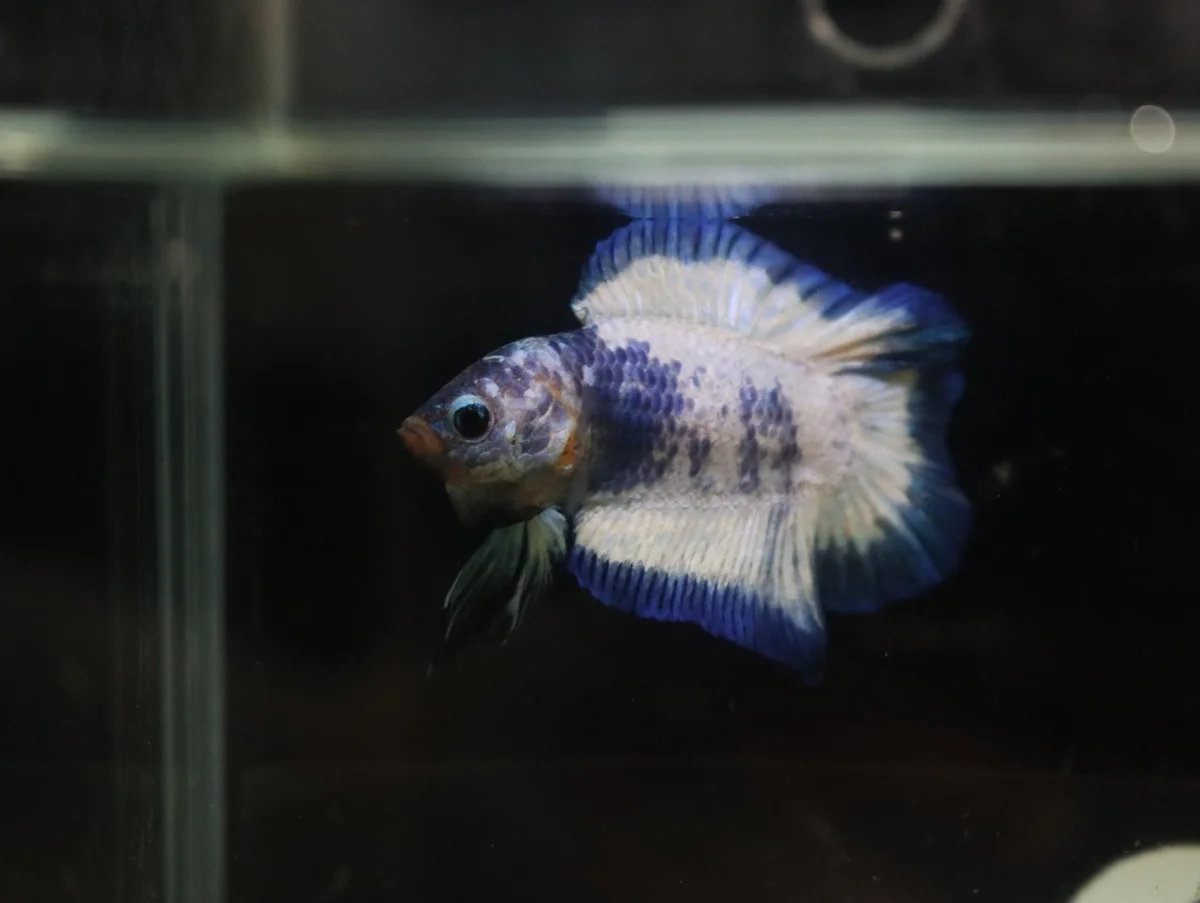
Constipation in bettas is the build-up of undigested food and waste in the digestive tract that the fish cannot pass normally. A betta’s gut is very short and is designed to process small amounts of protein-rich food frequently — not large meals or hard, expanding dry food. When it’s overfed, fed only dry pellets with little fibre, or kept too cold for normal digestion, food backs up. The belly swells, no waste is produced, and the distended gut presses on nearby organs — most importantly the swim bladder, which is why untreated constipation so often becomes a buoyancy problem.
The key reassurance: a constipated betta with flat scales is dealing with a mechanical, digestive issue — not a systemic infection. That is precisely why fasting, fibre, and warmth resolve the large majority of cases.
What Causes Betta Constipation
- Overfeeding. The leading cause by far — too much food, too often, overwhelms a short gut.
- Dry pellets that expand. Un-soaked pellets swell with water inside the fish and are low in fibre, both of which promote blockage.
- Freeze-dried foods. Freeze-dried bloodworms and brine shrimp are notorious for causing constipation if fed dry and often.
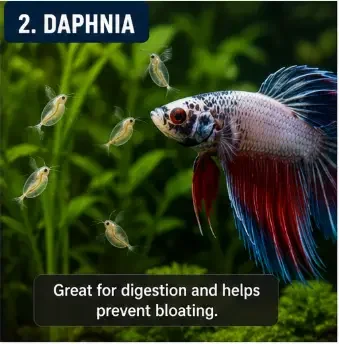
- Lack of dietary variety/fibre. A monotonous all-pellet diet lacks the roughage that keeps the gut moving; foods like daphnia add helpful fibre.
- Cold water. Below about 76°F, digestion slows dramatically and food sits in the gut too long.
- Gulping air. Eating dry pellets off the surface makes the fish swallow air, compounding bloating.
Step-by-Step: Confirming It’s Constipation
- View from directly above. Flat scales with a rounded belly = constipation. Scales standing out like a pinecone = dropsy (serious, different).
- Check behaviour. A constipated betta is usually still alert and active. Severe lethargy with refusal to eat points elsewhere.
- Recall recent feeding. Did the bloat follow a big meal, dry pellets, or freeze-dried food? That strongly supports constipation.
- Look at any waste. No poop at all with a swollen belly fits constipation. Thin body with stringy white poop points to internal parasites instead.
- Consider sex and eggs. A plump female with flat scales and a visible white “egg spot” may simply be carrying eggs, which is normal.
The Cooked Pea Method, Done Properly
Peas provide gentle, indigestible fibre that helps move a blockage through the gut. Done incorrectly it can backfire, so follow these specifics:
- Use a frozen or fresh green pea, never canned (canned peas contain added salt).
- Briefly cook or microwave until soft, then cool to tank temperature.
- Remove the tough outer skin completely — the skin itself is hard to digest.
- Mash or cut the inner pea to roughly the size of the betta’s eye — that is one full portion.
- Offer one small piece once daily for one to two days only; pea is a remedy, not a staple.
- Remove any uneaten pea promptly so it doesn’t foul the water.
If the betta refuses the pea, don’t force it — continue fasting and use the Epsom-salt bath, which works without the fish needing to eat.
The Epsom Salt Bath, Step by Step
Epsom salt (magnesium sulfate) acts as a muscle relaxant and mild laxative, helping the gut release a blockage and reducing swelling. It is completely different from aquarium salt (sodium chloride) and the two are not interchangeable.
- Fill a clean container with tank water so the temperature already matches.
- Fully dissolve about 1 tablespoon of Epsom salt per gallon before adding the fish.
- Place the betta in the bath for 10–15 minutes, watching the entire time.
- Return the fish to its clean, warm main tank.
- Repeat once daily for up to 3 days maximum.
- If the fish shows severe distress (rolling, violent gasping, worse loss of balance), remove it immediately.
The Long-Term Feeding Plan That Prevents It
Because overfeeding causes the vast majority of cases, prevention is a routine, not a medication. Lock in this plan:
- Small portions. A betta’s stomach is roughly the size of its eye — feed that much 1–2 times daily, not a pile.
- Soak dry pellets before feeding so they don’t expand inside the fish or cause surface air-gulping.
- One fasting day per week. Completely safe and lets the gut fully clear.
- Add fibre and variety. Quality protein plus occasional fibre-rich foods like daphnia keeps digestion moving.
- Limit freeze-dried foods or rehydrate them first; never feed them dry and frequently.
- Keep water warm and stable at 78–80°F so digestion works efficiently.
- Remove uneaten food within minutes so it doesn’t rot and foul the water.
A betta on this routine rarely sees constipation again — it’s one of the clearest “prevention beats treatment” wins in the hobby, and the same feeding discipline is one of the seven habits in how to prevent betta diseases. If the belly stays swollen and the fish can’t stay level, read betta swim bladder disease next.
Common Mistakes With a Bloated Betta
- Skipping the from-above check. The classic error — panic-treating constipation as dropsy, or dismissing real dropsy as “just bloat”.
- Continuing to feed. Feeding a constipated fish “because it looks hungry” worsens the exact problem you’re trying to fix.
- Using aquarium salt instead of Epsom salt. Only Epsom salt has the laxative/relaxant effect needed here.
- Feeding the pea skin or a huge piece. The skin is indigestible and oversized portions add to the blockage.
- Letting it slide. Untreated constipation compounds into swim bladder disease — act at the early “round belly, no poop, still active” stage.
Sources & Further Reading
NippyFish — constipation & swim bladder; Bettafish.org — disease library; Aquarium Co-Op — feeding/constipation notes; Merck Veterinary Manual — Gastrointestinal disorders in fish.
Frequently Asked Questions
Why is my betta bloated and not pooping?
Almost always constipation from overfeeding or low-fibre dry food. Fast for 3 days, then feed a small cooked pea; add an Epsom-salt bath if it persists.
How long can a betta go without pooping?
A day or two can be normal, especially after a fast. Several days with a swollen belly means constipation that needs treating.
How do I help my constipated betta?
Stop feeding for 3 days, keep water warm and clean, then offer a small piece of cooked, shelled pea once daily for 1–2 days.
Is my betta constipated or does it have dropsy?
Look from above: flat scales with a round belly = constipation; scales sticking out like a pinecone = dropsy, which is far more serious.
How do I stop my betta getting constipated again?
Feed small portions, soak pellets first, vary the diet, and include one weekly fasting day.
Can a betta die from constipation?
Simple constipation is rarely directly fatal and usually clears with fasting and a pea, but if left untreated it can compress the swim bladder and lead to serious buoyancy problems, and severe prolonged blockage can become dangerous. Acting early at the “round belly, no poop, still active” stage prevents complications.
How often should a healthy betta poop?
A well-fed betta typically passes waste roughly once a day, though it can vary with diet and a recent fasting day. A day or two without poop can be normal, but several days combined with a swollen belly indicates constipation that needs treating.
What does healthy betta poop look like?
Healthy betta waste is short, brownish or reddish, and somewhat segmented. Long, white, stringy, slimy poop instead points toward internal parasites or an internal infection rather than simple constipation, especially if it recurs with weight loss.
Can I feed my betta a pea every day to prevent constipation?
No. Peas are a short-term remedy, not a staple food — feeding pea daily long-term unbalances the betta’s protein-based diet. Prevent constipation instead with small portions, soaked pellets, dietary variety, and a weekly fasting day.