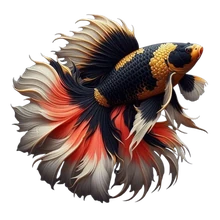
The best water conditioner for bettas is the cheapest insurance policy in the entire hobby, a small bottle costs little, lasts months, and prevents the single most common fatal mistake new owners make: adding untreated tap water to the tank. This guide explains exactly what a conditioner must neutralise, compares the well-known product types side by side, shows how to dose it precisely, and covers the dosing errors that quietly poison fish.
Why a Conditioner Is Non-Negotiable
Tap water is treated with chlorine or chloramine to kill bacteria, great for humans, lethal for fish gills. Chlorine burns the delicate gill tissue a betta breathes with, causing distress, gasping, and death (it mimics other emergencies, see betta gasping/breathing problems). A dechlorinator neutralises it in seconds. Skipping it is one of the most common fatal beginner mistakes.
Liquid Conditioner Concentrate vs. Ready-Mixed
Concentrated liquid dechlorinators are by far the best value, a small bottle treats hundreds of gallons and lasts a beginner a very long time. “Ready-mixed” betta waters sold in pet shops are just conditioned water at a huge markup; you can make the same thing for pennies with tap water + a few drops of concentrate.
Can You Over-Dose Conditioner?
Most quality conditioners have a safety margin and a moderate overdose is usually tolerated, but “more is better” is still wrong. Heavily overdosing some products can reduce oxygen or stress fish. Stick to label directions; precision protects the fish and your wallet.
Common Conditioner Mistakes
- Skipping it entirely with tap water, fast gill damage.
- Using a chlorine-only product where the supply is chloramine.
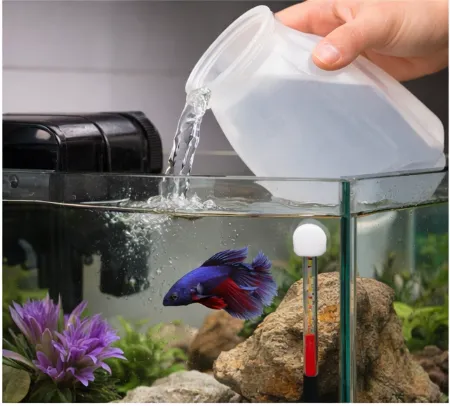
- Adding it straight to the tank with the fish, then pouring untreated water in, treat the new water first.
- Eyeballing the dose instead of measuring by volume.
- Letting it expire: old conditioner can lose potency; replace stale bottles.
The Best Water Conditioner for Bettas: Top Options Compared
You do not need an exotic product, you need one that reliably removes chlorine and chloramine, and ideally detoxifies ammonia for emergencies. The well-known options below all do the core job; the differences are in extras, concentration, and value. (No affiliate links, choose what is available and reputable in your region.)
| Conditioner | Removes chlorine + chloramine | Detoxifies ammonia/nitrite | Concentration / value | Best for |
|---|---|---|---|---|
| Seachem Prime | Yes | Yes, temporarily binds ammonia & nitrite | Very high (5 mL per 50 gallons / 200 L); excellent value | All-round best pick, especially during cycling or an ammonia emergency |
| API Stress Coat | Yes | No (adds a slime-coat aloe component instead) | Standard (5 mL per 10 gal) | Fish with torn fins or handling stress; not for ammonia control |
| API Tap Water Conditioner | Yes | No | Concentrated (follow the label dose); cheap basic option | Budget routine dechlorination when the cycle is stable |
| Tetra AquaSafe | Yes | No (adds protective colloids) | Standard | Beginners wanting a simple, widely available product |
| Fluval Aqua Plus / Water Conditioner | Yes | No | Standard | General routine use; slime-coat support |
Practical recommendation: for most betta keepers a concentrated dual-purpose conditioner that also detoxifies ammonia (the Seachem Prime type) is the most useful single bottle, because it doubles as an emergency tool. A pure dechlorinator (the API Tap Water Conditioner type) is perfectly fine and very economical once the tank is fully cycled and stable.
How to Use Water Conditioner for a Betta (Step by Step)
- Fill a clean bucket (never used with soap) with tap water.
- Work out the volume you are adding, not the tank size. A 25% change on a 5 gallon tank is about 1.25 gallons.
- Add the label dose for that volume to the bucket and stir. Chlorine and chloramine are neutralised within a minute or two.
- Match the temperature to the tank within about 1–2°F using a thermometer.
- Pour the water in slowly, away from the betta, or let it run over a decoration or plant.
Doing the water change itself is covered in how often to clean a betta tank.
Dosing Chart by Tank Size
Always defer to your specific bottle’s label, but this shows why measuring matters, conditioners vary enormously in strength:
| Actual water volume | Prime-type concentrate (5 mL per 50 gal) | Standard type (5 mL per 10 gal) |
|---|---|---|
| 2.5 gallons | ~5 drops | ~1.25 mL (¼ tsp) |
| 5 gallons | ~10 drops (0.5 mL) | ~2.5 mL (½ tsp) |
| 10 gallons | ~1 mL | ~5 mL (1 tsp) |
| 20 gallons | ~2 mL | ~10 mL (2 tsp) |
Note that “actual water volume” is less than the tank’s rated size once substrate, decor, and equipment displace water, a “10-gallon” tank often holds closer to 8–9 gallons.
How a Dechlorinator Works (the simple chemistry)
It helps to know why a few drops are enough. Most conditioners contain a reducing agent (commonly a sodium thiosulfate derivative) that chemically converts chlorine into harmless chloride almost instantly. Chloramine is trickier because it is chlorine bonded to ammonia: a good conditioner breaks that bond, neutralises the chlorine portion, and, in the better products, temporarily binds the released ammonia into a non-toxic form the filter bacteria can still consume. This is exactly why a chlorine-only product is inadequate where chloramine is used: it can free the ammonia without detoxifying it, briefly making things worse. It is also why the ammonia-binding effect is temporary (typically 24–48 hours) and not a substitute for a real cycled tank.
Conditioner as an Emergency Tool
A conditioner that detoxifies ammonia is one of the most valuable items to keep on hand for an emergency. During an ammonia or nitrite spike, dosing for the full tank volume after a water change can temporarily render residual ammonia/nitrite non-toxic while you address the root cause, buying the fish critical hours. The key word is temporary, it converts the toxin to a safer form for a day or two but does not remove it, so it must always be paired with water changes and fixing the underlying cause. Used this way, a single bottle is both routine maintenance and a first-aid kit.
How to Tell If Your Tap Water Has Chlorine or Chloramine
Choosing the right conditioner depends entirely on what your water utility actually uses, and most owners never check. There are two reliable ways to find out, and both take only a few minutes. The most authoritative method is to look up your local water company’s annual water quality report (often called a Consumer Confidence Report). It is usually published free online and states plainly whether the supply is disinfected with chlorine or chloramine, many municipalities switched to chloramine over the past two decades because it is more chemically stable in the pipes. The second method is a simple total-chlorine test: a multi-test strip or a dedicated chlorine test will show whether free chlorine is present, and a chloramine-using supply typically shows total chlorine that does not dissipate when the water is left to stand.
This matters because of a once-common myth: that letting tap water “sit out overnight” makes it safe. That trick only ever worked, partially, for free chlorine, which is volatile and gases off over many hours. Chloramine does not meaningfully evaporate, water left standing for days is still loaded with it. If you remember one thing from this section, make it this: never rely on standing water, always use a conditioner, and if your supply uses chloramine, the bottle must explicitly say it handles chloramine.
The standing-water myth, settled
I still see this advice repeated in old forum threads, and it kills fish. Even in a chlorine-only area, the time required for chlorine to fully dissipate is unpredictable and depends on surface area, agitation and concentration, it is not a precise method. In a chloramine area it does essentially nothing. A few drops of conditioner is instant, reliable and costs almost nothing. There is no scenario in modern fishkeeping where “let it sit out” is the correct answer over a proper dechlorinator.
Slime-Coat Conditioners: Marketing vs. Real Benefit
Several popular conditioners advertise an added “slime coat” or aloe-based skin-protectant component, and beginners often assume this makes them automatically superior. The honest answer is more nuanced. A healthy betta produces its own protective slime coat continuously; it does not normally need a supplement. The slime-coat additive has a genuine, narrow use case: a fish that has been physically stressed, newly shipped, netted and moved, recovering from torn fins or minor injury, may benefit from temporary extra protection while its own coat recovers. For routine weekly water changes on a settled, healthy betta, the slime-coat ingredient is a “nice to have”, not a deciding factor, and it does nothing to address ammonia. Do not let an aloe additive distract you from the two features that actually matter: complete chlorine and chloramine removal, and ammonia detoxification for emergencies. Choose the conditioner for those; treat the slime-coat extra as a minor bonus relevant mainly during recovery or transport.
Storing Conditioner and Knowing When It Has Expired
A conditioner is only insurance if it still works, and a surprising number of “I dosed it but my fish still showed chlorine stress” cases trace back to a degraded bottle. Liquid dechlorinators are reducing agents and they do slowly lose potency, faster if abused. Store the bottle tightly capped, out of direct sunlight, at room temperature, not on a sunny windowsill above the tank and not somewhere that freezes. A telltale sign of a spoiled reducing-agent conditioner is a strong rotten-egg (sulfur) smell well beyond the product’s normal mild odour, or obvious cloudiness, sediment or separation that does not mix back in. Most bottles carry a shelf life of roughly two to four years unopened and less once opened; if you cannot remember how old a half-used bottle is, it costs far less to replace it than to lose a fish. For a single betta you will rarely finish a concentrated bottle before it ages out anyway, so buy a sensibly small size rather than the biggest jug on the shelf.
Quick conditioner troubleshooting
| Problem | Likely cause | Fix |
|---|---|---|
| Fish gasping right after a water change despite dosing | Underdosed for true volume, expired bottle, or chlorine-only product on a chloramine supply | Re-dose correctly for full tank volume with a fresh chloramine-rated conditioner; aerate |
| Strong sulfur smell from the bottle | Conditioner degraded | Replace the bottle; do not rely on it |
| Ammonia still reads positive after using an “ammonia detox” conditioner | Many test kits read the bound (safe) form too; effect is also temporary | Confirm with a kit that distinguishes free ammonia; keep doing water changes and fix the cycle |
| Cloudy or separated conditioner | Old stock or temperature abuse | Discard and replace; store cool and capped |
Real Scenario: Treating a Bucket the Right Way
To make the whole routine concrete, here is exactly how a weekly water change should look for a typical 5-gallon betta tank. Fill a clean, fish-only bucket (never one that has held soap or cleaning chemicals) with the volume of fresh tap water you plan to swap, say 1.25 gallons for a 25% change. Add the correct conditioner dose for that water volume right into the bucket and give it a gentle stir; with most products it is active within a minute. While it works, bring the bucket water close to tank temperature so you do not shock the fish, see change betta water temperature safely. Only then siphon out the old tank water and pour the treated, temperature-matched replacement back in slowly. Done in this order, the betta is never exposed to chlorine, chloramine or a temperature swing for even a moment. This bucket-first habit, more than any specific brand, is what separates owners who never have a chlorine incident from those who do. A conditioner is the first step in safe water; the targets it protects live on the full betta water parameters chart, and the right best water for betta fish plus the best betta water test kit complete the routine.
Sources & Further Reading
Bettafish.org, water treatment; Aquarium Co-Op, dechlorinator basics; Aquarium Store Depot, betta water guide; Seachem product references.
Frequently Asked Questions
Do bettas really need a water conditioner?
Yes, if you use tap water. Chlorine and chloramine in tap water burn a betta’s gills and can be fatal; a conditioner neutralises them instantly.
What is the best water conditioner for a betta?
Any reputable concentrated dechlorinator that removes chlorine, chloramine, and heavy metals, bonus if it also detoxifies ammonia. Concentrate is best value.
How much water conditioner do I use for a betta tank?
Follow the label dose for your actual water volume (not rated tank size). It’s usually a few drops or a small capful per gallon.
Can I add water conditioner directly to the tank?
It’s safer to treat the new water in a bucket first. If dosing the tank during a quick top-up, dose for the whole tank volume and add new water slowly.
Can you use too much water conditioner?
A small overdose is usually tolerated, but heavy overdosing can stress fish or affect oxygen. Always follow label directions.
Does bottled water need conditioner?
Spring/distilled water has no chlorine, so no dechlorinator is needed, but distilled still needs minerals added. Tap water always needs conditioner.
How long after adding water conditioner can I add my betta?
Most conditioners neutralise chlorine and chloramine within a minute or two. Wait a few minutes, match the temperature, then add the water or the fish.
How much Seachem Prime do I use for a 5 gallon betta tank?
The label dose is 5 mL per 50 gallons, so a full 5 gallon tank needs about 0.5 mL (around 10 drops). Dose by the water you are adding during a water change.