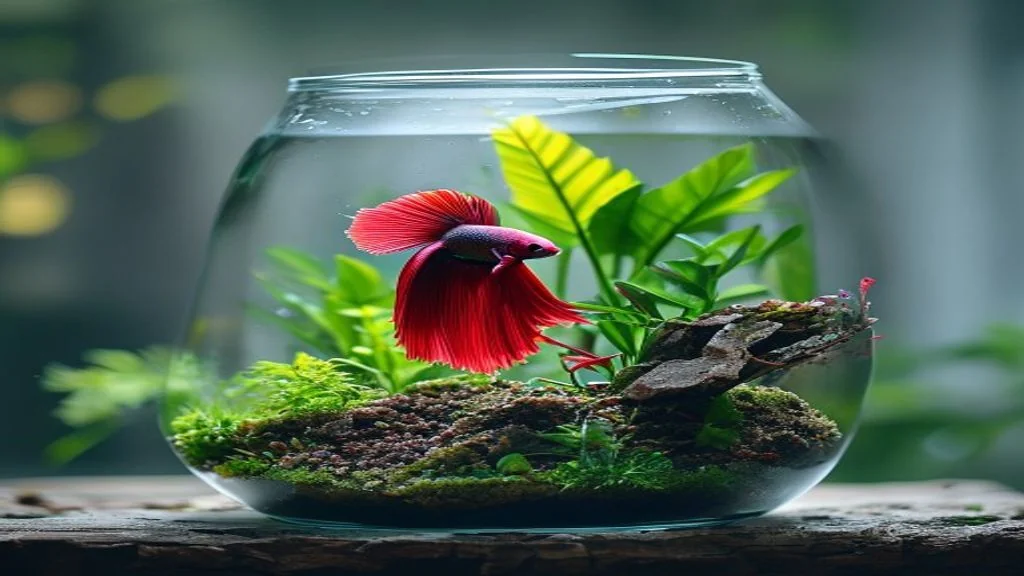
Picking the best betta fish tank is the decision that quietly determines how easy every other part of betta care will be. Get the size and shape right and temperature, water chemistry, and your maintenance workload all become forgiving; get it wrong with a tiny cube and you’ll be fighting unstable water for the fish’s whole life. This guide gives you the real minimum size, the shapes to avoid, the kit-versus-separate trade-off, and specific tanks experienced keepers recommend.
Quick answer: The best betta fish tank is a 5-gallon (or larger) rectangular glass or acrylic tank with a lid and room for a heater and gentle filter. 5 gallons is the realistic minimum; bigger is more stable. Avoid tiny “betta cubes,” tall vases, and round bowls.
Size: Why 5 Gallons Is the Real Minimum
The biggest betta myth is that they “like” tiny containers. They survive, they don’t thrive. Smaller water swings in temperature and toxins fast and amplifies every mistake; more water is more stable and forgiving. The detailed case is in our betta tank size guide, is 5 gallons best, and why bowls fail.
| Size | Verdict |
|---|---|
| Bowl / under 2.5 gal | ❌ Inhumane long-term, unstable, no room for heater/filter |
| 2.5 gal | ⚠️ Bare minimum survival, hard to keep stable |
| 5 gal | ✅ Realistic minimum, stable, room for gear |
| 10 gal+ | ✅✅ Best, most stable, allows plants/enrichment |
Features That Actually Matter
- Room for a heater & gentle filter: non-negotiable for a tropical fish (heater, filter).
- A secure lid: bettas jump; a lid also keeps the warm air layer they breathe from.
- Glass or quality acrylic: clear, durable; acrylic is lighter but scratches easier.
- Reasonable footprint (length > height) for swimming and surface access.
- Low-heat LED light (often included in kits) on a timer, see do betta fish need light.
Kit vs. Buying Separately
| All-in-one kit | Buy separately | |
|---|---|---|
| Convenience | High, tank+filter+light together | Lower, you assemble it |
| Risk | Stock heater may be weak/missing; filter often too strong | You pick correct heater & gentle filter |
| Best for | Beginners, if you verify/upgrade heater & baffle filter | Anyone wanting it right the first time |
Kits are fine to start with, but most include a weak/absent heater and a too-strong filter, plan to add an adjustable heater and baffle the flow. The full shopping list is in our betta starter kit checklist.
How to Choose a Betta Tank: Buying Criteria
- Volume: 5 gallons minimum, 10 gallons better. This single factor drives stability and how often you’ll do maintenance.
- Footprint over height: length and surface area beat tall, narrow designs. Bettas patrol horizontally and breathe at the surface.
- Equipment room: it must comfortably fit an adjustable heater and a gentle filter without crowding the swimming space.
- Secure lid: a tight lid with minimal gaps, bettas are determined jumpers and the lid also keeps the warm, humid air they breathe.
- Material & build quality: low-iron glass for clarity and scratch resistance, or quality acrylic if you want light and impact resistance; check seams/rim quality.
- Lighting: a low-heat LED (built-in on kits) that you can put on a timer.
- Kit honesty: if it’s a kit, judge the included heater and filter on betta criteria, convenience doesn’t excuse a weak heater or a torrent filter.
Choosing the Best Betta Fish Tank: Recommended Models
These are real, widely recommended tanks and kits suitable for a single betta. The standalone tanks let you choose your own heater/filter; the kits are convenient but usually need a heater upgrade and a flow baffle.
| Product | Size | Best for | Notes |
|---|---|---|---|
| Fluval Spec V | 5 gal | Best overall betta tank | Sleek low-iron glass, integrated filter (baffle the return), LED; add a 25 W heater |
| Fluval Flex 9 | 9 gal | Best for a planted display | Curved front, good volume, app-style LED; baffle filter, add heater, very stable |
| Aqueon 10-Gallon (standard glass) | 10 gal | Best value / most stable | Cheap, rectangular, tons of room; buy your own heater, sponge filter, lid and light |
| Marineland Portrait / Contour Glass Kit | 5 gal | Best compact rimless kit | Clean look, hidden filter; flow needs baffling, heater usually required separately |
| Tetra 5/10-Gallon Glass Aquarium | 5–10 gal | Best budget standalone | Plain reliable rectangular tank; pair with adjustable heater + sponge filter |
| Waterbox / UNS rimless nano | 5–10 gal | Best premium aquascape tank | Ultra-clear rimless glass for a planted betta scape; all gear chosen separately |
Editorial picks: Best overall, Fluval Spec V (5 gal). Best value and most stable, a standard Aqueon or Tetra 10-gallon with separate gear. Best budget standalone, Tetra 5/10-gallon. Best for a planted showpiece, Fluval Flex 9 or a rimless nano. Whatever you choose, add an adjustable heater and a gentle/baffled filter.
Sizing, Footprint & Setup Specifics
- Stand & weight: water weighs ~8.3 lb per gallon, a filled 10-gallon tank with substrate is ~100 lb. Use furniture that can take it.
- Footprint target: favour tanks where length clearly exceeds height; a long shallow tank gives more swimming and surface area than a tall cube of the same volume.
- Lid gap: close off feeding holes and cord gaps, even a small opening is enough for a startled betta to jump out.
- Cycle before stocking: set up the tank, heater, and filter and complete the nitrogen cycle before the betta moves in.
The Real Reason Bigger Is Easier: Water Stability Explained
“5 gallons minimum, bigger is better” is repeated everywhere, but the reasoning is what actually changes behaviour, and it comes down to one principle: dilution and thermal mass. Almost every problem that kills pet bettas, ammonia spikes, temperature swings, pH crashes, is a problem of concentration and rate of change, and both are governed by how much water is in the tank.
Consider ammonia, the leading betta killer. A betta produces a roughly fixed amount of waste regardless of tank size. Put that same waste output into 1 gallon and the concentration climbs fast and high; put it into 10 gallons and the same waste is spread through ten times the water, so the concentration rises far more slowly and peaks far lower. The fish did not change, the buffer around it did. The larger tank does not eliminate the waste; it gives you and the biological filter dramatically more time and margin before that waste reaches a dangerous level. A small tank punishes a missed water change in days; a large one tolerates the same lapse for far longer.
Temperature works the same way through thermal mass. A small volume of water heats and cools quickly, so a cold night, a warm afternoon, or a brief heater fault produces a sharp swing that stresses the fish. A larger volume has more thermal inertia, it changes temperature slowly, so the same room fluctuation or short equipment hiccup barely moves the water. pH and general chemistry follow the identical logic: more water resists sudden shifts; little water lurches.
This is why tank size is described as the decision that determines how forgiving every other part of betta care will be. It is not that a betta “needs space to be happy” in some vague sense, it is that water volume is literally the safety margin on temperature, toxins, and chemistry. A beginner in a 10-gallon tank can make the normal beginner mistakes and the fish often survives them; the same mistakes in a 1-gallon cube are frequently fatal because there is no buffer. Choosing adequate volume is, in effect, buying yourself the right to make recoverable errors instead of fatal ones.
Why Tank Shape Changes Betta Health, Not Just Looks
Volume gets the attention, but two tanks of identical volume can be very different homes depending on shape, and the reasons are biological, not aesthetic.
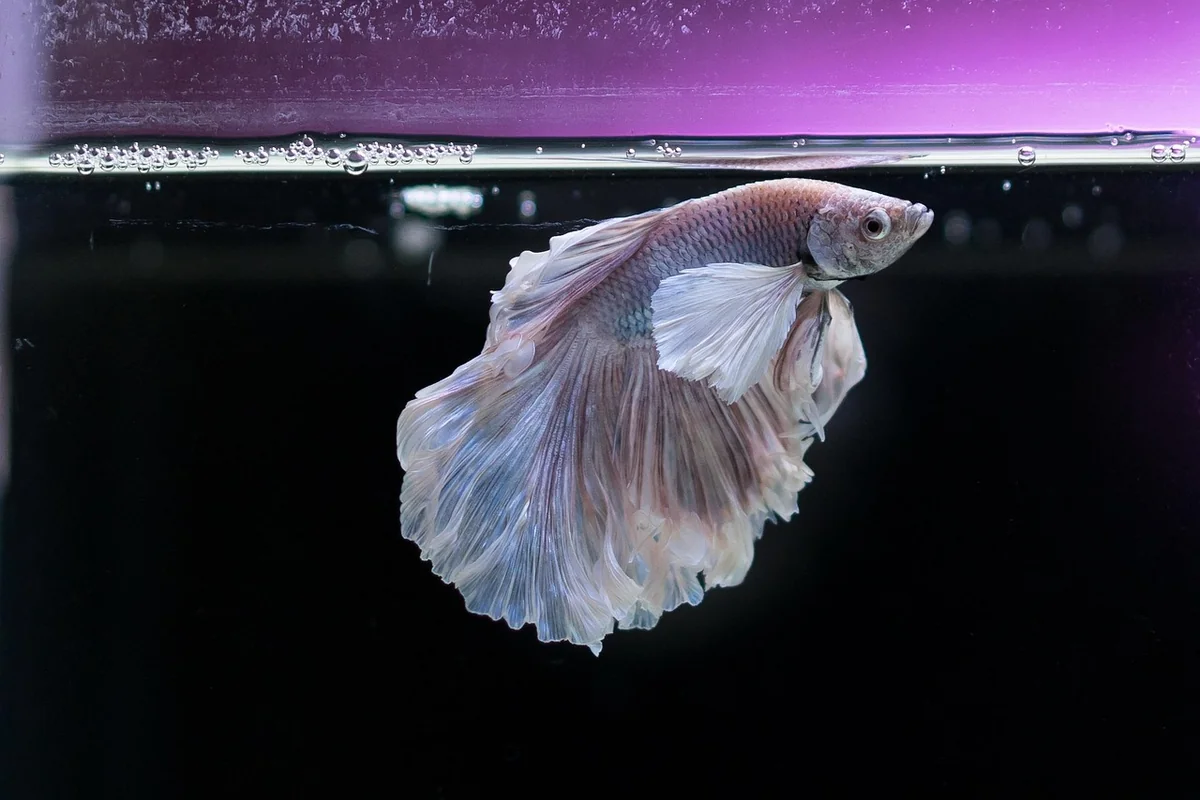
The first is the labyrinth organ. Bettas are obligate air-breathers, alongside their gills they have a labyrinth organ that lets them gulp air from the surface, and they must be able to reach the surface easily and regularly. This makes surface area and a short vertical distance to the top genuinely important. A tall, narrow tower or vase of a given volume has a small water surface and forces the fish to make a long vertical trip for air; a long, lower tank of the same volume has far more surface area and an easy path up. More surface area also means better gas exchange overall, which benefits the whole system. Tall novelty vases fail bettas specifically here.
The second is behaviour. Bettas are horizontal patrollers, in a suitable tank they cruise the length of the front glass, investigate territory, and use the whole footprint. Length and floor space give them that natural movement; height does not, because a betta does not meaningfully use vertical space the way it uses horizontal space. A tall column is mostly water the betta does not really get value from, while the dimension it actually wants, length to patrol, is exactly what that shape sacrifices.
Round bowls add their own problems on top: a curved surface distorts the fish’s view of the outside world (a low-grade ongoing stressor), bowls have poor surface-area-to-volume ratios, and their shape makes it awkward or impossible to fit a heater and gentle filter properly, so a bowl tends to fail on equipment and stability as well as shape. The practical conclusion across all of this is the same: a standard rectangular tank with length clearly greater than height is not the recommendation because it looks tidy, it is the recommendation because it matches how a betta breathes and behaves. Shape is a welfare variable.
The Kit-vs-Separate Decision, Worked Through Honestly
All-in-one kits are the most common first purchase, and the honest answer is not “kits are bad”, it is “kits are convenient but almost always need two specific corrections.” Knowing exactly what those are lets a beginner use a kit safely instead of being misled by it.
What kits genuinely get right
A good kit delivers a correctly built tank, a fitted lid, integrated lighting, and an integrated filter in one purchase, already matched to fit together. For a beginner who finds assembling separate components intimidating, that integration has real value and removes several ways to get the basics wrong.
The two things kits routinely get wrong
First, the heater. Many kits either omit a heater entirely or include an underpowered, non-adjustable preset unit. Since stable tropical temperature is one of the highest-stakes requirements for a betta, this is not a minor gap, a kit’s heater situation must be judged on the same criteria as any standalone heater, and upgraded to an adjustable, correctly sized one if it falls short. Second, the filter flow. Kit filters are frequently tuned for general community fish and push far too strong a current for a long-finned betta, which causes chronic flow stress and torn fins. The fix, baffling or reducing the return flow, is cheap and easy but is the single most-missed step for kit owners.
When to choose separate components instead
Buying a plain tank and selecting your own heater and gentle filter is the better path for anyone who wants it correct from day one without retrofitting, and it is often also the most stable and best-value route, because a basic large rectangular tank plus a chosen sponge filter and adjustable heater can outperform a smaller, design-led kit for less money. The trade-off is purely convenience versus control.
The decision rule is simple: a kit is acceptable for a beginner provided they treat “verify/upgrade the heater” and “baffle the filter” as mandatory steps rather than optional ones. A kit used uncritically out of the box is exactly the trap; a kit used with those two corrections is a perfectly good betta home.
From Box to Fish: The Setup Sequence That Prevents First-Month Deaths
The right tank still kills the fish if it is commissioned in the wrong order. Most first-month betta deaths are not really tank-choice failures; they are sequencing failures, specifically, adding the fish before the tank is biologically ready. This is the order experienced keepers follow.
- Site the tank on furniture that can take the load. Water weighs roughly 8.3 lb per gallon, so a filled 10-gallon tank with substrate is around 100 lb. Choose sturdy, level furniture and a location away from a cold exterior wall or direct sun, both of which fight the heater later.
- Assemble hardware with no fish. Rinse substrate and décor, install the heater and the gentle (baffled) filter, fill with dechlorinated water, fit the lid, and start the equipment running.
- Verify temperature stability against a separate thermometer. Confirm the heater holds a steady tropical temperature through a full day-and-night cycle before trusting it. The dial is not proof; the independent thermometer is.
- Cycle the tank before the fish exists in it. Run a fishless nitrogen cycle so the beneficial bacteria that process ammonia and nitrite are established first. This step, not the tank model, is what most directly prevents the classic first-month ammonia death, and it is the step impatient owners skip.
- Only then add the betta, gently acclimated. When the cycle is complete and the temperature is proven stable, acclimate the fish slowly to the new water rather than dumping it in.
- Seal every lid gap before the fish goes in. Bettas are determined jumpers; close off feeding holes and cord cut-outs, because an open gap plus a startled betta is a common and entirely preventable death even in an otherwise perfect tank.
The recurring theme: the tank’s size and shape set the ceiling on how easy and safe the setup can be, but the order of operations decides whether that potential is actually realised. A great tank stocked too early still produces a dead fish.
Long-Term Ownership: Maintenance Scales With the Choice You Make Now
The tank decision is not just a day-one purchase; it sets your workload for the entire life of the fish, which can be several years. This is the part beginners undervalue most, because the cost of a too-small tank is paid slowly, in labour and instability, long after the receipt is forgotten.
A larger, well-shaped tank is less work, not more. Because parameters move slowly in more water, a 10-gallon tank tolerates a normal weekly partial water change and routine maintenance comfortably, and a missed week is rarely a crisis. A tiny tank demands more frequent, more anxious intervention precisely because it destabilises fast, the very fragility that makes small tanks dangerous also makes them higher-maintenance. People often buy small “to keep it simple” and get the opposite.
The sustainable routine for an appropriately sized tank is modest and predictable: a roughly 20–30% weekly water change with a substrate vacuum, a quick glass wipe, and a five-second heater-and-thermometer check at the same time. Periodically wipe condensation and mineral buildup off the lid and light so output and visibility stay good, and treat acrylic gently with a soft pad since it scratches far more easily than glass. None of this is demanding when the volume is working in your favour; all of it becomes a constant battle when it is not.
Framed over the fish’s whole life, the tank choice compounds. Adequate volume and a sensible rectangular shape buy years of forgiving, low-stress maintenance and a more resilient fish; an undersized novelty tank buys years of fragile water, frequent emergencies, and a shorter-lived fish. The best betta tank is the one that makes every following year of care easy, and that is decided entirely by the size and shape you commit to at the start.
Sources & Further Reading
Bettafish.org, tank size & setup; Aquarium Co-Op, choosing a betta tank; The Spruce Pets, betta housing; Aquarium Store Depot, best betta tanks.
Frequently Asked Questions
What is the best tank size for a betta?
5 gallons is the realistic minimum; 10+ gallons is best. Bigger tanks are more temperature- and chemistry-stable and far more forgiving.
Can a betta live in a 1-gallon tank or bowl?
It can survive but not thrive, tiny volumes swing fast and can’t fit a heater/filter. It’s not a humane long-term home.
What shape tank is best for a betta?
A standard rectangular tank with good length and surface area. Avoid tall narrow vases and round bowls.
Are betta kits any good?
They’re convenient for beginners, but the included heater is often weak/absent and the filter too strong, verify the heater and baffle the flow.
Does a betta tank need a lid?
Yes, bettas jump, and a lid also preserves the warm humid air layer they breathe with their labyrinth organ.
What is the best 5-gallon betta tank?
The Fluval Spec V is a top pick, low-iron glass, integrated filter (baffle the return), and an LED. Add a 25-watt adjustable heater to complete it.
Disclosure: This article contains affiliate links. As an Amazon Associate I earn from qualifying purchases. If you buy through these links, bettafishh.com may earn a commission at no extra cost to you. We only recommend products we genuinely believe are good for your betta. See our full disclaimer.