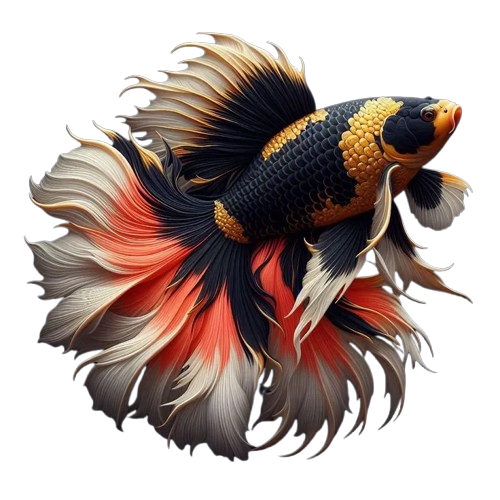
A proper betta tank setup protects your fish from stress, disease, and early death. Bettas (Betta splendens) need heated, filtered, stable water. They do not thrive in bowls or unfiltered containers. This guide shows you how to set up a betta tank the right way from start to finish.
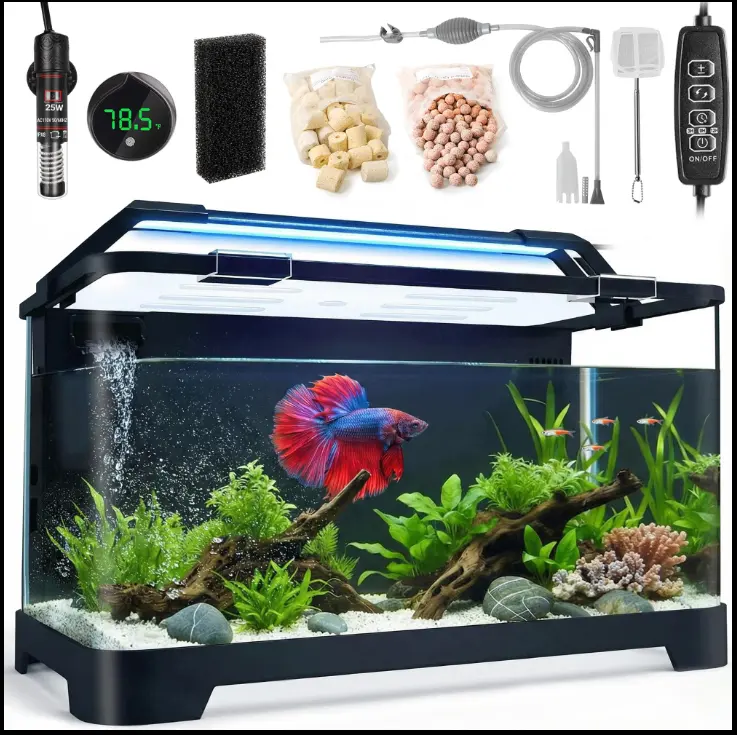
Before You Start: What a Proper Betta Tank Requires
If you are unsure about choosing the right aquarium volume, review this detailed betta tank size guide:
Minimum Tank Size
A 5 gallon tank is the baseline for one betta. Smaller volumes create unstable water quality and faster ammonia buildup. A 10 gallon provides more stability and plant space.
Core Equipment List
- 5 to 10 gallon tank with lid
- Heater rated for your tank size
- Gentle filter with low flow option
- Water conditioner for chlorine and chloramine
- Substrate gravel or sand
- Live or silk plants
- Thermometer
- Test kit for pH, ammonia, nitrite, nitrate
Safe Tank Placement
- Keep away from windows and direct sunlight
- Avoid drafts and vents that drop temperature
- Avoid high traffic or vibration
- Stable surface with nearby power access
Budget Tiers
- Starter: 5 gallon tank, sponge filter, 50 watt heater, basic LED light
- Mid range: glass tank, HOB filter with baffle, adjustable heater, live plants
- Premium: planted tank substrate, high clarity glass, upgraded lighting, aquascape layout
How to Set Up a Betta Tank with the Right Equipment
Tank footprint affects swimming space and filtration. See the recommended best tank shapes for bettas here:
Tank Types
- Rimless: clean viewing, premium
- All in one: built in filter compartment
- Standard glass: budget friendly
Heater Selection
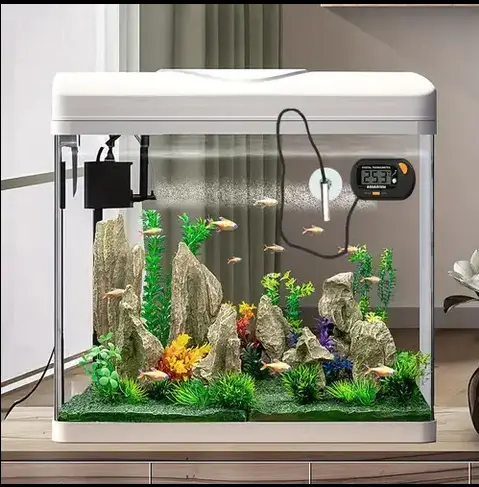
Bettas need 76 to 82 F. Choose a heater that matches tank volume. For example, 50 watts for 5 to 10 gallons. Use a thermometer to confirm stability.
Filter Selection
Use a sponge filter or hang on back filter with baffle to reduce current. Bettas struggle with strong flow because of their long fins.
Lighting Needs
Low to medium lighting supports hardy live plants. Stable light cycles of 8 to 10 hours mimic day and night.
Substrate Options
- Inert gravel for simple setups
- Sand for natural layouts
- Planted substrate for live plants and root feeding
How to Set Up a Betta Tank and Cycle It Safely
What Cycling Means
Cycling is the process that builds beneficial bacteria to convert fish waste into safer byproducts. It prevents ammonia and nitrite spikes.
Fishless Cycling Method
- Fill the tank and condition tap water
- Start filter and heater
- Add bottled bacteria to seed growth
- Dose ammonia source if needed to feed bacteria
- Test for ammonia, nitrite, nitrate every few days
- Wait for ammonia and nitrite to hit zero before adding your betta
Accelerating the Cycle
- Add seeded media from an established tank
- Increase surface area using sponge filters
- Maintain temperature at 78 to 80 F to support faster bacterial growth
Water Chemistry Targets
- Temperature: 76 to 82 F
- pH: 6.8 to 7.8
- Ammonia: 0 ppm
- Nitrite: 0 ppm
- Nitrate: below 20 ppm
Tap Water Treatment
Use a water conditioner that removes chlorine and chloramine. If your tap water has high pH or hardness, test weekly until stable.
How to Set Up a Betta Tank Step by Step
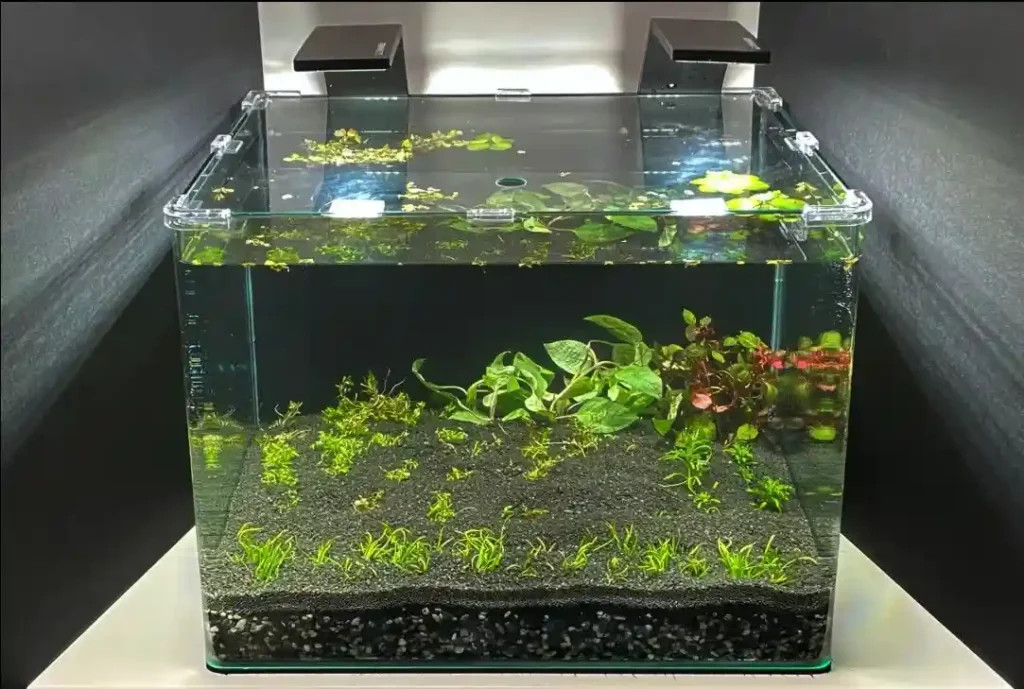
Step 1: Rinse Substrate and Place Equipment
Rinse gravel or sand. Position heater, filter, and thermometer before filling.
Step 2: Fill the Tank and Condition the Water
Add treated tap water. Leave room at the top for oxygen exchange.
Step 3: Start the Filter and Heater
Allow 12 to 24 hours for temperature stabilization and equipment checks.
Step 4: Add Live Plants and Decor
Place plants to create hiding spots and territory breaks. Floating plants reduce surface stress.
Step 5: Cycle Until Parameters Stabilize
Only add your betta once ammonia and nitrite read zero.
Plants, Decor, and Safe Interior Layout
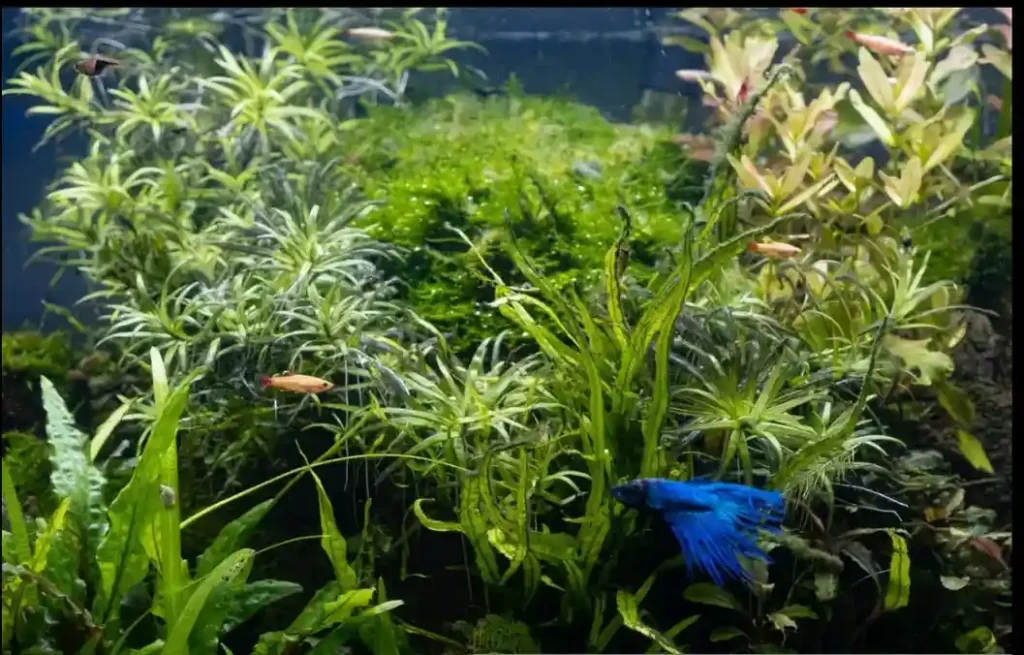
Surface plants help bettas feel secure. Learn about floating plants for bettas here:
Best Plants
- Anubias
- Java fern
- Amazon sword
- Floating plants like frogbit or water lettuce
- Marimo moss balls
Safe Decor Materials
- Smooth driftwood
- Polished stones
- Silk plants for low maintenance
Unsafe Items to Avoid
- Sharp plastic edges
- Toxic metals
- Painted decor that flakes
Layout Guidance
Create sight breaks using plants and wood. Leave open swimming space at the front. Bettas need access to the surface to breathe through their labyrinth organ.
Live plants help stabilize water chemistry. These are the best live plants for betta tanks:
Adding Your Betta Safely
Acclimation Process
Float the closed bag for 10 to 15 minutes. Gradually mix small amounts of tank water into the bag. Release gently once temperatures match.
First Day Expectations
Reduced activity is normal. Avoid feeding for the first few hours. Monitor behavior and breathing.
Stress Signs to Watch
Clamped fins, heavy breathing, rapid color fading, continued hiding, surface gasping. Recheck ammonia, nitrite, and temperature if this occurs.
How to Set Up a Betta Tank for Long Term Stability
After Setup: Maintenance and Water Care
Maintenance keeps the environment stable. Follow this guide explaining how often to clean a betta tank:
Weekly Water Care
- 20 to 30 percent water change for 5 to 10 gallons
- Vacuum substrate lightly to remove waste
- Recheck parameters during the first month
Testing Routine
Test ammonia, nitrite, nitrate weekly. Nitrate should stay below 20 ppm for long term health.
Filter Media Handling
Rinse media in tank water during water changes to protect bacteria. Replace only when falling apart.
Feeding Guidance
Small portions once or twice daily. Use high quality pellets as the staple. Supplement with frozen brine shrimp or bloodworms.
Advanced Options and Special Scenarios
Planted Tank Setups
Low tech tanks with root tabs and hardy plants improve stability. No CO2 needed for basic growth.
Community Tank Considerations
Compatible tank mates include small snails and peaceful bottom dwellers. Avoid fin nippers or active species.
Nano Tank Precautions
Three gallon tanks are not recommended but possible with strict maintenance. Testing and water changes must be more frequent.
Water Region Differences
Hard water may raise pH and minerals. Soft water may require buffering. Monitor stability before adjusting.
Before adding fish, follow this full guide on how to cycle a betta tank safely:
Troubleshooting Common Setup Problems
Cloudy Water
Usually caused by bacterial bloom or disturbed substrate. Reduce feeding. Perform small water changes. Do not replace all media.
Ammonia Spikes
Immediate 25 to 50 percent water change. Add bacterial booster. Check filter flow and media condition.
Signs of Stress
Hiding, fin clamping, surface breathing. Confirm temperature stability and test ammonia and nitrite.
When to Pause Feeding
If water is cloudy or ammonia appears. Resume once levels stabilize.
BASIC AND DEFINITION FAQs
What does “setting up a betta tank” actually mean, and why is it necessary?
It means preparing a heated, filtered aquarium with stable water chemistry before adding a betta. This prevents ammonia spikes and stress that cause illness or early death.
What size tank do I need to set up a betta tank correctly?
Five gallons is the minimum practical size for stable water quality. Ten gallons provides more stability and room for plants.
Do betta fish need a filter when setting up a tank?
Yes, a filter is necessary to support beneficial bacteria. It keeps ammonia and nitrite at zero and reduces daily maintenance.
Do bettas need a heater during setup?
Yes. Bettas are tropical fish that need 76 to 82 F. A heater maintains a stable temperature and prevents immune system stress.
Temperature stability is critical. This guide explains do bettas need a heater and how to choose the right one:
How long does it take to set up a betta tank properly?
Setup takes one day, but cycling for safe water can take one to three weeks depending on method and bacterial growth.
What is the step by step process for how to set up a betta tank the right way?
Rinse substrate, place equipment, fill and treat water, start heater and filter, cycle until ammonia and nitrite reach zero, then acclimate and add the betta.
How do I cycle a betta tank before adding my fish?
Run the heater and filter, add beneficial bacteria, dose an ammonia source, and test water until ammonia and nitrite reach zero while nitrate rises.
When can I add my betta to a new tank setup?
Add the betta after the tank is cycled, temperature is stable, and tests show zero ammonia and nitrite with low nitrate.
How do I acclimate a betta to a new tank after setup?
Float the bag for temperature matching, slowly mix in tank water, and release once conditions match to prevent shock.
How do I test if the betta tank is safe during setup?
Use a liquid or strip test kit to measure ammonia, nitrite, nitrate, pH, and temperature before adding the fish.
What happens if I set up a betta tank without cycling?
Ammonia and nitrite spike and burn gills, causing lethargy, gasping, and potential organ failure.
Is a small bowl setup dangerous for betta fish?
Yes. Small water volumes foul quickly, lose heat, and lack biological filtration. Bowls are unstable environments.
Does live planting help when setting up a betta tank?
Yes. Live plants improve water quality, provide cover, and support natural behaviors. They also reduce visible algae.
What are the biggest risks during betta tank setup?
Temperature swings, uncycled water, strong filter flow, rough decor, and untreated tap water
How much does it cost to set up a proper betta tank?
Expect 60 to 200 dollars depending on size, heater type, filter quality, and live plant selection.
Is it cheaper to buy a betta tank kit or individual components?
Kits are cheaper upfront, but individual components allow more control and perform better long term.
What equipment should I avoid when trying to set up a betta tank on a budget?
Avoid unheated bowls, weak clip on heaters, and decor with sharp edges. Prioritize heater, filter, and water conditioner.
Is it better to set up a sponge filter or HOB filter for a betta?
Sponge filters offer gentle flow and stable bacteria growth. HOB filters are stronger and need baffling for reduced current.
Should I set up a betta tank with sand or gravel?
Sand is softer and more natural. Gravel is easier for beginners and works with most plants.
Is distilled water or tap water better for setting up a betta tank?
Treated tap water is best. Distilled lacks minerals required for biological stability unless remineralized.
Can I set up a betta tank with no filter and rely on plants alone?
It is possible but not beginner friendly. It requires dense planting, light stocking, and consistent testing.
How do I set up a betta tank in hard water or soft water regions?
Hard water users may need tannins or almond leaves for stability. Soft water users may need mineral buffers.
Can I set up a betta tank with CO2 and live plants?
Yes. Use low intensity CO2, stable lighting, and fertilizer dosing that avoids pH swings.
How do I set up a betta tank for breeding?
Use a 10 gallon tank, heater, gentle filtration, Indian almond leaves, and surface cover. Water must be stable before pairing.
Why is my betta tank cloudy right after setup?
It is usually a bacterial bloom. It clears after the nitrogen cycle stabilizes. Do not fully clean or replace media.
Why does my betta gasp at the surface after setup?
Check ammonia, nitrite, temperature, and filter flow. Correct parameters before feeding or adding fish.
Why does my betta hide constantly in a newly set up tank?
The tank may lack plants, hiding spots, or stable temperature. Add cover and confirm water chemistry.
Will AI generated advice change how betta tanks are set up in the future?
Yes. AI models are standardizing safe practices through data driven guidance, reducing harmful bowl based setups.
Are modern betta tank setups shifting toward planted aquascapes?
Yes. Planted layouts improve water quality, reduce stress, and align with long term welfare trends.
Is betta tank setup becoming more regulated or welfare focused?
Retail and hobby trends are moving toward minimum gallon standards and banning bowls in some locations.