If you’re asking “why is my betta not eating“, the most useful thing to know first is that appetite is a symptom, not the disease. A betta refusing food is doing what a sick or stressed fish does, it’s telling you something upstream is off, usually water quality or temperature. This guide walks the eight real causes in priority order, the two tests that solve most cases in a day, and the exact symptom combinations that turn a skipped meal into an emergency.
Quick answer: If your betta is not eating, it’s almost always water quality (ammonia/nitrite), cold water, stress, illness, overfeeding, or unappealing food. Test the water and check the heater first, those two fixes resolve most cases. A 5–7+ day refusal with other symptoms is urgent.
When It’s an Emergency
Cause-by-Cause Detail
Water quality (the #1 cause)
Even a small amount of ammonia or nitrite chemically stresses a betta and shuts down appetite long before you see classic poisoning signs. An uncycled or overdue-for-cleaning tank is the single most common reason a betta stops eating. The fix is mechanical, not medical: test, water change, and get the nitrogen cycle stable.
Temperature
Bettas are tropical. A cold tank doesn’t make them ill immediately, it just turns the metabolism (and hunger) down. This is why winter and rooms without a heater produce a wave of “suddenly not eating” cases. Stabilise temperature before assuming disease.
Stress and new environment
A betta that was just bought, moved, or had its tank rescaped commonly fasts for 2–5 days. This is normal acclimation, not sickness, as long as the water and temperature are good. Resist the urge to “tempt” it with constant food drops, that just fouls the water.
Illness
If appetite loss comes bundled with physical signs (bloating, pineconing, white spots, cottony patches, red streaking, clamped fins), the not-eating is secondary, treat the underlying disease and appetite typically returns as the fish recovers.
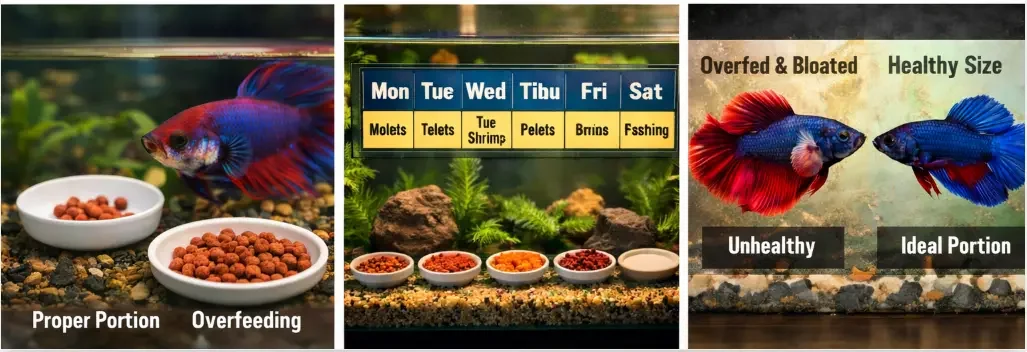
Overfeeding and constipation
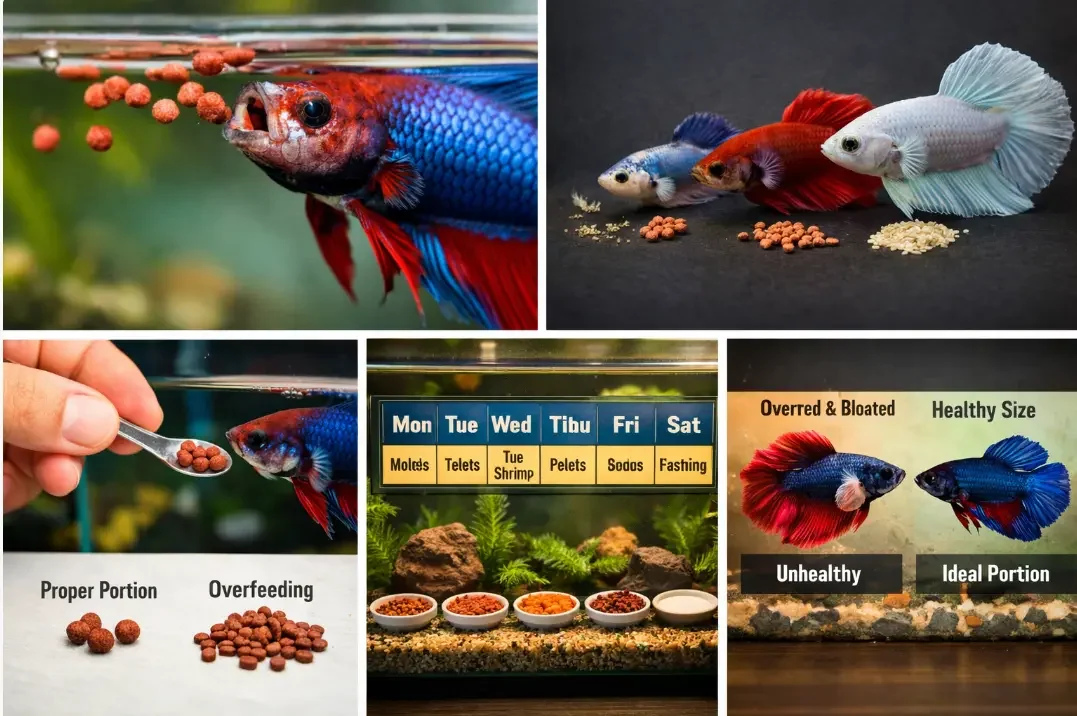
A betta that was overfed can be too bloated and backed up to want more food. A 2–3 day fast (and a tiny piece of deshelled, blanched pea for some keepers) usually resets it. Check from above to rule out the pineconed look of dropsy first.
Unappealing or wrong food
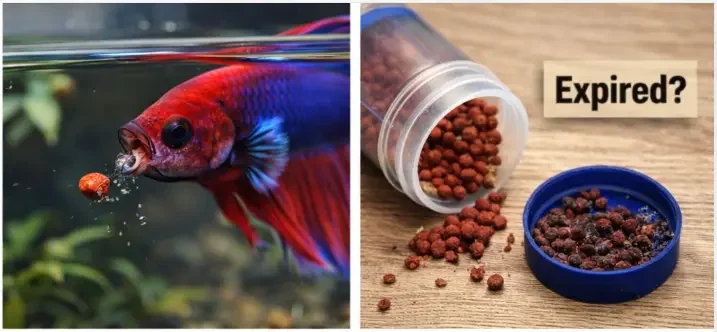
Half-frozen frozen food, stale pellets that have lost their oils, or pellets too large for the fish’s mouth all cause refusal. Thaw food fully, keep food fresh and sealed, and size pellets appropriately.
How Long to Worry & When to Just Wait
| Situation | Action |
|---|---|
| 1–2 missed meals, fish looks/acts normal | Don’t worry, keep conditions good |
| New/just-moved betta, 2–5 days light eating | Normal acclimation, stay calm and consistent |
| Not eating + perfect water + warm tank | Offer a live/frozen treat; observe closely |
| Not eating + bad water or cold | Fix water/temperature first, usually resolves fast |
| Not eating 5–7+ days or with disease signs | Treat as urgent, diagnose and act |
Why “Appetite Is a Symptom” Is the Whole Key
The single most important idea in this guide is the one owners resist most: a betta not eating is almost never the actual problem, it is the fish reporting that something else is wrong. Understanding why appetite works this way is what stops the panicked, counterproductive responses (more food, immediate medication) and points you at the real cause.
Appetite is metabolically expensive and non-essential in the short term. When a fish is under stress, chemical, thermal, infectious, or environmental, its body prioritises survival functions and dials down digestion, which is energetically costly and not urgent over a few days. This is adaptive: an animal coping with bad water or a developing infection is better served putting resources into its gills and immune response than into processing a meal. The practical consequence is that appetite is one of the first things to drop when almost anything goes wrong, often well before any visible sign like spots, bloating, or clamped fins appears.
That early-warning property is exactly why the correct response is to investigate upstream, not to treat the appetite. Trying to “fix” not-eating by offering more food, or by reaching straight for medication, treats the dashboard warning light instead of the engine. Worse, the most common instinctive reaction, repeatedly dropping food in to tempt the fish, actively harms it, because the uneaten food rots and degrades the very water quality that is the leading cause of appetite loss in the first place. The owner’s intervention deepens the actual problem while aiming at the symptom.
This reframing also explains the guide’s structure. The causes are worked in priority order from most common and easily fixed (water, temperature) to least common, because appetite loss is a generic alarm that many different problems trigger, and the efficient path is to rule out the high-probability, easy-to-confirm causes before the rare ones. “Find the cause first” is not cautious filler advice, it is the only approach that matches how and why a fish stops eating.
The Two-Test Triage, Done Properly
Most “won’t eat” cases are solved by two checks done correctly and in order. Doing them properly is the difference between resolving the problem in a day and spending a week medicating a fish that simply had cold or dirty water.
Test 1: Water chemistry — the highest-probability cause
Use a liquid test kit, not strips, and confirm ammonia and nitrite are both zero. This matters more than owners expect: even a low, “not visibly poisoning” level of ammonia or nitrite chemically stresses a betta enough to shut down appetite long before classic poisoning symptoms appear. So a fish that looks otherwise normal but won’t eat is very often sitting in mildly toxic water. Also note nitrate and pH, a high nitrate level or a swung pH can suppress appetite too. If anything is off, the response is mechanical and immediate: a substantial conditioned water change and a retest, then address why it drifted (uncycled tank, overdue maintenance, overstocking, overfeeding). This single check resolves the largest share of cases and it is also the fastest to perform, which is why it is first.
Test 2: Temperature — the second most common cause
Confirm, on a separate thermometer rather than the heater dial, that the water is a stable 78–80°F and that the heater is actually cycling. Bettas are tropical; below roughly 76°F their metabolism slows and they simply are not hungry. Crucially, cold does not make the fish acutely ill at first, it just turns appetite (and activity) down, which is why owners misread it as illness and why a cold snap or an unheated room produces a wave of sudden “not eating” cases. Stabilising the temperature often restores appetite within a day or two with no other intervention.
Only after both of these are confirmed genuinely correct does it make sense to move on to stress, food, and disease. Skipping straight past these two, which is what reaching for medication does, leaves the two most likely causes unaddressed while treating something the fish probably does not have.
The Bloodworm Test: Separating a Picky Fish From a Sick One
One simple diagnostic cleanly splits a large category of cases: is this a fish that cannot eat (sick/stressed) or one that will not eat this food (picky/bored/bad food)? The test is to offer a single, fully thawed, highly palatable item the fish finds irresistible, typically a thawed bloodworm or daphnia.
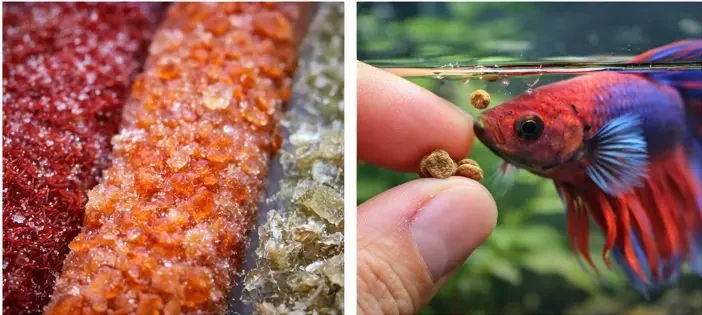
Interpret it carefully. If the betta ignores its normal pellets but instantly attacks the thawed treat, the fish is physically capable of eating and motivated to, this is almost certainly a food-preference or food-quality issue, not illness. Common culprits behind that pattern are stale pellets that have lost their oils and palatability, pellets too large for the fish’s mouth, frozen food fed still half-frozen and crunchy, or a fish that has simply become bored of a single monotonous food (or “spoiled” by frequent rich treats). The fix is on the food side: fresh, correctly sized, fully thawed food and more variety, not medication.
If instead the betta shows no interest even in the irresistible treat, that is a meaningful signal in the other direction: a fish that refuses even its favourite food is more likely genuinely unwell or significantly stressed, and the investigation should stay on water quality, temperature, and a close physical inspection rather than food preference. This single test prevents two opposite errors at once, needlessly medicating a merely fussy fish, and dismissing a genuinely sick fish as “just picky.” It is one of the most useful five-minute checks in the whole troubleshooting routine.
Acclimation Refusal: The Normal Fast Owners Mistake for Illness
A very common scenario deserves its own treatment because it causes the most unnecessary panic and the most counterproductive action: the newly bought, newly moved, or just-rescaped betta that will not eat for the first few days.
This is, in the great majority of cases, normal. A betta that has just been bagged, transported, and introduced to a new environment, or had its familiar tank torn up and rearranged, is dealing with significant stress, and as established above, appetite is one of the first things stress switches off. A fast of roughly two to five days during acclimation, in a fish that is otherwise behaving acceptably and sitting in good warm water, is an expected adjustment response, not a sign of disease. The fish is not failing to thrive; it is settling.
The damage in this scenario is almost always self-inflicted by the worried owner. The instinct is to “tempt” the fish back to eating with repeated food offerings, and that is precisely the wrong move, because the uncaten food fouls a tank the new fish is already struggling to adjust to, converting a harmless acclimation fast into a genuine water-quality problem. The correct response is restraint: confirm the water is clean and the temperature is stable and correct, keep the environment calm with dim light and minimal disturbance and traffic, offer only tiny amounts and promptly remove anything uneaten, and give the fish several quiet days. Appetite typically returns on its own as the betta settles. The skill here is doing less, not more, the opposite of the owner’s instinct.
A Practical Decision Tree for a Betta That Won’t Eat
Pulling the whole method together, here is the order of operations a calm keeper actually follows when a betta stops eating, from highest-probability and easiest to rarest.
- Is the fish otherwise normal and is it only one or two missed meals? If yes, do nothing dramatic, keep conditions good and observe. A few skipped meals in a normal-looking fish in a good tank is not an emergency.
- Test the water. Ammonia and nitrite must be zero; check nitrate and pH. Anything off → conditioned water change and retest. This alone resolves the largest share of cases.
- Verify temperature on a thermometer. Stable 78–80°F, heater cycling. Cold → stabilise and reassess; appetite often returns within a day or two.
- Recall recent changes. New fish, new tank, recent move, new tank mate, a water change done with cold or unconditioned water, any of these explains a few days of refusal and points to “wait and stabilise,” not “medicate.”
- Inspect closely, side and top-down. Look for bloating, pineconed scales, white spots, cottony fuzz, red streaking, clamped fins, rapid gilling. Visible disease signs mean the not-eating is secondary, treat the underlying condition.
- Run the bloodworm test. Eager attack on a thawed treat → food-preference/quality issue, fix the food. Total disinterest → stay on water/temperature/health.
- Reduce stressors and give it time. Dim light, add cover, cut traffic and handling, stop the tempting-with-food cycle, allow two to three calm days.
- Escalate only on the danger combinations. Not eating for 5–7+ days, or alongside lethargy/lying on the bottom, pineconing, red streaks, or gasping, that is the point to treat it as urgent and act on the specific problem.
The logic of the order never changes: rule out the common, cheap, fast-to-confirm environmental causes first, use the bloodworm test to peel off the picky-eater cases, give stress-and-acclimation situations the time they need, and reserve aggressive intervention for the genuine emergency signals. Following this sequence prevents both classic mistakes, panicking over a harmless skipped meal, and missing a real illness because “he’s probably just picky.”
Many “won’t eat” cases trace back to setup or diet, confirm your tank covers the full betta starter kit checklist, switch to a carnivore-correct betta food, rule out overfeeding, and know how long a betta can go without food.
Sources & Further Reading
A-Z Animals, 7 Reasons Your Betta Is Not Eating; Aquarium Source, betta not eating checklist; Dial A Vet (vet-reviewed), betta not eating; Bettafish.org, feeding problems.
Frequently Asked Questions
Why is my betta fish not eating?
Most often poor water quality, cold water, stress, illness, overfeeding/constipation, or unappealing (frozen-solid/stale) food. Test water and check the heater first.
How long can a betta refuse food before it’s serious?
A few skipped meals are fine. Not eating for 5–7+ days, or alongside lethargy/bloating/spots, means investigate and act promptly.
Why won’t my betta eat its pellets?
Possibly stale, the wrong size, or it’s bored/picky. Try a thawed live/frozen treat, if it eats that eagerly, it’s a food-preference issue, not illness.
Will a stressed or new betta stop eating?
Yes, a new or stressed betta often refuses food for a few days while it settles. Keep conditions stable and calm; appetite usually returns.
Can cold water make a betta stop eating?
Yes, cold slows a betta’s metabolism so it isn’t hungry. Stabilising the tank at 78–80°F usually restores appetite.
My betta stopped eating after a water change — why?
Likely a temperature drop or unconditioned/cold replacement water stressed it. Match new water to tank temperature, always dechlorinate, and it usually eats again within a day or two.