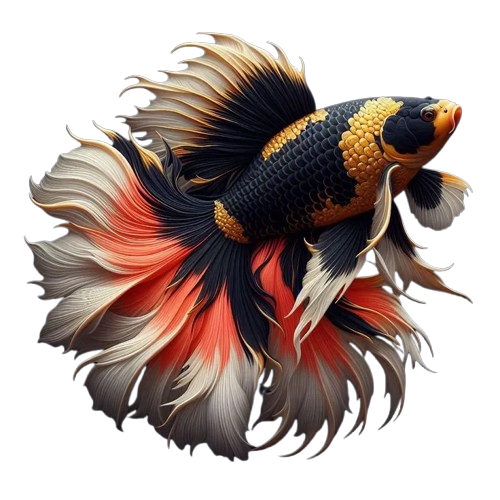
Knowing the worst betta tank mates prevents more dead fish than any medication or cure ever will. Almost every “my betta killed everything” or “my betta got shredded overnight” story traces back to the same dozen species and five behavioural traits. This guide lists the 12 fish to never put with a betta, explains exactly why each one fails, and gives you a 10-second screening filter so you can judge any fish in a store without memorising a banned list.
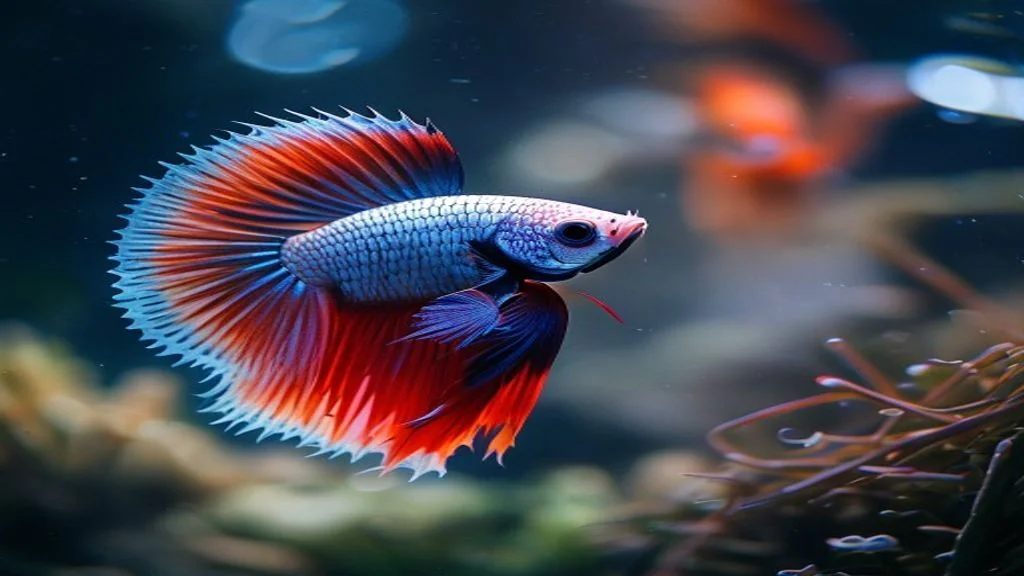
The 12 Worst Betta Tank Mates (and Why)
| Avoid | Why it fails |
|---|---|
| Another betta (male or male/female long-term) | Territorial fighting; only controlled sorority/breeding setups by experts |
| Guppies (esp. fancy males) | Bright + long fins trigger attacks; also nip back — see betta & guppies |
| Fancy goldfish | Cold-water, messy, different needs — incompatible |
| Tiger barbs | Notorious fin-nippers; shred betta fins |
| Serpae tetras | Aggressive nippers in small groups |
| Dwarf gouramis | Same family, similar look — territorial clashes |
| Cichlids (most) | Aggressive/territorial; betta gets killed |
| Angelfish | Get large, can bully or be nipped; need taller tanks |
| Paradise fish | Aggressive labyrinth-fish rival |
| Other “flashy” long-finned fish | Mistaken for a rival betta |
| Large/fast aggressive fish (some danios in tiny tanks) | Stress the betta, outcompete for food |
| Tiny fish/fry (e.g., very small shrimp fry alone) | Become betta snacks |
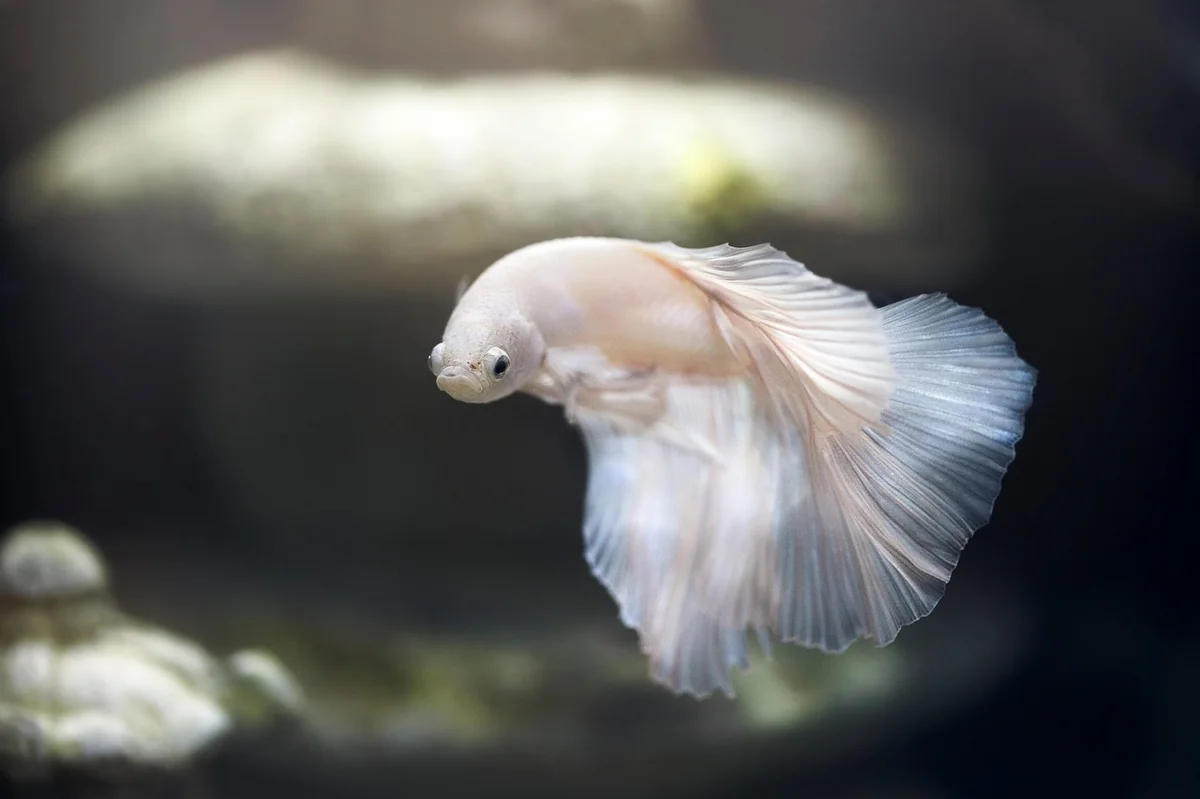
The 5 Traits That Make a Fish Dangerous
- Bright colour + long fins → looks like a rival betta.
- Fin-nipping behaviour → shreds the betta (then fin rot).
- Aggression / territoriality → fights to the death.
- Wrong water needs (cold-water, brackish) → chronic stress for someone.
- Size mismatch → predator or prey.
“But Mine Works!” — Why That’s Risky Advice
Some keepers report a betta living with a bad-list fish. That’s individual temperament and luck, not a safe rule — and it often ends badly months later. Build around the best tank mates list instead, and watch for early signs of stress.
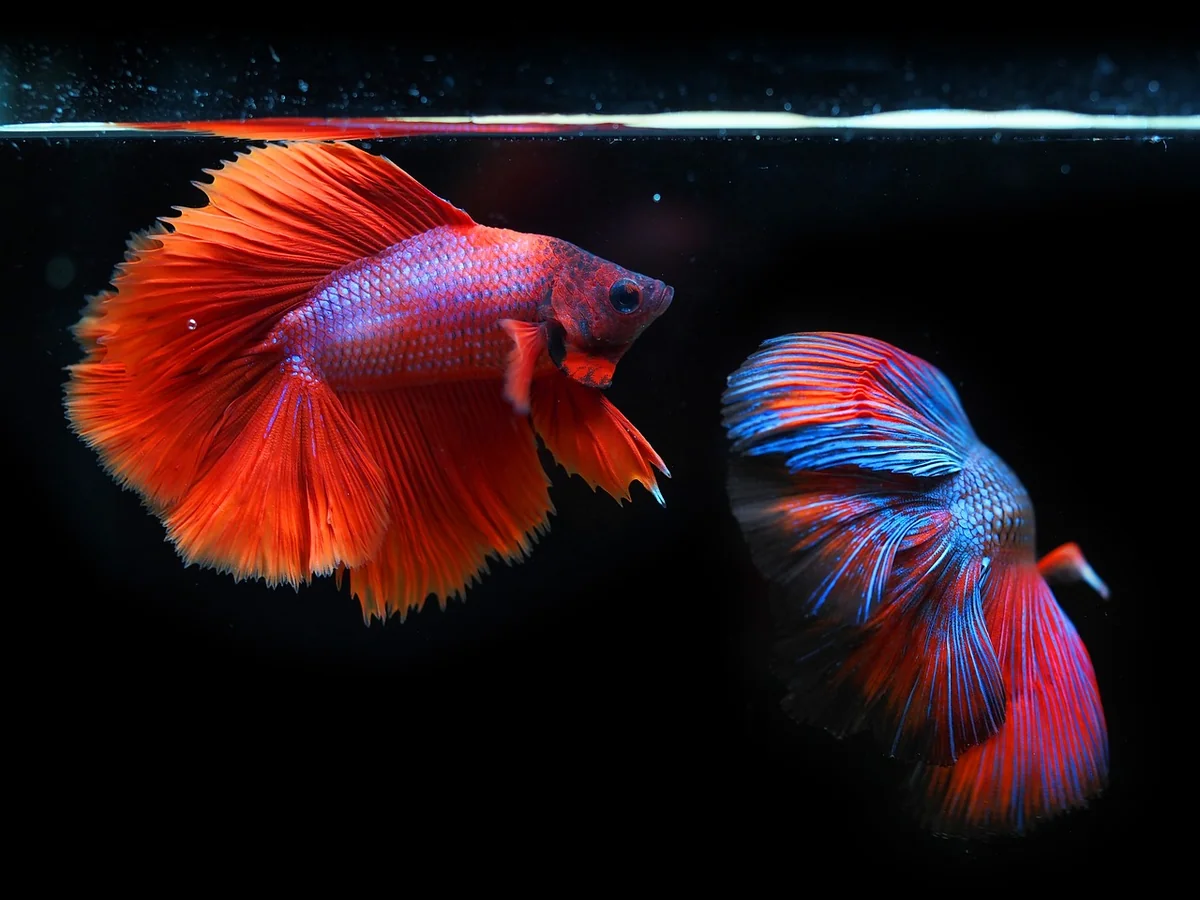
The 5 “Danger Traits” — Screen Any Fish in 10 Seconds
You don’t need to memorise a banned list. Any fish that has even one of these five traits is a bad bet with a betta — this single filter screens out almost every disaster:
| Danger trait | Why it fails with a betta | Examples |
|---|---|---|
| Bright + long fins | Looks like a rival betta → triggered attacks (both ways) | Fancy guppies, other bettas |
| Fin-nipping behaviour | Shreds the betta’s fins → fin rot | Tiger/serpae tetras |
| Aggressive/territorial | Fights to the death | Most cichlids, paradise fish |
| Wrong water needs | Chronic stress for someone | Goldfish (cold), brackish species |
| Size mismatch | Predator or prey | Big fish; tiny fry alone |
If a fish trips any one row, skip it — no matter how often someone online says “mine works”.
“But Mine Lives With One!” — Why That’s Survivorship Bias
Every bad-list pairing has a few success stories online, and they’re misleading. Here’s the honest framing:
- You only hear the survivors. The owner whose betta shredded a guppy in two days usually doesn’t post a triumphant thread about it. The rare “it works!” gets amplified; the common failure goes quiet.
- “Works” is often temporary. Many risky pairings hold for weeks, then fail suddenly when the betta matures, the tank shifts, or a fin gets nipped — by then you’ve grown attached.
- It’s individual luck, not a rule. One calm betta tolerating a guppy doesn’t make guppies safe — it makes that betta unusual. You can’t bank on luck for a life you’re responsible for.
- The downside is severe. A failed pairing isn’t “oops” — it’s a dead or maimed fish, and a stressed survivor prone to infection.
Build around the proven-safe options in best betta tank mates instead, watch for early stress, and treat anecdotes as exceptions — not instructions.
The Worst Pairings Ranked by Severity
Not every bad tank mate fails the same way. Some are slow, chronic mismatches; others are a dead fish within hours. Understanding the failure speed helps you grasp why “it’s been fine for a week” is meaningless reassurance.
| Pairing | How it fails | Typical timeline |
|---|---|---|
| Another male betta | Direct fighting, often fatal | Minutes to hours |
| Tiger / serpae tetras | Fin-shredding nips | Hours to days |
| Cichlids, paradise fish | Territorial attacks | Hours to days |
| Fancy male guppies | Triggered aggression both ways | Days to weeks |
| Goldfish | Temperature and bioload mismatch | Weeks to months (chronic) |
| Angelfish | Outgrows tank; bullying or nipping | Weeks to months |
The slow failures are the most deceptive. A goldfish-and-betta tank can look “fine” for weeks while the betta lives in water that is too cold and too polluted for it, declining quietly until it gets sick. Fast failures at least announce themselves; chronic mismatches kill in silence.
Why Bettas See Some Fish as Rivals
Betta aggression is not random spite — it is a hardwired response to specific visual triggers. Wild bettas defend territory against other bettas, and a captive betta cannot tell the difference between a rival male and a fish that simply looks like one. This is the mechanism behind half of this list.
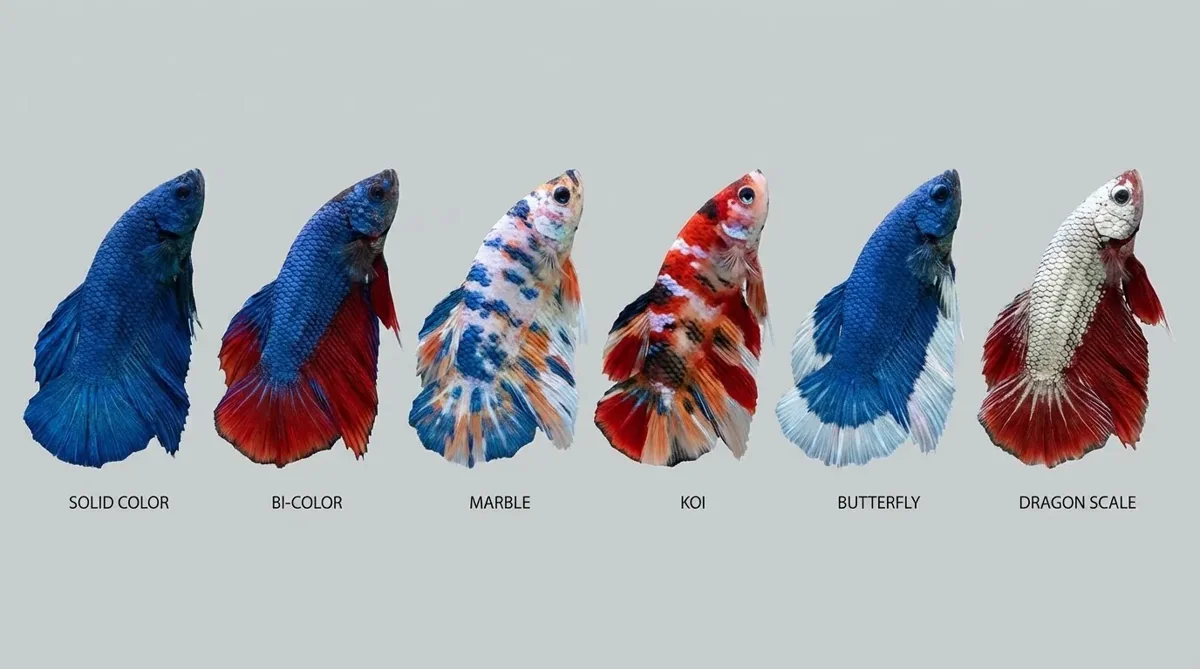
- Long, flowing fins read as the silhouette of a rival male betta and provoke flaring and attacks. This is why fancy guppies and other long-finned fish are so dangerous.
- Bright, saturated colour — especially reds and blues — amplifies the rival response, because show-strain bettas are themselves vividly coloured.
- Slow, hovering movement in the betta’s surface zone looks like another labyrinth fish holding territory, which is why gouramis and paradise fish clash.
- Mirror-like flashing from iridescent scales can keep a betta locked in display mode, which is exhausting and a chronic stressor even without contact.
The practical takeaway: the more a fish resembles a betta in fin shape, colour, and pace, the worse the pairing. Plain, fast, short-finned fish are ignored precisely because they do not trip this circuit.
What To Do If a Pairing Is Already Failing
If you are reading this because a tank mate is already being attacked, act now — every hour of harassment increases the chance of fatal injury or a stress-driven disease outbreak.
- Separate immediately. Move the aggressor or the victim into a backup tank, a cycled hospital tank, or even a clean container with an air stone as a short-term measure.
- Treat injuries. Torn fins are open wounds. Keep water pristine and watch for fin rot setting in over the next several days.
- Do not “give it more time”. Betta aggression escalates, it does not fade. A betta that has decided a fish is a target rarely changes its mind.
- Re-home the wrong fish. If a species from this list cannot live safely, the kind decision is to return or re-home it rather than repeatedly attempting the same failed setup.
- Rebuild around safe species. Restart with the proven options in best betta tank mates — such as snails, corydoras, or rasboras — rather than a second risky experiment.
Common Myths That Get Fish Killed
Several pieces of pet-store and forum advice are repeated so often they sound true. Each one regularly ends in a dead fish.
- “A bigger tank fixes any aggression.” Space reduces density-driven aggression, but it does not make a fin-nipper stop nipping or a cichlid peaceful. Volume mitigates risk; it does not erase a fundamentally incompatible species.
- “Add them at the same time and they’ll grow up fine.” Juveniles often coexist, then turn on each other at maturity when hormones and territorial instinct kick in. Early peace is not proof of long-term safety.
- “My betta is calm, so any fish is fine.” A calm betta widens your options among safe species; it does not make a tiger barb or a goldfish appropriate.
- “Females are always peaceful.” Female bettas are usually less aggressive than males, but they still nip, still defend territory, and still fail with the species on this list.
- “It worked for someone on YouTube.” You see the rare success, not the thousands of quiet failures. Survivorship bias is not a stocking plan.
A Species-by-Species Breakdown of the Worst Offenders
The summary table tells you what to avoid; this section explains the mechanism behind each failure so you can recognise the same pattern in a fish that is not on the list by name. Pet shops constantly stock new “community” species, and the failure modes below repeat far more reliably than any banned list.
Tiger Barbs — the Classic Fin-Shredder
Tiger barbs are the single most common cause of a betta arriving home with intact fins and developing ragged, bloody edges within forty-eight hours. They are obligate shoaling fish that nip as a social and feeding behaviour, and a long-finned, slow-moving betta is the most tempting target in any tank. Keeping them in a larger group of eight or more reduces nipping among themselves but does nothing to protect a betta — it simply means a coordinated group is now interested in those flowing fins. There is no tank size, no plant density, and no feeding schedule that makes this pairing safe. The damage almost always progresses to fin rot because torn fin tissue is an open wound in bacteria-rich water.
Serpae Tetras — Quietly Worse Than They Look
Serpae tetras are sold as peaceful community fish, and in a large school of their own kind they are tolerable. In the small groups most beginners buy (three to five), they become persistent nippers that single out the slowest, showiest fish in the tank. A betta fits that description perfectly. The danger here is reputation: because serpae are marketed as community-safe, owners blame the betta or “bad luck” rather than the species, and they often re-attempt the pairing after a loss.
Dwarf Gouramis — Same Niche, Constant Friction
Dwarf gouramis occupy the same upper-water, labyrinth-breathing niche as a betta and read as a territorial rival even though they are a different species. The conflict is rarely a single dramatic fight; it is chronic flaring, surface-zone disputes, and a slow stress load that suppresses the immune systems of both fish. Dwarf gouramis also carry a well-documented iridovirus that is effectively untreatable, so the disease risk compounds the behavioural one.
Angelfish — Outgrow the Problem Into a Bigger One
Angelfish look harmless at the two-inch size they are sold at. They mature into deep-bodied fish the size of a small saucer that need a tall tank and become territorial, especially when paired or spawning. A juvenile angelfish may be nipped by a betta; an adult angelfish may bully or outcompete one. Either way the pairing fails — the only question is the direction and the timeline.
Paradise Fish — A Betta in a Different Coat
Paradise fish are close labyrinth-fish relatives with a temperament as aggressive as a male betta’s, and they are hardy enough to harass relentlessly. Two surface-territorial, flare-prone fish in one tank is a guaranteed conflict. This is one of the few species that can genuinely out-aggress a betta, which means your betta can be the victim rather than the aggressor.
Goldfish — The Slow, Invisible Killer
Goldfish do not attack bettas; they kill them by environment. Goldfish are cold-water fish that thrive at temperatures a betta finds chronically stressful, they are heavy waste producers that pollute the water far faster than a betta’s biology tolerates, and they grow far larger than most beginners expect. A betta-and-goldfish tank can look calm for weeks while the betta’s immune system is quietly collapsing from cold stress and ammonia exposure. By the time symptoms appear, the damage is advanced.
Compatibility Scorecard: Why Each Trait Disqualifies a Fish
Use this scorecard as a mental checklist in the store. Score a candidate fish on all five traits; a single failing row is enough to walk away, regardless of how the other rows look.
| Trait to check | Safe (green) | Caution (amber) | Disqualifying (red) |
|---|---|---|---|
| Fin shape | Short, plain fins | Slightly long fins, muted colour | Long, flowing, brightly coloured fins |
| Temperament | Peaceful, ignores others | Semi-aggressive in small groups | Territorial, aggressive, or compulsive nipper |
| Water needs | Tropical 76–80°F, fresh | Tolerates a narrow overlap | Cold-water or brackish requirement |
| Adult size | Smaller than the betta or similar | Slightly larger, peaceful | Large enough to bully, or small enough to be eaten |
| Water zone | Bottom or mid, fast-moving | Mid-water, occasional surface | Surface/labyrinth competitor, slow hoverer |
The reason this works better than memorising names is that aquarium retail constantly introduces new species under “community fish” signage. Traits do not change; marketing does. A fish that scores green on all five rows is almost always worth trialling with a quarantine and a backup tank; a fish that scores even one red is almost always a future loss.
A Realistic Account of How a Bad Pairing Unfolds
Beginners often expect a failed pairing to look like an obvious fight. More often it is a quiet, four-stage decline that is easy to rationalise until it is too late. Recognising the stages early is the difference between a same-day rescue and a dead fish.
- The honeymoon (day 0–3). Both fish are stressed from a recent move and largely ignore each other. The owner concludes the pairing “works” and stops watching closely. This is the most dangerous moment, because it builds false confidence.
- The first incident (day 3–10). A flare, a chase, or a single nipped fin. It is brief, so it gets dismissed as “settling in”. In reality it is the betta or the tank mate establishing that the other is a target.
- Escalation (week 2–6). Incidents become routine. Fins fray, one fish hides constantly, appetite drops. Owners often respond by rearranging décor or adding plants, which helps marginally and delays the real decision.
- Failure. A fatal injury, a stress-driven disease outbreak, or a chronically declining fish that dies “for no reason”. By now the owner is emotionally attached, which is exactly why acting at stage one matters so much.
The lesson is not to panic at every flare — some posturing is normal even among safe species — but to take the first genuine incident seriously rather than waiting for proof. With a fish from this list, the first incident is the proof.
Quarantine: The Step That Prevents Half These Disasters
A large share of “my whole tank died after I added a new fish” reports are not aggression at all — they are disease introduced by an unquarantined newcomer. Even a perfectly compatible species can wipe out a tank if it arrives carrying ich, columnaris, or internal parasites. Every new fish, safe-list or not, should spend two to four weeks in a separate quarantine tank before going anywhere near your betta.
- Use a separate, cycled container. A simple ten-gallon with a sponge filter, a heater, and a lid is enough. It does not need to be decorated.
- Observe for the full period. Many diseases incubate for one to two weeks. A fish that “looked fine in the store” can break out with symptoms days after purchase.
- Watch for the warning signs. Clamped fins, white spots, rapid gilling, stringy white faeces, or unusual hiding all warrant holding the fish longer and treating before introduction.
- Never share equipment between tanks. A shared net or siphon transfers pathogens straight to your betta and defeats the entire purpose of quarantine.
Quarantine does not make an incompatible species compatible — a tiger barb is still a tiger barb. But it removes the single biggest cause of mass die-offs that owners wrongly blame on their betta, and it makes the safe pairings genuinely safe.
Sources & Further Reading
Aquarium Store Depot — tank mates to avoid; Bettafish.org — incompatible species; FishLab — betta compatibility; The Spruce Pets (vet-reviewed) — betta community tanks.
Frequently Asked Questions
What fish should never be with a betta?
Other bettas, guppies and fancy long-finned fish, fin-nippers like tiger and serpae tetras, cichlids, angelfish, paradise fish, goldfish, and anything tiny enough to be eaten.
Can two male bettas live together?
No. They fight, often fatally. Males must be housed separately; only experienced keepers attempt controlled breeding/sorority setups.
Why can’t bettas live with guppies?
Male guppies are bright and long-finned, which triggers betta aggression, and guppies can also nip the betta’s fins. Both directions cause damage.
Are goldfish bad tank mates for bettas?
Yes. Goldfish are cold-water, messy, and have very different needs, making them incompatible with tropical bettas.
My betta tolerates a “bad” tank mate — is that safe?
It’s individual luck, not a safe rule. These pairings often fail later. Build around proven-safe species and keep a backup tank.
Can a betta live with another betta if the tank is big enough?
No. Two males will fight regardless of tank size; volume reduces density aggression but does not override territorial instinct toward another betta. Only experienced keepers attempt controlled sorority or breeding setups, and even those frequently fail.
Are angelfish bad tank mates for bettas?
Yes. Angelfish grow large, need tall tanks, and can either bully a betta or have their own long fins nipped. The size and behaviour mismatch makes them unreliable and risky.
Why do tiger barbs shred betta fins?
Tiger barbs are compulsive fin-nippers, especially in small groups. A betta’s long, slow fins are an irresistible target, and the damage routinely turns into fin rot.
Is it the species or my individual betta that decides?
Both matter, but the species sets the ceiling. A calm betta still cannot safely live with a cichlid, a goldfish, or a tiger barb — temperament only widens your options among species that are safe to begin with.