Of all the popular pairings, betta and neon tetras is one of the few that earns a genuine “yes”, but only when the school size and tank size are right. Neon tetras are fast, short-finned, and school tightly, so they dodge a slow betta and don’t trip the fin-recognition aggression that bright long-finned guppies do. This guide explains exactly why the pairing works, the minimum school and tank size that make or break it, and the introduction steps that turn a good-on-paper match into a thriving community tank.
Why Betta and Neon Tetras Work (When Guppies Don’t)
- Short fins, modest colour: they don’t look like a rival betta, so they trigger far less aggression.
- Fast schoolers: they stay mid-water in a group and easily dodge a curious betta.
- Peaceful: in a proper-sized school they’re calm and not nippy.
Success rates for neon tetras are far higher than betta + guppy pairings, but it still depends on your individual betta’s temperament.
The Right Setup
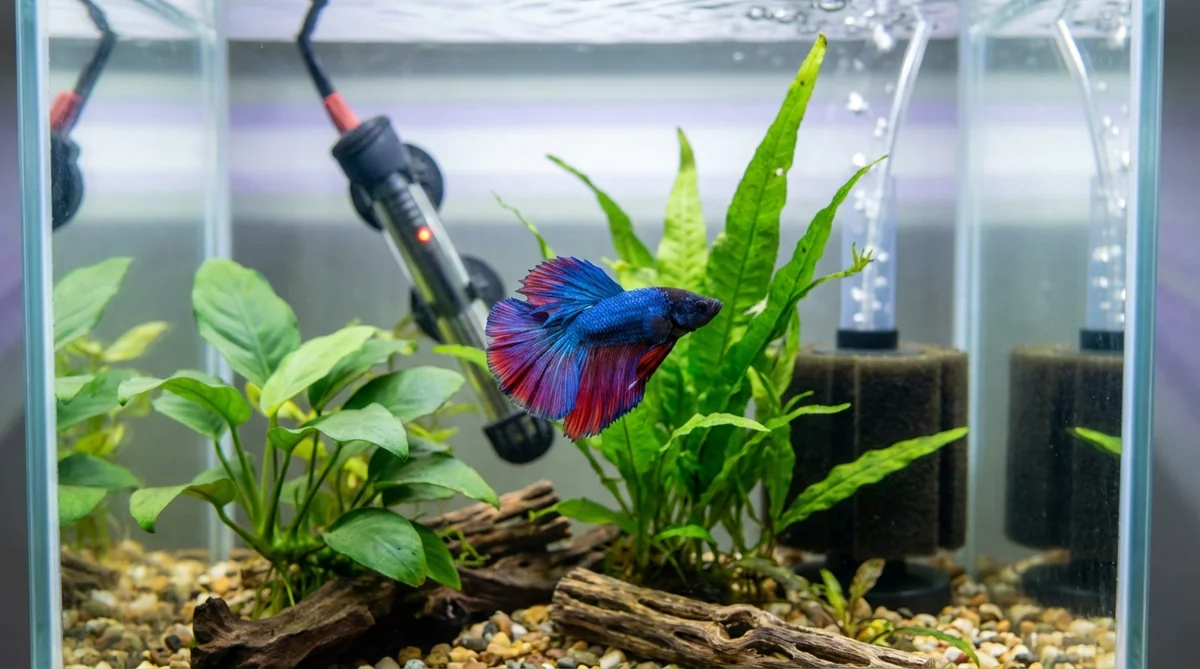
| Factor | Best practice |
|---|---|
| Tank size | 10 gal minimum, 20+ ideal, tank size guide |
| School size | 6 minimum, 8+ ideal (lone/under-schooled tetras get nippy & stressed) |
| Plants/hides | Heavily planted with open mid-water swimming lanes |
| Water | Same tropical conditions: 78–80°F (heater), gentle filter |
| Betta | Calmer individual; backup tank ready |
Key: an under-sized school is the #1 reason this fails, small groups of tetras become stressed fin-nippers. Always keep 6+.
Why Neon Tetras Beat Guppies (the Mechanics)
Neon tetras are one of the few genuine “yes” pairings, and it’s worth understanding why so you can judge other species the same way:
- Short fins, modest colour. They don’t resemble a rival betta, so they don’t trip the fin-recognition aggression that bright long-finned guppies do.
- Speed + schooling. Fast mid-water schoolers easily dodge a slow betta; a tight group also dilutes any single fish’s risk.
- Matching water. Same tropical range (78–80°F, similar pH), no hidden chemistry clash like mollies.
- Peaceful temperament in a proper school, not nippy when secure.
It still depends on the individual betta, so quarantine the school first (quarantine guide), add them together, watch the first 48 hours, and keep a backup tank. Even in a good pairing, occasional nipping can happen, keep water pristine so any minor fin damage doesn’t turn into fin rot, and watch for stress signs. Done right, this is one of the most rewarding community setups for a betta.
The Compatibility Scorecard
Neon tetras score well on nearly every axis that matters, which is why they sit near the top of the safe list. The only real variables are tank size, school size, and the individual betta’s temperament.
| Factor | Betta + neon tetra rating | Notes |
|---|---|---|
| Temperature | Match | Both tropical, 78–80°F |
| pH / hardness | Match | Soft, slightly acidic to neutral suits both |
| Appearance trigger | Low | Short fins, modest colour, not a rival betta |
| Speed / escape | Strong | Fast schoolers easily dodge a slow betta |
| School requirement | Critical | 6 minimum, 8+ ideal, the make-or-break factor |
| Overall | One of the best pairings | High success rate with correct setup |
Notice that water chemistry is a clean match here, unlike mollies. The conflict, when it happens, is almost always behavioural and almost always traceable to an under-sized school or a too-small tank, both fully within your control.
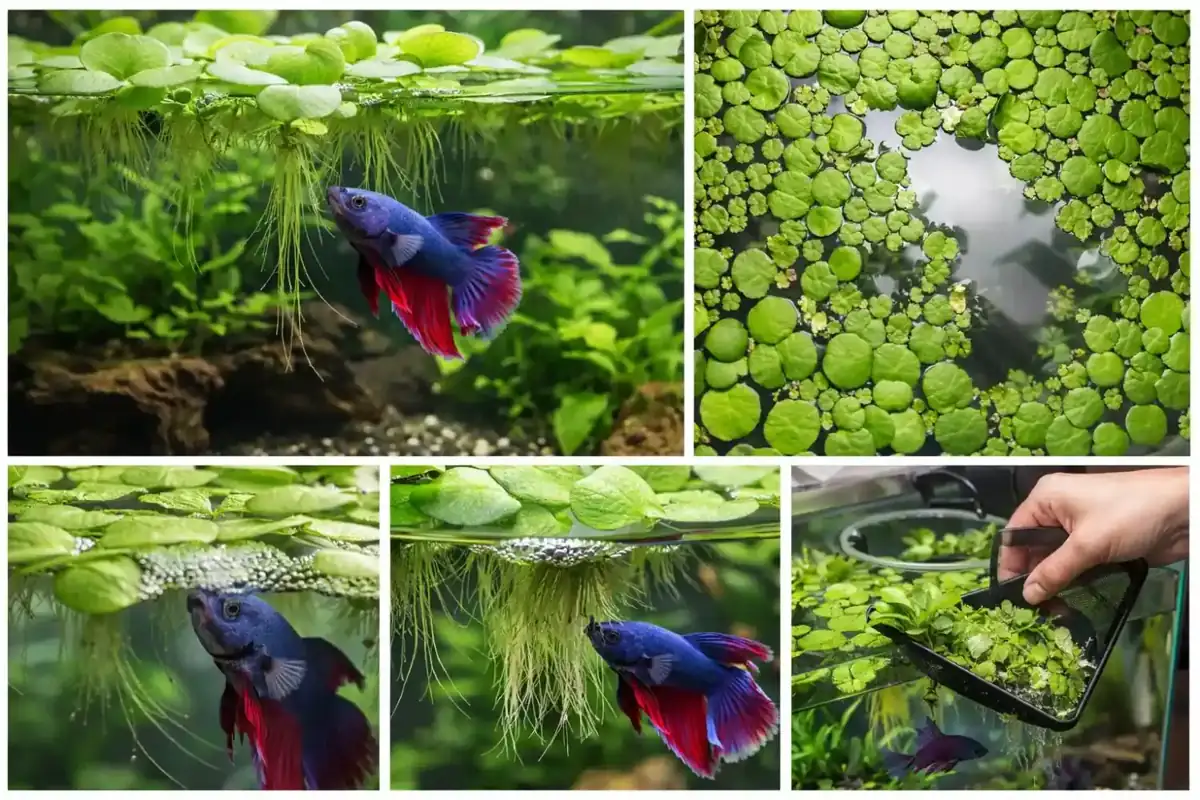
Acclimation: Adding the School the Right Way
Neon tetras are sensitive to sudden water changes and are notorious for importing disease, so a careful introduction matters as much as the species choice.
- Quarantine the whole school 4–6 weeks. Neons can carry the parasite behind “neon tetra disease” and common ich, never add them straight from the store (quarantine guide).
- Buy the full school at once. Adding a few now and a few later leaves the early fish under-schooled and stressed in the meantime.
- Rescape before they go in. Add plants and sight breaks and rearrange decor so the betta doesn’t hold established territory.
- Float and drip acclimate for 30–45 minutes to equalise temperature and chemistry, then net them in, don’t pour store water into the tank.
- Dim the lights for the first day and watch the first 48 hours. A confident school exploring within hours is a good sign; tetras pinned in a corner are not.
Warning Signs and How to Read Them
This pairing usually settles fast, so trouble is easy to spot if you know the difference between curiosity and conflict.
| Behaviour | Normal | Separate now |
|---|---|---|
| Betta interest | A glance, then back to patrol | Locked-on chasing of one tetra |
| Tetra fins | Intact, all fish | Frayed or nipped, often from too-small a school |
| Schooling | Tight group, exploring | Scattered, hiding, not feeding |
| Betta fins | Intact | Nipped by stressed tetras → fin rot risk |
Most “neon tetras attacked my betta” reports are not aggressive tetras, they are stressed, under-schooled tetras. Fix the school size first; only if behaviour stays bad with 6–8+ fish is it the individual betta, in which case use the backup tank.
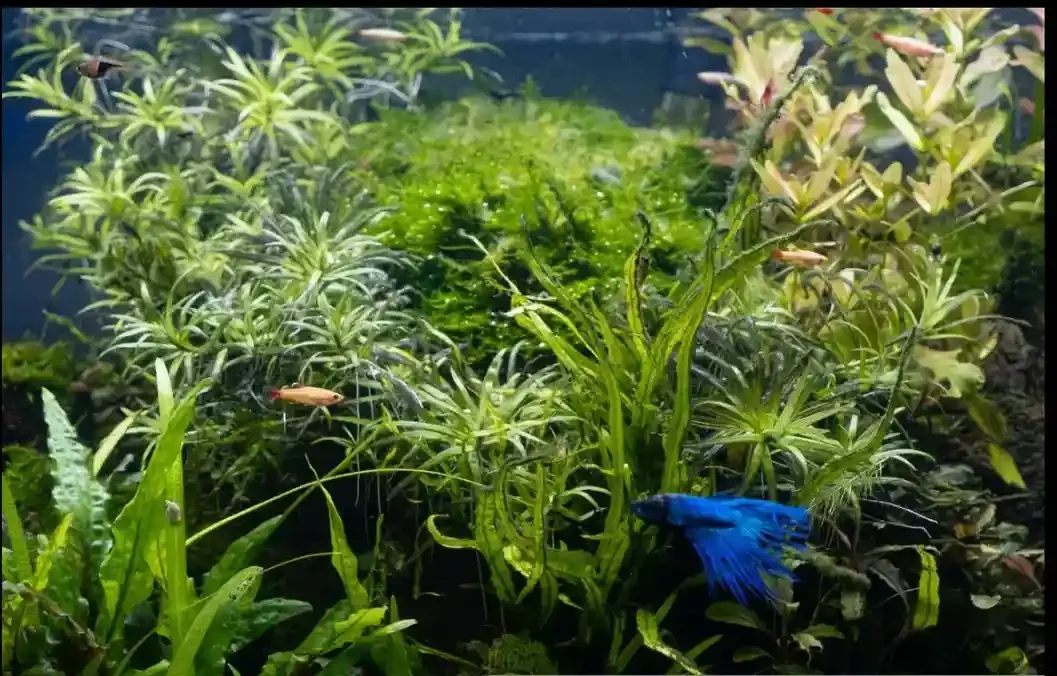
Ember Tetras: An Even Safer Variation
If you want the tetra look with slightly lower risk, ember tetras are worth considering alongside neons.
- Smaller and even more peaceful. Embers are tiny (under an inch) and very calm, so they’re even less likely to nip than neons.
- Warm orange, not flashy. Their modest colour doesn’t read as a rival betta any more than neons do.
- Same school rule applies. Keep 6+ (8–10 ideal); under-schooled embers get just as jittery as under-schooled neons.
- Slightly smaller footprint. They can suit a well-planted 10-gallon a little more comfortably than a full neon school, though more space is always better (tank size guide).
Both rank highly in best betta tank mates; embers are simply the gentler end of the same successful formula, small, fast, dull, tightly schooling fish that a betta has little reason to fight.
The Biology Behind Why Schooling Protects Both Fish
The repeated instruction to “keep at least six” can sound like an arbitrary rule, but it is grounded in how a schooling fish’s nervous system works, and understanding the mechanism makes it obvious why an under-stocked group is the single biggest cause of failure.
Neon tetras are an obligate shoaling species. In the wild they live in groups of hundreds, and a tetra’s safety behaviour is calibrated to constant proximity to its own kind. When the group is large enough, an individual tetra reads the school as cover: it relaxes, feeds in the open, and essentially ignores the betta because its threat-response is satisfied by the presence of its shoal. When the group is too small, that safety signal never arrives. The tetra remains in a chronic state of low-level alarm, which expresses itself as darting, hiding, fin-clamping, and, critically, displaced nipping. A stressed tetra that cannot calm itself through schooling will redirect that tension at the most conspicuous slow-moving target in the tank, which is the betta’s trailing fins.
This is why the common report “the tetras attacked my betta” is almost always a misdiagnosis. The tetras are not aggressive by nature; they are anxious because there are too few of them. Adding more tetras does not “dilute” aggression so much as it switches off the stress response that created it in the first place. The same logic explains why a tight, confident school will swim right past a betta without incident, their nervous systems are no longer in alarm mode, so the betta is simply scenery. Get the school size right and most of this article’s other warnings rarely come into play.
Exact Tank and Water Targets That Make This Pairing Thrive
Neon tetras and bettas overlap so cleanly on water chemistry that there is no compromise to negotiate, but “no compromise” only helps if you actually hit and hold the targets. Use the figures below as setpoints, not approximations.
| Parameter | Target | Why it matters here |
|---|---|---|
| Temperature | 78°F (stable, ±1°) | Suits both species; swings stress tetras fast and weaken immunity |
| pH | 6.5–7.0 | Soft, slightly acidic water both species evolved in |
| Hardness | Soft to moderate | Hard water stresses neons over time even if the betta copes |
| Ammonia / nitrite | 0 ppm | Neons are more sensitive than bettas; any reading is a problem |
| Nitrate | Under 20 ppm | Schooling fish in a group raise bioload; water changes matter |
| Flow | Gentle | Strong current exhausts the betta and scatters the school |
Two practical points. First, neon tetras are noticeably less tolerant of an immature or swinging nitrogen cycle than a betta is, so this pairing should only go into a fully cycled, stable tank, never a new one. Second, because you are adding a group of fish rather than one, your bioload jumps; maintain a consistent weekly water-change schedule so nitrate stays low. A stable tank within these numbers removes essentially every non-behavioural way this pairing can fail.
The Individual Betta Factor: When Even a Perfect Setup Fails
Honesty matters more than reassurance: a correct school, a cycled planted tank, and ideal water still will not guarantee success, because a small minority of bettas are simply too aggressive to share any space. This is not a setup failure; it is temperament, and no amount of plants or volume overrides it.
- Some bettas are wired hot. A betta that flares at its own reflection for long stretches, patrols obsessively, and never settles is signalling a temperament that often does not tolerate tank mates regardless of species.
- Maturity can change behaviour. A juvenile betta may share happily and then become territorial as it matures. Early peace is encouraging but not a guarantee, which is why the backup tank is permanent, not temporary.
- The school being correct is the test. If behaviour is still bad with a confident group of eight or more well-schooled tetras in a properly sized tank, you have ruled out the common causes, and the remaining variable is this particular betta.
- Accepting a solo betta is a valid outcome. A betta thriving alone in a well-planted tank is a successful, ethical setup. Forcing tank mates onto an intolerant individual is not.
The practical rule: fix the controllable factors first, school size, tank size, water, cycling, planting. Only when all of those are correct and behaviour is still hostile should you conclude it is the individual betta, and at that point the kind decision is to keep that betta solo rather than repeatedly stressing both species.
Diagnosing Trouble: A Step-by-Step Decision Path
If something does go wrong, do not jump straight to “rehome the betta”. Most problems have a fixable cause, and working through them in order solves the large majority of cases.
- Count the school. Fewer than six, or recently reduced by losses? Restock to eight or more first. This resolves the single most common failure outright.
- Check the volume and layout. Under 10 gallons or sparsely decorated? Upsize or heavily replant to break line of sight and add escape routes before assuming a behaviour problem.
- Verify the water. Test for ammonia, nitrite, nitrate, and temperature stability. Stressed, jittery tetras are frequently a water problem misread as aggression.
- Distinguish curiosity from attack. A betta glancing and moving on is normal. Locked-on, repeated pursuit of one specific tetra is target selection and warrants separation.
- Inspect fins on both sides. Nipped tetra fins usually mean a too-small school; nipped betta fins usually mean stressed, under-schooled tetras. Either way, fix the school before anything else.
- Only then judge the betta. If every factor above is correct and a confident eight-plus school is still being hunted, use the backup tank and keep this betta solo.
Most owners who follow this path discover the problem was the school size or the tank, not an irredeemably aggressive fish. Watch for the broader signs of stress in betta fish throughout, and keep water pristine so any minor fin damage does not progress to fin rot.
Feeding Bettas and Neon Tetras Together
The two species eat at different levels, which makes feeding easy once you know the trick. Bettas are surface feeders, while neon tetras pick food from the middle of the water.
- Feed the betta first at one end of the tank with its usual pellets.
- Then feed the tetras at the other end with small flakes or micro pellets that sink slowly through the middle.
- Watch for food stealing. Bettas happily eat tetra food, which leads to overfeeding. Give the tetras slightly more, in small pinches.
- Remove leftovers after about two minutes so they do not foul the water.
For portion sizes see how many pellets to feed a betta, and for other safe species see the best betta tank mates.
Sources & Further Reading
The Aquarium Guide, Neon Tetra and Betta Together; Aquarium Store Depot, betta tank mates; Bettafish.org, safe tank mates; FishLab, compatibility list.
Frequently Asked Questions
Can bettas live with neon tetras?
Yes, it’s one of the better pairings. Keep a school of 6+ (8+ ideal) in a 10–20+ gallon planted tank with a reasonably calm betta.
How many neon tetras should I keep with a betta?
At least 6, ideally 8 or more. Small groups get stressed and turn into fin-nippers.
What size tank for a betta and neon tetras?
10 gallons minimum, 20+ gallons ideal, heavily planted with open swimming space.
Will a betta eat neon tetras?
Adult neons are too fast and large to be eaten and stay in a tight school. A very aggressive betta may still chase them, so monitor and keep a backup tank.
Are neon tetras better than guppies with a betta?
Yes. Neons have short fins and modest colour, so they trigger far less aggression than bright long-finned guppies.
Are ember tetras safer than neon tetras with a betta?
Slightly. Ember tetras are smaller and even more peaceful, but the same rules apply, keep 6+ in a planted tank. Both are excellent betta companions.
Can a betta and neon tetras live in a 5 gallon tank?
No. A school of 6 or more neon tetras needs at least 10 gallons, and 20 gallons is better. In 5 gallons the betta should live alone or with one snail.
What do you feed a betta and neon tetras?
Feed the betta its pellets at the surface first, then small flakes or micro pellets for the tetras at the other end of the tank. Remove leftovers after about two minutes.