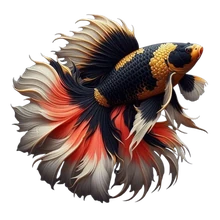
On paper, betta and mollies looks like an easy community match, both are common, hardy, tropical fish. In practice it is one of the more deceptive pairings, because the three problems that sink it are exactly the ones most guides skip: a size mismatch, active fin-nipping, and a genuine water-chemistry clash that no amount of plants or hides can fix. This guide gives the honest breakdown, the only conditions under which it has a chance, and the safer alternatives that succeed far more reliably.
Why Betta and Mollies Looks Easy but Isn’t
Mollies get recommended because they’re hardy, peaceful-ish, and common, but with a betta specifically, three things stack against them:
- Size & appetite. Mollies reach 3–4″+, noticeably bigger than a betta, and can out-compete it for food or bully it at feeding time.
- Active fin-curiosity. They’re busy, nippy-curious fish; a betta’s long fins are an easy target → torn fins → fin rot.
- The water-chemistry clash (explained below): the deal-breaker most people only discover after months of a slowly declining betta.
Verdict: “fine on paper, problems in practice.” If you want livebearer-style activity, the safer route is the proven options in best betta tank mates, corydoras, ember/neon tetras, snails, or shrimp, which match betta water and temperament far better. If you still try mollies, use a large planted tank, watch for stress, and keep a backup ready.
Molly Types: Does It Change the Risk?
People often ask whether a particular molly variety is safer with a betta. The honest answer is that molly type tweaks the risk slightly but never removes the two structural problems, size and water chemistry.
| Molly type | Notes with a betta | Risk shift |
|---|---|---|
| Short-fin (common) molly | Less fin to trigger or get nipped | Slightly lower |
| Sailfin molly | Large showy fin; bigger adult size | Higher |
| Lyretail / balloon molly | Longer fins, body deformities reduce hardiness | Higher |
| Dalmatian / black molly | Behaviour same; still 3–4″+ adult | Same baseline |
If you are committed to trying, a small group of short-fin common mollies is the least-bad choice. Sailfin and balloon varieties stack extra problems on top of an already shaky pairing and should be avoided with bettas entirely.
The Compatibility Scorecard
Laying the factors side by side shows clearly why this pairing earns a “not recommended”. The temperature is the only clean win, everything that actually decides long-term success is a problem.
| Factor | Betta + molly rating | Why |
|---|---|---|
| Temperature | Match | Both tropical; 78–80°F suits both |
| Hardness / pH | Clash | Mollies want hard alkaline water; bettas soft neutral |
| Salt tolerance | Clash | Mollies often kept with salt; long-term salt harms bettas |
| Size | Poor | Mollies reach 3–4″+, can bully and out-eat a betta |
| Fin-nipping | Poor | Active, curious; betta’s long fins are a target |
| Overall | Not recommended | Chemistry clash is unfixable with decor |
This is the rare pairing where even a perfectly calm betta and a generous tank do not solve the core issue. Behaviour problems can sometimes be managed with space and plants; a water-chemistry mismatch cannot.
Warning Signs to Watch For
With mollies the danger is often slow and chemical rather than a dramatic fight, so you have to watch for quiet decline as well as overt aggression.
- Frayed or shortening betta fins from molly nipping, a direct route to fin rot.
- The betta losing weight or being crowded out at feeding time by larger, faster mollies.
- Clamped fins, lethargy, or faded colour in the betta, classic signs of chronic stress from living in the wrong water (stress signs).
- Mollies “pecking” at the betta’s body or fins as it rests, curiosity that becomes constant harassment.
- A slow population spike: mollies are livebearers; unchecked breeding overloads the bioload and degrades water quality further.
The Water-Chemistry Problem Explained in Plain Terms
Every other issue in this pairing, size, nipping, breeding, can in principle be reduced with a big tank, heavy planting, and a calm betta. The chemistry clash cannot, and it is worth understanding exactly why, because it is the reason this pairing earns a flat “not recommended” rather than a “risky but doable”.
Mollies evolved in mineral-rich, hard, alkaline water, and in many cases in genuinely brackish coastal habitats. Hobbyists frequently keep them with a small amount of aquarium salt and a higher pH because it keeps mollies healthier and noticeably reduces their susceptibility to a stress-related condition keepers call “the shimmies”. Bettas evolved in soft, acidic, salt-free still water (see the ideal pH for bettas), rice paddies, shallow pools, and slow streams. These are not minor preferences at the edges of the same range; they are opposite ends of two different water profiles.
When you set the tank to suit the molly, harder, more alkaline, perhaps lightly salted, the betta lives under a constant, low-grade physiological load. It will not die overnight. Instead it tends to fade over months: duller colour, reduced finnage, weaker immune response, and a shorter lifespan. When you set the tank to suit the betta, the mollies become more prone to disease and the shimmies. There is no setting that serves both, which is why décor, space, and temperament, the tools that rescue most other pairings, are powerless here. This is the single most important sentence in the article: a behavioural mismatch can sometimes be managed, but a water-chemistry mismatch is permanent.
Step-by-Step: The Least-Bad Way to Attempt It
This section is for the keeper who has read every warning and still intends to try, perhaps because the fish are already owned. The aim is harm reduction, not a recommendation. Follow every step; skipping any of them shifts the pairing from “shaky” back toward “predictably fails”.
- Confirm the betta’s temperament first. Only attempt this with a betta that has already proven calm and non-reactive with other tank mates. A flare-prone or fin-display betta should never be put with mollies.
- Use 20+ gallons with a long footprint. Mollies are strong, active swimmers; cramped space concentrates both the size mismatch and the nipping risk. A long tank disperses both.
- Quarantine the mollies for four to six weeks. Livebearers are among the most common vectors for ich and other diseases into established tanks; the method is the same as when you quarantine a new betta. This step is non-negotiable.
- Choose a single compromise water profile and hold it. Moderate hardness, pH around 7.5, no long-term salt. Accept that neither species is fully optimised, and never swing the parameters trying to please both.
- Stock a small group of short-fin common mollies, all one sex. A group disperses attention better than a single molly, and a single-sex group prevents the breeding cascade. Avoid sailfin, balloon, and lyretail varieties entirely.
- Heavily plant and rescape before adding the mollies. Establish sight breaks and escape routes first so the betta does not hold uncontested territory when the mollies arrive.
- Drip acclimate over 30–45 minutes and dim the lights for the first day. Then observe closely for the full first 48 hours, and keep a cycled backup tank ready before you begin, not after the first incident.
If at any point the betta fixates on a molly, the mollies peck at a resting betta, or the betta’s condition declines over the following weeks, separate them. With this pairing, “wait and see” usually means “wait and lose”.
How to Tell a Chemistry Problem From a Behaviour Problem
One reason mollies are so deceptive is that the damage they cause is often misread. Owners look for bites and chasing, see none, and conclude the tank is fine, while the real problem is invisible and chemical. Use the contrast below to diagnose what is actually happening.
| What you observe | Likely a behaviour problem | Likely a chemistry problem |
|---|---|---|
| Onset speed | Hours to days | Weeks to months |
| Fin condition | Torn, ragged, asymmetrical edges | Intact but thinning, clamped |
| Visible interaction | Chasing, nipping, flaring | None, fish largely ignore each other |
| Colour and energy | Normal until an incident | Gradual fading, lethargy, reduced appetite |
| Affected fish | Usually one targeted individual | The betta specifically, declining alone |
The crucial insight: a molly tank that “has no aggression” is not a safe molly tank. The most common failure mode here is the bottom-right column, a betta in the wrong water, untouched by any fish, quietly declining until it gets sick “for no reason”. If you see the right-hand pattern, more plants and a bigger tank will not help; only correct water will, and correct water for the betta is wrong water for the molly.
Real Keeper Scenarios and How They End
Here is how this pairing typically resolves in the three setups people most often try, so the abstract warnings have concrete shape.
Scenario 1: One molly added to a 10-gallon betta tank
The most common attempt and the fastest failure. A 3–4 inch molly in 10 gallons is cramped, the size mismatch is at its sharpest, and there is nowhere for either fish to retreat. This usually produces either a stressed, fin-nipped betta within weeks or a stressed molly, and frequently both. It is the setup most responsible for the pairing’s poor reputation.
Scenario 2: A single-sex group of short-fin mollies in a planted 29-gallon at compromise water
The best-case version. Adequate volume, dispersed attention, no breeding cascade, and short-finned fish reduce the behavioural risk to manageable. But the chemistry compromise still runs in the background, so the realistic outcome is a betta that lives but is never quite at its best, in a tank that demands constant monitoring. Some keepers sustain this; many quietly lose the betta to slow decline a year or two in.
Scenario 3: A mixed-sex molly group with no fry plan
This fails for compounding reasons. Mollies are prolific livebearers; the population climbs, the bioload rises in water that is already a betta compromise, and the constant fry trigger the betta’s predatory drive, which often spills into harassing the adults. Even a calm betta in a generous tank is overwhelmed by uncontrolled breeding. If you keep mixed-sex mollies, you must have a fry plan before the first fish goes in.
Better Alternatives to Mollies
If you want livebearer-style activity without the molly problems, look at the safer options in our best betta tank mates guide, corydoras, ember/neon tetras, snails, and shrimp are far more reliable. Avoid the patterns explained in worst tank mates.
Sources & Further Reading
FishLab, betta compatibility; Aquarium Store Depot, tank mates; Bettafish.org, community species; The Spruce Pets, molly & betta care.
Frequently Asked Questions
Can bettas live with mollies?
Usually not recommended. Mollies are larger, can nip fins, and prefer harder water than bettas, so it only works in a large planted tank with a calm betta, and safer options exist.
Will mollies nip a betta’s fins?
They can. Mollies are active and curious and may target a betta’s long fins, which can lead to fin rot.
Do mollies and bettas need the same water?
Not exactly. Mollies prefer harder, more alkaline water (sometimes with salt); bettas prefer soft, neutral, salt-free water, a built-in compromise.
What size tank for a betta and mollies?
At least 20 gallons, heavily planted, because mollies are large and active.
What’s a better alternative to mollies with a betta?
Corydoras, ember or neon tetras, snails, and shrimp are far more reliable betta companions.
Will a betta eat molly fry?
Yes. Bettas readily hunt molly fry. This can switch on predatory behaviour and, combined with the mollies’ fast breeding, lead to constant tank disruption and a rising bioload.
Can a female betta live with mollies?
The same problems apply. Female bettas have shorter fins, so nipping is less of a risk, but the size gap and the hard, alkaline water mollies prefer still make it a poor match.
Are balloon or sailfin mollies safe with a betta?
They are worse than common short-fin mollies. Sailfins grow larger, and balloon mollies have body deformities that make them less hardy, so avoid both with a betta.