
Ammonia and nitrite kill fast and dramatically; betta nitrate levels kill slowly and invisibly, which is why nitrate is the parameter most owners never test and the hidden reason behind so many “my betta just declined for no reason” stories. The safe target is simple, keep nitrate at or below 20 ppm, but understanding why it accumulates, how it harms the fish over months, and exactly how to bring it down is what keeps a betta thriving for years. This guide covers all of it, step by step.
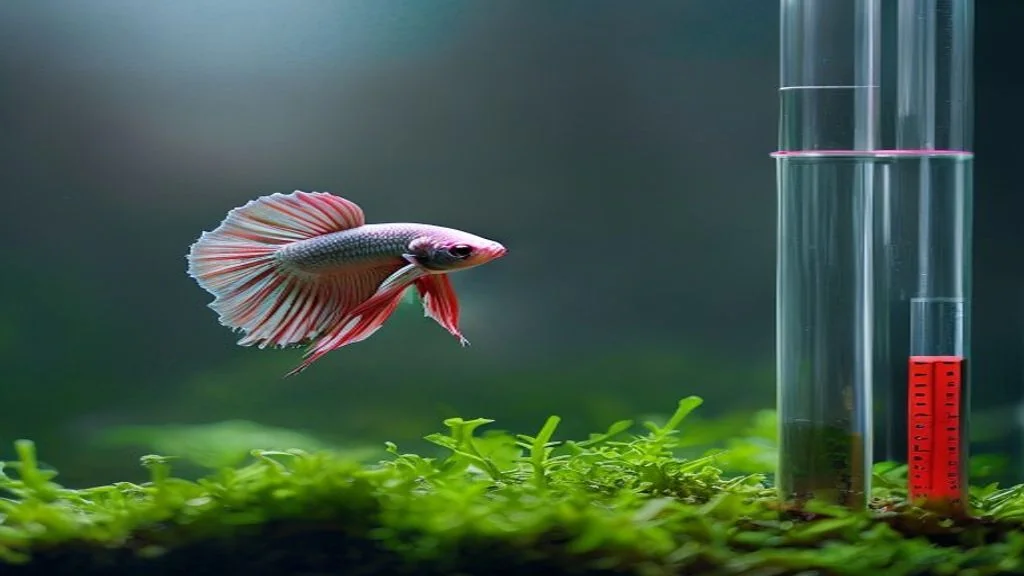

Safe Betta Nitrate Levels
| Nitrate (ppm) | Status | Action |
|---|---|---|
| 0–20 | Ideal / safe | Maintain with weekly changes |
| 20–40 | Acceptable but rising | Increase water-change frequency |
| 40–80 | Stressful, immune suppression | Act: bigger/more frequent changes |
| 80+ | Dangerous, long-term harmful | Series of careful changes to bring down |
You can only know your nitrate with a test kit, it’s invisible like ammonia and nitrite.
Symptoms of Chronic High Nitrate
Unlike ammonia (sudden, dramatic), nitrate damage is slow and easy to miss:
- Lethargy and reduced activity over time (see lethargy).
- Faded colour and frequent minor illnesses (weak immunity).
- Loss of appetite, slow fin/wound healing.
- “Old age decline” that can actually be nitrate poisoning.
- Stunted growth in young bettas.
Because it’s gradual, owners often blame “bad luck” or age, when a simple nitrate test would reveal the real cause.
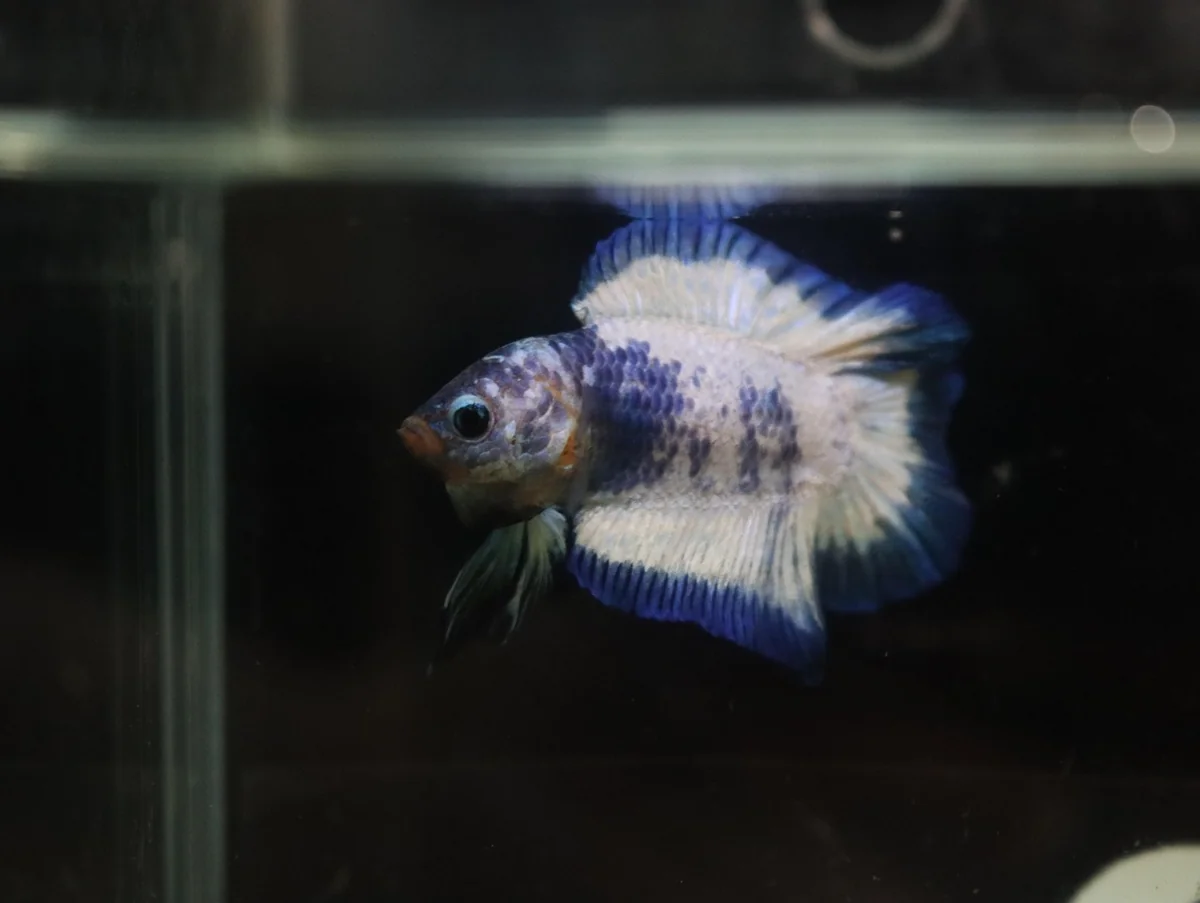
How to Lower Nitrate: Step by Step
- Partial water changes: the main method. A 25–50% dechlorinated, temperature-matched change directly removes nitrate. Do it gradually if the level is very high (a sudden huge change is its own shock).
- Don’t overfeed: uneaten food and waste become nitrate. Small portions, remove leftovers (see feeding logic in what betta fish eat).
- Don’t overstock: more fish = more waste = more nitrate (relevant if you added tank mates).
- Live plants: they consume nitrate as fertiliser; a planted tank holds nitrate lower naturally.
- Clean substrate & filter: trapped waste is a nitrate factory; see how to clean a betta tank and how often.
- Check source water: some tap water already has nitrate; test it so you’re not adding more.
Common Nitrate Mistakes
- Never testing nitrate (only checking ammonia/nitrite).
- Skipping water changes because “the tank is cycled”.
- Overfeeding and leaving uneaten food to rot.
- Doing one massive change to crash a high level (do it in stages instead).
- Ignoring nitrate in tap source water.
How to Calculate the Water Change You Actually Need
“Do a water change” is vague advice. The useful version is knowing roughly how much to change to hit your target, because a partial water change dilutes nitrate in direct proportion to the volume swapped. As a simple guide, a 50% change roughly halves the nitrate; a 25% change removes about a quarter of it. Use this table to plan rather than guess:
| Current nitrate | Target | Approx. change needed | How to do it |
|---|---|---|---|
| 40 ppm | ≤20 ppm | ~50% (single change) | One 50% dechlorinated, temperature-matched change |
| 60 ppm | ≤20 ppm | ~65–70% total | Two changes a day or two apart, not one huge one |
| 80 ppm | ≤20 ppm | ~75% total | Three staged ~35–40% changes over several days |
| 100+ ppm | ≤20 ppm | Large, but staged | Series of moderate changes over a week; never one massive drop |
The reason high nitrate must be lowered in stages is that the fish has physiologically adjusted to that water; crashing it from 80 to 10 ppm in one change is its own osmotic shock, much like a temperature swing. Aim for no more than roughly a 50% reduction per day when the starting point is very high.
The Nitrate Factory: Hidden Sources Most People Miss
Water changes export nitrate, but the smart move is also reducing how fast it is produced in the first place. Several sources are routinely overlooked:
- Detritus in the substrate. Uneaten food and waste trapped in gravel decompose continuously into nitrate. Gentle substrate vacuuming during water changes is one of the biggest improvements you can make.
- A clogged filter. Trapped gunk in filter media keeps breaking down into nitrate. Rinse mechanical media in old tank water periodically (never tap water, which kills beneficial bacteria).
- Overfeeding. Every flake the fish does not eat becomes nitrate. Feed small amounts the betta finishes in a couple of minutes and remove leftovers.
- Dead leaves and decaying plant matter. Rotting plant material adds to the load; trim and remove dying leaves.
- Source water. Some tap water already contains 10–40 ppm nitrate, so you can be adding it with every water change. Test your tap water once to know your baseline.
Live Plants: A Natural Nitrate Sink
Plants absorb nitrate as fertiliser, so a well-planted tank genuinely holds nitrate lower between water changes. Fast-growing, low-maintenance species are the most effective per unit of effort because growth rate correlates with nutrient uptake. Floating plants and hardy stem plants are particularly good “nitrate sponges” and have the bonus of giving a betta shade and resting spots. Plants do not replace water changes, they slow the rise and widen the safety margin, which is especially valuable for owners who travel or occasionally miss a maintenance day.
| Plant type | Nitrate uptake | Difficulty |
|---|---|---|
| Floating plants (e.g. duckweed, frogbit) | High, fast growth | Very easy |
| Hardy stems (e.g. hornwort, water sprite) | High | Easy |
| Rhizome plants (e.g. anubias, java fern) | Low–moderate | Very easy (slow growth) |

A Realistic Maintenance Schedule
The whole point of understanding nitrate is to set a routine you can actually keep. For a typical, properly sized, cycled betta tank, a single weekly 25–30% dechlorinated, temperature-matched water change, paired with light substrate vacuuming and not overfeeding, keeps nitrate comfortably under 20 ppm for most setups. Smaller tanks accumulate nitrate faster (less water to dilute it), so they need proportionally more frequent changes, yet another reason an adequately sized tank makes everything easier. Test nitrate every week or two for the first couple of months so you can dial the schedule to your specific tank rather than guessing; once you know your tank’s rate of rise, the routine becomes automatic. Nitrate is the final step of the nitrogen cycle on the full betta water parameters chart, following ammonia and nitrite, and the best betta water test kit is how you see the level rise.
The Science: Why Chronic Nitrate Quietly Wears a Betta Down
It helps to understand why a “less toxic” compound still kills, because that understanding is what convinces people to actually test it. Nitrate is far less acutely poisonous than ammonia or nitrite, but it is not inert. Over weeks and months of constant exposure it imposes a steady physiological tax on the fish. It interferes with oxygen transport and the betta’s osmoregulation, the constant fine balancing of salts and water across the gills and skin that every freshwater fish must perform to stay alive. Living permanently in high nitrate forces the body to spend energy compensating, energy that should go to growth, colour, immune defence and wound repair. The visible result is the classic chronic-nitrate picture: a fish that is not dramatically sick on any single day but is gradually less vibrant, slower, more prone to minor infections, and slower to heal. Because none of this happens overnight, the owner rarely connects it to water, and the fish is often labelled “just old” or “always a bit weak”. The science is the whole argument for routine testing: an invisible, slow tax is still a tax, and the only way to see it is a test kit and a logbook.
Why high nitrate makes other diseases more likely
A large share of “my betta keeps getting fin rot / ich / fungus no matter what I treat” cases are really chronic-nitrate cases. Sustained nitrate stress suppresses the immune system, so opportunistic bacteria, parasites and fungus that a healthy betta would shrug off get a foothold. Treating the symptom with medication while leaving nitrate high is why these owners feel stuck in a loop. The lasting fix is almost always environmental: get nitrate down and keep it down, and the recurring “diseases” frequently stop on their own.
Step-by-Step: How to Accurately Test Nitrate
Nitrate is the test most often performed incorrectly, which leads to false low readings and a dangerous false sense of security. The popular liquid nitrate test in particular has a notorious extra step that, if skipped, makes high nitrate read as deceptively low. Here is the method done properly:
- Use a liquid kit, not just strips, for accuracy. Strips give a rough ballpark and degrade with humidity. For a number you can act on, a liquid nitrate test is far more reliable.
- Shake the second reagent bottle hard for the full stated time. This is the step everyone rushes. The nitrate-test second bottle contains a reagent that settles into a solid layer; if it is not vigorously shaken (often a full minute or two, banging it on a hard surface), the test cannot read high nitrate and will under-report it badly.
- Shake the capped test tube for the full stated time too. Another commonly skipped step that causes false lows.
- Wait the full development time before reading, colour continues to develop, and reading too early underestimates the level.
- Read against a white background in natural light. Artificial light skews the orange-red colour scale and makes the chart hard to match.
- Test your tap water too. Run the same test on dechlorinated tap water so you know your baseline; if the tap is already 20–40 ppm, water changes alone will never get you low and you may need other measures.
If your nitrate “never seems to go up no matter how long between changes”, the overwhelmingly likely explanation is not a magically self-cleaning tank, it is an under-shaken nitrate test reading falsely low. This single mistake has lulled countless owners into skipping water changes while their fish slowly declined.
Real Scenario: The “He Just Got Old” Betta
Here is the pattern this article exists to break. An owner has a betta in an unplanted 3-gallon tank that was cycled months ago. Because “the tank is cycled”, water changes drifted from weekly to roughly monthly, and nitrate was never tested, only ammonia and nitrite, which always read 0, reinforcing the belief that everything was fine. Over about three months the betta gradually lost colour, started refusing food some days, developed a minor fin edge that never quite healed, and spent more time resting on a leaf. The owner assumed old age. On a hunch they finally bought a nitrate test, shook it properly, and got 80 ppm. The fix was deliberately gradual, a staged series of moderate dechlorinated, temperature-matched changes over a week to bring nitrate down to the low 20s without osmotic shock, followed by a strict weekly 40% change, light substrate vacuuming, smaller feedings, and a couple of fast-growing plants. Within a few weeks the colour returned, appetite normalised, and the fin healed. The betta was never old, it was chronically nitrate-poisoned the whole time. The takeaway is blunt: “the tank is cycled” is not a maintenance plan, and an untested nitrate is the single most common reason a betta “mysteriously” declines.
Quick Nitrate Troubleshooting Table
| Situation | Most likely cause | Action |
|---|---|---|
| Nitrate always reads near 0 despite rare water changes | Nitrate test under-shaken / false low | Re-test, shaking reagent bottle 2 and the tube hard for the full time; re-check |
| Nitrate climbs fast between weekly changes | Tank too small, overfeeding, or trapped detritus | Vacuum substrate, feed less, change more often, consider a bigger tank |
| Nitrate still high right after a big water change | Tap water already contains nitrate | Test tap water; if high, plants/larger tank/RO blend may be needed |
| Recurring “diseases” despite treatment | Chronic nitrate suppressing immunity | Fix nitrate first; many recurring infections stop once it is controlled |
| Betta slowly fading with ammonia/nitrite at 0 | Untested chronic nitrate | Test nitrate; if high, stage it down and set a strict routine |
Sources & Further Reading
Bettafish.org, nitrate & water changes; Aquarium Co-Op, nitrate control; sera, nitrogen cycle; Merck Veterinary Manual, Chronic nitrate stress in fish.
Frequently Asked Questions
What is a safe nitrate level for a betta?
At or below 20 ppm is ideal. 40–80 ppm causes chronic stress and immune suppression; 80+ ppm is dangerous long-term.
How do I lower nitrate in a betta tank?
Weekly 25–30% partial water changes are the main method, with larger staged changes if the level is already high, plus not overfeeding/overstocking, adding live plants, and keeping substrate and filter clean.
What are symptoms of high nitrate in bettas?
Gradual lethargy, faded colour, poor appetite, frequent minor illness, slow healing, and stunted growth, a slow decline often mistaken for old age.
Does a cycled tank still need water changes?
Yes. Cycling produces nitrate but doesn’t remove it. Only water changes export nitrate, so routine changes are still essential.
Do live plants lower nitrate?
Yes, plants use nitrate as a nutrient, so a well-planted tank naturally keeps nitrate lower between water changes.
Can high nitrate kill a betta?
Yes, over time. It suppresses immunity and slowly damages health, shortening lifespan even though it acts much more slowly than ammonia.
Is nitrate or nitrite worse for bettas?
Nitrite is far worse. Nitrite is toxic at any level and needs urgent water changes, while nitrate harms bettas slowly when it stays above about 40 ppm.