How to prevent betta diseases comes down to one liberating fact: over 90% of betta illnesses are environmental and almost entirely preventable. Learning prevention is far more valuable than learning to treat, because nearly every illness — fin rot, ich, dropsy, septicemia — traces back to the same handful of missing husbandry habits. This guide gives you the complete 7-point health system, a 30-second daily check, a weekly and monthly maintenance routine, the consequence of skipping each point, and a beginner first-month survival plan. Master these seven habits and you will rarely, if ever, need the medicine cabinet.
Why “Treatment” Is the Wrong Goal
Every disease guide on this site — fin rot, ich, dropsy, septicemia — repeats the same root causes: bad water, cold water, stress, overfeeding, no quarantine. Treat those and you almost never reach the medicine cabinet.
How to Prevent Betta Diseases: The 7-Point System
1. Cycle the tank (the non-negotiable)
An uncycled tank has no bacteria to process ammonia — the #1 killer behind fin rot, gasping, and dropsy. Cycle before the fish goes in: how to cycle a betta tank safely.
2. Stable heat 78–80°F
Cold and fluctuating temperatures crush immunity and trigger ich. Use an adjustable heater — see do bettas need a heater.
3. Adequate tank size
Small tanks swing fast and amplify every mistake. Bigger water is more stable water — betta tank size guide.
4. Weekly partial water changes
Routine 20–30% changes keep ammonia/nitrate down and dilute pathogens — how often to clean a betta tank.
5. Correct feeding
Overfeeding causes constipation, swim bladder issues, and fouled water. Small portions, varied diet, one weekly fast day — how often to feed a betta fish and what betta fish eat.
6. Quarantine every newcomer
Fish, plants, live food — all can carry ich, velvet, and parasites. A 4–6 week quarantine stops outbreaks before they start: how to quarantine a new betta.
7. Low stress + daily observation
Chronic stress is an invisible immune-killer. Learn the early cues in signs of stress in betta fish and a 30-second daily look catches problems while they’re still easy to fix.
The 30-Second Daily Health Check
- Eating eagerly? Colour bright? Fins open (not clamped)?
- Swimming level and active? Breathing calm?
- No spots, fuzz, redness, bloating, or stringy poop?
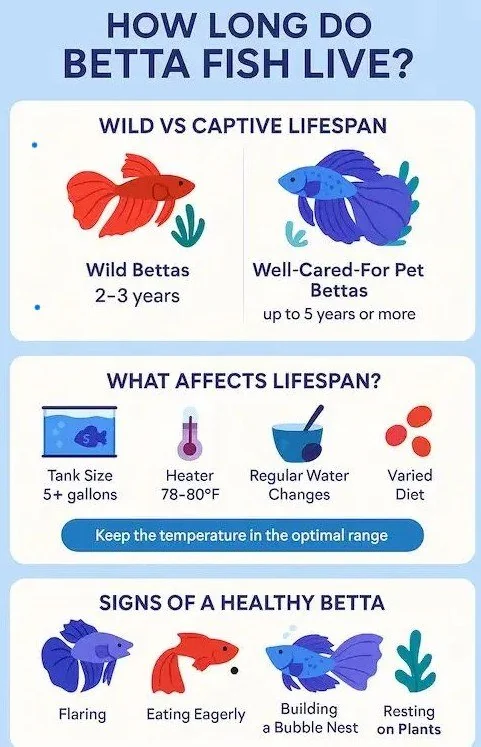
Any “no” → check water first, then match symptoms to the disease guides. Compare against signs of a healthy betta fish.
Weekly & Monthly Routine
| Frequency | Task |
|---|---|
| Daily | 30-second health check; remove uneaten food |
| Weekly | Test water; 20–30% water change; one fast day |
| Monthly | Inspect heater/filter; deep-check parameters |
| Per new addition | 4–6 week quarantine |
The “Why Each Point Matters” Breakdown
It’s easy to nod at a 7-point list and not act on it. Here’s the consequence of skipping each — so the list stops being abstract:
| Skip this… | …and you get |
|---|---|
| Cycling | Chronic ammonia → fin rot, gasping, organ damage |
| Stable heat | Suppressed immunity → ich, lethargy, short life |
| Adequate tank size | Fast toxin/temperature swings → constant stress |
| Weekly water changes | Rising nitrate → slow decline, weak immunity |
| Correct feeding | Constipation, swim bladder, fouled water |
| Quarantine | Ich/velvet/parasite outbreaks from newcomers |
| Daily observation | Problems caught late, when they’re hard to fix |
Almost every article in this disease library traces back to one of these seven being skipped. Prevention isn’t seven chores — it’s the absence of seven future emergencies.
The Beginner’s First-Month Survival Plan
Most betta deaths happen in the first 30 days, from predictable causes. If you do nothing else, do this:
- Before the fish: tank cycled (cycling guide), heater stable at 78–80°F, adequate size set up and running.
- Week 1: test water every 1–2 days; feed tiny portions; let the betta settle (some hiding is normal).
- Weeks 2–4: weekly 20–30% water change; one fasting day; 30-second daily health check against signs of a healthy betta.
- Any new fish/plant: 4–6 week quarantine — no exceptions.
- Any “off” sign: test water first (most “illness” is water), then match symptoms to the disease guides.
A betta that clears its first month under this plan, in good conditions, often lives years — see realistic expectations in betta lifespan.
The Nitrogen Cycle: The Foundation of Disease Prevention
If you understand only one concept in fishkeeping, make it the nitrogen cycle, because chronic ammonia poisoning from an uncycled tank is the root cause behind the largest share of betta illness. Here’s the cycle in plain terms:
- Ammonia is produced constantly from fish waste, uneaten food, and respiration. It is highly toxic and burns gills and fins even at low levels.
- Beneficial bacteria colonise the filter and surfaces, converting ammonia into nitrite (also toxic).
- A second group of bacteria converts nitrite into nitrate, which is far less toxic and is removed by partial water changes.
A “cycled” tank has established colonies of both bacteria groups, so ammonia and nitrite stay at 0. A new, uncycled tank has neither — meaning the betta swims in slowly accumulating poison. This is why cycling before the fish goes in (or doing a careful fish-in cycle with frequent water changes and a test kit) is the single highest-impact prevention step. A liquid or digital test kit confirming 0 ammonia, 0 nitrite, nitrate under 20 ppm is the most valuable equipment a betta keeper owns.
Water Parameters at a Glance
| Parameter | Target for bettas | Why it matters |
|---|---|---|
| Ammonia | 0 ppm | Any reading burns gills/fins and suppresses immunity |
| Nitrite | 0 ppm | Toxic; impairs the blood’s oxygen carrying (“brown blood”) |
| Nitrate | Under 20 ppm | Chronic elevation causes slow decline and weak immunity |
| Temperature | 78–80°F (25–27°C), stable | Cold/swinging temps crush immunity and trigger ich |
| pH | ~6.5–7.5, stable | Stability matters more than the exact number |
| Chlorine/chloramine | 0 (always dechlorinate) | Tap-water chlorine destroys gills and beneficial bacteria |
How Stress Causes Disease (The Invisible Mechanism)
“Stress” sounds vague, but the biology is concrete. Chronic stress in fish elevates the hormone cortisol, which directly suppresses the immune system. A stressed betta’s body diverts energy away from fighting pathogens, so bacteria and parasites that a relaxed fish would shrug off are able to take hold. This is exactly why two bettas in the same building can have wildly different health outcomes — the relaxed one resists infection the stressed one succumbs to. Common chronic stressors to eliminate:
- Unstable or incorrect temperature and poor water quality (stress and direct harm combined).
- Tank too small or barren — no plants, caves, or sight breaks.
- Aggressive or fin-nipping tank mates, or housing male bettas together.
- Constant disturbance: glass-tapping, high-traffic placement, sudden bright lights, frequent rough handling.
- Strong filter flow that exhausts a fish built for calm water.
Reducing stress isn’t a “nice to have” — it is a core disease-prevention lever.
Building a Low-Stress, Disease-Resistant Habitat
- Right-size the tank. A larger volume is chemically and thermally more stable, which directly reduces stress and disease risk.
- Stable heat. A quality adjustable heater and a thermometer you actually check — aim for a steady 78–80°F.
- Gentle filtration. Biological filtration without harsh flow; baffle the outflow if it pushes the betta around.
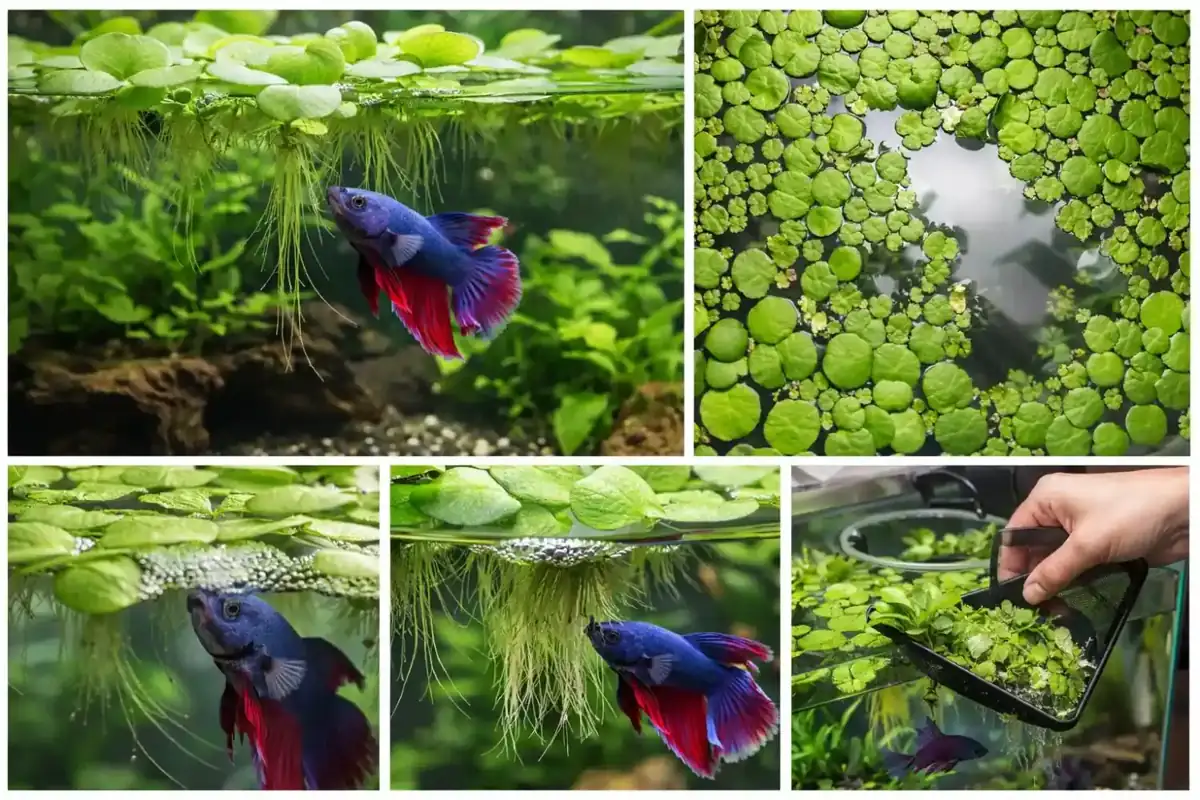
- Cover and structure. Live or silk plants, a cave or hide, and a smooth layout give security and eliminate sharp-decor injuries that seed fin rot and fungus.
- Calm placement. Away from loud noise, direct sun, and high foot traffic; consistent gentle lighting.
- Appropriate company. Only peaceful, betta-compatible tank mates in an adequately sized tank — or keep the betta solo.
Seasonal and Situational Prevention
Some risks spike at specific times — anticipate them:
- Winter: room temperatures drop and tanks chill overnight. Check the heater and thermometer more often; consider a slightly larger heater for stability.
- Summer / heatwaves: water can overheat, holding less oxygen. Add surface agitation and monitor temperature; never let it climb unchecked.
- Power outages: have a plan — insulation, battery air pump, or moving the tank to a warmer area to hold temperature.
- Vacations: never overfeed before leaving or leave excess food with a sitter; a healthy adult betta tolerates a short fast far better than fouled water.
- New additions or rescaping: quarantine new livestock and plants, and make big changes gradually to avoid an acute stress spike.
Common Prevention Mistakes
- Skipping the cycle. The biggest single mistake — it guarantees chronic ammonia exposure.
- No heater or an unreliable one. Room-temperature swings silently crush immunity.
- Treating tank size as optional. Tiny tanks magnify every error and stress the fish constantly.
- Overfeeding. Causes constipation and fouls water faster than any other daily habit.
- No quarantine. One un-screened newcomer can wipe out a healthy tank.
- Reacting instead of observing. Skipping the daily look means problems are found late, when they’re hardest to fix.
- Medicating before testing water. Treats the symptom while the real cause keeps harming the fish.
Disease-by-Disease: Which of the 7 Points Prevents What
The 7-point system can feel abstract until you see exactly which habit blocks which disease. Almost every illness in this site’s library maps back to one or two missing points. This table makes the link concrete — read it as “if I do this point properly, I have largely eliminated this disease”.
| Disease | Primary preventable cause | Which point stops it |
|---|---|---|
| Fin rot | Ammonia, cold water, chronic stress, injury | Points 1 (cycle), 2 (heat), 4 (water changes), 7 (low stress) |
| Ich (white spot) | Cold/unstable temperature, an un-quarantined carrier fish | Points 2 (stable heat) and 6 (quarantine) |
| Velvet | Stress plus an un-quarantined carrier fish or plant | Points 6 (quarantine) and 7 (low stress) |
| Dropsy | Chronic poor water, long-term stress, organ strain | Points 1 (cycle), 4 (water changes), 5 (feeding), 7 (stress) |
| Septicemia | Sustained ammonia/nitrite exposure and stress lowering immunity | Points 1 (cycle), 4 (water changes), 7 (low stress) |
| Swim bladder / constipation | Overfeeding and low-quality monotonous diet | Point 5 (correct feeding) |
| Columnaris | Stress and an un-quarantined carrier; accelerated by warmth + poor water | Points 4 (water changes), 6 (quarantine), 7 (low stress) |
| Internal parasites | Un-quarantined fish or live food carrying the parasite in | Point 6 (quarantine of fish, plants and live food) |
| Popeye & fungal infection | Injury plus poor water quality letting infection take hold | Points 1 (cycle), 4 (water changes), 7 (low stress) |
| Gasping / breathing problems | Ammonia, low oxygen, or wrong temperature | Points 1 (cycle), 2 (heat), 4 (water changes) |
Notice the pattern: cycling, water changes, stable heat, correct feeding, quarantine and low stress, repeated over and over. There is no exotic prevention here — the same six or seven habits block almost the entire disease library, which is exactly why mastering them is worth more than any medicine cabinet.
The Equipment That Makes Prevention Possible
Prevention is mostly habits, but a few pieces of gear are what make those habits achievable. Skimping here is the most common reason a well-intentioned keeper still ends up fighting disease.
- A liquid or digital test kit. The single highest-value purchase in the hobby. You cannot prevent ammonia poisoning you cannot see. Strips are better than nothing, but a proper liquid kit is more accurate and pays for itself the first time it catches a spike early.
- A reliable adjustable heater (correctly sized to the tank). A cheap, fixed, or undersized heater that swings temperature is actively dangerous. Stable heat is non-negotiable for immunity, so this is not the place to economise.
- An accurate thermometer you actually read. A heater’s own dial is not proof of temperature. A separate thermometer checked daily catches a failing or stuck heater before it costs the fish.
- A gentle, appropriately sized filter. Biological filtration is what makes the nitrogen cycle work; gentle flow keeps a fish built for calm water from being exhausted.
- A dedicated dechlorinator. Tap-water chlorine and chloramine destroy gills and the beneficial bacteria you depend on. Every drop of new water gets treated, every time, with no exceptions.
- A quarantine tank and dedicated net/siphon. Cheap to assemble and the only thing standing between a new fish and your whole display tank — it doubles as the hospital tank you will eventually need.
None of this is expensive relative to repeatedly buying medication, replacement fish, and treating preventable outbreaks. Good equipment is bought once; preventable disease is paid for again and again.
The Annual Prevention Audit
Habits drift over months. Filters clog, heaters age, routines slip, “I’ll test it next week” becomes a month. Once or twice a year, run an honest audit against this checklist — most chronic, recurring disease in an established tank traces to one of these having quietly failed:
- Is the tank genuinely cycled right now? Confirm with an actual test (0 ammonia, 0 nitrite), not an assumption based on how long it has been running.
- Is the heater holding a stable 78–80°F? Check against the separate thermometer over a full day, including overnight when the room cools.
- Is the filter still flowing properly? Clogged or failing media silently wrecks biological filtration and water quality.
- Has the water-change routine actually held? Be honest about whether weekly really means weekly, or has slipped to “occasionally”.
- Has feeding crept up? Portion creep and skipped fast days are the most common quiet cause of constipation, swim bladder issues, and fouled water.
- Is anything stressing the fish long-term? A new noisy location, added tank mates, a strong filter, or constant disturbance that built up gradually.
- Is quarantine still being honoured? Or have “just one quick fish” exceptions crept in?
An audit takes ten minutes and prevents the slow-onset problems that ambush keepers who assume a once-healthy tank stays healthy on autopilot. Prevention is not a one-time setup — it is a routine that has to be re-verified.
Why Prevention Beats Treatment Every Time (The Honest Case)
It is worth stating plainly why this entire system exists. Treatment, even when it works, is always the worse outcome compared with prevention — for several concrete reasons:
- By the time a disease is visible, damage is already done. Eroded fins, organ strain from dropsy, gill damage from ammonia — much of it is only partially reversible even after a “successful” treatment.
- Treatment is itself stressful. Medications, salt, hospital moves, and handling all add stress to an already-weakened fish. Prevention spares the fish that ordeal entirely.
- Misdiagnosis is common and costly. Under pressure, owners frequently treat the wrong condition, losing days a fast disease may not allow. Prevention removes the high-stakes guessing game.
- Some diseases move faster than treatment can. Velvet and columnaris can kill within days; prevention is realistically the only reliable defence against the fastest killers.
- Recurrence is the norm when the cause is ignored. Treating the symptom while the environmental root cause remains simply resets the clock on the next outbreak.
This is the core philosophy of the entire site: a betta in a cycled, heated, adequately sized, well-maintained, low-stress tank, with quarantined newcomers and daily observation, rarely gets sick at all. The medicine cabinet is the backup plan. The 7-point system is the actual plan.
Sources & Further Reading
Bettafish.org — disease prevention; Aquarium Co-Op — fish health basics; The Spruce Pets (vet-reviewed) — betta care; Merck Veterinary Manual — Husbandry & preventive health for ornamental fish.
Frequently Asked Questions
How do I keep my betta from getting sick?
Follow the 7-point system: cycled tank, stable heat, adequate size, weekly water changes, correct feeding, quarantine newcomers, and low stress with daily observation.
What is the number one cause of betta disease?
Poor water quality — especially ammonia from an uncycled or unmaintained tank. It’s behind most fin rot, gasping, and organ disease.
How often should I change betta water to prevent disease?
A 20–30% partial change weekly for a properly sized, cycled tank keeps toxins and pathogens low.
Does quarantine really prevent betta diseases?
Yes — most ich, velvet, and parasite outbreaks arrive on un-quarantined fish, plants, or live food. A 4–6 week quarantine prevents them.
Can stress make a betta sick?
Yes. Chronic stress suppresses the immune system, letting otherwise harmless tank bacteria and parasites take hold.
What water parameters keep a betta healthy?
Aim for 0 ppm ammonia, 0 ppm nitrite, nitrate under 20 ppm, a stable temperature of 78–80°F, a steady pH around 6.5–7.5, and always-dechlorinated water. Stability matters as much as the numbers themselves, so test regularly with a reliable kit.
Do I need to cycle a betta tank to prevent disease?
Yes. An uncycled tank has no beneficial bacteria to process ammonia, so the fish lives in slowly accumulating poison — the root cause behind most fin rot, gasping, and organ disease. Cycle before adding the fish, or do a careful monitored fish-in cycle.
How can I tell if my betta is healthy?
A healthy betta eats eagerly, shows bright colour, holds its fins open rather than clamped, swims actively and level, breathes calmly, and has no spots, fuzz, redness, bloating, or stringy poop. A quick daily check against these signs catches problems while they are still easy to fix.
Is a bigger tank really better for preventing betta disease?
Yes. A larger water volume is more chemically and thermally stable, so toxins dilute, temperature swings are slower, and the fish is far less stressed — all of which directly reduce disease risk compared with small bowls or cups.