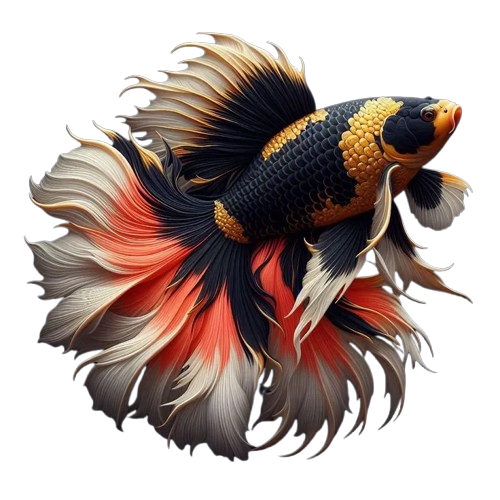
Betta stress stripes are dark horizontal lines running head-to-tail along a betta’s body, and they are one of the clearest, earliest signals a betta can give you that something is wrong — usually poor water, cold, shock, or a new environment. The single most important thing to know: horizontal stripes mean stress, while vertical bars mean breeding readiness, and confusing the two leads owners to either panic over a normal female or ignore a fish that’s quietly being harmed. This guide explains exactly what stress stripes mean, how they differ from breeding bars, every common cause, how to make them fade, and how to use them as an early-warning system. Stress stripes are a symptom, not a disease — and they usually fade within hours to days once you fix the cause.
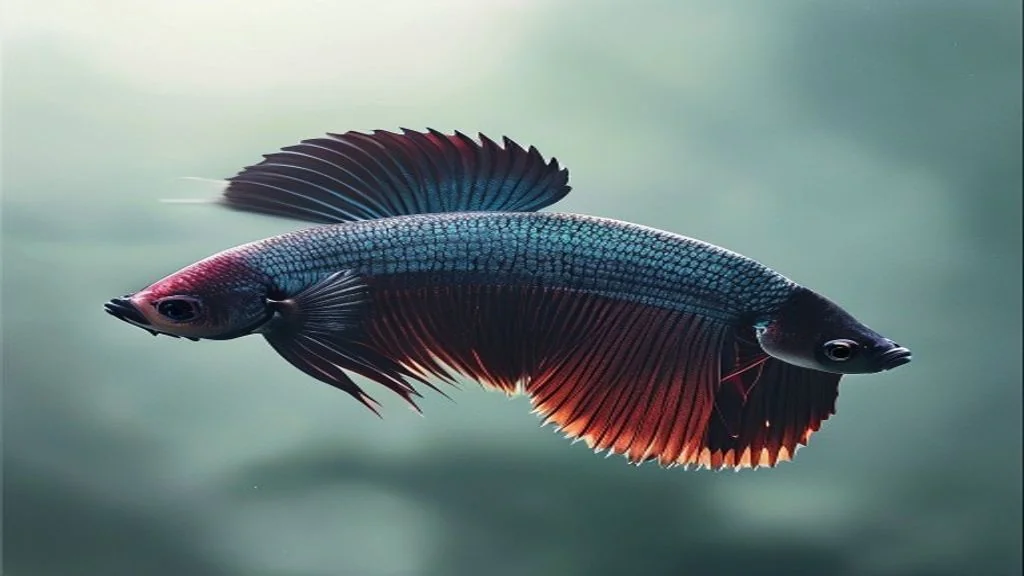
Horizontal Stress Stripes vs. Vertical Breeding Bars
| Stress stripes | Breeding bars | |
|---|---|---|
| Direction | Horizontal (head → tail) | Vertical (top → bottom) |
| Meaning | Stress / discomfort | Female ready to breed |
| Who | Any betta | Usually females |
| Action | Find & fix the stressor | Normal — no action |
This is the single most important distinction: horizontal = stress, vertical = breeding. Mixing them up leads owners to ignore a real problem or panic over a normal female. Compare general stress cues in signs of stress in betta fish.
What Causes Betta Stress Stripes
- Poor water quality — ammonia/nitrite (how to lower ammonia in a betta tank).
- Cold or unstable temperature (do bettas need a heater).
- New environment / transport shock — common right after bringing a betta home (how to introduce a new betta to its tank).
- Small tank, aggression, or sudden changes.
- Underlying illness — if stripes come with spots, fuzz, or lethargy.
How to Make Stress Stripes Fade
- Test water and do a 25–50% dechlorinated, temperature-matched change.
- Stabilise heat at 78–80°F.
- Reduce stressors — add hides/plants, dim harsh lighting, remove aggressors, minimise handling.
- Give a new betta time — stripes from a recent move often fade in a day or two once settled.
- Check for disease — if stripes persist with other symptoms, match to the disease guides (e.g., ich, parasites) and see the betta medication guide.
What NOT To Do
- Don’t confuse horizontal stress stripes with a female’s vertical breeding bars.
- Don’t medicate immediately — fix environment first.
- Don’t keep over-handling or moving a stressed fish.
- Don’t dismiss long-lasting stripes as “just his pattern”.
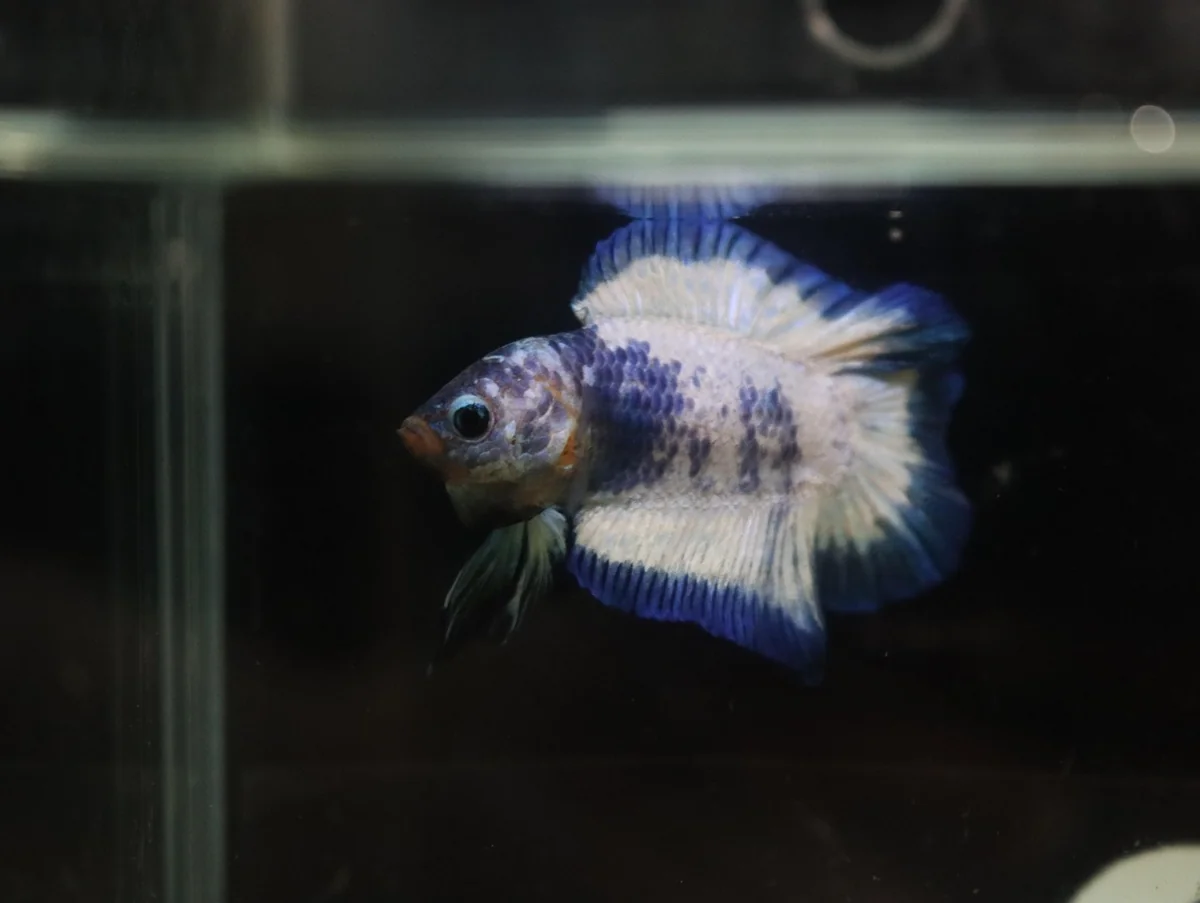
Prevention
Stable, clean, warm water in an adequately sized, low-stress tank keeps stress stripes away — the same routine in how to prevent betta diseases and a daily look using signs of a healthy betta fish. Because stress shows up in more than one way, the same stressors also cause betta clamped fins and a betta losing color — fixing the environment usually clears all three at once.
Horizontal vs. Vertical: The Mistake That Causes Needless Panic (or Missed Problems)
This one distinction resolves the vast majority of “stripe” confusion — and getting it wrong sends owners in exactly the wrong direction:
| Horizontal stripes (head→tail) | Vertical bars (top→bottom) | |
|---|---|---|
| Meaning | Stress — something is wrong | Breeding readiness (usually females) |
| Who | Any betta | Typically mature females |
| What to do | Find & fix the stressor | Nothing — it’s normal |
| Common error | Dismissed as “his pattern” → real problem ignored | Mistaken for illness → needless panic |
Lock it in: horizontal = stress, vertical = breeding. Owners who confuse these either panic over a perfectly normal female or ignore a fish that’s quietly being harmed.
Stress Stripes as a “Check Engine Light”
Like clamped fins, horizontal stress stripes are an early readout — they often appear before any disease. Use them:
- Brief stripes after a water change or move: normal, fade within a day or two as the fish settles (like introducing a new betta).
- Persistent stripes for days: an ongoing stressor — almost always water quality or temperature. Test water, do a change, confirm the heater.
- Stripes + spots/fuzz/clamping: a disease is starting; match symptoms to the relevant guide and don’t wait.
- Stripes only when a tank mate is near: aggression/intimidation — reassess the pairing (signs of stress).
The fix is almost never a medication — it’s removing the stressor: stable, clean, warm water in an adequately sized, low-stress tank. Stripes that vanish once conditions are corrected confirm you found it. Persistent stripes you can’t explain are a prompt to audit the whole setup against how to prevent betta diseases.
What Stress Stripes Actually Are (The Biology)
Stress stripes are a visible colour change produced by the betta’s pigment cells (chromatophores) in response to stress hormones. When a betta is stressed, frightened, or unwell, its body releases cortisol, and as part of the stress response the pigment cells alter their distribution — revealing dark horizontal banding that is normally masked by the fish’s vibrant colour. In the wild, this paling-and-striping can serve as camouflage or a signal of submission. In the aquarium, it’s an honest, involuntary readout: the fish cannot “fake” being relaxed, so stress stripes are one of the most reliable early indicators that conditions need attention. Because it is a hormonal/pigment response and not tissue damage, it reverses quickly once the stressor is removed.
Stress Stripes vs. Other Striping and Markings
| Marking | Appearance | Meaning |
|---|---|---|
| Stress stripes | Dark horizontal lines, head to tail, often on a paled body | Stress — find and fix the cause |
| Breeding bars | Vertical bands, top to bottom, usually on females | Breeding readiness — normal |
| Marble-gene change | Patches of colour shifting/relocating over time | Harmless genetics |
| Resting/sleeping pattern | Faint horizontal lines while inactive, gone when active | Normal rest behaviour |
| Juvenile/wild-type pattern | Natural horizontal markings in some young or wild-type fish | Normal — not stress if behaviour is fine |
The decisive checks are direction (horizontal versus vertical) and behaviour (is the fish otherwise active and eating, or stressed/unwell?).
Each Cause in Detail
1. Poor water quality
Ammonia and nitrite are major stressors that frequently trigger stress stripes along with lethargy and clamped fins. A water test and prompt change is the first response.
2. Cold or unstable temperature
Bettas are tropical; cold or fluctuating water is a constant physiological stressor that commonly produces striping. A stable 78–80°F resolves it.
3. New environment and transport shock
The most common benign cause — a betta just brought home or moved often shows stress stripes for a day or two while it acclimates. Calm, stable, warm water and patience usually clear it.
4. Small tank or unstable conditions
Tiny tanks swing rapidly in chemistry and temperature, keeping the fish chronically stressed and striped. An adequately sized, stable setup is the long-term fix.
5. Aggression and intimidation
Stress stripes that appear only when a tank mate is nearby indicate the betta feels threatened. Reassess the pairing and separate if needed.
6. Underlying illness
If stripes accompany spots, fuzz, redness, or marked lethargy, a disease is likely beginning — match the symptoms to the relevant disease and treat it.
Step-by-Step: Diagnosing Stress Stripes
- Confirm the direction. Horizontal = stress; vertical = breeding (normal). This is the first and most important check.
- Assess behaviour. Active and eating with brief stripes after a change is usually benign; striped plus lethargic, clamped, or not eating is a real concern.
- Test the water. Ammonia and nitrite must be 0; any reading is a prime suspect.
- Check temperature. Confirm a stable 78–80°F.
- Review recent events. A new tank, move, big water change, or new tank mate explains stress-driven striping.
- Scan for disease. Spots, dust, fuzz, or redness alongside stripes means treat the specific disease.
How Long Stress Stripes Take to Fade
| Cause | Typical fade time after correction |
|---|---|
| New environment / transport | Hours to 1–2 days as the fish settles |
| Water quality | Hours to a couple of days after a corrective change |
| Cold water | 1–2 days after a stable 78–80°F is restored |
| Disease-driven | Fades as the underlying disease is successfully treated |
Common Mistakes With a Striped Betta
- Confusing horizontal stress stripes with vertical breeding bars. The classic error — leading to needless panic over a normal female or ignoring a genuinely stressed fish.
- Medicating immediately. Stress stripes are almost never fixed by medication — the answer is removing the stressor.
- Dismissing persistent stripes as “his pattern”. Long-lasting stripes signal an ongoing harmful stressor, usually water or temperature.
- Over-handling a stressed fish. Repeated netting and moving compounds the very stress causing the stripes.
- Ignoring concurrent symptoms. Stripes with spots or fuzz means a disease is starting and needs specific treatment.
The Stress Stripe Timeline: From Trigger to Fade
One of the most reassuring things to understand about stress stripes is that they follow a predictable arc. Because they are a hormonal pigment response rather than tissue damage, they appear fast when a stressor hits and fade fast once it is removed. Knowing the normal arc tells you whether you are watching a benign blip or an ongoing problem.
| Stage | What is happening | What you should do |
|---|---|---|
| Trigger event | A stressor hits — transport, a water change, cold, a tank mate, poor water — and cortisol rises | Identify what just changed; this is the cause |
| Stripes appear (minutes to hours) | Pigment cells redistribute and dark horizontal banding becomes visible, often with paling | Do not panic or medicate; assess the cause calmly |
| Acute phase (hours to 1–2 days) | Stripes persist while the stressor is present or the fish is still settling | Remove or correct the stressor; keep conditions stable and calm |
| Fade phase (hours to a couple of days after correction) | Cortisol drops, pigment redistributes back, banding recedes | Confirm the fish is also behaving normally again |
| Persistent stripes (days with no fade) | An ongoing, uncorrected stressor — almost always water quality or temperature | Treat as a real warning; test water, change water, verify the heater |
The single most useful read: stripes that appear briefly and fade after a known event (a move, a water change) are normal and need only patience. Stripes that stay for days mean the stressor is still active and is quietly harming the fish — that is the version that demands action.
The Five Honest Questions to Find the Stressor
Stress stripes tell you something is wrong but not what. Because the fix is almost never medication — it is removing the stressor — the entire job is identifying the cause. Work through these five questions honestly and in order; the answer is nearly always in here.
- Are the stripes horizontal or vertical? Horizontal (head to tail) = stress, continue. Vertical (top to bottom), usually on a female = breeding readiness, which is completely normal and needs no action. This single check resolves a large share of all “stripe” worries.
- What changed recently? A new tank, a recent move, a large or poorly matched water change, a new tank mate, rescaping, or a heater that may have failed. Recent change is the most common trigger.
- What does the water test say? Ammonia and nitrite must be 0. Any reading is a prime suspect and an immediate action item — this is the most common persistent cause.
- Is the temperature stable at 78–80°F? Check against a real thermometer, not the heater dial. Cold or swinging temperature is a constant physiological stressor that produces striping.
- Is anything stressing the fish behaviourally? A tank mate it only stripes around, harsh lighting, constant glass-tapping, a high-traffic location, or over-handling. Stripes that appear only in a specific situation point straight to that situation.
If horizontal stripes accompany spots, fuzz, redness, clamped fins, or marked lethargy, treat it as a disease starting rather than simple stress — match the symptoms to the relevant disease guide and the betta medication guide and do not wait. Otherwise, the answer to one of these five questions is almost always the entire problem, and fixing it is the entire solution.
The Biology of the Stripe: Why a Fish Can’t Fake Calm
It is worth understanding the mechanism, because it explains why stress stripes are one of the most trustworthy signals a betta gives. Betta colouration comes from pigment cells (chromatophores) layered in the skin. When the fish experiences stress — fear, poor water, cold, illness, a threat — its body releases the stress hormone cortisol, and as part of that physiological response the pigment cells redistribute. The vibrant colour that normally masks the underlying pattern recedes, and dark horizontal banding that is usually hidden becomes visible, frequently alongside an overall paling.
The important consequence is that this is involuntary. The fish cannot consciously suppress it to look healthy, the way an animal might mask pain. The stripe is a direct, honest, real-time readout of the fish’s internal stress state — which is exactly what makes it so valuable to a keeper. It is, in effect, a built-in stress gauge you can read at a glance. And because it is a hormonal and pigment response rather than physical tissue damage (unlike fin rot or an injury), it is fully reversible: once the stressor is gone and cortisol falls, the pigment redistributes and the stripe fades, often within hours. In the wild, this same paling-and-striping is thought to function as camouflage or a signal of submission — in the aquarium, it is simply a flag that conditions need attention.
Stress Stripes vs. Every Other Marking: The Definitive Comparison
“My betta has lines/stripes/bars” describes several completely different things, only one of which is a problem. Misreading the marking is the classic error that leads to either needless panic or a genuinely stressed fish being ignored. This is the definitive sort:
| Marking | Appearance | Meaning | Action |
|---|---|---|---|
| Stress stripes | Dark horizontal lines, head to tail, often on a paled body | Stress / discomfort | Find and fix the stressor |
| Breeding bars | Vertical bands, top to bottom, usually on mature females | Breeding readiness | None — completely normal |
| Marble-gene change | Patches of colour shifting and relocating over weeks/months | Harmless lifelong genetics | None — enjoy the change |
| Resting / sleeping pattern | Faint horizontal lines and paling while inactive, gone when active | Normal rest behaviour | None — observe |
| Juvenile / wild-type pattern | Natural horizontal markings in some young or wild-type fish | Normal if behaviour is fine | None — judge with behaviour |
| Disease-related change | Stripes/colour change plus spots, fuzz, redness, clamped fins, lethargy | Disease starting | Identify and treat the specific disease |
The two decisive tests cut through all of it: direction (horizontal means stress, vertical means breeding) and behaviour (a fish that is active, eating, and otherwise normal with brief stripes is almost always fine; a striped fish that is also lethargic, clamped, or off its food is a real concern). Apply those two reads and you will correctly classify nearly every striped betta you ever see.
The Recurring-Stripes Audit: When It Keeps Happening
A one-off stripe after a move or water change is normal and forgettable. A betta that is repeatedly or chronically striped is telling you something in the setup is persistently wrong — and that is worth a structured audit rather than repeated short-term fixes.
- Is the tank genuinely cycled? Chronic low-level ammonia or nitrite is the most common reason for ongoing, recurring stress stripes. Confirm with an actual test, not an assumption.
- Is the heater truly stable? A failing, undersized, or fixed heater that lets temperature drift, especially overnight, is a constant stressor. Check against a separate thermometer over a full day.
- Is the tank big enough? Small volumes swing in chemistry and temperature so fast that the fish is never genuinely stable — chronic striping is a common result.
- Have water changes actually been kept up? Slipped maintenance lets conditions degrade gradually until the fish is permanently mildly stressed.
- Is there a behavioural stressor that never went away? A tank mate it always stripes around, a permanently high-traffic location, constant disturbance, harsh lighting, or a strong filter flow it cannot escape.
- Was there an un-quarantined addition? A newcomer can introduce both stress and a low-grade disease that keeps the fish flagging.
Recurring stress stripes are not “just his pattern” — they are a chronic-stress signal, and chronic stress is precisely what suppresses immunity and opens the door to the diseases throughout this library. Treat persistent striping as an instruction to audit the entire environment against how to prevent betta diseases, because a fish that is constantly stressed enough to stay striped is a fish on its way to being a sick fish.
Sources & Further Reading
Bettafish.org — stress & behaviour; Aquariadise — betta stress; Betta Care Fish Guide — stress stripes; Merck Veterinary Manual — Stress responses & coloration changes in fish.
Frequently Asked Questions
What do stress stripes on a betta mean?
Dark horizontal lines running head-to-tail signal stress — usually poor water, cold, shock, or a new environment. They’re a symptom, not a disease.
What’s the difference between stress stripes and breeding bars?
Stress stripes are horizontal and mean stress; breeding bars are vertical and mean a female is ready to breed. Direction is the key — horizontal = stress, vertical = breeding.
How do you get rid of betta stress stripes?
Fix the cause: test and change water, stabilise temperature at 78–80°F, reduce stressors. Stripes usually fade in hours to a couple of days.
Are stress stripes an emergency?
Not instantly, but persistent stripes mean an ongoing harmful stressor (often water or temperature) that should be corrected promptly.
Do new bettas get stress stripes?
Yes, very commonly after transport or rehoming. They usually fade within a day or two once the fish settles into stable, clean, warm water.
Do female bettas get stress stripes too?
Yes. Both male and female bettas show horizontal stress stripes when stressed. The key is not to confuse a female’s normal vertical breeding bars with horizontal stress stripes — direction tells you which one you’re seeing.
Can stress stripes mean my betta is sick?
They can. Stress stripes alone are usually environmental, but stripes combined with spots, fuzz, redness, clamped fins, or lethargy often signal a disease starting. In that case, match the symptoms to the specific disease and treat it promptly.
Will betta stress stripes go away on their own?
Yes, once the underlying stressor is removed. Stripes from a recent move or water change typically fade within hours to a day or two as the fish settles, while stripes from ongoing poor water or cold persist until you correct the conditions.
Are horizontal stripes always bad on a betta?
Not always — some young or wild-type bettas naturally show horizontal markings, and resting fish show faint lines. They indicate a problem only when they appear or intensify alongside stress triggers or other symptoms, so always judge them together with the fish’s behaviour and environment.