When people ask which schooling fish is safest with a betta, betta and rasboras — specifically harlequin rasboras — is one of the few answers experienced keepers give without hesitation. They’re peaceful, modestly coloured, short-finned, and fast enough that a slow betta rarely catches or bothers them. This guide explains why rasboras work so reliably, the school and tank size that make or break the pairing, the species worth choosing, and exactly how to introduce them.
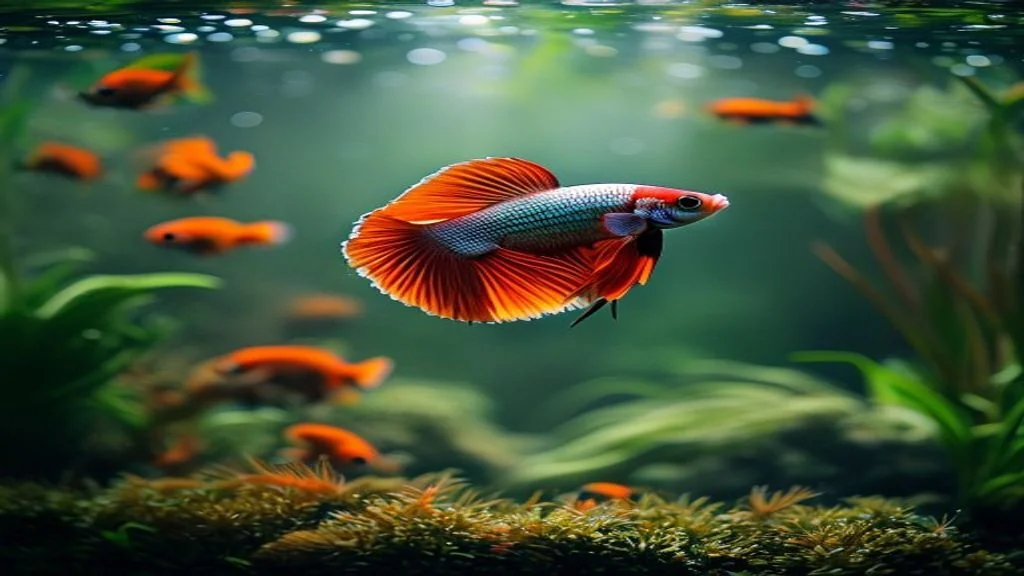
Why Betta and Rasboras Work So Well
- Speed: rasboras are quick; bettas are slow — even an aggressive betta rarely catches them.
- Tight schooling: a proper group stays together mid-water and stresses less.
- Short fins, modest colour: they don’t read as a rival betta, so little aggression is triggered.
- Same water needs: tropical, ~75–80°F — a clean match with betta requirements.
This is why rasboras rank near the top of our best betta tank mates list and are safer than guppies.
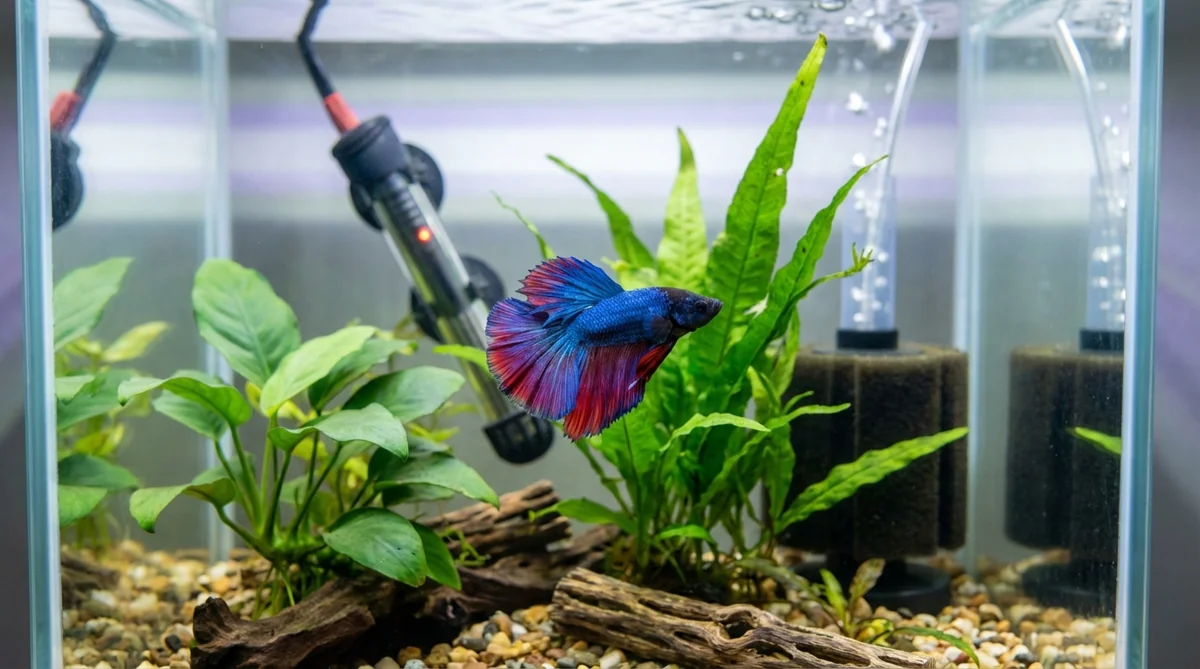
The Right Setup
| Factor | Best practice |
|---|---|
| Tank size | 20+ gallons ideal (10–15 gal works for a small shoal) — size guide |
| School size | 6 minimum, 8–10 better (under-schooled = stressed/nippy) |
| Plants/hides | Planted with open mid-water swimming lanes |
| Water | 78–80°F, gentle filter — same as betta (heater) |
| Betta | Calmer individual; backup tank ready |
How to Introduce
- Quarantine the rasboras 4–6 weeks (quarantine guide).
- Add the full school together; rearrange decor so the betta doesn’t own all territory (same idea as introducing a new betta).
- Watch 48 hours; persistent chasing or fin damage → separate. Most pairings settle quickly.
Speed: The Trait That Keeps Rasboras Safe
Rasboras succeed for one core reason worth understanding: the physics simply favour them. A betta is a slow, deliberate swimmer; harlequin rasboras are quick, agile schoolers.
| Factor | Why it protects rasboras |
|---|---|
| Speed mismatch | Even an aggressive betta rarely catches a rasbora |
| Tight schooling | A confident group is hard to single out or intimidate |
| Short fins, modest colour | Doesn’t read as a rival betta → little aggression triggered |
| Mid-water zone | Stays off the betta’s preferred surface patrol |
This is the same logic that makes neon tetras work and guppies fail — speed and a non-betta appearance beat slow, flashy, long-finned every time.
The School-Size Rule (Same as Tetras)
The most common rasbora failure isn’t the betta — it’s keeping too few. Under-schooled rasboras get stressed and nippy, then the betta’s fins suffer:
- Keep 6 minimum, 8–10 ideal. Below 6, schooling breaks down, the fish become anxious, and nipping starts — torn betta fins can become fin rot.
- Give them room. 20+ gallons is ideal (a small shoal can work in 10–15) — schooling fish need horizontal swimming space (tank size guide).
- Plant for sight-breaks + open lanes. Cover to retreat to, plus clear mid-water for the school to cruise.
- Match water: same tropical range (78–80°F, similar pH) — no hidden chemistry clash, unlike mollies.
Quarantine the shoal first (quarantine guide), add them together, watch the first 48 hours, keep a backup tank, and monitor for stress. Stocked correctly, harlequin rasboras are one of the most reliable, beginner-friendly community choices in best betta tank mates — and far safer than the over-recommended guppy.
The Compatibility Scorecard
Harlequin rasboras score well on every axis that matters, which is why they’re a go-to recommendation for a first community tank. The only variables are school size, tank size, and the individual betta.
| Factor | Betta + rasbora rating | Notes |
|---|---|---|
| Temperature | Match | Both tropical, 75–80°F |
| pH / hardness | Match | Soft, slightly acidic to neutral suits both |
| Speed / escape | Strong | Quick schoolers easily evade a slow betta |
| Appearance trigger | Low | Short fins, modest colour — not a rival betta |
| School requirement | Critical | 6 minimum, 8–10 ideal |
| Overall | One of the most reliable pairings | Beginner-friendly with correct setup |
As with neon tetras, the water chemistry is a clean match, so any trouble is behavioural and almost always traces back to too few fish or too little space — both fully in your control.
Best Rasbora Species for a Betta Tank
“Rasbora” covers several species with different sizes and temperaments. Not all are equally suited to a betta.
- Harlequin rasbora — the gold standard: hardy, peaceful, fast, and the most reliable of the group with a betta.
- Lambchop rasbora — very similar to harlequins in size and temperament; an excellent, near-interchangeable choice.
- Chili / mosquito rasbora — tiny and peaceful, good for smaller (still 10–15+ gallon) planted tanks, but keep large groups of 10+ as they school tightly.
- Scissortail rasbora — gets noticeably larger and more active; better suited to bigger tanks and not the easiest first choice with a betta.
For most keepers, harlequin or lambchop rasboras in a group of 6–10 are the safest, most proven option — chili rasboras are a fine small-tank alternative with a larger school.
Acclimation and Introduction
Rasboras settle quickly when introduced properly. The priority is a low-stress transfer and removing the betta’s territorial advantage.
- Quarantine the shoal 4–6 weeks. New schooling fish commonly import ich and other parasites into an established tank (quarantine guide).
- Buy the full school at once so no fish is left under-schooled and stressed while you build the group up.
- Rescape before they go in — add plants and sight breaks and rearrange decor so the betta doesn’t hold established territory (same logic as introducing a new betta).
- Float and acclimate gently over 30–45 minutes, then net them in rather than pouring store water into the tank.
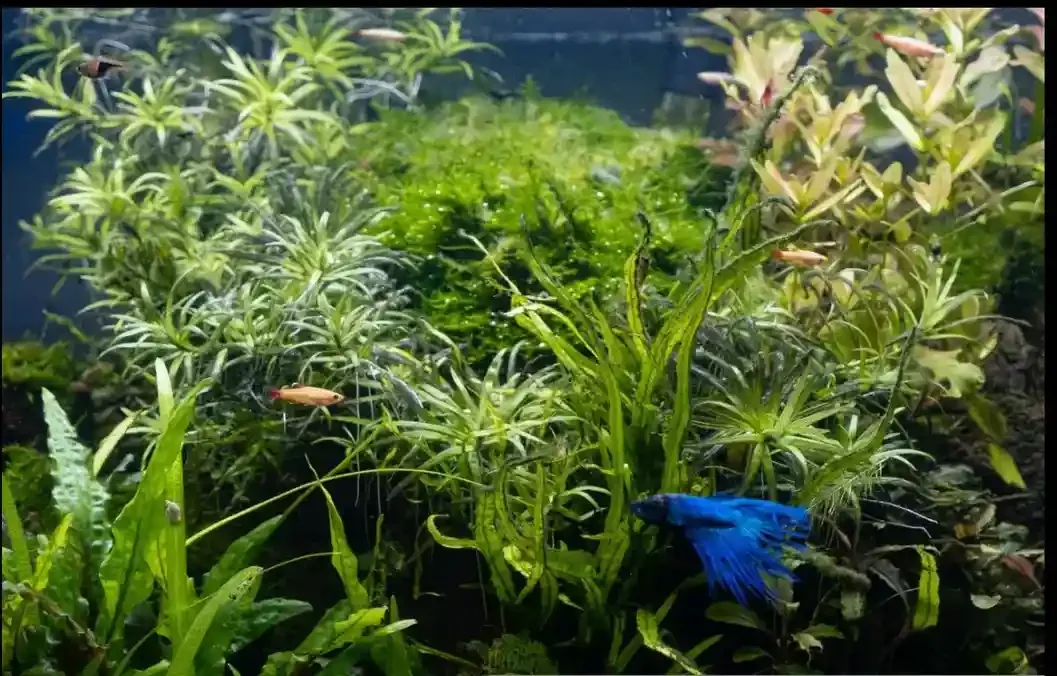
- Watch the first 48 hours. A confident school cruising mid-water is a good sign; persistent chasing or fin damage means separate using the backup tank.
Warning Signs and How to Read Them
This pairing usually settles fast, so problems are easy to catch early if you know what normal looks like.
| Behaviour | Normal | Separate now |
|---|---|---|
| Betta interest | A glance, then back to patrol | Locked-on chasing of one rasbora |
| Rasbora schooling | Tight group, exploring mid-water | Scattered, hiding, not feeding |
| Betta fins | Intact | Nipped by stressed, under-schooled rasboras → fin rot risk |
| Rasbora fins | Intact, all fish | Frayed — usually a too-small group |
Just like tetras, most “rasboras nipping” reports are stressed, under-schooled fish rather than aggressive ones. Fix the school size to 6–10 first; only if behaviour stays bad is it the individual betta — watch for broader stress signs across the tank.
The Physics of Why Speed Beats Aggression
The single most important reason harlequin rasboras succeed where guppies fail is not temperament — it is locomotion. Understanding this mechanism lets you predict, for any prospective tank mate, whether a betta can realistically catch and harm it.
A betta is built for display and ambush in still water, not for sustained pursuit. Its large, ornamental fins generate drag, and its body plan favours slow, deliberate movement and short bursts rather than chasing speed. A harlequin rasbora is the opposite: a streamlined, laterally compressed fish built for quick, darting movement and constant agile schooling. In an open swim, the rasbora out-accelerates and out-manoeuvres the betta so comfortably that even a betta that wants to chase one almost never makes contact. The betta expends energy lunging; the rasbora flicks away with no effort and the betta gives up. Over a few days, most bettas simply stop trying, because the pursuit never pays off.
This is also why a tight school amplifies the protection. A schooling fish in a confident group presents the betta with a shifting, coordinated mass rather than a single target, which is exactly the visual confusion that schooling behaviour evolved to create against predators. The betta cannot lock onto one fish long enough to pursue it. Contrast this with a fancy guppy: slow, trailing-finned, and brightly coloured — it is both catchable and a visual trigger, which is why that pairing fails for the inverse of every reason this one works. When you evaluate any future tank mate, ask first: can the betta physically catch it? With fast schoolers the answer is no, and that single fact carries most of the safety.
Exact Water and Tank Targets for a Thriving Shoal
Rasboras and bettas overlap so cleanly that there is no compromise to manage — but, as with neon tetras, “compatible” only delivers if you actually hit and hold the numbers. Treat the figures below as setpoints.
| Parameter | Target | Why it matters here |
|---|---|---|
| Temperature | 78°F, stable (±1°) | Suits both; swings stress the shoal and weaken immunity |
| pH | 6.0–7.0 | Soft, slightly acidic water both species are adapted to |
| Hardness | Soft to moderate | Hard water stresses rasboras over time even if the betta copes |
| Ammonia / nitrite | 0 ppm | A group of schooling fish has no tolerance for an immature cycle |
| Nitrate | Under 20 ppm | A shoal raises bioload; consistent water changes are essential |
| Flow | Gentle to moderate | Rasboras enjoy a little current; strong flow still exhausts the betta |
Two practical notes. First, this pairing belongs only in a fully cycled, stable tank — a group of rasboras added to a new tank is far more vulnerable to a nitrogen spike than a lone betta would be. Second, because you are adding a school rather than one fish, plan your maintenance around the higher bioload: a consistent weekly water change keeps nitrate low and the whole community healthy. Hit these numbers and essentially every non-behavioural failure mode is removed.
Step-by-Step: Building the Community From Scratch
The cleanest way to run this pairing is to build the tank correctly from the start rather than retrofitting a shoal into an established betta’s territory. Here is the order that gives the best results.
- Cycle the tank fully first. Establish a stable nitrogen cycle before any fish goes in. This protects the rasboras, who tolerate cycling problems poorly.
- Scape for sightlines and lanes. Plant the perimeter and background densely for sight breaks and refuge, but leave clear open mid-water lanes — rasboras need room to actually school, not just hiding spots.
- Quarantine the full shoal for four to six weeks. Schooling fish are a common route for ich and other parasites into a tank. Never skip this, and quarantine the entire group together.
- Consider adding the rasboras before the betta. If you are setting up fresh, establishing the shoal first means the betta is the newcomer with no claimed territory — the lowest-conflict starting point.
- If the betta is already resident, rescape before introducing the shoal. Rearranging décor disrupts the betta’s established territory map and reduces its sense of ownership when the rasboras arrive.
- Float and acclimate the whole school gently over 30–45 minutes, then net them in together so the shoal forms immediately rather than trickling in.
- Observe the first 48 hours and keep a backup tank ready. A confident school cruising the open water within a day is the success signal; persistent targeted chasing means use the backup.
Rasboras Versus Other Schooling Options
Harlequin rasboras are frequently recommended over other schoolers, and it is worth seeing exactly why so you can choose the right schooling fish for your situation.
| Schooling fish | Strengths with a betta | Considerations |
|---|---|---|
| Harlequin rasbora | Hardy, fast, peaceful, very forgiving; one of the most reliable | Needs 6+; ideally a 20-gallon footprint |
| Lambchop rasbora | Near-identical to harlequins in every practical respect | Effectively interchangeable with harlequins |
| Neon tetra | Fast, modestly coloured, well-proven | Slightly more disease-prone; school size critical |
| Ember tetra | Tiny, gentle, suits slightly smaller planted tanks | Very small; keep a larger group of 8–10+ |
| Chili rasbora | Excellent for smaller planted tanks | Tiny; needs a larger, very tight group |
The honest summary: harlequin and lambchop rasboras are arguably the single most forgiving schooling choice for a first betta community, because they are hardier and less disease-prone than neons while sharing all of the speed and appearance advantages. Neons and embers are excellent alternatives; the right pick is mostly a question of tank size and the look you want, not of safety, since all of these share the same protective traits.
Long-Term Scenarios and How They Play Out
To make the guidance concrete, here is how this pairing typically resolves over months in the setups people actually run.
Scenario 1: A school of eight harlequins in a planted, cycled 20-gallon with a calm betta
The model success. Adequate group, ample swimming room, matched water, and a settled betta that quickly learns it cannot catch the shoal. The rasboras cruise the open mid-water confidently; the betta patrols and ignores them. This setup routinely runs for years and is exactly why rasboras are a default beginner-community recommendation.
Scenario 2: Four rasboras in a 10-gallon
The under-schooled failure, and the most common one. The betta is rarely the real problem; the group is too small to feel secure, so the rasboras lose their schooling confidence, become stressed and nippy, and the betta’s fins suffer. The fix is almost always “more rasboras and more space”, not “remove the betta” — this is the single most frequent misdiagnosis in the whole pairing.
Scenario 3: A correct setup with a genuinely hyper-aggressive betta
The rare exception. With a proper shoal, adequate volume, and matched water already in place, you have eliminated the common causes — so if a betta still relentlessly targets a confident eight-plus school, this is one of the uncommon cases where the individual betta is genuinely the issue. The answer is the standing backup tank: keep that betta solo rather than subjecting the shoal to constant pursuit. A betta thriving alone in a well-planted tank remains a completely valid, ethical outcome.
Sources & Further Reading
Hepper — Harlequin Rasbora & Betta; Betta Care Fish Guide — bettas and rasboras; Aquariadise — harlequin rasbora & betta; Bettafish.org — safe tank mates.
Frequently Asked Questions
Can bettas live with rasboras?
Yes — harlequin rasboras are one of the most reliable betta tank mates. Keep a school of 6+ in a 20-gallon-plus planted tank.
How many rasboras should I keep with a betta?
At least 6, ideally 8–10. Small groups get stressed and may nip the betta’s fins.
What size tank for a betta and rasboras?
20 gallons or more is ideal; a small shoal can work in 10–15 gallons, planted with open swimming space.
Will a betta eat rasboras?
Very unlikely — rasboras are fast and bettas are slow, so even an aggressive betta rarely catches them.
Are rasboras better than guppies with a betta?
Yes. Rasboras are fast, short-finned, and modestly coloured, so they trigger far less aggression than bright long-finned guppies.
Can a betta and rasboras live in a 10-gallon tank?
A small shoal can work in 10–15 gallons heavily planted, but 20+ gallons is ideal. Schooling fish need horizontal swimming space, and more volume dilutes any aggression.
Which rasbora species is best with a betta?
Harlequin rasboras are the most reliable, with lambchop rasboras nearly identical. Chili rasboras suit smaller tanks if kept in larger groups; scissortails get big and are less ideal.
Do I need to quarantine rasboras before adding them?
Yes, for 4–6 weeks. New schooling fish commonly carry ich and other parasites that can wipe out an established betta tank if added straight from the store.
Why are my rasboras nipping the betta?
Almost always because the school is too small. Under-schooled rasboras become stressed and nippy. Increase the group to 6–10 and the behaviour usually stops.
Will rasboras outcompete a betta for food?
No. They eat similar small foods and there’s no real competition if you feed adequately. Spread food across the tank so both the betta and the school get their share.