Knowing the signs of a happy betta is the most useful daily skill a keeper can have, because your fish tells you how it is doing every single time you look at it — if you know what to read. A happy betta is active, eats eagerly, glows with colour, and interacts with you; an unhappy one hides, fades, clamps, and shuts down. This guide is the simple at-a-glance system I use every day to read a betta’s mood in about thirty seconds, and it ties the whole behaviour cluster together.
7 Signs of a Happy Betta
| Sign | What you see |
|---|---|
| 1. Active & curious | Explores the tank, inspects décor, patrols, rests then moves again |
| 2. Hearty appetite | Comes to the front and eats eagerly at feeding time |
| 3. Bright colour | Saturated, vivid colour with smooth, shiny scales |
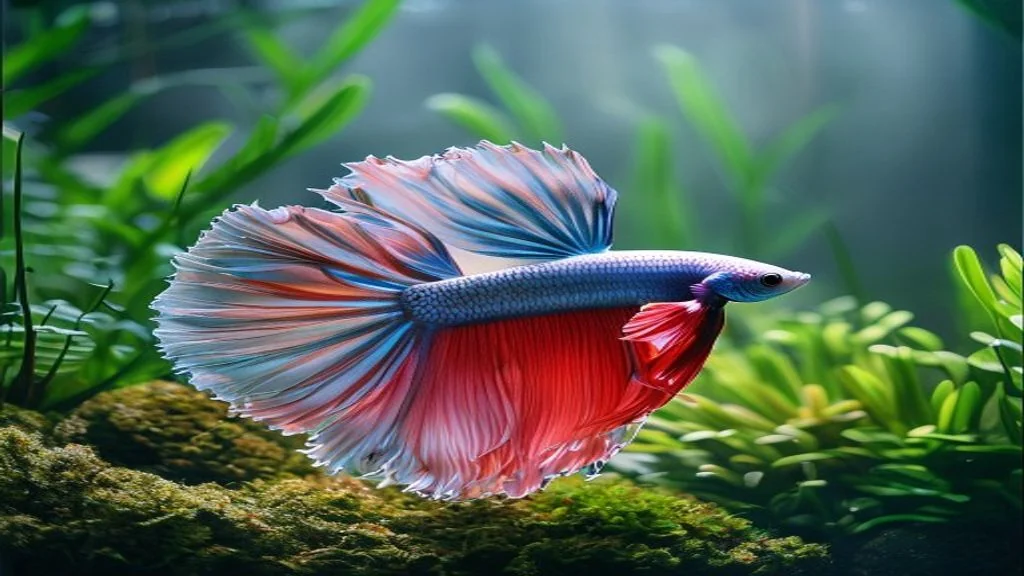
| 4. Open, flowing fins | Fins spread and relaxed — not clamped to the body |
| 5. Interacts with you | Follows your finger, greets you at the glass |
| 6. Builds bubble nests (males) | A mature, comfortable male may nest (not a guaranteed meter — see bubble nest meaning) |
| 7. Rests normally | Sleeps/rests then resumes activity (do bettas sleep) |
This overlaps with physical health — cross-check with signs of a healthy betta fish. Happy and healthy almost always go together.
Warning Signs of an Unhappy Betta
- Constant hiding or hovering listlessly (why is my betta hiding).
- Not eating or barely picking at food.
- Faded / washed-out colour (losing color).
- Clamped fins held tight to the body (clamped fins).
- Lethargy (lethargic / lying at bottom) or frantic glass surfing.
- Non-stop flaring or aggression (constant flaring, aggression & chasing).
- Rubbing / scratching on objects — early parasite warning (flashing).
- Stress stripes — horizontal lines (stress stripes).
The 30-Second Daily Happiness Check
- Is it active and exploring (not hiding all day)?
- Did it come to eat eagerly?
- Is the colour bright and the fins open (not clamped)?
- Does it react to you at the glass?
Mostly “yes” → a happy fish. Several “no” → check water and temperature first (the usual cause), then match symptoms to the behaviour and disease guides. Good husbandry is what creates a happy betta — see how to prevent betta diseases.
What Actually Makes a Betta Happy
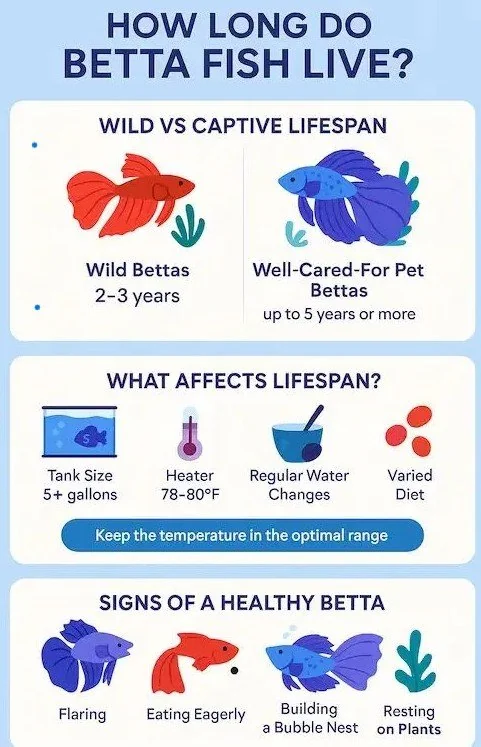
No magic — just the fundamentals done consistently: a properly sized (tank size guide), cycled, heated 78–80°F (heater), gently filtered tank with plants/hides, a good varied diet, clean water, and low stress. Get those right and the happy behaviours follow on their own.
Happy vs. Unhappy: The Side-by-Side
“Happy” feels vague until you put the signs next to their opposites. This is the at-a-glance reference to keep in your head:
| Signal | Happy betta | Unhappy betta |
|---|---|---|
| Activity | Explores, curious, patrols | Hides constantly, listless |
| Appetite | Eager, comes to feed | Picks at or ignores food |
| Colour | Bright, saturated | Faded, washed out |
| Fins | Open, flowing | Clamped to the body |
| You | Reacts/greets at the glass | No interest, avoids |
| Swimming | Smooth, level, varied | Frantic glass-surfing or motionless |
Almost every “unhappy” column entry has its own guide on this site — hiding, fading colour, clamped fins, glass surfing, lethargy — so this article is really the hub that ties the whole behaviour cluster together.
What Actually Creates a Happy Betta (No Magic)
Happiness isn’t a trick or a gadget — it’s the by-product of getting the fundamentals right. Every “happy” sign above appears on its own when these are in place:
- Right-sized, cycled tank. Stable water = a calm, secure fish (tank size guide).
- Stable 78–80°F heat. A warm betta is an active, colourful betta (heater guide).
- Clean water, routine changes. The single biggest driver of mood and health.
- Enrichment. Plants, caves, sight-breaks — a betta with things to explore doesn’t get bored or glass-surf.
- Good, varied diet, not overfed. Drives colour, energy, and a hearty feeding response (best live foods).
- Low stress. Few sudden disturbances, no bullying tank mates, gentle lighting.
That’s the whole secret — it’s the same checklist as disease prevention, because a healthy betta and a happy betta are the same fish. Do a 30-second daily read against the table above; mostly “happy” column means you’ve got it right, and several “unhappy” entries means check water and temperature first, then work the relevant guide.
Can a Fish Actually Be “Happy”? A Quick Honest Note
It is worth being straight about the word. We cannot ask a betta how it feels, and “happy” in everyday use is shorthand for something more concrete and observable: low stress and good welfare. A betta that is unstressed and well-kept reliably shows a cluster of behaviours — activity, appetite, colour, relaxed fins, responsiveness — while a stressed or unwell one shows the opposite cluster. So when this guide says “happy,” it means a fish whose behaviour and body indicate it is thriving rather than coping. That framing matters because it keeps you focused on what you can actually see and influence, instead of guessing at emotions. Every sign below is observable, and every fix below is something you control.
The 7 Signs of a Happy Betta, Explained
The table earlier lists them; here is what each one actually looks like day to day, so you can judge your own fish with confidence.
1. Active and curious
A content betta explores. It patrols the tank, inspects new décor, swims through plants, rests, then moves again. The key is varied, relaxed activity — not frantic pacing and not constant hiding. A fish that investigates its world is a fish that feels safe in it.
2. A hearty appetite
This is the single most reliable everyday tell. A happy betta comes to the front at feeding time and attacks its food eagerly. Appetite is the first thing to drop when something is wrong, so a fish that consistently eats with enthusiasm is almost always doing well.
3. Bright, saturated colour
A thriving betta shows deep, vivid colour with smooth, shiny scales. Colour is metabolically expensive, so a fish that maintains it has energy to spare. Sudden fading is one of the clearest early warning signs — see why is my betta losing color.
4. Open, flowing fins
Fins held spread and relaxed — flowing as the fish swims — indicate a calm, healthy betta. Fins clamped tight to the body are a near-universal sign of stress or illness (clamped fins).
5. Interacts with you
Many happy bettas learn their keeper and react — following a finger along the glass, coming over when you approach, anticipating feeding. A fish confident enough to engage rather than flee is a good sign.
6. Builds bubble nests (males only)
A mature, comfortable male may build a bubble nest. Treat this as a mild positive, not a guaranteed happiness meter — bettas nest even in poor conditions, and females and many healthy males do not nest at all. See bubble nest meaning.
7. Rests normally
A happy betta sleeps and rests, then resumes activity. Normal rest is not a bad sign; the warning version is near-constant lethargy that does not lift, paired with other symptoms (do bettas sleep).
Warning Signs of an Unhappy Betta — and What Each One Points To
An unhappy betta shows the opposite cluster. Crucially, almost every one of these has its own dedicated cause-and-fix guide on this site, so this article works as the hub of the whole behaviour cluster.
- Constant hiding or listless hovering — points to stress, poor water, cold, or bullying (why is my betta hiding).
- Not eating or barely picking — often the first and most important red flag; investigate water and temperature immediately.
- Faded, washed-out colour — stress or illness draining the fish (losing color).
- Clamped fins held tight to the body — a near-universal stress and illness signal (clamped fins).
- Lethargy or lying at the bottom — often the most medically serious; treat as a symptom (lethargic / lying at bottom).
- Frantic glass surfing — the hyper-active end of stress, usually environmental (glass surfing).
- Constant flaring or chasing — a fish stuck in fight mode, almost always a fixable trigger (flaring, aggression & chasing).
- Rubbing or scratching on objects — “flashing,” an early sign of parasites or water irritation (flashing explained).
- Stress stripes — horizontal lines that appear under stress (stress stripes).
Step-by-Step: If Your Betta Seems Unhappy
If a daily read comes back mostly “unhappy,” work this order rather than guessing or medicating blindly.
- Test the water. Ammonia and nitrite must be 0. Poor water is the most common single cause of an unhappy betta and the fastest to fix (lower ammonia).
- Check the temperature. Confirm a stable 78–80°F. Cold or swinging temperature flattens mood, colour, and appetite (heater guide).
- Review the setup. Adequate tank size, gentle filtration, plenty of plants and hides, gentle lighting, no bullying tank mates.
- Match remaining symptoms. Use the warning-sign links above to go straight to the specific behaviour or disease guide for what you are seeing.
- Re-read in a few days. After correcting water, temperature, and setup, run the 30-second check again. Genuine improvement confirms you found it.
What Actually Creates a Happy Betta — and What Does Not
There is no gadget or trick. A happy betta is the by-product of the fundamentals done consistently:
- A right-sized, cycled tank — stable water chemistry means a calm, secure fish (tank size guide).
- Stable 78–80°F warmth — a warm betta is an active, colourful one (heater guide).
- Clean water with routine changes — the single biggest driver of both mood and health.
- Enrichment — plants, caves, and sight breaks so the fish has things to do and never gets bored enough to glass-surf.
- A good, varied diet, not overfed — drives colour, energy, and a strong feeding response (best live foods).
- Low stress — few sudden disturbances, no bullying tank mates, gentle lighting.
Equally, here is what does not make a betta happy: a tiny “betta bowl,” a tankmate added for the owner’s enjoyment, a mirror left in for entertainment, bright décor over actual husbandry, or any product that promises happiness without addressing water, warmth, space, and diet. Happiness is husbandry — there is no shortcut around it.
Mistakes to Avoid When Judging a Betta’s Mood
- Treating a bubble nest as proof of happiness. It is a mild positive at best; bettas nest in poor conditions too. Judge the whole fish.
- Mistaking normal rest for lethargy. A betta that rests then resumes activity and eats well is fine. Lethargy only matters paired with other warning signs.
- Ignoring appetite changes. A drop in eagerness to eat is often the earliest warning — never wave it away.
- Judging mood by colour alone. Use the full cluster: activity, appetite, colour, fins, responsiveness. One signal in isolation misleads.
- Reaching for medication before checking water and temperature. Most “unhappy” bettas have an environmental cause that is faster and safer to fix than dosing.
- Assuming a solitary betta is unhappy. Bettas are naturally solitary; a calm single betta in a good tank is a thriving betta, not a lonely one.
That’s the whole secret — it’s the same checklist as disease prevention, because a healthy betta and a happy betta are the same fish. Do a 30-second daily read; mostly “happy” means you’ve got it right, and several “unhappy” entries means check water and temperature first, then work the relevant guide.
Sources & Further Reading
LoveToKnow Pets — 7 Signs a Betta Is Happy; WSU Ask Dr. Universe — telling if a betta is happy; Tropicflow — happy vs unhealthy betta; The Spruce Pets — betta wellbeing.
Frequently Asked Questions
How do I know if my betta is happy?
A happy betta is active and curious, eats eagerly, shows bright colour with open flowing fins, and interacts with you. Mature males may also build bubble nests.
What are signs of an unhappy betta?
Constant hiding, refusing food, faded colour, clamped fins, lethargy or frantic glass surfing, and stress stripes.
Does a bubble nest mean my betta is happy?
It usually indicates a comfortable mature male, but it’s not a guaranteed happiness meter — judge by overall behaviour and health too.
How can I make my betta happier?
Provide a properly sized, cycled, heated, gently filtered tank with plants and hides, a varied diet, clean water, and low stress.
Is my betta bored?
Possibly, if it glass surfs or acts listless in a bare tank. Add plants, caves, and varied décor to enrich the environment.
What is the fastest way to tell if my betta is happy?
Watch it eat. A betta that comes to the front and attacks its food eagerly is almost always doing well — appetite is the first thing to fade when something is wrong.
Can a betta really feel happy?
“Happy” is everyday shorthand for low stress and good welfare. We judge it by observable signs — activity, appetite, colour, relaxed fins, responsiveness — not by guessing emotions.
Why does my betta look happy some days and not others?
Minor day-to-day variation is normal. A consistent slide across several signs — fading, less eating, more hiding — is the real concern. Run the 30-second check daily and act on trends, not single off days.
Does a betta need tank mates to be happy?
No. Bettas are naturally solitary and territorial. A calm single betta in a well-kept tank is thriving — adding tank mates is more often a stressor than a source of happiness.
My betta is happy but doesn’t build bubble nests — is that a problem?
No. Females never nest and many healthy males rarely do. A bright, active, eating betta with no nest is doing perfectly well; the nest is not a happiness requirement.