
A koi betta is a regular Betta splendens bred to look like a Japanese koi carp, with bold patches of red, orange, black and white on a pale body. It has no relation to real koi and needs no special care. What makes it different is that its pattern can keep changing for years, so the fish you buy may not be the fish you have next summer. This guide covers the main types, why the colors shift, male vs female, price and care.
Koi Betta at a Glance
| Koi betta | |
|---|---|
| Species | Betta splendens (a color pattern, not a separate species) |
| Adult size | About 2.25 to 3 inches including the tail |
| Lifespan | 3 to 5 years with good care (see betta lifespan) |
| Tank size | 5 gallons minimum; 10 gallons is easier to keep stable |
| Temperature | 78–80°F (25.5–26.7°C) |
| Water | Ammonia 0, nitrite 0, nitrate 20 ppm or lower, pH 6.5–7.8 and stable |
| Diet | Carnivore: 2–3 soaked pellets once or twice a day, plus frozen treats |
| Temperament | Territorial; keep males alone |
| Typical price | About $15 to $50 in stores and more from breeders |
What Makes a Betta a Koi?
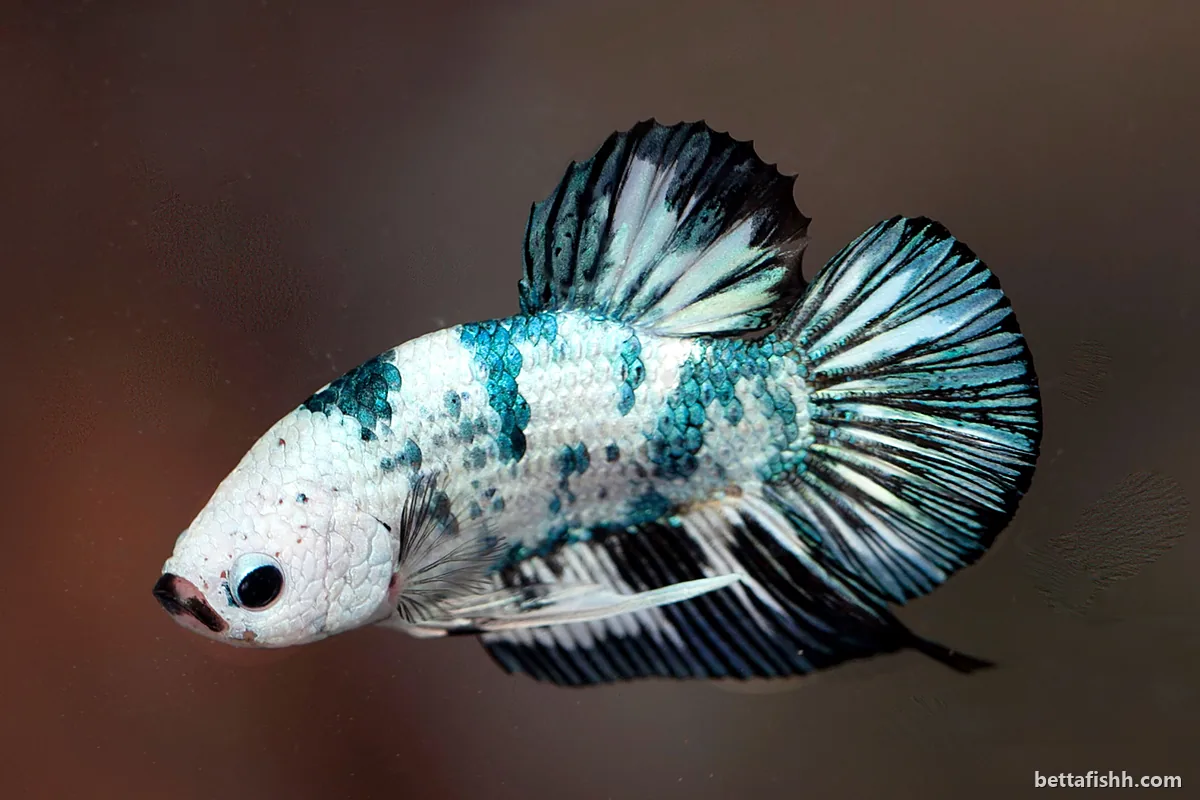
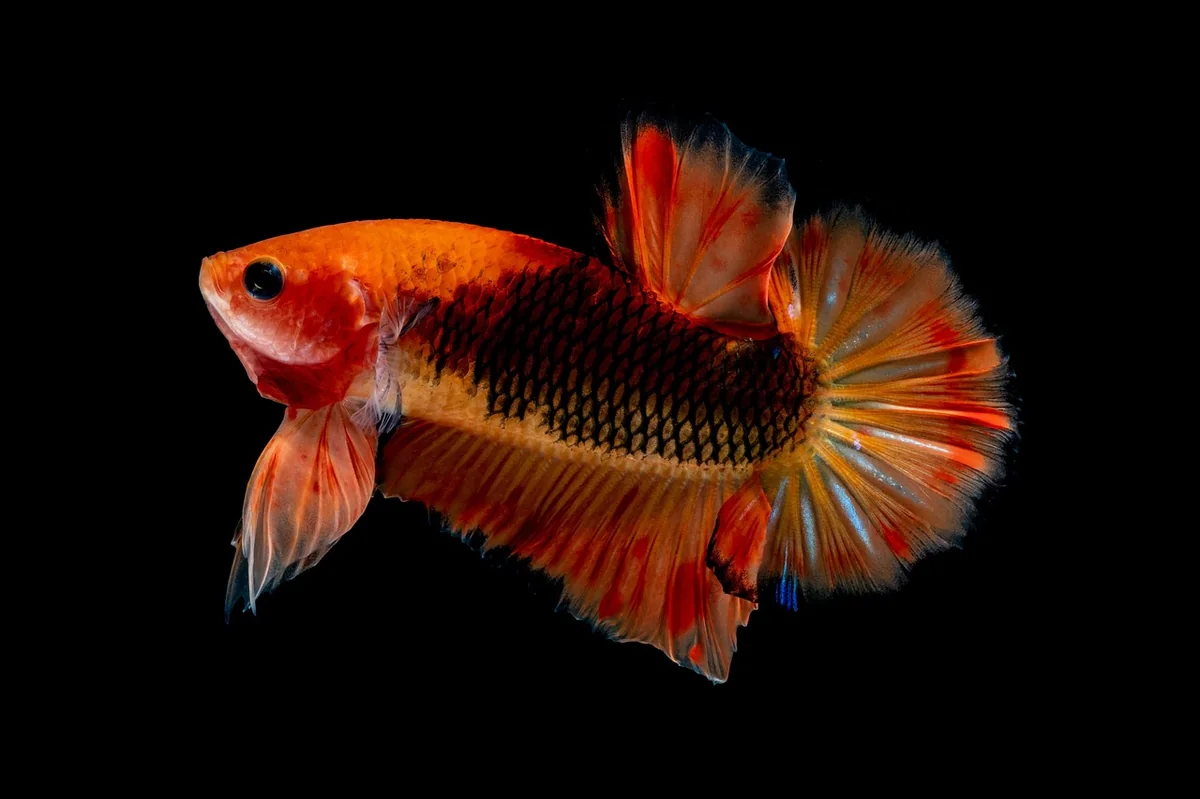
Look for a white or silvery base with irregular, clearly separated blocks of color. The classic mix is red and black on white, with orange and sometimes blue. Those blotches sit across the body and run into the fins, and no two fish carry the same layout.
“Koi” describes the pattern only. Koi can appear on most fin types, so you will see koi halfmoons, koi crowntails and koi veiltails, as well as the short-finned plakat betta, which is where the look is most often sold. Its name comes purely from the resemblance: a koi betta and a koi carp are completely different animals, and one would never fit the other’s tank.
Koi betta vs marble betta
Every koi is a type of marble, but not every marble looks like a koi. Koi lines were selectively bred from marble bettas to get cleaner patches and more colors. Left to breed without selection, the offspring can drift back toward plainer colors.
| Marble betta | Koi betta | |
|---|---|---|
| Pattern | Blotchy and irregular | Distinct patches that resemble koi carp |
| Colors over the base | Usually two | Often up to three |
| Changes with age | Yes | Yes |
| Origin | The marble gene | Selected from marble lines |
Types of Koi Betta
These are seller names rather than official show classes, and they overlap. The same fish can be listed as a galaxy on one site and a candy on another, so judge the fish you see and not the label.
| Type | What it looks like | Good to know |
|---|---|---|
| Traditional koi | White body with patches of red, orange and black | The look most people picture |
| Galaxy koi | Koi marbling plus scattered iridescent or metallic speckles | Colors vary widely, and blue speckles are common |
| Nemo | Orange and red leading, with black and white contrast | A trade name inspired by clownfish |
| Candy | A bright mix that can include red, black, blue and yellow | Defined by color spread more than a set palette |
| Samurai koi | Darker fish with heavy, armor-like scales | Overlaps with dragon scale lines |
Why Koi Bettas Change Color
Koi bettas inherit the marble gene, which carries what geneticists call a jumping gene. It moves pigment around as the fish ages, so patches can spread, shrink, darken or vanish. A mostly white fish can turn mostly black, and the change can start within months. There is no way to lock a pattern in, and it does not shorten the fish’s life.
The key is telling that apart from illness. A healthy koi changes pattern while staying active and hungry, and colors move rather than fade. A fish that goes pale all over, clamps its fins or stops eating is probably stressed or cold, so test the water first. Why a betta loses color walks through the difference. Never medicate a healthy fish because its pattern has shifted.
If an exact pattern is the reason you are buying, keep this in mind. An older fish has usually done more of its changing, but no seller can promise that a pattern will hold.
Koi Betta Male vs Female
Both sexes carry the same pattern, so judge by the fins and body rather than the colors:
| Trait | Male | Female |
|---|---|---|
| Fins | Usually longer, though koi plakat males are short-finned | Short and rounded |
| Body | Slimmer and longer | Shorter and rounder, especially when full of eggs |
| Egg spot | None | A small white dot behind the ventral fins |
| Stripes | Rarely shows vertical bars | Vertical bars when ready to breed |
| Price | Up to about $50 in stores | Often about $15 to $20 |
The plakat is what catches people out, because a short-finned male can pass for a female. Check for the egg spot, and see male vs female bettas for the full set of signs. For females specifically, the female betta guide explains why a sorority needs at least five fish and 20 gallons, and why it often fails even then.
How Much Does a Koi Betta Cost?
Hepper puts store prices at about $15 to $20 for a female and up to $50 for a male. Prices rise when you buy from a breeder or choose a fish by its exact photo. On one Thai breeder’s koi page, in November 2026, sale prices ran from about $30 to $196, with most near $45 before shipping. Galaxy and show-quality plakats sit at the top of that range.
Koi bettas are not rare. They are bred in large numbers and sold by chains such as Petco, so wait for a healthy fish rather than rushing. For what truly counts as hard to find, see rare betta fish.
Koi Betta Care
A koi needs nothing beyond standard betta care. Here is the setup:
- Size: 5 gallons is the minimum and 10 gallons is easier to keep stable. See the betta tank size guide.
- Heater: an adjustable heater holding 78–80°F, about 25 W for 5 gallons and 50 W for 10 gallons; see the best heater for a betta tank.
- Filter: a sponge filter or a baffled hang-on-back with gentle flow; see the best filter for a betta tank.
- Plants and decor: live plants or silk plants, and smooth decorations with no sharp edges.
- Lid: all bettas can jump.
- Cycle first: ammonia and nitrite should read 0 before the fish goes in. Follow how to set up a betta tank.
Change 25–30% of the water each week in a 5-gallon tank, or 20–25% in a 10-gallon, with dechlorinated, temperature-matched water. Feed 2–3 soaked pellets once or twice a day, using this pellet guide, and add frozen brine shrimp or daphnia as a treat. Good food and clean water help the colors show at their best, though neither one controls the pattern.
Can a Koi Betta Live With Other Fish?
A koi behaves like any other betta, which depends far more on the individual than on the pattern. Males are best kept alone or with snails in 5 gallons. In 10 gallons or more with plenty of plants, a calm fish may accept shrimp or a small school of short-finned fish. Never keep two males together, and never keep a male with a female outside a breeding setup. The best tank mates for bettas guide has the full list, and the aquarium stocking calculator will check a plan for your tank.
Is a Koi Betta Good for Beginners?
Yes. A koi is as easy as other bettas, as long as you are comfortable with a fish whose appearance will not stay the same. For many keepers that is half the fun. Before you buy, look for clear eyes, intact fins and interest in food; signs of a healthy betta covers what to check. Short-finned koi plakats are the most forgiving choice, since they swim well and have less fin to tear.
Sources
Hepper, Koi Betta care guide (origin, price, appearance). Thailand Betta Fish, koi collection (pattern names and prices, November 2026). A-Z Animals, betta genetics and color (marble and koi patterns). Gensou, Koi Betta care guide (galaxy and nemo patterns). Bettafishh care standards.
Frequently Asked Questions
What is a koi betta?
A koi betta is a Betta splendens with a pattern of red, orange, black and white patches that resembles a koi carp. It is a selectively bred color pattern, not a separate species, and it is not related to koi.
Are koi bettas rare?
No. They are bred in large numbers and sold by pet chains as well as breeders. Particular patterns and show-quality fish are harder to find and cost more.
How much does a koi betta cost?
About $15 to $20 for a female and up to about $50 for a male in stores. Breeder fish chosen by photo often cost about $30 to $60 or more, plus shipping.
How big do koi bettas get?
About 2.25 to 3 inches including the tail, the same as other bettas. Short-finned plakats look more compact.
How long do koi bettas live?
About 3 to 5 years with good care, the same as other bettas. Clean, warm water and a varied diet make the biggest difference.
Why is my koi betta changing color?
Usually because of the marble gene, which moves pigment throughout the fish’s life. If it stays active and keeps eating, the change is normal. Going pale all over with clamped fins points to stress or illness.
What is the difference between a koi betta and a marble betta?
A koi is a selected form of marble. Marble bettas are blotchy, while koi have cleaner, more distinct patches and often more colors. Both can change with age.
What is a galaxy koi betta?
A koi betta with scattered iridescent or metallic speckles over the koi pattern. It is a seller name rather than a show class, and it has the same care needs as any betta.