
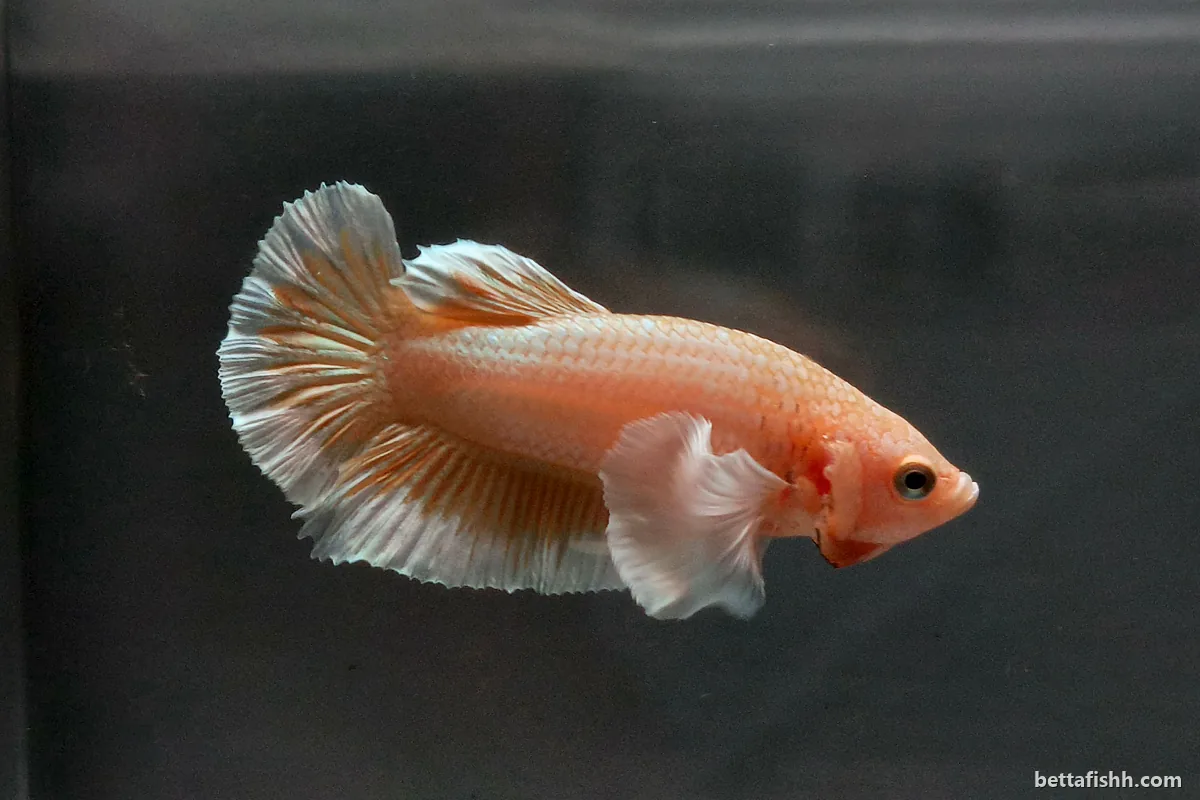
A plakat betta is the short-finned form of the Siamese fighting fish, and it looks more like a small, muscular athlete than the flowing show bettas beside it in the store. Plakats swap the long veil of fins for a compact body, a quick turn of speed and fins that are harder to tear. This guide covers the main plakat types, how to tell a male from a female (the question that trips up most buyers), the colors you will see, and how to set up a tank for such an active fish.
Plakat Betta at a Glance
| Plakat betta | |
|---|---|
| Species | Betta splendens (a fin type, not a separate species) |
| Adult size | About 2 to 3 inches; giant plakats about 3.5 to 5 inches |
| Lifespan | 3 to 5 years with good care (see betta lifespan) |
| Tank size | 5 gallons minimum, 10 gallons preferred; 10 gallons minimum for a giant |
| Temperature | 78–80°F (25.5–26.7°C) |
| Water | Ammonia 0, nitrite 0, nitrate 20 ppm or lower, pH 6.5–7.8 and stable |
| Diet | Carnivore: 2–3 soaked pellets once or twice a day, plus frozen treats |
| Temperament | Bold, active and territorial; keep males alone |
| Must have | A tight lid, gentle filter flow and plenty of plants to patrol |
What Is a Plakat Betta?
The name is usually translated from Thai as “biting fish”, and that tells you the history. For generations, short-finned bettas were bred in Thailand for fish fighting, a tradition where long fins were a weakness because an opponent could grab and shred them. Short fins and a thick body made a harder target. Plakats bred for the aquarium trade today are selected for color and shape instead, but the build and the attitude remain.
A plakat is not a different species. It is the same Betta splendens as a halfmoon or veiltail, with a fin type closer to the original short-finned fish. Everything about its basic care follows from that, which is why the numbers in the table above match every other betta on this site. For how plakats fit alongside the other tail types, see betta fish types and colors.
Types of Plakat Betta
“Plakat” covers several fin shapes. These are the ones sellers list most often:
| Type | How it looks | Good to know |
|---|---|---|
| Traditional plakat (PK) | Short, rounded tail, sometimes with a slight point that gives a spade look | The closest to the old fighting fish |
| Halfmoon plakat (HMPK) | Short tail that spreads to a full 180 degrees, with a longer, slanted anal fin | The modern show type and the one most high-grade sellers offer |
| Crowntail plakat (CTPK) | Short fins with the spiky, reduced webbing of a crowntail betta | Rays are shorter than on a full crowntail |
| Double tail plakat | Short tail split into two lobes, often with a broad dorsal fin | Often has a shorter body; feed small portions |
| Dumbo ear plakat | Short fins with oversized, fan-like pectoral fins | The big “ears” still need soft decor |
| Giant plakat | Same short fins on a much larger body, about 3.5 to 5 inches | Needs 10 gallons or more |
The wording varies between sellers, and a fish can combine traits, so a listing might read “giant koi HMPK”. Read each word separately: size, then color, then fin type.
Plakat Betta Male vs Female
This is the hardest sexing job in the betta world, because the usual rule of “short fins means female” does not work here. Check several signs together on an adult fish:
| Sign | Male plakat | Female plakat |
|---|---|---|
| Egg spot | None in most fish | Small white dot behind the belly fins; the strongest single sign |
| Belly (ventral) fins | Long and pointed, often like two thin ribbons | Shorter and stubbier |
| Anal fin | Longer, ending in a clear point toward the tail | Shorter and more rounded |
| Tail and dorsal fin | Short, but broad and well developed | Shorter again, and smaller overall |
| Beard | Large; often pokes out past the gill cover | Small; usually seen only when flaring |
| Body | Longer and sleek | Shorter and rounder, especially when carrying eggs |
| Color | Often bolder | Can be just as bright, so never use color alone |
Plakat Betta Colors
Plakats come in every color and pattern that long-finned bettas do, and the short fins show off body color well. Common listings include:
- Solid colors: red, blue, black, white, yellow and copper.
- Koi and marble: patches of orange, red, black and white. These fish carry the marble gene, so the pattern can change over months.
- Nemo and galaxy: trade names for koi-type mixes, galaxy with added sparkle on the body.
- Dragon scale and metallic: thick, shiny scales over a darker body. Heavy scaling can spread over the eyes in some lines, so check before you buy.
- Avatar, copper and hellboy: metallic or deep red types, mostly from specialist sellers.
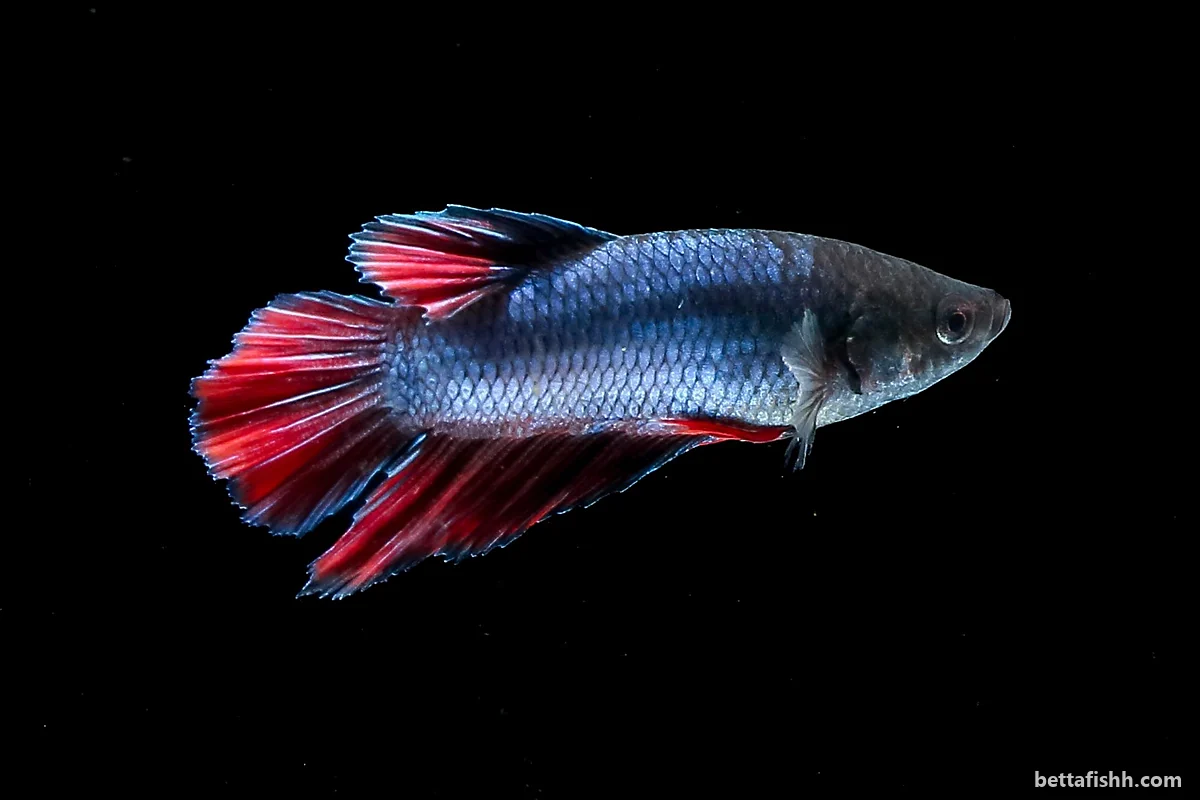
If a koi plakat changes color over time and is otherwise eating and active, it is most likely genetics rather than illness; see why is my betta losing color.
How Plakats Differ From Long-Finned Bettas
| Plakat | Long-finned betta | |
|---|---|---|
| Swimming | Quick, with fast turns | Slower; heavy fins tire it in current |
| Fin damage | Harder to tear, and less prone to fin rot | Tears more easily on rough decor |
| Handling flow | Copes slightly better, but still needs it gentle | Needs very gentle flow |
| Space | Benefits from a longer tank to patrol | Happy with less swimming |
| Look | Compact, with color on the body | Dramatic fins |
| Care | Same water, temperature and food | Same water, temperature and food |
Keepers who switch often say the same thing: plakats seem more alert and busier than their long-finned fish. Short fins are not a free pass, though. They reduce fin problems without removing them, and poor water will still cause fin rot in a plakat.
Plakat Betta Tank Setup
- Size: 5 gallons is the minimum and 10 gallons suits this active fish better, ideally a long tank rather than a tall one. See the betta tank size guide and whether 5 gallons is enough.
- Lid: plakats are strong jumpers. Use a tight lid and leave a small air gap above the water, because they breathe at the surface.
- Heater: an adjustable heater holding 78–80°F, about 25 W for 5 gallons and 50 W for 10 gallons. See the best heater for a betta tank.
- Filter: a sponge filter or a baffled hang-on-back. Plakats handle a little more flow than long-fins, but they should still be able to rest and reach the surface easily; see the best filter for a betta tank.
- Plants and cover: a busy fish needs things to explore. Add live plants, a cave and a few safe decorations to break the line of sight.
- Cycle first: run the tank until ammonia and nitrite read 0 before adding the fish. Follow how to set up a betta tank.
Change 25–30% of the water each week in a 5-gallon tank, or 20–25% in a 10-gallon, using dechlorinated, temperature-matched water.
Feeding a Plakat Betta
Plakats eat the same carnivore diet as other bettas: 2–3 soaked pellets once or twice a day, plus frozen bloodworms, brine shrimp or daphnia a couple of times a week. A very active fish does not need bigger meals, and a round belly is the sign to cut back. Portions are in how many pellets to feed a betta and food choices in best betta fish food.
Plakat Betta Temperament and Tank Mates
Plakats have a reputation as the toughest bettas, and that history is real, but individual fish vary a lot. Some ignore everything; others attack anything that moves. Never keep two males together, and do not keep a male with a female outside a short breeding attempt. Because plakats are quick, a slow tank mate has less chance of escaping if your fish decides to chase it.
Start with the lowest-risk option, a nerite snail, and watch your fish for a few days before adding anything else. Bigger plans follow the same size rules as other bettas: 5 gallons is enough for a snail, 10 gallons or more for shrimp, and 15–20 gallons or more for small schooling fish, with no bright, long-finned or fin-nipping species. Keep a spare heated tank ready in case it fails. See the best tank mates for betta fish and betta aggression and chasing.
Plakat Betta Health
Plakats get the same illnesses as other bettas, and water quality is the cause or trigger for most of them. The two things worth watching for in this type are torn fins or scrapes from fast, excited swimming around sharp decor, and jumping injuries in a tank without a lid. If something looks wrong, test the water first and then use the betta disease guide. Hiding, clamped fins or horizontal stripes usually point to stress.
Is a Plakat Betta Right for You?
Choose a plakat if you want a lively fish that uses the whole tank and you prefer tough, low-maintenance fins to a show of long ones. It suits beginners well, as long as you have a lid and at least 5 gallons. If the long, flowing look is what drew you to bettas, a halfmoon or a crowntail will make you happier, and needs the same water care. Whichever you choose, check the beginner betta care mistakes before you buy.
Sources & Further Reading
Aquariadise, Plakat Betta Care Guide (name, fighting history, jumping); Aquarium Source, Plakat Betta (size, lifespan, fin rot resistance); Shrimpy Business, What Is a Plakat Betta? (fin shape); r/bettafish wiki, tail types and sexing; Thailand Betta Fish, plakat grades and forms. Sources differ on minimum tank size and swimming strength; the figures here follow this site’s care standards.
Frequently Asked Questions
Are plakat bettas more aggressive?
Often, yes, since they come from fighting lines, but individual temperament matters more than type. Some plakats are calm and some long-fins are fierce. Keep males alone and test tank mates carefully.
Are HMPK and plakat the same?
HMPK is a type of plakat. It stands for halfmoon plakat: a short-finned betta whose tail spreads to 180 degrees. All HMPKs are plakats, but a traditional plakat with a rounded tail is not an HMPK.
How big do plakat bettas get?
Most reach about 2 to 3 inches. Giant plakats are bred for size and reach about 3.5 to 5 inches.
How long do plakat bettas live?
About 3 to 5 years with good care, the same as other bettas. Clean, warm water and a varied diet make the biggest difference.
Can a plakat betta live in a community tank?
Sometimes, but it depends on the fish. Use a tank of 15–20 gallons or more, avoid bright or long-finned fish and nippers, and keep a spare heated tank ready. Many plakats do best alone.
Are plakat bettas good for beginners?
Yes. Their short fins cope better with small mistakes in decor and flow, and they need the same simple care as other bettas. Use a heated, filtered tank of 5 gallons or more with a lid.
Why is my female plakat growing long fins?
She may be a young male. Plakat males are often sold as females because their fins start short. Check for long, pointed belly fins and a missing egg spot as the fish matures.
Do plakat bettas jump?
Yes. Bettas are strong jumpers and active plakats take the chance readily. A tight lid is essential, with a small air gap above the water for breathing.